Exosomes and neuropathic pain: visualization analysis on literature
Authors: MA Jing, HAN Jing, SHI Linyu, WU Yuwei, YUAN Haiguang, LI Yongfeng
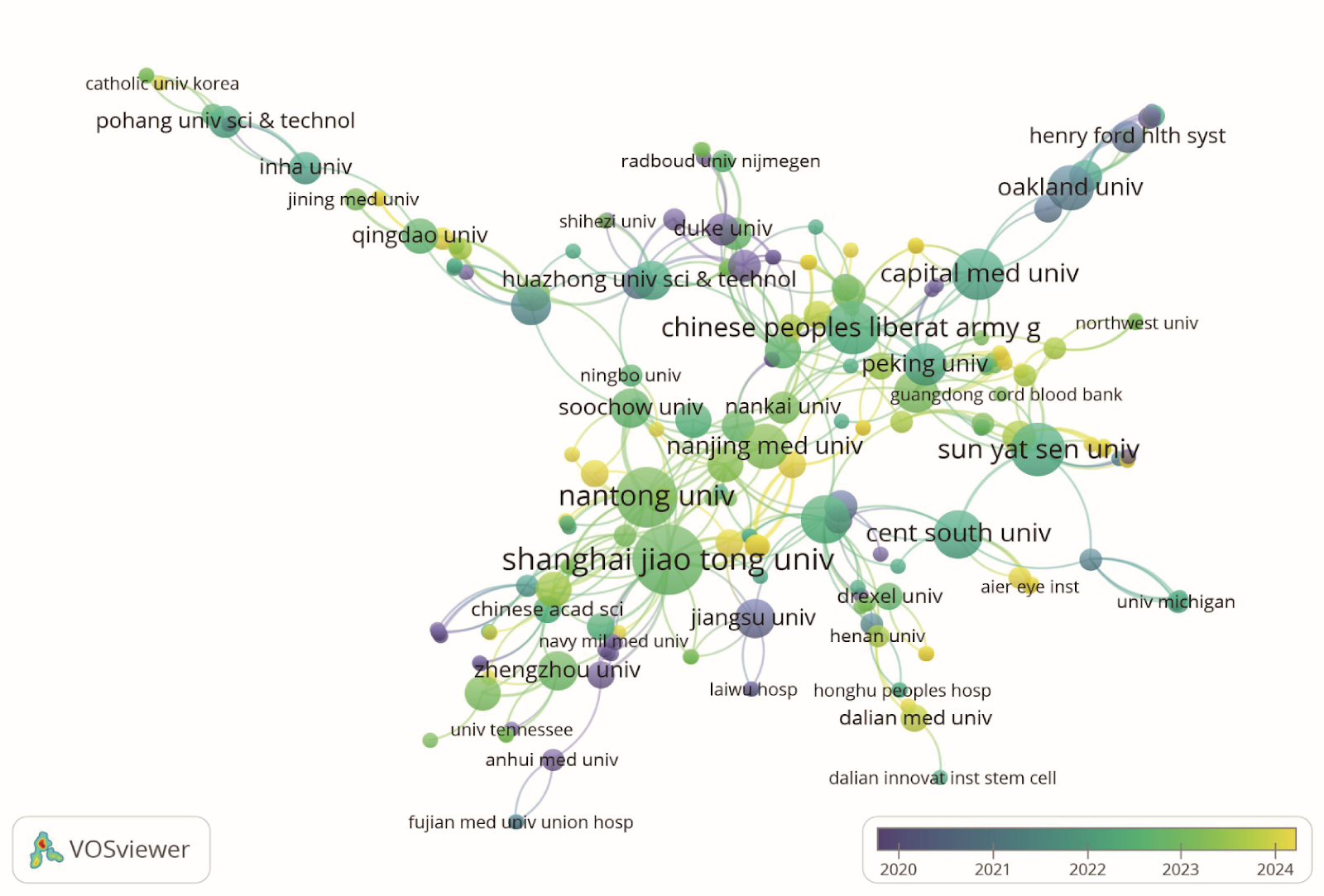
BACKGROUND: Neuropathic pain has a complex pathogenesis and limited clinical intervention outcomes. In recent years, exosomes have gradually emerged as a focal point in the study of neuropathic pain due to their unique intercellular communication functions and molecular delivery capabilities. OBJECTIVE: To systematically review research progress on exosomes in the field of neuropathic pain using bibliometric methods, summarize the knowledge framework and research hotspots, and provide theoretical foundations and translational strategies for advancing this field. METHODS: Based on the Web of Science Core Collection (WOSCC) database, literature on exosomes and neuropathic pain was retrieved from 2012-01-01 to 2025-03-31. VOSviewer and CiteSpace software were used for keyword co-occurrence, cluster analysis, burst detection, and collaboration network visualization. RESULTS AND CONCLUSION: A total of 313 articles were included. Among 42 countries or regions, the United States and China made significant contributions. Shanghai Jiao Tong University and Nantong University were the most prolific institutions. The most productive and co-cited journals were Neural Regeneration Research and International Journal of Molecular Sciences, respectively. A total of 382 authors were identified; Zhang Zhenggang had the most articles, and Zhang Yi had the most citations. Key high-frequency keywords included 'nerve regeneration', 'neuroinflammation', 'schwann cell', 'regenerative medicine', and 'spinal cord injury', which are key research areas for future development. Through bibliometric analysis, this study mapped the research trends of exosomes in neuropathic pain. Exosomes hold broad prospects in elucidating basic mechanisms and developing novel precision therapies for neuropathic pain. Future efforts should integrate multi-omics and engineered exosome platforms to advance this field.