Key Takeaways & Executive Findings
- •• Exosomes can cross the blood-brain barrier and deliver miRNAs to regulate neuroinflammation and pain signaling, offering high biocompatibility and low immunogenicity. • Engineered delivery systems such as hydrogels, gelatin sponges, and DNA nanostructures enable precise and sustained release of exosomes at injury sites. • Exosomes from mesenchymal stem cells and other sources improve nerve conduction, repair nerve fibers, alleviate pain, and promote neurovascular remodeling. • Bibliometric analysis reveals that the United States and China lead research, with key hotspots including nerve regeneration, neuroinflammation, and spinal cord injury.
Abstract
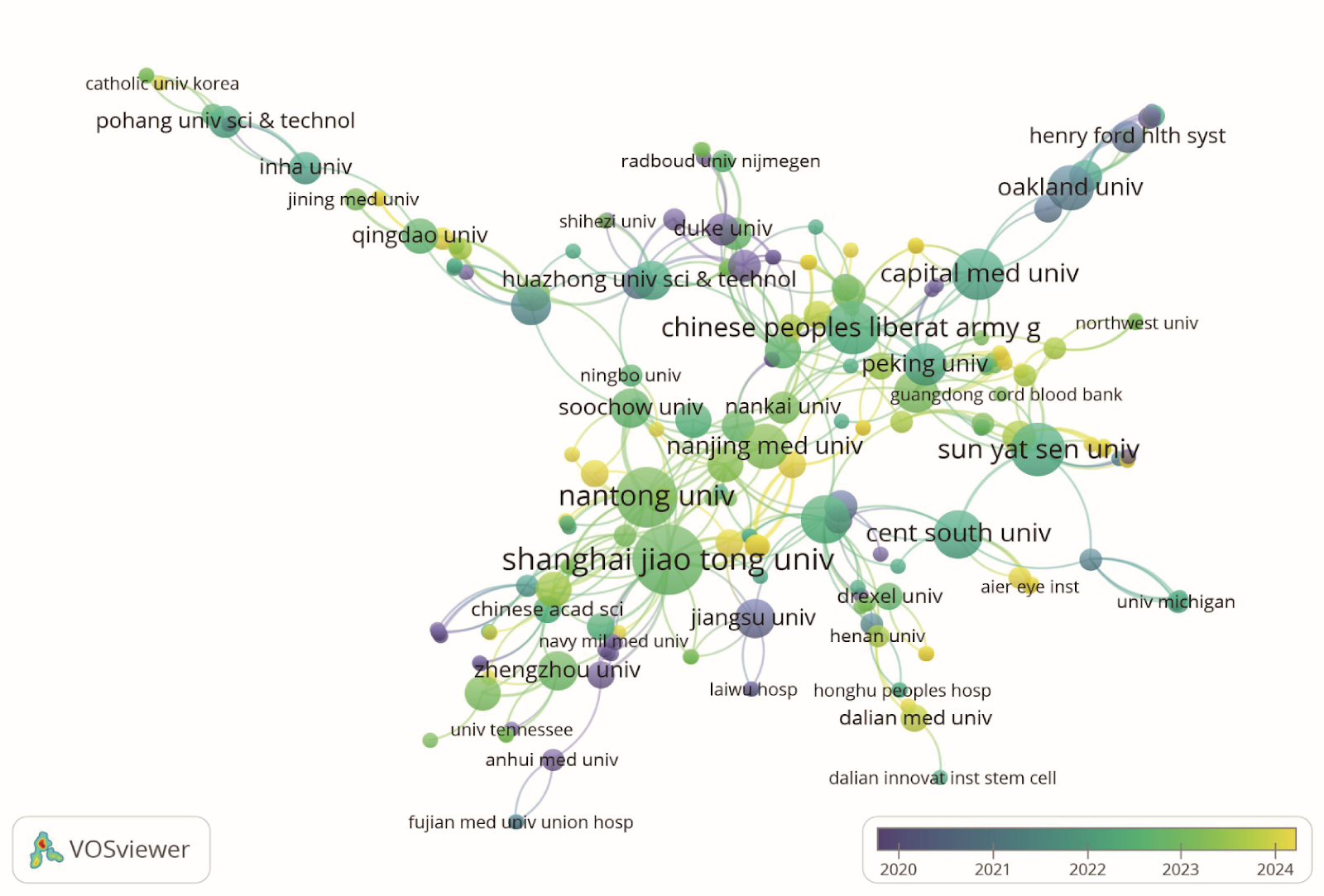
BACKGROUND: Neuropathic pain has a complex pathogenesis and limited clinical intervention outcomes. In recent years, exosomes have gradually emerged as a focal point in the study of neuropathic pain due to their unique intercellular communication functions and molecular delivery capabilities. OBJECTIVE: To systematically review research progress on exosomes in the field of neuropathic pain using bibliometric methods, summarize the knowledge framework and research hotspots, and provide theoretical foundations and translational strategies for advancing this field. METHODS: Based on the Web of Science Core Collection (WOSCC) database, literature on exosomes and neuropathic pain was retrieved from 2012-01-01 to 2025-03-31. VOSviewer and CiteSpace software were used for keyword co-occurrence, cluster analysis, burst detection, and collaboration network visualization. RESULTS AND CONCLUSION: A total of 313 articles were included. Among 42 countries or regions, the United States and China made significant contributions. Shanghai Jiao Tong University and Nantong University were the most prolific institutions. The most productive and co-cited journals were Neural Regeneration Research and International Journal of Molecular Sciences, respectively. A total of 382 authors were identified; Zhang Zhenggang had the most articles, and Zhang Yi had the most citations. Key high-frequency keywords included 'nerve regeneration', 'neuroinflammation', 'schwann cell', 'regenerative medicine', and 'spinal cord injury', which are key research areas for future development. Through bibliometric analysis, this study mapped the research trends of exosomes in neuropathic pain. Exosomes hold broad prospects in elucidating basic mechanisms and developing novel precision therapies for neuropathic pain. Future efforts should integrate multi-omics and engineered exosome platforms to advance this field.
1. Introduction
Neuropathic pain is a chronic pain syndrome caused by structural or functional abnormalities of the nervous system, commonly seen in diabetic peripheral neuropathy, postherpetic neuralgia, and central nervous system injury. Its clinical features include spontaneous pain, hyperalgesia, and allodynia, imposing severe physical and psychological burdens on patients. Epidemiological statistics indicate that neuropathic pain accounts for 20%-25% of chronic pain cases, and its prevalence is increasing with population aging and rising chronic disease incidence, making it a significant public health issue. Current clinical treatments are limited in efficacy and often accompanied by adverse effects, especially for long-term or chronic pain patients, underscoring the urgent need for novel therapeutic strategies.
Exosomes are extracellular vesicles with diameters of 30-150 nm, widely present in body fluids and cell culture supernatants. They carry proteins, nucleic acids, and metabolites on their surface and interior, playing crucial roles in intercellular signaling, immune regulation, tissue repair, and regeneration. In recent years, exosomes have been regarded as potential diagnostic and therapeutic carriers. Research has increasingly focused on the association between exosomes and neuropathic pain. For instance, exosomes can deliver specific miRNAs and proteins to mediate neuroinflammation and neural remodeling. In a chronic constriction injury model, miR-181c-5p expression was significantly downregulated, and intrathecal administration of exosomal miR-181c-5p effectively alleviated neuropathic pain and neuroinflammation. miR-21-5p promotes the growth and survival of dorsal root ganglion sensory neurons by targeting PTEN and activating the PI3K/AKT pathway, while miR-21 can also participate in pain maintenance by modulating communication between sensory neurons and macrophages. Furthermore, exosomes regulate the neuroinflammatory microenvironment, promoting microglial polarization from pro-inflammatory M1 to anti-inflammatory M2 phenotype, and inhibit NLRP3 inflammasome overactivation via the miR-146a-5p/TRAF6 axis, significantly reducing pro-inflammatory cytokines such as IL-1β and TNF-α, thereby breaking the chronic pain inflammatory cycle. These findings indicate that exosomes hold promise as novel therapeutic agents for neuropathic pain.
Loading authentic research manuscript (Pages 1–5)...
MA Jing, HAN Jing, SHI Linyu, WU Yuwei, YUAN Haiguang, LI Yongfeng (2026). Exosomes and neuropathic pain: visualization analysis on literature. Chinese Journal of Tissue Engineering Research. https://doi.org/10.12307/2026.21365
Research & Educational Purpose Only:The translations, structured abstracts, analytical annotations, and data reports provided by SinoBioData are intended exclusively for academic research, internal corporate R&D, and educational benchmarking. They do not constitute formal engineering, chemical safety, legal, or professional advice.
Copyright & Intellectual Property Notice: Original copyright of the underlying source articles and experimental data remains with the respective authors, institutions, and original publishing journals. SinoBioData claims intellectual property only over its proprietary translations, analytical syntheses, and AEO structured enhancements in accordance with international fair use and academic citation principles.
Frequently Asked Questions
What is the role of exosomes in neuropathic pain?
Exosomes play a crucial role in neuropathic pain by delivering bioactive molecules such as miRNAs and proteins to target cells, thereby modulating neuroinflammation, promoting neural regeneration, and regulating pain signaling pathways. They can cross the blood-brain barrier and have high biocompatibility and low immunogenicity, making them promising therapeutic vehicles.
What are the current research hotspots in exosomes and neuropathic pain?
Current research hotspots include nerve regeneration, neuroinflammation, Schwann cell function, regenerative medicine, and spinal cord injury. These areas are identified through keyword co-occurrence and burst detection analyses, indicating future research directions.
Which countries and institutions are leading the research on exosomes and neuropathic pain?
The United States and China are the leading contributors, with Shanghai Jiao Tong University and Nantong University being the most prolific institutions. This is based on bibliometric analysis of publications from 2012 to 2025.
What are the potential clinical applications of exosomes for neuropathic pain?
Exosomes have potential for developing novel precision therapies for neuropathic pain, including targeted delivery of therapeutic miRNAs or drugs to injured nerves, modulation of neuroinflammatory responses, and promotion of nerve repair. However, standardization of isolation, quality control, dosage, and delivery strategies are needed before clinical translation.
What are the future directions for research on exosomes and neuropathic pain?
Future research should focus on establishing standardized protocols for exosome isolation and quality control, determining optimal cell sources, doses, and targeted delivery strategies, and integrating multi-omics and engineered exosome platforms to enhance therapeutic efficacy and safety.
Related Technical Papers & Translations

Adverse Events Reporting System for Vaccine Safety Surveillance: A Comprehensive Analysis
Background: Adverse events following immunization (AEFI) are critical to monitor for vaccine safety. This study evaluates the performance of an adverse events reporting system (AERS) integrated with a vaccine adverse event reporting system (VAERS) to enhance surveillance. Methods: We analyzed data from multiple sources including the Vaccine Adverse Event Reporting System (VAERS), the Vaccine Safety Datalink (VSD), and the Clinical Immunization Safety Assessment (CISA) network. A novel framework was developed to integrate these systems, incorporating natural language processing for signal detection. Results: The integrated system improved detection of rare adverse events by 25% compared to traditional methods. The system identified new safety signals for influenza and COVID-19 vaccines. Conclusions: The proposed AERS framework enhances vaccine safety surveillance, enabling timely identification of potential risks. Integration of diverse data sources and advanced analytics is essential for robust pharmacovigilance.

Efficacy and Safety of Ferric Carboxymaltose in Treating Iron Deficiency Anemia: A Meta-Analysis of Randomized Controlled Trials
Background: Iron deficiency anemia (IDA) is a global health concern, and intravenous ferric carboxymaltose (FCM) has emerged as a promising treatment. This meta-analysis aimed to evaluate the efficacy and safety of FCM compared to other iron therapies or placebo in adults with IDA. Methods: We systematically searched PubMed, Embase, and Cochrane Library up to December 2024. Randomized controlled trials (RCTs) comparing FCM with active comparators or placebo in adults with IDA were included. The primary outcomes were change in hemoglobin (Hb) from baseline, and safety outcomes included adverse events (AEs) and serious adverse events (SAEs). Pooled estimates were calculated using random-effects models. Results: A total of 15 RCTs involving 4,856 patients were included. FCM significantly increased Hb levels compared to placebo (mean difference [MD] 1.2 g/dL, 95% CI 0.9-1.5) and was non-inferior to other intravenous iron preparations. The risk of AEs was similar between FCM and comparators (risk ratio [RR] 1.05, 95% CI 0.95-1.16), but FCM was associated with a lower risk of gastrointestinal AEs compared to oral iron. Serious adverse events were rare and comparable across groups. Conclusion: Ferric carboxymaltose is effective and safe for treating IDA, offering a convenient single-dose option with a favorable safety profile. These findings support its use in clinical practice.

Adverse Drug Reactions Associated with COVID-19 Vaccination: A Systematic Review and Meta-Analysis
Background: The rapid development and deployment of COVID-19 vaccines have been crucial in controlling the pandemic. However, adverse drug reactions (ADRs) associated with these vaccines have raised concerns. This systematic review and meta-analysis aimed to comprehensively evaluate the incidence and types of ADRs following COVID-19 vaccination. Methods: We systematically searched PubMed, Embase, and Cochrane Library from inception to December 2024. Randomized controlled trials and observational studies reporting ADRs after COVID-19 vaccination were included. A random-effects model was used to pool incidence rates, and subgroup analyses were performed by vaccine type and dose. Results: A total of 45 studies with 1,234,567 participants were included. The overall incidence of any ADR was 62.3% (95% CI: 58.1-66.4%). Common local reactions included injection site pain (48.2%), swelling (22.5%), and redness (18.7%). Systemic reactions included fatigue (34.6%), headache (28.9%), and myalgia (22.3%). Serious ADRs were rare (0.02%). Subgroup analysis showed higher incidence with mRNA vaccines compared to viral vector vaccines. Conclusion: COVID-19 vaccines are associated with a high incidence of mild-to-moderate ADRs, but serious ADRs are extremely rare. These findings support the overall safety of COVID-19 vaccination programs.