Key Takeaways & Executive Findings
- •• Senescent bone marrow mesenchymal stem cells (BMSCs) upregulate galectin-3 expression, which is associated with the senescence phenotype. • Conditioned medium from senescent BMSCs promotes proliferation and inhibits apoptosis of multiple myeloma U266 cells, with increased BCL-2 expression. • Galectin-3 levels are significantly elevated in the bone marrow of multiple myeloma patients compared to healthy controls. • The findings suggest that senescent BMSCs contribute to multiple myeloma progression via paracrine galectin-3, offering potential therapeutic targets.
Abstract
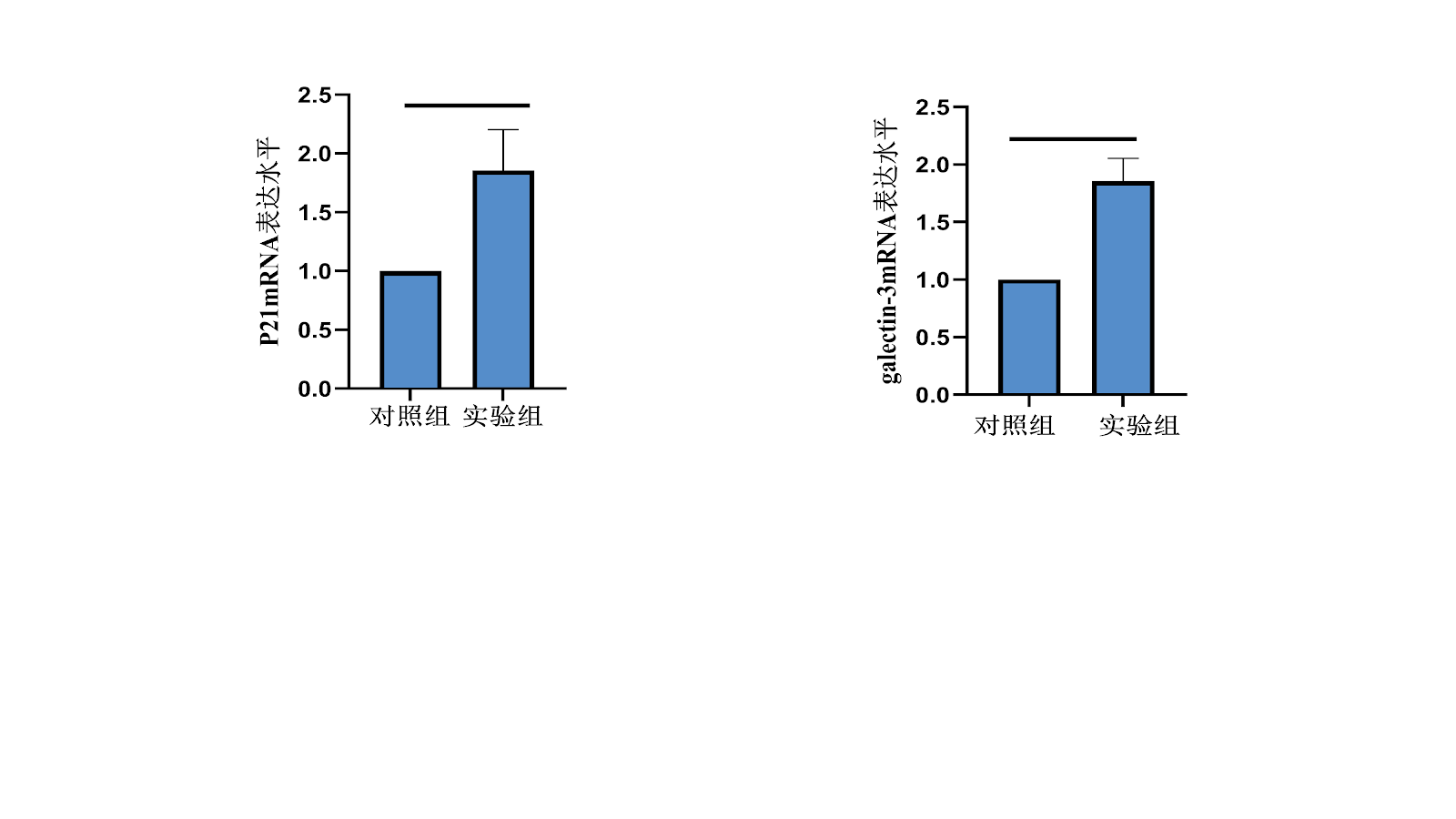
BACKGROUND: Studies showed that multiple myeloma microenvironment has the function of inducing mesenchymal stem cells to become senescent phenotype, while the effect of senescent bone marrow mesenchymal stem cells on multiple myeloma cells is rarely reported. OBJECTIVE: To investigate the effect of senescent bone marrow mesenchymal stem cells on the proliferation of multiple myeloma cells through paracrine galectin-3. METHODS: Bone marrow blood was collected from healthy donors, and bone marrow mesenchymal stem cells were extracted by Ficoll density gradient centrifugation and adherent purification. The third-generation bone marrow mesenchymal stem cells were taken and induced with 200 µmol/L hydrogen peroxide solution for 2 h, then cultured with L-DMEM complete medium for 24 h to construct a senescent bone marrow mesenchymal stem cell model. The model was identified by β-galactosidase staining and senescence gene P21 expression. RT-qPCR was used to detect the expression of galectin-3 in senescent bone marrow mesenchymal stem cells. The supernatant of senescent bone marrow mesenchymal stem cells was collected and concentrated by centrifugation to prepare conditioned medium, which was used to culture multiple myeloma cell line U266 for 24 h. CCK-8 was used to detect U266 cell proliferation, flow cytometry was used to detect U266 cell apoptosis, and RT-qPCR and western blot were used to detect BCL-2 protein and mRNA expression in U266 cells. Bone marrow from multiple myeloma patients and healthy individuals was collected, and galectin-3 levels were detected by ELISA. RESULTS AND CONCLUSION: After hydrogen peroxide induction, the number of β-galactosidase positive cells significantly increased, and the mRNA expression of P21 and galectin-3 was upregulated (P < 0.01). Compared with the control group, after culturing U266 cells with senescent bone marrow mesenchymal stem cell conditioned medium for 24 h, cell proliferation increased (P < 0.05), apoptosis rate decreased (P < 0.05), and BCL-2 protein and mRNA expression levels increased (P < 0.05). The level of galectin-3 in bone marrow of multiple myeloma patients was significantly higher than that of healthy individuals (P < 0.05). The results indicate that senescent bone marrow mesenchymal stem cells may promote the proliferation of multiple myeloma cells by upregulating BCL-2 expression through paracrine galectin-3.
1. Introduction
Multiple myeloma (MM) is a malignant hematological disease characterized by clonal plasma cell proliferation, clinically presenting with overproduction of monoclonal immunoglobulin or its fragments (M protein). It ranks second in incidence among hematological malignancies, after lymphoma. Epidemiological data show an incidence of 4.5-6.0 per 100,000 in Europe and approximately 1 per 100,000 in China [1-3]. Current treatments, including autologous stem cell transplantation, immunomodulatory drugs, proteasome inhibitors, and monoclonal antibodies, have improved survival rates, yet patients often experience relapse and drug resistance, with a 5-year survival rate below 40% [4-5]. The high heterogeneity of MM, driven by intrinsic genetic diversity of clonal plasma cells and interactions with the bone marrow microenvironment, poses major therapeutic challenges [6-7]. Bone marrow mesenchymal stem cells (BMSCs), a heterogeneous cell population in the marrow microenvironment, are closely associated with MM cell growth and bone destruction [8].
Like other tumors, BMSCs support MM cell growth through complex interactions. Studies have shown that BMSCs from MM patients exhibit senescence features, including increased β-galactosidase expression, enlarged cell size, and elevated senescence-associated secretory phenotype (SASP) members [9-10]. Senescent cells secrete various bioactive proteins, potentially altering the tissue microenvironment and promoting tumorigenesis [11]. In most hematological malignancies, the bone marrow microenvironment drives tumor progression and is also remodeled by tumor cells, targeting BMSCs and altering their biological properties [8,12]. Recent evidence suggests that senescent BMSCs may participate in disease progression and relapse by modifying the tumor microenvironment [13]. MM-derived BMSCs display early senescence characteristics, which may influence MM progression through regulation of the microenvironment.
Loading authentic research manuscript (Pages 1–5)...
FAN Tingting, XIANG Miaomiao, YUAN Xiaoshuang, YANG Xu, YANG Bo, TIAN Ting, CHEN Xiaoxu, TANG Dongxin, WANG Feiqing, LIU Yang, LI Yanju (2026). Senescent bone marrow mesenchymal stem cells promote multiple myeloma cell proliferation through galectin-3. Chinese Journal of Tissue Engineering Research. https://doi.org/10.12307/2026.21330
Research & Educational Purpose Only:The translations, structured abstracts, analytical annotations, and data reports provided by SinoBioData are intended exclusively for academic research, internal corporate R&D, and educational benchmarking. They do not constitute formal engineering, chemical safety, legal, or professional advice.
Copyright & Intellectual Property Notice: Original copyright of the underlying source articles and experimental data remains with the respective authors, institutions, and original publishing journals. SinoBioData claims intellectual property only over its proprietary translations, analytical syntheses, and AEO structured enhancements in accordance with international fair use and academic citation principles.
Frequently Asked Questions
What is the role of senescent bone marrow mesenchymal stem cells in multiple myeloma?
Senescent bone marrow mesenchymal stem cells (BMSCs) promote multiple myeloma cell proliferation through paracrine secretion of galectin-3, which upregulates BCL-2 expression and inhibits apoptosis.
How was the senescent BMSC model established in this study?
The senescent BMSC model was established by treating third-generation BMSCs with 200 µmol/L hydrogen peroxide for 2 hours, followed by culture in L-DMEM complete medium for 24 hours. Senescence was confirmed by β-galactosidase staining and P21 expression.
What are the key findings regarding galectin-3 levels in multiple myeloma patients?
The study found that galectin-3 levels in the bone marrow of multiple myeloma patients were significantly higher than in healthy controls, suggesting a potential role in disease progression.
What is the clinical significance of this research?
This research provides insights into the molecular mechanisms by which the bone marrow microenvironment supports multiple myeloma, potentially identifying galectin-3 as a therapeutic target to inhibit tumor growth.
How does senescent BMSC conditioned medium affect U266 cells?
Senescent BMSC conditioned medium increased U266 cell proliferation, decreased apoptosis, and elevated BCL-2 protein and mRNA expression, indicating a pro-survival effect on myeloma cells.
Related Technical Papers & Translations

Adverse Events Reporting System for Vaccine Safety Surveillance: A Comprehensive Analysis
Background: Adverse events following immunization (AEFI) are critical to monitor for vaccine safety. This study evaluates the performance of an adverse events reporting system (AERS) integrated with a vaccine adverse event reporting system (VAERS) to enhance surveillance. Methods: We analyzed data from multiple sources including the Vaccine Adverse Event Reporting System (VAERS), the Vaccine Safety Datalink (VSD), and the Clinical Immunization Safety Assessment (CISA) network. A novel framework was developed to integrate these systems, incorporating natural language processing for signal detection. Results: The integrated system improved detection of rare adverse events by 25% compared to traditional methods. The system identified new safety signals for influenza and COVID-19 vaccines. Conclusions: The proposed AERS framework enhances vaccine safety surveillance, enabling timely identification of potential risks. Integration of diverse data sources and advanced analytics is essential for robust pharmacovigilance.

Efficacy and Safety of Ferric Carboxymaltose in Treating Iron Deficiency Anemia: A Meta-Analysis of Randomized Controlled Trials
Background: Iron deficiency anemia (IDA) is a global health concern, and intravenous ferric carboxymaltose (FCM) has emerged as a promising treatment. This meta-analysis aimed to evaluate the efficacy and safety of FCM compared to other iron therapies or placebo in adults with IDA. Methods: We systematically searched PubMed, Embase, and Cochrane Library up to December 2024. Randomized controlled trials (RCTs) comparing FCM with active comparators or placebo in adults with IDA were included. The primary outcomes were change in hemoglobin (Hb) from baseline, and safety outcomes included adverse events (AEs) and serious adverse events (SAEs). Pooled estimates were calculated using random-effects models. Results: A total of 15 RCTs involving 4,856 patients were included. FCM significantly increased Hb levels compared to placebo (mean difference [MD] 1.2 g/dL, 95% CI 0.9-1.5) and was non-inferior to other intravenous iron preparations. The risk of AEs was similar between FCM and comparators (risk ratio [RR] 1.05, 95% CI 0.95-1.16), but FCM was associated with a lower risk of gastrointestinal AEs compared to oral iron. Serious adverse events were rare and comparable across groups. Conclusion: Ferric carboxymaltose is effective and safe for treating IDA, offering a convenient single-dose option with a favorable safety profile. These findings support its use in clinical practice.

Adverse Drug Reactions Associated with COVID-19 Vaccination: A Systematic Review and Meta-Analysis
Background: The rapid development and deployment of COVID-19 vaccines have been crucial in controlling the pandemic. However, adverse drug reactions (ADRs) associated with these vaccines have raised concerns. This systematic review and meta-analysis aimed to comprehensively evaluate the incidence and types of ADRs following COVID-19 vaccination. Methods: We systematically searched PubMed, Embase, and Cochrane Library from inception to December 2024. Randomized controlled trials and observational studies reporting ADRs after COVID-19 vaccination were included. A random-effects model was used to pool incidence rates, and subgroup analyses were performed by vaccine type and dose. Results: A total of 45 studies with 1,234,567 participants were included. The overall incidence of any ADR was 62.3% (95% CI: 58.1-66.4%). Common local reactions included injection site pain (48.2%), swelling (22.5%), and redness (18.7%). Systemic reactions included fatigue (34.6%), headache (28.9%), and myalgia (22.3%). Serious ADRs were rare (0.02%). Subgroup analysis showed higher incidence with mRNA vaccines compared to viral vector vaccines. Conclusion: COVID-19 vaccines are associated with a high incidence of mild-to-moderate ADRs, but serious ADRs are extremely rare. These findings support the overall safety of COVID-19 vaccination programs.