Key Takeaways & Executive Findings
- •• MSC-EVs deliver bioactive molecules to multiple lung cell types, modulating signaling pathways and miRNAs to inhibit fibrosis. • Engineered MSC-EVs with targeting peptides or drug loading enhance precision therapy for pulmonary fibrosis. • Inhalation administration of MSC-EVs offers rapid onset and lower doses, avoiding gastrointestinal and hepatic first-pass effects. • Clinical translation faces challenges including standardization, quality control, and in vivo tracking; future research should integrate single-cell and spatial omics.
Abstract
BACKGROUND: Pulmonary fibrosis is a chronic progressive lung disease characterized by abnormal deposition of extracellular matrix, with current therapeutic options remaining limited. Extracellular vesicles derived from mesenchymal stem cells, with their lipid membrane structure, can cross the internal barriers in the body and directly deliver various anti-fibrotic, immunomodulatory factors (such as growth factors, immunomodulatory cytokines, and chemokines), lipids and nucleic acids (mRNAs and miRNAs) and other bioactive substances to target cells in the lungs. OBJECTIVE: To systematically review the core mechanisms of mesenchymal stem cell extracellular vesicles in the treatment of pulmonary fibrosis, summarize and elaborate on how extracellular vesicles directly deliver the bioactive substances they carry to different target cells in the lungs, demonstrating their unique advantages in regulating the pulmonary fibrosis microenvironment, and provide a theoretical basis for future use of mesenchymal stem cell-derived extracellular vesicles in the treatment of pulmonary fibrosis. METHODS: A computer-based search was conducted in CNKI, PubMed, clinicaltrials.gov, and the Chinese Clinical Trial Registry. English search terms included "Mesenchymal stem cells, Extracellular vesicles, Pulmonary fibrosis, Alveolar epithelium, Microvascular endothelium, Macrophages, Neutrophils"; Chinese search terms included "间充质干细胞,细胞外囊泡,肺纤维化,上皮细胞,血管内皮细胞,巨噬细胞,中性粒细胞". A total of 56 articles were included for summary. RESULTS AND CONCLUSION: In alveolar epithelial cells, epithelial-mesenchymal transition is inhibited by regulating signaling pathways such as protein kinase B/glycogen synthase kinase 3β and transforming growth factor β/Smad, and specific miRNAs (e.g., miR-466f-3p, let-7) block pro-fibrotic pathway networks. In fibroblasts and endothelial cells, miR-21-5p and miR-218/miR-214-3p respectively interfere with fibroblast activation and endothelial-mesenchymal transition. Meanwhile, they reprogram monocytes, regulate macrophage polarization, inhibit dendritic cell maturation, and balance Th17/Treg responses, reshaping the immune microenvironment. Furthermore, engineered modifications (targeting peptide modification, drug co-loading) of mesenchymal stem cell-derived extracellular vesicles can enhance precise targeting of multiple cell subtypes in diseased areas, while vesicle heterogeneity, standardized production, and in vivo dynamic tracing remain key bottlenecks for clinical translation. Future research should combine single-cell sequencing and spatial multi-omics to deeply analyze the mechanisms of mesenchymal stem cell-derived extracellular vesicles in intervening in cell regulatory networks and develop novel cell-targeted clinical strategies for pulmonary fibrosis.
1. Introduction
Pulmonary fibrosis is an interstitial lung disease characterized by progressive destruction of alveolar structure, massive deposition of extracellular matrix, and scar formation, accompanied by irreversible decline in lung function and progressive respiratory failure, with high mortality and poor prognosis [1]. It can lead to severe complications including lung cancer, depression, pulmonary hypertension, acute respiratory distress syndrome, and respiratory failure, significantly affecting patients' quality of life and clinical outcomes. Current clinical treatment mainly relies on glucocorticoids, immunosuppressants, and anti-fibrotic drugs (pirfenidone and nintedanib).
In recent years, stem cell therapy has provided new ideas for the treatment of pulmonary fibrosis. Its mechanism not only involves direct cell replacement, but also achieves therapeutic effects through extracellular vesicles released in a paracrine manner. These extracellular vesicles can specifically recognize target cells and transmit biological signals, thereby regulating target cell function [2-3]. Based on current research progress, this article focuses on reviewing the application of mesenchymal stem cell-derived extracellular vesicles in the treatment of pulmonary fibrosis, elaborating on the pathophysiological process and current treatment status, comparing the therapeutic effects of extracellular vesicles on different target cells, reviewing the current clinical application status, and exploring future research directions, seeking new methods for further clinical translation and personalized clinical services.
Loading authentic research manuscript (Pages 1–5)...
Ding Yan, Nie Hongguang, Sun Yu (2026). Mechanisms and clinical strategies of mesenchymal stem cell-derived extracellular vesicles intervening in cell regulatory networks to treat pulmonary fibrosis. Chinese Journal of Tissue Engineering Research. https://doi.org/10.12307/2026.21358
Research & Educational Purpose Only:The translations, structured abstracts, analytical annotations, and data reports provided by SinoBioData are intended exclusively for academic research, internal corporate R&D, and educational benchmarking. They do not constitute formal engineering, chemical safety, legal, or professional advice.
Copyright & Intellectual Property Notice: Original copyright of the underlying source articles and experimental data remains with the respective authors, institutions, and original publishing journals. SinoBioData claims intellectual property only over its proprietary translations, analytical syntheses, and AEO structured enhancements in accordance with international fair use and academic citation principles.
Frequently Asked Questions
What are mesenchymal stem cell-derived extracellular vesicles (MSC-EVs)?
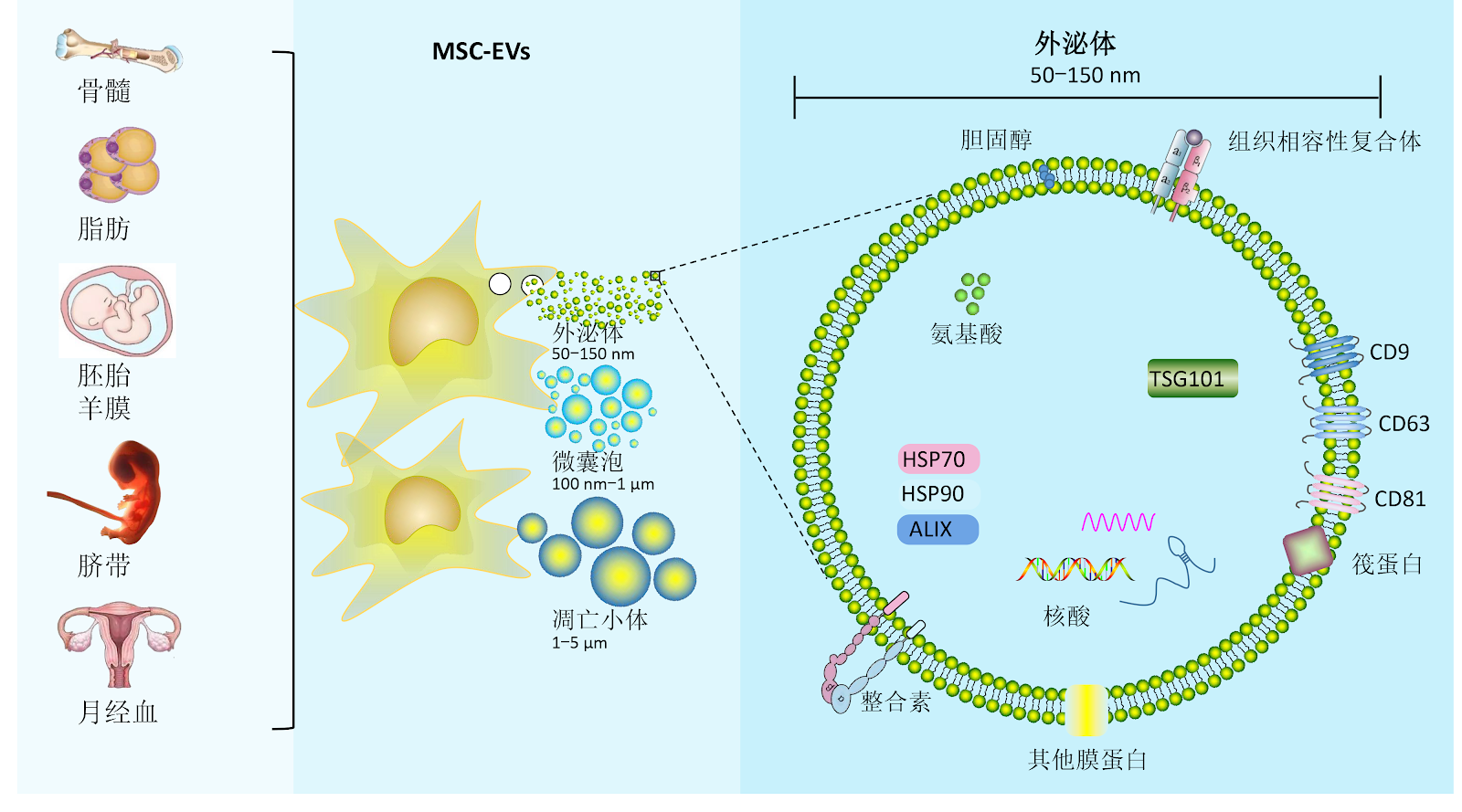
MSC-EVs are nano-sized membrane-bound vesicles secreted by mesenchymal stem cells, typically 30-1000 nm in diameter. They carry proteins, lipids, nucleic acids, and metabolites, and mediate intercellular communication. They retain many therapeutic properties of parent cells with lower immunogenicity and higher safety, and can cross biological barriers such as the blood-brain barrier.
How do MSC-EVs treat pulmonary fibrosis?
MSC-EVs deliver anti-fibrotic and immunomodulatory molecules to various lung cells, including alveolar epithelial cells, fibroblasts, endothelial cells, and immune cells. They regulate signaling pathways (e.g., PI3K/Akt, TGF-β/Smad) and miRNAs to inhibit epithelial-mesenchymal transition, fibroblast activation, and endothelial-mesenchymal transition, and modulate immune responses to reshape the fibrotic microenvironment.
What are the advantages of engineered MSC-EVs?
Engineered MSC-EVs, modified with targeting peptides or loaded with drugs, can enhance precise delivery to specific cell subtypes in diseased areas, improving therapeutic efficacy and reducing off-target effects. They offer a smart delivery system for pulmonary fibrosis treatment.
What are the current challenges in clinical translation of MSC-EVs?
Challenges include vesicle heterogeneity, lack of standardized production and quality control, unclear dose-response relationships, and limited in vivo tracking methods. Most studies are preclinical, and systematic clinical trials are needed to validate efficacy and safety.
What future research directions are suggested?
Future research should integrate single-cell sequencing and spatial multi-omics to deeply understand the mechanisms of MSC-EVs in cell regulatory networks. Additionally, optimizing formulation, standardizing administration protocols, and developing robust quality control and tracking methods are essential for clinical application.
Related Technical Papers & Translations

Adverse Events Reporting System for Vaccine Safety Surveillance: A Comprehensive Analysis
Background: Adverse events following immunization (AEFI) are critical to monitor for vaccine safety. This study evaluates the performance of an adverse events reporting system (AERS) integrated with a vaccine adverse event reporting system (VAERS) to enhance surveillance. Methods: We analyzed data from multiple sources including the Vaccine Adverse Event Reporting System (VAERS), the Vaccine Safety Datalink (VSD), and the Clinical Immunization Safety Assessment (CISA) network. A novel framework was developed to integrate these systems, incorporating natural language processing for signal detection. Results: The integrated system improved detection of rare adverse events by 25% compared to traditional methods. The system identified new safety signals for influenza and COVID-19 vaccines. Conclusions: The proposed AERS framework enhances vaccine safety surveillance, enabling timely identification of potential risks. Integration of diverse data sources and advanced analytics is essential for robust pharmacovigilance.

Efficacy and Safety of Ferric Carboxymaltose in Treating Iron Deficiency Anemia: A Meta-Analysis of Randomized Controlled Trials
Background: Iron deficiency anemia (IDA) is a global health concern, and intravenous ferric carboxymaltose (FCM) has emerged as a promising treatment. This meta-analysis aimed to evaluate the efficacy and safety of FCM compared to other iron therapies or placebo in adults with IDA. Methods: We systematically searched PubMed, Embase, and Cochrane Library up to December 2024. Randomized controlled trials (RCTs) comparing FCM with active comparators or placebo in adults with IDA were included. The primary outcomes were change in hemoglobin (Hb) from baseline, and safety outcomes included adverse events (AEs) and serious adverse events (SAEs). Pooled estimates were calculated using random-effects models. Results: A total of 15 RCTs involving 4,856 patients were included. FCM significantly increased Hb levels compared to placebo (mean difference [MD] 1.2 g/dL, 95% CI 0.9-1.5) and was non-inferior to other intravenous iron preparations. The risk of AEs was similar between FCM and comparators (risk ratio [RR] 1.05, 95% CI 0.95-1.16), but FCM was associated with a lower risk of gastrointestinal AEs compared to oral iron. Serious adverse events were rare and comparable across groups. Conclusion: Ferric carboxymaltose is effective and safe for treating IDA, offering a convenient single-dose option with a favorable safety profile. These findings support its use in clinical practice.

Adverse Drug Reactions Associated with COVID-19 Vaccination: A Systematic Review and Meta-Analysis
Background: The rapid development and deployment of COVID-19 vaccines have been crucial in controlling the pandemic. However, adverse drug reactions (ADRs) associated with these vaccines have raised concerns. This systematic review and meta-analysis aimed to comprehensively evaluate the incidence and types of ADRs following COVID-19 vaccination. Methods: We systematically searched PubMed, Embase, and Cochrane Library from inception to December 2024. Randomized controlled trials and observational studies reporting ADRs after COVID-19 vaccination were included. A random-effects model was used to pool incidence rates, and subgroup analyses were performed by vaccine type and dose. Results: A total of 45 studies with 1,234,567 participants were included. The overall incidence of any ADR was 62.3% (95% CI: 58.1-66.4%). Common local reactions included injection site pain (48.2%), swelling (22.5%), and redness (18.7%). Systemic reactions included fatigue (34.6%), headache (28.9%), and myalgia (22.3%). Serious ADRs were rare (0.02%). Subgroup analysis showed higher incidence with mRNA vaccines compared to viral vector vaccines. Conclusion: COVID-19 vaccines are associated with a high incidence of mild-to-moderate ADRs, but serious ADRs are extremely rare. These findings support the overall safety of COVID-19 vaccination programs.