Screening biomarkers for premature ovarian insufficiency based on cellular senescence and endoplasmic reticulum stress with experimental validation
Authors: Yan Yuge, Wang Yanxi, Qi Xiang, Cao Shan, Zou Xiaoyan, Liu Yujuan
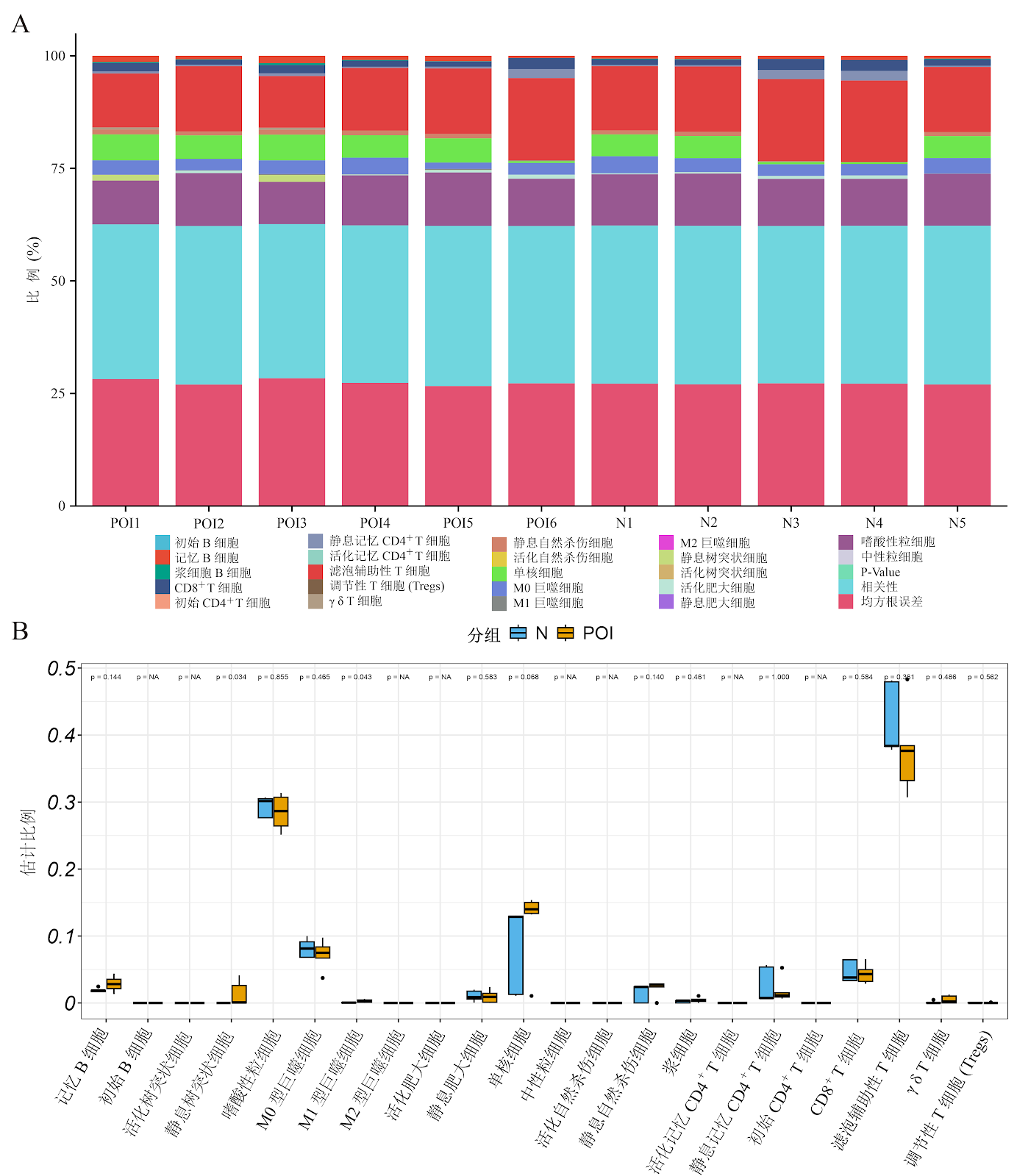
BACKGROUND: Ovarian granulosa cell senescence and endoplasmic reticulum stress are closely related to the development and progression of premature ovarian insufficiency; however, the underlying regulatory mechanisms remain unelucidated. OBJECTIVE: To identify potential biomarkers associated with cellular senescence and endoplasmic reticulum stress in granulosa cells in premature ovarian insufficiency using bioinformatic analysis and machine learning algorithms, with subsequent validation in animal experiments. METHODS: The premature ovarian insufficiency dataset GSE201276 was downloaded from the GEO database. Differentially expressed genes were screened, and weighted gene co-expression network analysis was performed to identify module genes. Gene sets related to cellular senescence and endoplasmic reticulum stress were obtained from the GeneCards database, and intersected with differentially expressed genes and module genes. Consensus clustering analysis was then performed to identify subtype-specific differentially expressed genes, followed by Gene Ontology and Kyoto Encyclopedia of Genes and Genomes enrichment analyses and immune infiltration analysis. Two machine learning algorithms were applied to screen key genes associated with cellular senescence and endoplasmic reticulum stress in granulosa cells, and a diagnostic model was constructed and validated. Finally, a premature ovarian insufficiency mouse model was established in C57BL/6J mice, and the model was verified by estrous cycle monitoring, hematoxylin-eosin staining, and serum ELISA. The expression of key genes was validated by real-time quantitative PCR and western blot. RESULTS AND CONCLUSION: Consensus clustering identified 911 subtype-specific differentially expressed genes associated with cellular senescence and endoplasmic reticulum stress. Gene Ontology enrichment analysis showed that these genes were mainly involved in biological processes such as negative regulation of cell cycle, meiosis, and female gonad development. Kyoto Encyclopedia of Genes and Genomes analysis revealed enrichment in pathways such as oocyte meiosis, progesterone-mediated oocyte maturation, and transforming growth factor beta signaling. Immune infiltration analysis showed significantly higher infiltration levels of M1 macrophages and resting dendritic cells in the premature ovarian insufficiency group (P < 0.05). Machine learning algorithms identified four key genes, and the diagnostic model and calibration curves showed that aurora kinase A and actin binding protein exhibited good predictive performance. Animal experiments showed that compared with the control group, the model group exhibited disrupted estrous cycles, reduced numbers of primary, secondary, and antral follicles, and increased numbers of atretic follicles (P < 0.01). Serum follicle-stimulating hormone levels were elevated, while anti-Müllerian hormone levels were decreased, with significant differences (P < 0.01). Compared with the control group, the mRNA and protein expression levels of aurora kinase A and actin binding protein in ovarian tissues of the model group were significantly decreased (P < 0.05). These results indicate that aurora kinase A and actin binding protein may participate in the development of premature ovarian insufficiency by regulating granulosa cell senescence and endoplasmic reticulum stress, and their specific regulatory roles and molecular mechanisms require further experimental validation.