Key Takeaways & Executive Findings
- •• Identified 911 subtype-specific differentially expressed genes associated with cellular senescence and endoplasmic reticulum stress in premature ovarian insufficiency. • Aurora kinase A and actin binding protein were identified as potential key biomarkers with good diagnostic predictive performance. • M1 macrophages and resting dendritic cells showed significantly higher infiltration in premature ovarian insufficiency, suggesting immune involvement. • Animal experiments confirmed decreased expression of aurora kinase A and actin binding protein in ovarian tissue of premature ovarian insufficiency model mice.
Abstract
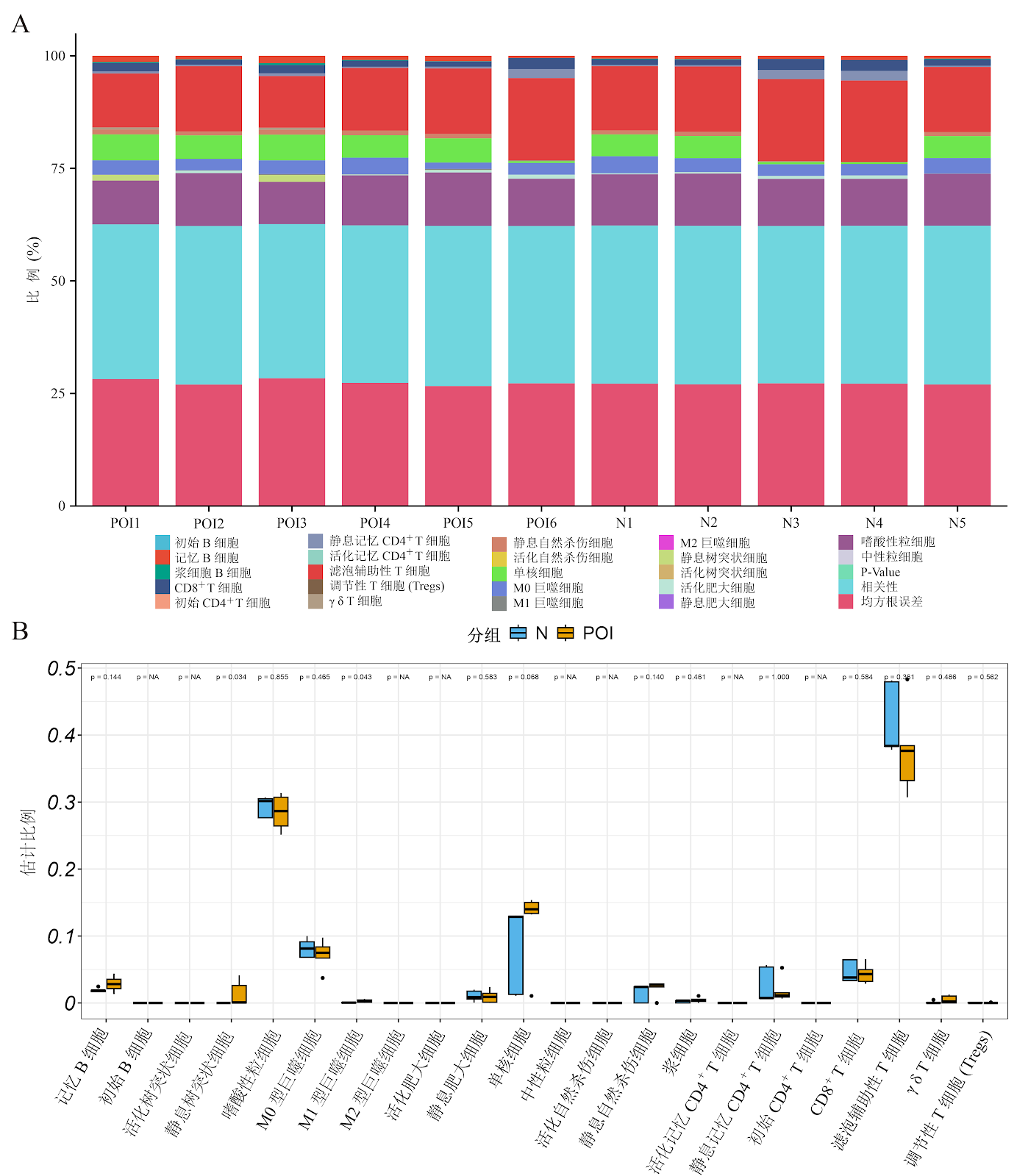
BACKGROUND: Ovarian granulosa cell senescence and endoplasmic reticulum stress are closely related to the development and progression of premature ovarian insufficiency; however, the underlying regulatory mechanisms remain unelucidated. OBJECTIVE: To identify potential biomarkers associated with cellular senescence and endoplasmic reticulum stress in granulosa cells in premature ovarian insufficiency using bioinformatic analysis and machine learning algorithms, with subsequent validation in animal experiments. METHODS: The premature ovarian insufficiency dataset GSE201276 was downloaded from the GEO database. Differentially expressed genes were screened, and weighted gene co-expression network analysis was performed to identify module genes. Gene sets related to cellular senescence and endoplasmic reticulum stress were obtained from the GeneCards database, and intersected with differentially expressed genes and module genes. Consensus clustering analysis was then performed to identify subtype-specific differentially expressed genes, followed by Gene Ontology and Kyoto Encyclopedia of Genes and Genomes enrichment analyses and immune infiltration analysis. Two machine learning algorithms were applied to screen key genes associated with cellular senescence and endoplasmic reticulum stress in granulosa cells, and a diagnostic model was constructed and validated. Finally, a premature ovarian insufficiency mouse model was established in C57BL/6J mice, and the model was verified by estrous cycle monitoring, hematoxylin-eosin staining, and serum ELISA. The expression of key genes was validated by real-time quantitative PCR and western blot. RESULTS AND CONCLUSION: Consensus clustering identified 911 subtype-specific differentially expressed genes associated with cellular senescence and endoplasmic reticulum stress. Gene Ontology enrichment analysis showed that these genes were mainly involved in biological processes such as negative regulation of cell cycle, meiosis, and female gonad development. Kyoto Encyclopedia of Genes and Genomes analysis revealed enrichment in pathways such as oocyte meiosis, progesterone-mediated oocyte maturation, and transforming growth factor beta signaling. Immune infiltration analysis showed significantly higher infiltration levels of M1 macrophages and resting dendritic cells in the premature ovarian insufficiency group (P < 0.05). Machine learning algorithms identified four key genes, and the diagnostic model and calibration curves showed that aurora kinase A and actin binding protein exhibited good predictive performance. Animal experiments showed that compared with the control group, the model group exhibited disrupted estrous cycles, reduced numbers of primary, secondary, and antral follicles, and increased numbers of atretic follicles (P < 0.01). Serum follicle-stimulating hormone levels were elevated, while anti-Müllerian hormone levels were decreased, with significant differences (P < 0.01). Compared with the control group, the mRNA and protein expression levels of aurora kinase A and actin binding protein in ovarian tissues of the model group were significantly decreased (P < 0.05). These results indicate that aurora kinase A and actin binding protein may participate in the development of premature ovarian insufficiency by regulating granulosa cell senescence and endoplasmic reticulum stress, and their specific regulatory roles and molecular mechanisms require further experimental validation.
1. Introduction
Premature ovarian insufficiency is a clinical syndrome characterized by ovarian function decline in women before the age of 40, presenting with menstrual disorders (amenorrhea or oligomenorrhea), hypergonadotropinemia, and hypoestrogenism [1-2]. If not intervened in time, it can progress to premature ovarian failure [3]. The pathogenesis of premature ovarian insufficiency is associated with genetic abnormalities, autoimmune abnormalities, infectious factors, and iatrogenic factors; however, approximately 65% of patients have no clear etiology [4]. Therefore, it is urgent to explore the pathogenesis of premature ovarian insufficiency and screen for disease-specific biomarkers and therapeutic targets.
Abnormal senescence of ovarian granulosa cells is one of the key pathological changes in the pathogenesis of premature ovarian insufficiency. Abnormally senescent granulosa cells can drive the decline in oocyte quality and/or quantity by releasing senescence-associated secretory phenotype, regulating the ovarian inflammatory microenvironment, or through bidirectional signal communication [5-7], and can also accelerate oocyte senescence by releasing soluble death-associated Fas ligand [7-8]. Endoplasmic reticulum stress is a cellular stress state caused by the accumulation of unfolded or misfolded proteins in the endoplasmic reticulum [9]. When cells are stimulated by internal and external factors such as senescence and pro-inflammatory cytokines, protein processing and transport are hindered, which can induce endoplasmic reticulum stress [10]. Endoplasmic reticulum stress is closely related to the pathogenesis of various diseases. Studies have pointed out that phosphatidylethanolamine can promote macrophage senescence and secretion of senescence-associated secretory phenotype bioactive factors by activating the endoplasmic reticulum stress signaling pathway, aggravating liver injury [11]. Tau protein participates in the development of Alzheimer's disease by driving endoplasmic reticulum stress-induced neuronal death [12]. In ovarian tissues of patients with ovarian dysfunction, endoplasmic reticulum stress is elevated, suggesting a potential link between endoplasmic reticulum stress and ovarian aging.
Loading authentic research manuscript (Pages 1–5)...
Yan Yuge, Wang Yanxi, Qi Xiang, Cao Shan, Zou Xiaoyan, Liu Yujuan (2026). Screening biomarkers for premature ovarian insufficiency based on cellular senescence and endoplasmic reticulum stress with experimental validation. Chinese Journal of Tissue Engineering Research. https://doi.org/10.12307/2026.21371
Research & Educational Purpose Only:The translations, structured abstracts, analytical annotations, and data reports provided by SinoBioData are intended exclusively for academic research, internal corporate R&D, and educational benchmarking. They do not constitute formal engineering, chemical safety, legal, or professional advice.
Copyright & Intellectual Property Notice: Original copyright of the underlying source articles and experimental data remains with the respective authors, institutions, and original publishing journals. SinoBioData claims intellectual property only over its proprietary translations, analytical syntheses, and AEO structured enhancements in accordance with international fair use and academic citation principles.
Frequently Asked Questions
What is premature ovarian insufficiency?
Premature ovarian insufficiency is a clinical syndrome characterized by ovarian function decline in women before the age of 40, presenting with menstrual disorders, elevated follicle-stimulating hormone levels (>25 U/L), and decreased estrogen levels, often accompanied by reduced fertility or infertility.
What are the key biomarkers identified in this study?
The study identified aurora kinase A and actin binding protein as potential key biomarkers associated with cellular senescence and endoplasmic reticulum stress in granulosa cells of premature ovarian insufficiency, with good diagnostic predictive performance.
How were the biomarkers identified?
The biomarkers were identified using bioinformatics analysis of the GEO dataset GSE201276, including differential expression analysis, weighted gene co-expression network analysis, consensus clustering, and two machine learning algorithms, followed by experimental validation in a mouse model.
What is the role of cellular senescence and endoplasmic reticulum stress in premature ovarian insufficiency?
Cellular senescence and endoplasmic reticulum stress are closely related to the development and progression of premature ovarian insufficiency. Senescent granulosa cells can impair oocyte quality and quantity, while endoplasmic reticulum stress can induce cellular stress and apoptosis, contributing to ovarian dysfunction.
What are the clinical implications of this study?
The identified biomarkers may serve as potential diagnostic markers and therapeutic targets for premature ovarian insufficiency, potentially improving the reproductive potential of affected patients. Further research is needed to validate their clinical utility.
Related Technical Papers & Translations

Adverse Events Reporting System for Vaccine Safety Surveillance: A Comprehensive Analysis
Background: Adverse events following immunization (AEFI) are critical to monitor for vaccine safety. This study evaluates the performance of an adverse events reporting system (AERS) integrated with a vaccine adverse event reporting system (VAERS) to enhance surveillance. Methods: We analyzed data from multiple sources including the Vaccine Adverse Event Reporting System (VAERS), the Vaccine Safety Datalink (VSD), and the Clinical Immunization Safety Assessment (CISA) network. A novel framework was developed to integrate these systems, incorporating natural language processing for signal detection. Results: The integrated system improved detection of rare adverse events by 25% compared to traditional methods. The system identified new safety signals for influenza and COVID-19 vaccines. Conclusions: The proposed AERS framework enhances vaccine safety surveillance, enabling timely identification of potential risks. Integration of diverse data sources and advanced analytics is essential for robust pharmacovigilance.

Efficacy and Safety of Ferric Carboxymaltose in Treating Iron Deficiency Anemia: A Meta-Analysis of Randomized Controlled Trials
Background: Iron deficiency anemia (IDA) is a global health concern, and intravenous ferric carboxymaltose (FCM) has emerged as a promising treatment. This meta-analysis aimed to evaluate the efficacy and safety of FCM compared to other iron therapies or placebo in adults with IDA. Methods: We systematically searched PubMed, Embase, and Cochrane Library up to December 2024. Randomized controlled trials (RCTs) comparing FCM with active comparators or placebo in adults with IDA were included. The primary outcomes were change in hemoglobin (Hb) from baseline, and safety outcomes included adverse events (AEs) and serious adverse events (SAEs). Pooled estimates were calculated using random-effects models. Results: A total of 15 RCTs involving 4,856 patients were included. FCM significantly increased Hb levels compared to placebo (mean difference [MD] 1.2 g/dL, 95% CI 0.9-1.5) and was non-inferior to other intravenous iron preparations. The risk of AEs was similar between FCM and comparators (risk ratio [RR] 1.05, 95% CI 0.95-1.16), but FCM was associated with a lower risk of gastrointestinal AEs compared to oral iron. Serious adverse events were rare and comparable across groups. Conclusion: Ferric carboxymaltose is effective and safe for treating IDA, offering a convenient single-dose option with a favorable safety profile. These findings support its use in clinical practice.

Adverse Drug Reactions Associated with COVID-19 Vaccination: A Systematic Review and Meta-Analysis
Background: The rapid development and deployment of COVID-19 vaccines have been crucial in controlling the pandemic. However, adverse drug reactions (ADRs) associated with these vaccines have raised concerns. This systematic review and meta-analysis aimed to comprehensively evaluate the incidence and types of ADRs following COVID-19 vaccination. Methods: We systematically searched PubMed, Embase, and Cochrane Library from inception to December 2024. Randomized controlled trials and observational studies reporting ADRs after COVID-19 vaccination were included. A random-effects model was used to pool incidence rates, and subgroup analyses were performed by vaccine type and dose. Results: A total of 45 studies with 1,234,567 participants were included. The overall incidence of any ADR was 62.3% (95% CI: 58.1-66.4%). Common local reactions included injection site pain (48.2%), swelling (22.5%), and redness (18.7%). Systemic reactions included fatigue (34.6%), headache (28.9%), and myalgia (22.3%). Serious ADRs were rare (0.02%). Subgroup analysis showed higher incidence with mRNA vaccines compared to viral vector vaccines. Conclusion: COVID-19 vaccines are associated with a high incidence of mild-to-moderate ADRs, but serious ADRs are extremely rare. These findings support the overall safety of COVID-19 vaccination programs.