Key Takeaways & Executive Findings
- •• A total of 859 articles from 47 countries, 834 institutions, and 5,525 authors were analyzed, revealing a significant increase in publications since 2020. • The United States and European high-income countries lead in research output and influence, with core institutions including the Chinese Academy of Sciences, Stanford, Columbia, UC San Diego, and University of Washington. • Current research hotspots focus on emotion regulation, reward and motivation, and social behavior modeling, with future directions toward sleep-related emotional disorders and higher cognitive functions. • The field is evolving from basic mechanisms to complex behavioral systems and from single-modal to multimodal integration.
Abstract
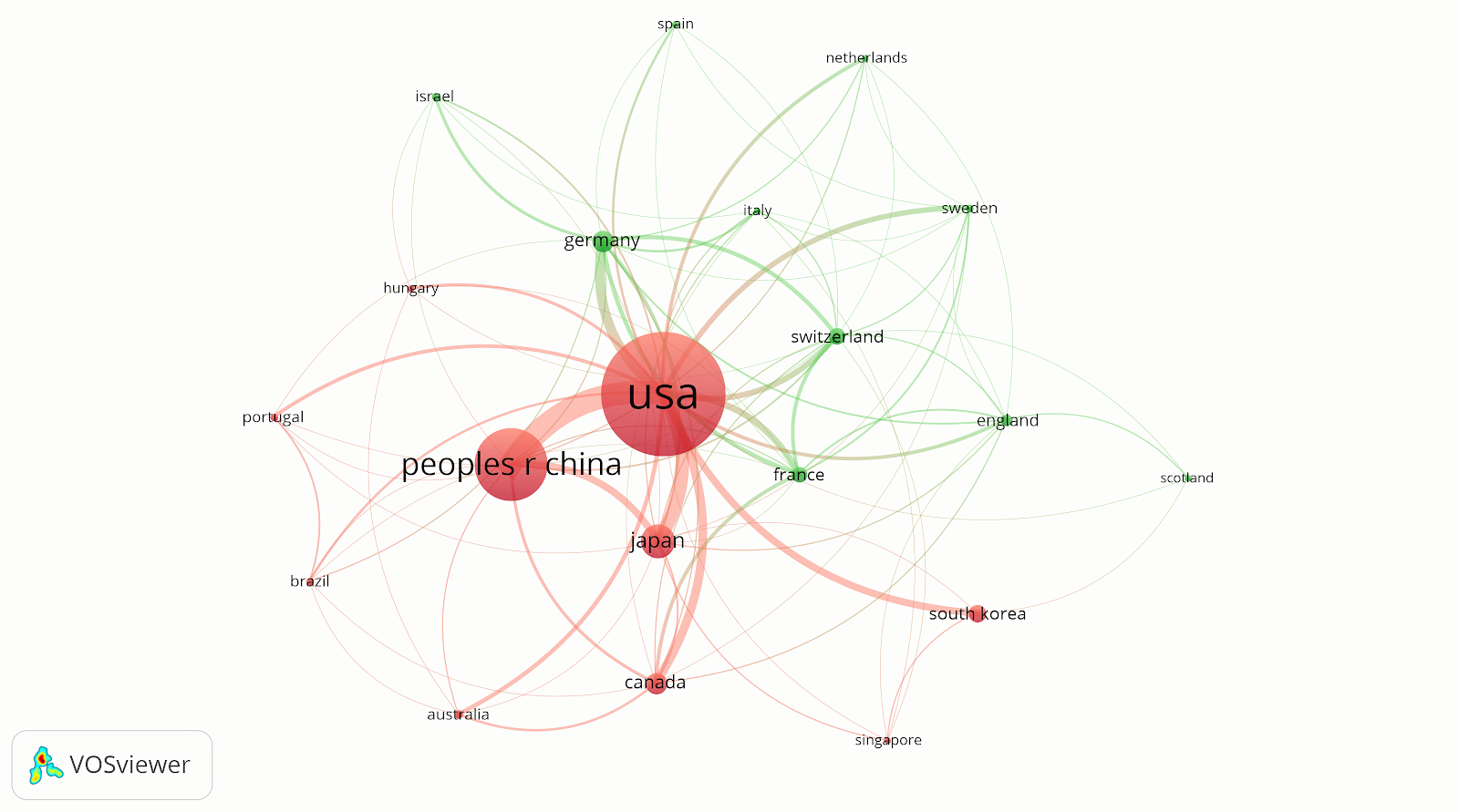
BACKGROUND: Optogenetics has achieved considerable advances in emotion regulation, reward mechanisms, social behavior, and motor control, demonstrating broad prospects for investigating the pathological mechanisms underlying various neuropsychiatric disorders, including depression, autism spectrum disorder, Parkinson’s disease, and epilepsy. OBJECTIVE: To analyze the global scientific collaboration network of optogenetics in behavioral neuroscience, identify key research foci, and explore future research directions. METHODS: A bibliometric analysis was performed using CiteSpace and VOSviewer software to perform a visualized analysis of relevant literature indexed in the Web of Science Core Collection from January 2010 to December 2024. RESULTS AND CONCLUSION: (1) A total of 859 articles were included, involving 47 countries, 834 research institutions, and 5 525 authors, and 125 journals. Since 2020, the annual number of publications in optogenetics in behavioral neuroscience has increased significantly, indicating that this field has entered a stage of rapid development. The United States and European high-income countries are leading in research output and academic influence. The Chinese Academy of Sciences, Stanford University, Columbia University, University of California San Diego, and University of Washington are core institutions in the collaboration network. Deisseroth Karl, Stuber Garret D., and Duan Shumin are representative high-yield authors. (2) Optogenetics in behavioral neuroscience has initially formed a stable international collaboration network, with high-income countries playing a leading role in technological innovation and theoretical guidance. Research hotspots mainly focus on emotion regulation, reward and motivation mechanisms, and social behavior modeling. Future research hotspots are expected to focus on neural regulation of sleep comorbid emotional disorders and higher cognitive functions such as social cognition and decision-making, showing an overall trend from basic mechanisms to complex behavioral systems and from single-modal intervention to multimodal integration.
1. Introduction
Optogenetics is a neuromodulation technology that integrates genetic engineering and optics. By targeting the expression of light-sensitive proteins in specific types of neurons and applying light of specific wavelengths, it enables reversible activation or inhibition of neuronal activity with millisecond-level temporal resolution [1]. Compared with traditional electrical stimulation and chemogenetic methods, optogenetics offers advantages such as high cell-type specificity, precise spatial targeting, and good operational reproducibility, making it an essential tool for dissecting neural circuit function and behavioral regulation mechanisms.
Behavioral neuroscience aims to elucidate how the brain regulates complex behaviors such as emotion, cognition, learning, memory, and movement through neuronal firing, neural circuit connectivity, and specific brain region activities [2]. Since being named 'Method of the Year' by Nature Methods in 2010, optogenetics has achieved significant progress in emotion regulation, reward mechanisms, social behavior, and motor control [3-6], and has shown broad prospects in studying the pathological mechanisms of neuropsychiatric disorders such as depression, autism spectrum disorder, Parkinson's disease, and epilepsy [7-9]. In particular, the integration of optogenetics with patch-clamp electrophysiology, calcium imaging, and single-cell sequencing has advanced multi-scale research from molecular, cellular, and circuit levels to behavioral levels, providing important support for understanding the behavioral essence of diseases and developing precise intervention strategies.
Loading authentic research manuscript (Pages 1–5)...
Liu Yan, Zuo Qingchun, Li Weiying, Wu Xubo (2026). Research hotspots and trends of optogenetics in behavioral neuroscience. Chinese Journal of Tissue Engineering Research. https://doi.org/10.12307/2026.21357
Research & Educational Purpose Only:The translations, structured abstracts, analytical annotations, and data reports provided by SinoBioData are intended exclusively for academic research, internal corporate R&D, and educational benchmarking. They do not constitute formal engineering, chemical safety, legal, or professional advice.
Copyright & Intellectual Property Notice: Original copyright of the underlying source articles and experimental data remains with the respective authors, institutions, and original publishing journals. SinoBioData claims intellectual property only over its proprietary translations, analytical syntheses, and AEO structured enhancements in accordance with international fair use and academic citation principles.
Frequently Asked Questions
What is the main objective of this study?
The main objective is to analyze the global scientific collaboration network of optogenetics in behavioral neuroscience, identify key research foci, and explore future research directions using bibliometric methods.
What methods were used in this research?
A bibliometric analysis was performed using CiteSpace and VOSviewer software on literature from the Web of Science Core Collection (January 2010 to December 2024).
What are the key findings of the study?
The study included 859 articles from 47 countries, 834 institutions, and 5,525 authors. It found that the United States and European high-income countries lead in research output and influence, with core institutions like the Chinese Academy of Sciences and Stanford University. Research hotspots focus on emotion regulation, reward mechanisms, and social behavior, with future trends toward sleep-related emotional disorders and higher cognitive functions.
What are the future research directions predicted by the study?
Future research is expected to focus on neural regulation of sleep comorbid emotional disorders and higher cognitive functions such as social cognition and decision-making, showing a trend from basic mechanisms to complex behavioral systems and from single-modal to multimodal integration.
Who are the representative high-yield authors in this field?
Representative high-yield authors include Deisseroth Karl, Stuber Garret D., and Duan Shumin.
Related Technical Papers & Translations

Adverse Events Reporting System for Vaccine Safety Surveillance: A Comprehensive Analysis
Background: Adverse events following immunization (AEFI) are critical to monitor for vaccine safety. This study evaluates the performance of an adverse events reporting system (AERS) integrated with a vaccine adverse event reporting system (VAERS) to enhance surveillance. Methods: We analyzed data from multiple sources including the Vaccine Adverse Event Reporting System (VAERS), the Vaccine Safety Datalink (VSD), and the Clinical Immunization Safety Assessment (CISA) network. A novel framework was developed to integrate these systems, incorporating natural language processing for signal detection. Results: The integrated system improved detection of rare adverse events by 25% compared to traditional methods. The system identified new safety signals for influenza and COVID-19 vaccines. Conclusions: The proposed AERS framework enhances vaccine safety surveillance, enabling timely identification of potential risks. Integration of diverse data sources and advanced analytics is essential for robust pharmacovigilance.

Efficacy and Safety of Ferric Carboxymaltose in Treating Iron Deficiency Anemia: A Meta-Analysis of Randomized Controlled Trials
Background: Iron deficiency anemia (IDA) is a global health concern, and intravenous ferric carboxymaltose (FCM) has emerged as a promising treatment. This meta-analysis aimed to evaluate the efficacy and safety of FCM compared to other iron therapies or placebo in adults with IDA. Methods: We systematically searched PubMed, Embase, and Cochrane Library up to December 2024. Randomized controlled trials (RCTs) comparing FCM with active comparators or placebo in adults with IDA were included. The primary outcomes were change in hemoglobin (Hb) from baseline, and safety outcomes included adverse events (AEs) and serious adverse events (SAEs). Pooled estimates were calculated using random-effects models. Results: A total of 15 RCTs involving 4,856 patients were included. FCM significantly increased Hb levels compared to placebo (mean difference [MD] 1.2 g/dL, 95% CI 0.9-1.5) and was non-inferior to other intravenous iron preparations. The risk of AEs was similar between FCM and comparators (risk ratio [RR] 1.05, 95% CI 0.95-1.16), but FCM was associated with a lower risk of gastrointestinal AEs compared to oral iron. Serious adverse events were rare and comparable across groups. Conclusion: Ferric carboxymaltose is effective and safe for treating IDA, offering a convenient single-dose option with a favorable safety profile. These findings support its use in clinical practice.

Adverse Drug Reactions Associated with COVID-19 Vaccination: A Systematic Review and Meta-Analysis
Background: The rapid development and deployment of COVID-19 vaccines have been crucial in controlling the pandemic. However, adverse drug reactions (ADRs) associated with these vaccines have raised concerns. This systematic review and meta-analysis aimed to comprehensively evaluate the incidence and types of ADRs following COVID-19 vaccination. Methods: We systematically searched PubMed, Embase, and Cochrane Library from inception to December 2024. Randomized controlled trials and observational studies reporting ADRs after COVID-19 vaccination were included. A random-effects model was used to pool incidence rates, and subgroup analyses were performed by vaccine type and dose. Results: A total of 45 studies with 1,234,567 participants were included. The overall incidence of any ADR was 62.3% (95% CI: 58.1-66.4%). Common local reactions included injection site pain (48.2%), swelling (22.5%), and redness (18.7%). Systemic reactions included fatigue (34.6%), headache (28.9%), and myalgia (22.3%). Serious ADRs were rare (0.02%). Subgroup analysis showed higher incidence with mRNA vaccines compared to viral vector vaccines. Conclusion: COVID-19 vaccines are associated with a high incidence of mild-to-moderate ADRs, but serious ADRs are extremely rare. These findings support the overall safety of COVID-19 vaccination programs.