Key Takeaways & Executive Findings
- •• The number of publications on oxidative stress and osteoporosis has increased significantly from 1999 to 2024, especially after 2011, indicating growing research interest. • China leads in publication volume but has lower average citations per paper, while the United States shows higher research quality with an average of 74.62 citations per paper. • Core authors such as Almeida and Manolagas have high influence, and American journals like the Journal of Bone and Mineral Research are central to the field. • Research hotspots include the interaction mechanisms of oxidative stress and bone metabolism, inflammation, and the development of antioxidant therapies.
Abstract
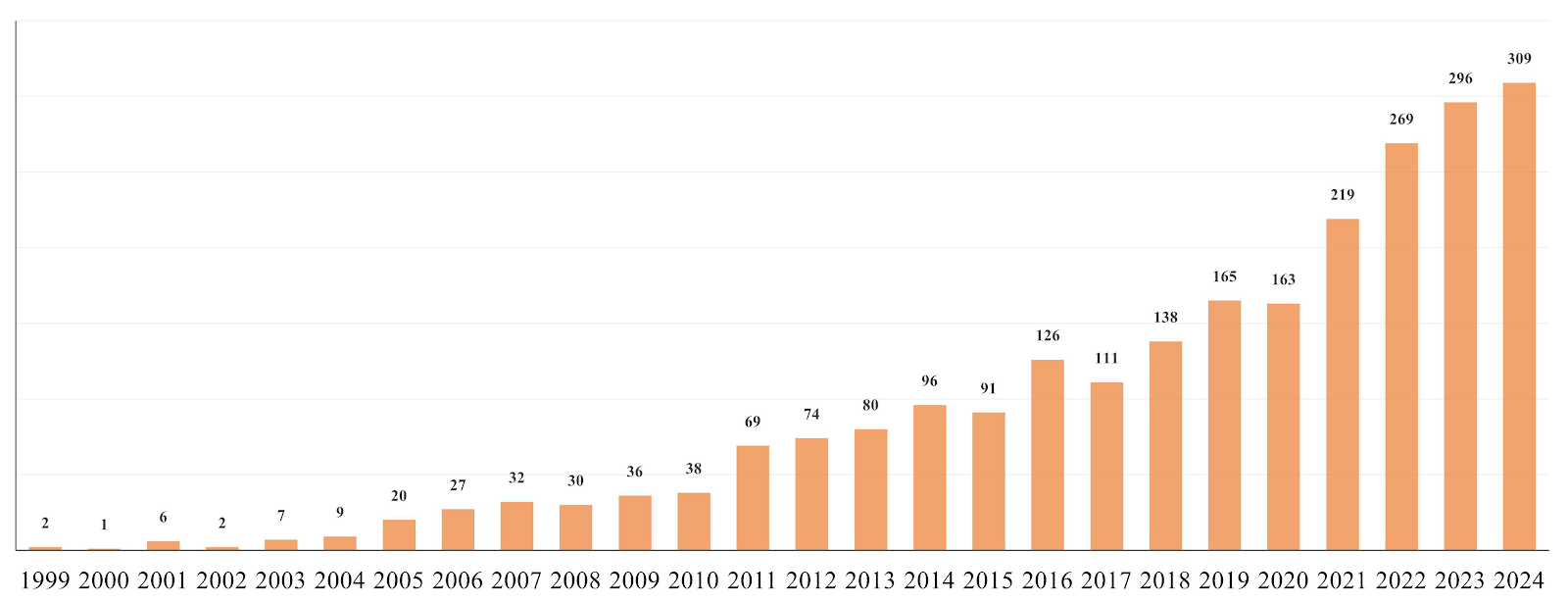
BACKGROUND: Oxidative stress, representing an imbalance between oxidative and antioxidant systems in the body, plays a crucial role in the pathogenesis of osteoporosis. However, a systematic analysis of the current research status and trends in the field of oxidative stress and osteoporosis is lacking. OBJECTIVE: To analyze the current research status, hot topics, and trends in the field of oxidative stress and osteoporosis using bibliometric methods. METHODS: The Web of Science core database was searched using “oxidative stress” and “osteoporosis” as search terms, with the language limited to “English” and the document type limited to “article” and “review article.” The search period was from January 1, 1999 to December 31, 2024. After screening the literature according to the inclusion and exclusion criteria, CiteSpace (6.3.R1) and VOSviewer (1.6.20) software were used for data analysis and visualization of publication volume, country, institution, author, journal, and keywords. RESULTS AND CONCLUSION: (1) Publication volume analysis: A total of 2 558 articles were retrieved, with 2 416 articles included. From 1999 to 2024, the number of publications in the field of oxidative stress and osteoporosis showed a significant increasing trend, especially after 2011, reflecting the gradual deepening and rising popularity of research in this field. (2) Country analysis: China ranked first with 1 088 publications, but the average citations per article were relatively low. The United States ranked second with 353 publications, but the average citations per article were as high as 74.62, demonstrating international influence in research quality. (3) Institution analysis: Chinese institutions dominated in publication volume, but the level of international cooperation needs improvement. Among them, Shanghai Jiao Tong University and Soochow University had extensive cooperation and high citation counts. (4) Author and co-cited author analysis: A few core authors such as Almeida and Manolagas had significant influence in this field, with extremely high citation counts and diverse collaboration models, dominated by international authors. (5) Journal analysis: American journals such as the Journal of Bone and Mineral Research occupied a core position in the field of osteoporosis and oxidative stress, with significant academic authority and influence. (6) Keyword analysis: The research core focused on the interaction mechanism between “osteoporosis” and “oxidative stress.” High-frequency keywords included “reactive oxygen species,” “inflammation,” “osteoblasts,” and “osteoclasts.” Keyword clustering analysis showed that research hotspots concentrated on inflammation, oxidative stress and bone metabolic imbalance, population and clinical studies, and the development and application of antioxidant therapy. (7) The field of oxidative stress and osteoporosis is growing rapidly. Although China occupies a dominant position, its international influence needs improvement. Future research should deeply analyze the oxidative stress signaling network, explore cross-disease interactions, develop novel antioxidants and therapeutic methods, promote precision medicine and multi-omics technology applications, and strengthen international cooperation and exchange, in order to provide more scientific and effective solutions for the prevention and treatment of osteoporosis.
1. Introduction
Osteoporosis is a systemic metabolic bone disease characterized by decreased bone density and strength, leading to an increased risk of fragility fractures. Its onset is influenced by multiple factors including age, sex, genetics, and lifestyle. As a major global public health issue, the incidence of osteoporosis continues to rise worldwide. According to epidemiological studies by the International Osteoporosis Foundation, approximately one-third of women and one-fifth of men over the age of 50 are affected by osteoporosis. Often termed a “silent disease,” osteoporosis typically presents no obvious symptoms in its early stages, and fragility fractures are a common complication, with over 9 million fractures annually attributed to osteoporosis worldwide.
With the aging population and changes in lifestyle and dietary habits in China, the incidence of osteoporosis is also increasing year by year, placing a heavy burden on the national healthcare system. The pathogenesis of osteoporosis involves multiple aspects such as hormonal disorders, autophagy, ferroptosis, oxidative stress, and gut microbiota dysbiosis. With deeper research, oxidative stress has been found to play a significant role in the development of osteoporosis. Oxidative stress is a pathological process caused by an imbalance between the production and scavenging of reactive oxygen species, leading to oxidative and antioxidant system dysregulation, which in turn causes cellular or tissue damage. It primarily disrupts bone metabolic balance by activating osteoclast differentiation and inhibiting osteoblast activity, accelerating bone loss, and ultimately leading to the onset and progression of osteoporosis.
Loading authentic research manuscript (Pages 1–5)...
GUO Jun, LU Zheng, YU Jinling, HAO Yuanyuan, LIU Kaishun, LIU Xuexia, HUANG Yourong (2026). Oxidative stress and osteoporosis: a bibliometric analysis of literature from SCI core database. Chinese Journal of Tissue Engineering Research. https://doi.org/10.12307/2026.21369
Research & Educational Purpose Only:The translations, structured abstracts, analytical annotations, and data reports provided by SinoBioData are intended exclusively for academic research, internal corporate R&D, and educational benchmarking. They do not constitute formal engineering, chemical safety, legal, or professional advice.
Copyright & Intellectual Property Notice: Original copyright of the underlying source articles and experimental data remains with the respective authors, institutions, and original publishing journals. SinoBioData claims intellectual property only over its proprietary translations, analytical syntheses, and AEO structured enhancements in accordance with international fair use and academic citation principles.
Frequently Asked Questions
What is the main objective of this bibliometric analysis?
The main objective is to analyze the current research status, hot topics, and trends in the field of oxidative stress and osteoporosis using bibliometric methods, based on publications from the Web of Science core database.
Which databases and tools were used in this study?
The study used the Web of Science core database for literature retrieval, and CiteSpace (6.3.R1) and VOSviewer (1.6.20) software for data analysis and visualization.
What are the key findings regarding publication volume and country contributions?
The study found a significant increase in publications from 1999 to 2024, especially after 2011. China had the highest number of publications (1,088), but the United States had higher average citations per paper (74.62), indicating higher research quality.
What are the main research hotspots identified in this field?
The main research hotspots include the interaction mechanisms between oxidative stress and bone metabolism, inflammation, the roles of osteoblasts and osteoclasts, and the development of antioxidant therapies.
What are the future research directions suggested by the authors?
Future research should focus on deeply analyzing the oxidative stress signaling network, exploring cross-disease interactions, developing novel antioxidants and therapeutic methods, promoting precision medicine and multi-omics applications, and strengthening international cooperation.
Related Technical Papers & Translations

Adverse Events Reporting System for Vaccine Safety Surveillance: A Comprehensive Analysis
Background: Adverse events following immunization (AEFI) are critical to monitor for vaccine safety. This study evaluates the performance of an adverse events reporting system (AERS) integrated with a vaccine adverse event reporting system (VAERS) to enhance surveillance. Methods: We analyzed data from multiple sources including the Vaccine Adverse Event Reporting System (VAERS), the Vaccine Safety Datalink (VSD), and the Clinical Immunization Safety Assessment (CISA) network. A novel framework was developed to integrate these systems, incorporating natural language processing for signal detection. Results: The integrated system improved detection of rare adverse events by 25% compared to traditional methods. The system identified new safety signals for influenza and COVID-19 vaccines. Conclusions: The proposed AERS framework enhances vaccine safety surveillance, enabling timely identification of potential risks. Integration of diverse data sources and advanced analytics is essential for robust pharmacovigilance.

Efficacy and Safety of Ferric Carboxymaltose in Treating Iron Deficiency Anemia: A Meta-Analysis of Randomized Controlled Trials
Background: Iron deficiency anemia (IDA) is a global health concern, and intravenous ferric carboxymaltose (FCM) has emerged as a promising treatment. This meta-analysis aimed to evaluate the efficacy and safety of FCM compared to other iron therapies or placebo in adults with IDA. Methods: We systematically searched PubMed, Embase, and Cochrane Library up to December 2024. Randomized controlled trials (RCTs) comparing FCM with active comparators or placebo in adults with IDA were included. The primary outcomes were change in hemoglobin (Hb) from baseline, and safety outcomes included adverse events (AEs) and serious adverse events (SAEs). Pooled estimates were calculated using random-effects models. Results: A total of 15 RCTs involving 4,856 patients were included. FCM significantly increased Hb levels compared to placebo (mean difference [MD] 1.2 g/dL, 95% CI 0.9-1.5) and was non-inferior to other intravenous iron preparations. The risk of AEs was similar between FCM and comparators (risk ratio [RR] 1.05, 95% CI 0.95-1.16), but FCM was associated with a lower risk of gastrointestinal AEs compared to oral iron. Serious adverse events were rare and comparable across groups. Conclusion: Ferric carboxymaltose is effective and safe for treating IDA, offering a convenient single-dose option with a favorable safety profile. These findings support its use in clinical practice.

Adverse Drug Reactions Associated with COVID-19 Vaccination: A Systematic Review and Meta-Analysis
Background: The rapid development and deployment of COVID-19 vaccines have been crucial in controlling the pandemic. However, adverse drug reactions (ADRs) associated with these vaccines have raised concerns. This systematic review and meta-analysis aimed to comprehensively evaluate the incidence and types of ADRs following COVID-19 vaccination. Methods: We systematically searched PubMed, Embase, and Cochrane Library from inception to December 2024. Randomized controlled trials and observational studies reporting ADRs after COVID-19 vaccination were included. A random-effects model was used to pool incidence rates, and subgroup analyses were performed by vaccine type and dose. Results: A total of 45 studies with 1,234,567 participants were included. The overall incidence of any ADR was 62.3% (95% CI: 58.1-66.4%). Common local reactions included injection site pain (48.2%), swelling (22.5%), and redness (18.7%). Systemic reactions included fatigue (34.6%), headache (28.9%), and myalgia (22.3%). Serious ADRs were rare (0.02%). Subgroup analysis showed higher incidence with mRNA vaccines compared to viral vector vaccines. Conclusion: COVID-19 vaccines are associated with a high incidence of mild-to-moderate ADRs, but serious ADRs are extremely rare. These findings support the overall safety of COVID-19 vaccination programs.