Key Takeaways & Executive Findings
- •• Toddalia asiatica contains 22 core active ingredients that target multiple pathways involved in rheumatoid arthritis pathogenesis. • Dihydrochelerythrine and 8-Methoxychelerythrine specifically bind to PLCG2 and MAPK8, respectively, revealing potential molecular targets. • Bioinformatics and molecular dynamics simulations provide a robust approach to elucidate the multi-target mechanisms of traditional Chinese medicine. • The study supports the traditional use of Toddalia asiatica for rheumatoid arthritis and offers a foundation for developing novel therapeutic agents.
Abstract
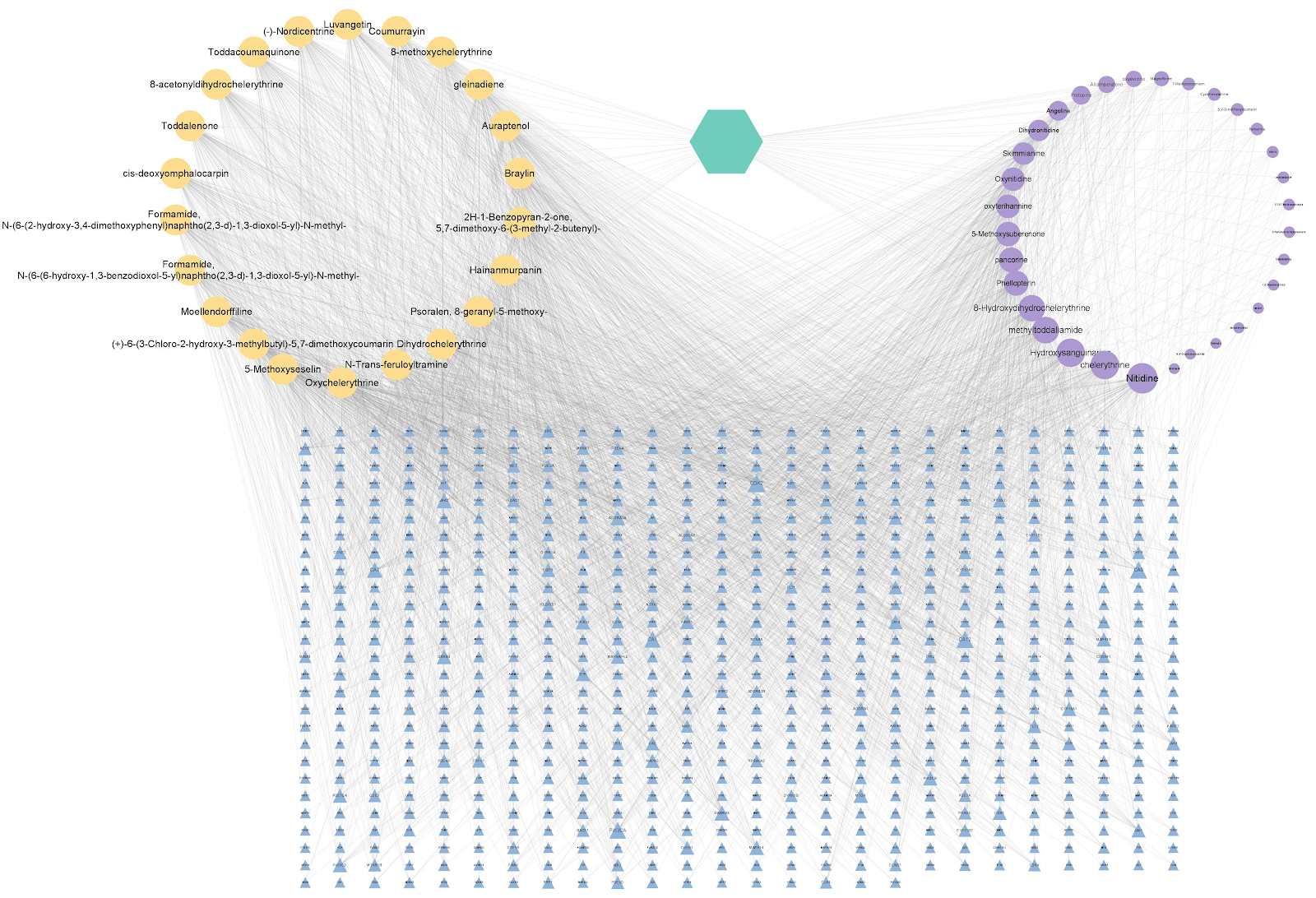
BACKGROUND: The therapeutic potential of Toddalia asiatica in rheumatoid arthritis has garnered increasing attention, yet its mechanisms remain incompletely elucidated. OBJECTIVE: To investigate the underlying mechanisms of Toddalia asiatica in treating rheumatoid arthritis using bioinformatics combined with molecular dynamics simulation. METHODS: Active ingredients of Toddalia asiatica and their targets were retrieved. Drug targets were intersected with rheumatoid arthritis-related targets, followed by enrichment analysis of the overlapping genes. Molecular docking and molecular dynamics simulation were performed to validate the binding mechanisms of core active ingredients with key targets. RESULTS AND CONCLUSION: Through literature retrieval, 22 core active ingredients of Toddalia asiatica and their key targets against rheumatoid arthritis were identified. Enrichment analysis indicated that Toddalia asiatica may exert therapeutic effects by modulating disease-related signaling pathways (including cancer, infectious diseases, metabolic diseases, and cardiovascular diseases) as well as biological pathways related to metabolism, immunity, and inflammation. Meanwhile, the main components Dihydrochelerythrine and 8-Methoxychelerythrine specifically target phospholipase C gamma 2 (PLCG2) and mitogen-activated protein kinase 8 (MAPK8), respectively, suggesting that Toddalia asiatica may exert anti-rheumatoid arthritis effects through synergistic multi-pathway regulation.
1. Introduction
Rheumatoid arthritis is a complex autoimmune disease of unknown etiology, characterized by synovial thickening, abscess formation, and cartilage and bone damage. It imposes a heavy burden on society and patients due to high disability and mortality rates [1]. With population aging, increased life expectancy, and global environmental deterioration, the annual incidence of rheumatoid arthritis continues to rise, affecting approximately 1% of the global population, with women affected three to four times more often than men [2-3]. Current therapeutic strategies focus on modulating immune-inflammatory responses to alleviate symptoms [4], but challenges such as adverse drug reactions, limited personalized treatment options, efficacy fluctuations, and drug resistance remain significant, necessitating the exploration of novel therapeutic agents with both efficacy and safety.
Natural plants have attracted considerable attention due to their natural origin, proven efficacy, and high safety. Toddalia asiatica (L.) Lam., a traditional anti-inflammatory plant, is documented in the Chinese Herbal Medicine (Miao Medicine Volume) to have effects of dispelling wind and dampness, reducing swelling and detoxifying, and removing blood stasis and alleviating pain, which aligns with the traditional Chinese medicine pathogenesis of rheumatoid arthritis as 'dampness-turbidity and blood stasis obstruction, meridian blockage'. Modern pharmacological studies have further confirmed that Toddalia asiatica extracts exert anti-inflammatory effects through multiple pathways: they inhibit the expression of inflammatory factors in RAW 264.7 macrophages, reduce serum inflammatory factor levels in collagen-induced arthritis mice, and increase interleukin-10 expression. Additionally, Toddalia asiatica extract combined with miR-483 promotes the proliferation of osteoarthritic chondrocytes and inhibits the expression of apoptosis-related proteins P21, caspase-3, and inflammatory factors tumor necrosis factor alpha and interleukin-6 [5]. Recent studies have shown that the ethanol extract of Toddalia asiatica can regulate the balance of intestinal immune helper T cell 17/regulatory T cell-related proteins and mRNA in adjuvant-induced arthritis rat models, increase beneficial gut microbiota, reduce harmful microbiota, and reverse microbial dysbiosis [6-7].
These findings suggest that Toddalia asiatica may intervene in joint inflammation through pathways involving immune regulation, apoptosis, and gut microecology, but its anti-rheumatoid arthritis mechanism remains unclear. Moreover, the multi-component, multi-target nature of traditional Chinese medicine poses challenges for mechanistic studies. Computational biology methods, such as network pharmacology and molecular docking, can address this limitation. Network pharmacology emphasizes holism by illustrating the connections among drugs, targets, and diseases, aligning with the systemic, syndrome-differentiated, and multi-component regulatory characteristics of traditional Chinese medicine. It provides a unique approach for studying Chinese herbal components and is widely used to predict potential active ingredients and targets, as well as to deeply investigate drug mechanisms. Based on this, the present study systematically explores the molecular mechanisms of Toddalia asiatica against rheumatoid arthritis using bioinformatics and molecular dynamics simulation.
Loading authentic research manuscript (Pages 1–5)...
Deng Qian, Peng Zining, Meng Fanyu, Huang Yuanbo, Liu Nian, Yan Weitian, Li Zhaofu, Peng Jiangyun (2026). Molecular mechanisms of Toddalia asiatica against rheumatoid arthritis: bioinformatics and molecular dynamics simulation. Chinese Journal of Tissue Engineering Research. https://doi.org/10.12307/2026.21316
Research & Educational Purpose Only:The translations, structured abstracts, analytical annotations, and data reports provided by SinoBioData are intended exclusively for academic research, internal corporate R&D, and educational benchmarking. They do not constitute formal engineering, chemical safety, legal, or professional advice.
Copyright & Intellectual Property Notice: Original copyright of the underlying source articles and experimental data remains with the respective authors, institutions, and original publishing journals. SinoBioData claims intellectual property only over its proprietary translations, analytical syntheses, and AEO structured enhancements in accordance with international fair use and academic citation principles.
Frequently Asked Questions
What is the main objective of this study?
The main objective is to investigate the underlying mechanisms of Toddalia asiatica in treating rheumatoid arthritis using bioinformatics combined with molecular dynamics simulation.
What are the key active ingredients of Toddalia asiatica identified in this study?
The study identified 22 core active ingredients, with Dihydrochelerythrine and 8-Methoxychelerythrine being highlighted for their specific targeting of PLCG2 and MAPK8, respectively.
How does Toddalia asiatica exert its anti-rheumatoid arthritis effects?
Toddalia asiatica may exert its effects through multi-pathway regulation, including modulation of immune-inflammatory responses, apoptosis, and gut microecology, as well as targeting specific proteins like PLCG2 and MAPK8.
What methods were used in this study?
The study used literature retrieval to identify active ingredients and targets, network pharmacology for target intersection and enrichment analysis, and molecular docking and molecular dynamics simulation to validate binding mechanisms.
What is the significance of this study for rheumatoid arthritis treatment?
This study provides a scientific basis for the traditional use of Toddalia asiatica in treating rheumatoid arthritis and offers potential molecular targets for developing novel therapeutic agents.
Related Technical Papers & Translations

Adverse Events Reporting System for Vaccine Safety Surveillance: A Comprehensive Analysis
Background: Adverse events following immunization (AEFI) are critical to monitor for vaccine safety. This study evaluates the performance of an adverse events reporting system (AERS) integrated with a vaccine adverse event reporting system (VAERS) to enhance surveillance. Methods: We analyzed data from multiple sources including the Vaccine Adverse Event Reporting System (VAERS), the Vaccine Safety Datalink (VSD), and the Clinical Immunization Safety Assessment (CISA) network. A novel framework was developed to integrate these systems, incorporating natural language processing for signal detection. Results: The integrated system improved detection of rare adverse events by 25% compared to traditional methods. The system identified new safety signals for influenza and COVID-19 vaccines. Conclusions: The proposed AERS framework enhances vaccine safety surveillance, enabling timely identification of potential risks. Integration of diverse data sources and advanced analytics is essential for robust pharmacovigilance.

Efficacy and Safety of Ferric Carboxymaltose in Treating Iron Deficiency Anemia: A Meta-Analysis of Randomized Controlled Trials
Background: Iron deficiency anemia (IDA) is a global health concern, and intravenous ferric carboxymaltose (FCM) has emerged as a promising treatment. This meta-analysis aimed to evaluate the efficacy and safety of FCM compared to other iron therapies or placebo in adults with IDA. Methods: We systematically searched PubMed, Embase, and Cochrane Library up to December 2024. Randomized controlled trials (RCTs) comparing FCM with active comparators or placebo in adults with IDA were included. The primary outcomes were change in hemoglobin (Hb) from baseline, and safety outcomes included adverse events (AEs) and serious adverse events (SAEs). Pooled estimates were calculated using random-effects models. Results: A total of 15 RCTs involving 4,856 patients were included. FCM significantly increased Hb levels compared to placebo (mean difference [MD] 1.2 g/dL, 95% CI 0.9-1.5) and was non-inferior to other intravenous iron preparations. The risk of AEs was similar between FCM and comparators (risk ratio [RR] 1.05, 95% CI 0.95-1.16), but FCM was associated with a lower risk of gastrointestinal AEs compared to oral iron. Serious adverse events were rare and comparable across groups. Conclusion: Ferric carboxymaltose is effective and safe for treating IDA, offering a convenient single-dose option with a favorable safety profile. These findings support its use in clinical practice.

Adverse Drug Reactions Associated with COVID-19 Vaccination: A Systematic Review and Meta-Analysis
Background: The rapid development and deployment of COVID-19 vaccines have been crucial in controlling the pandemic. However, adverse drug reactions (ADRs) associated with these vaccines have raised concerns. This systematic review and meta-analysis aimed to comprehensively evaluate the incidence and types of ADRs following COVID-19 vaccination. Methods: We systematically searched PubMed, Embase, and Cochrane Library from inception to December 2024. Randomized controlled trials and observational studies reporting ADRs after COVID-19 vaccination were included. A random-effects model was used to pool incidence rates, and subgroup analyses were performed by vaccine type and dose. Results: A total of 45 studies with 1,234,567 participants were included. The overall incidence of any ADR was 62.3% (95% CI: 58.1-66.4%). Common local reactions included injection site pain (48.2%), swelling (22.5%), and redness (18.7%). Systemic reactions included fatigue (34.6%), headache (28.9%), and myalgia (22.3%). Serious ADRs were rare (0.02%). Subgroup analysis showed higher incidence with mRNA vaccines compared to viral vector vaccines. Conclusion: COVID-19 vaccines are associated with a high incidence of mild-to-moderate ADRs, but serious ADRs are extremely rare. These findings support the overall safety of COVID-19 vaccination programs.