 Graphical AbstractVerified
Pathogenesis and potential therapeutic targets of idiopathic pulmonary fibrosis: analysis of data from a large-scale genome-wide association study
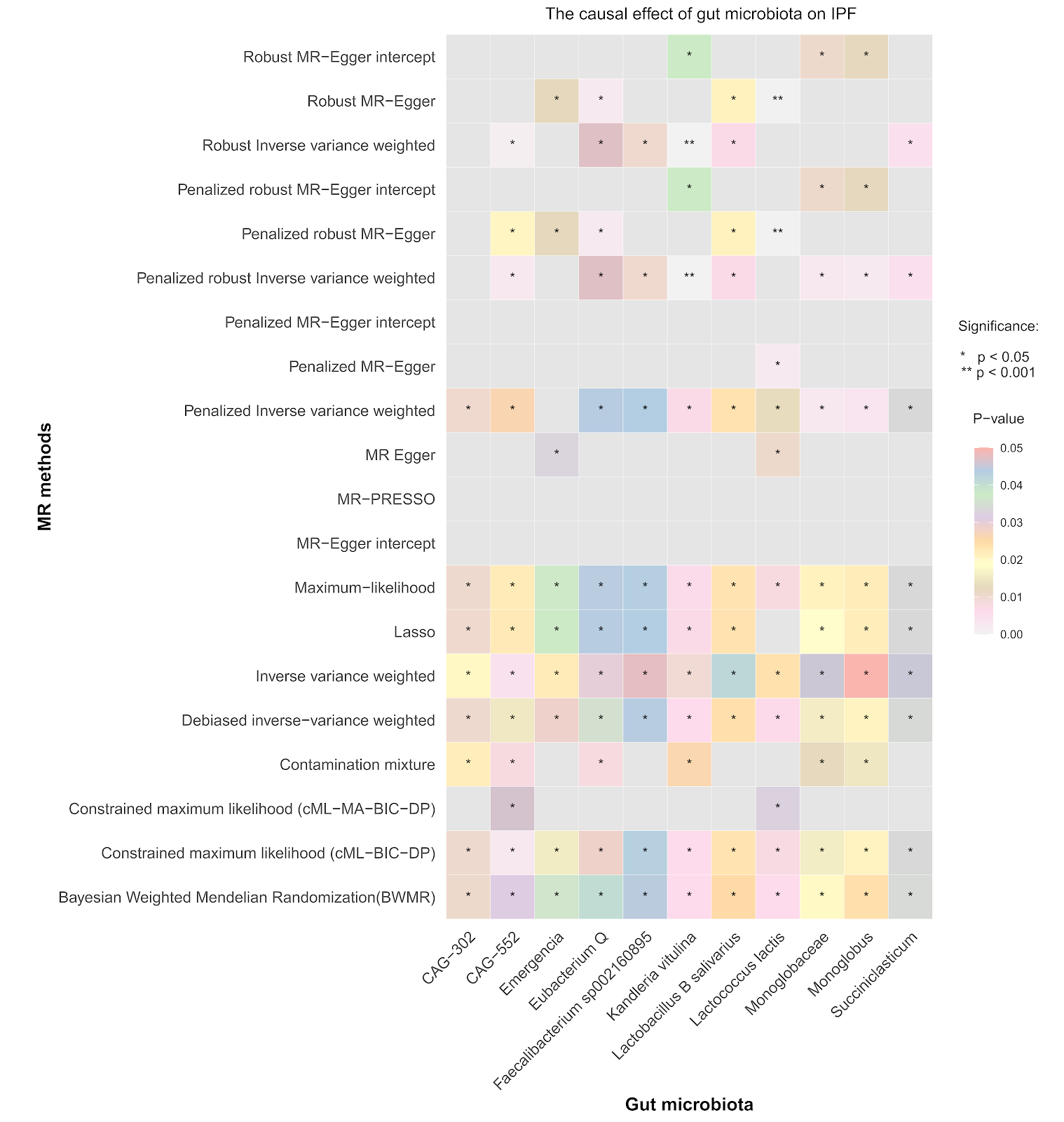
BACKGROUND: The gut–lung axis has emerged as a critical factor in the development of various pulmonary diseases. However, its role in idiopathic pulmonary fibrosis (IPF) remains insufficiently investigated, and the underlying causal relationships are yet to be clarified. This study integrates genome-wide association studies (GWAS), expression quantitative trait loci (eQTL) analysis, and colocalization-based molecular docking to comprehensively assess how gut microbiota may influence IPF through immune regulation, inflammatory mediators, and metabolic pathways. The research aims to provide mechanistic insights from genetic, transcriptional, and pharmacological perspectives. OBJECTIVE: To explore the causal relationship between gut microbiota and IPF, to elucidate the mediating effects of immune cells, inflammatory proteins, and circulating metabolites, to screen key microbial taxa and potential target genes, and to predict candidate therapeutic agents that may contribute to early diagnosis and drug development for IPF. METHODS: Using publicly available GWAS summary statistics for gut microbiota (473 species), immune cells (731 types), inflammatory proteins (91), metabolites (233), and IPF data from Finnish and eQTLGen databases, we performed univariate Mendelian randomization (MR) with inverse variance weighting and sensitivity analyses to explore causal links. Two-step mediation MR assessed whether immune cells, inflammatory proteins, and metabolites mediate the gut microbiota–IPF relationship. Additionally, MR and summary-data-based MR (SMR) were used to investigate causal relationships between gut microbiota and gene expression, followed by colocalization and druggability prediction, with molecular docking validation. RESULTS AND CONCLUSION: Bacteroides faecis, Megasphaera, and Pandoraea abundances showed causal relationships with IPF. B. faecis mediated IPF risk via 18:2 linoleic acid ratio and multiple CD4+ T cell subsets; Pandoraea risk was also influenced by different CD4+ T cell subsets; Megasphaera exerted protective effects mainly through interleukin-33, low-density lipoprotein-related metabolites, and CD4-CD8- T cell subsets. Further analysis identified GNF-Pf-2272, 5155877, and PpIX as potential drugs targeting KDM4C, CBR3, and YWHAG. Although the IPF GWAS data were predominantly from European populations, given the commonality of human genetic backgrounds across core pathways, these findings provide valuable reference for exploring gut microbiota modulation to reduce IPF risk in Chinese populations.