🧬 SinoBioData Academic Portal
🏛️ Indexed Academic JournalOriginal: 中国病理生理杂志

Chinese Journal of Pathophysiology

Premier Chinese Biomedical Journal indexed in SinoBioData: Chinese Journal of Pathophysiology (中国病理生理杂志).

Total Research Papers: 10
Access: 100% Free Open Access
Browse by Publication Year & VolumeReset All Filters ✕
Select Specific Issue:

Published Research PapersFiltered: Year 2024 • 40

Showing 3 of 10 peer-reviewed papers with full Graphical Abstracts.

Original ResearchVol. 40, Issue 8 • pp. 1488-1496DOI: 10.3969/j.issn.1000-4718.2024.08.016

TPOL triggers apoptosis with mitochondrial injury through activating a ROS-dependent p53/p21/p27/Rb/Bax/Cyto C/caspase-mediated signaling

Authors: CHENG Zongwei, ZENG Boning, XING Feiyue

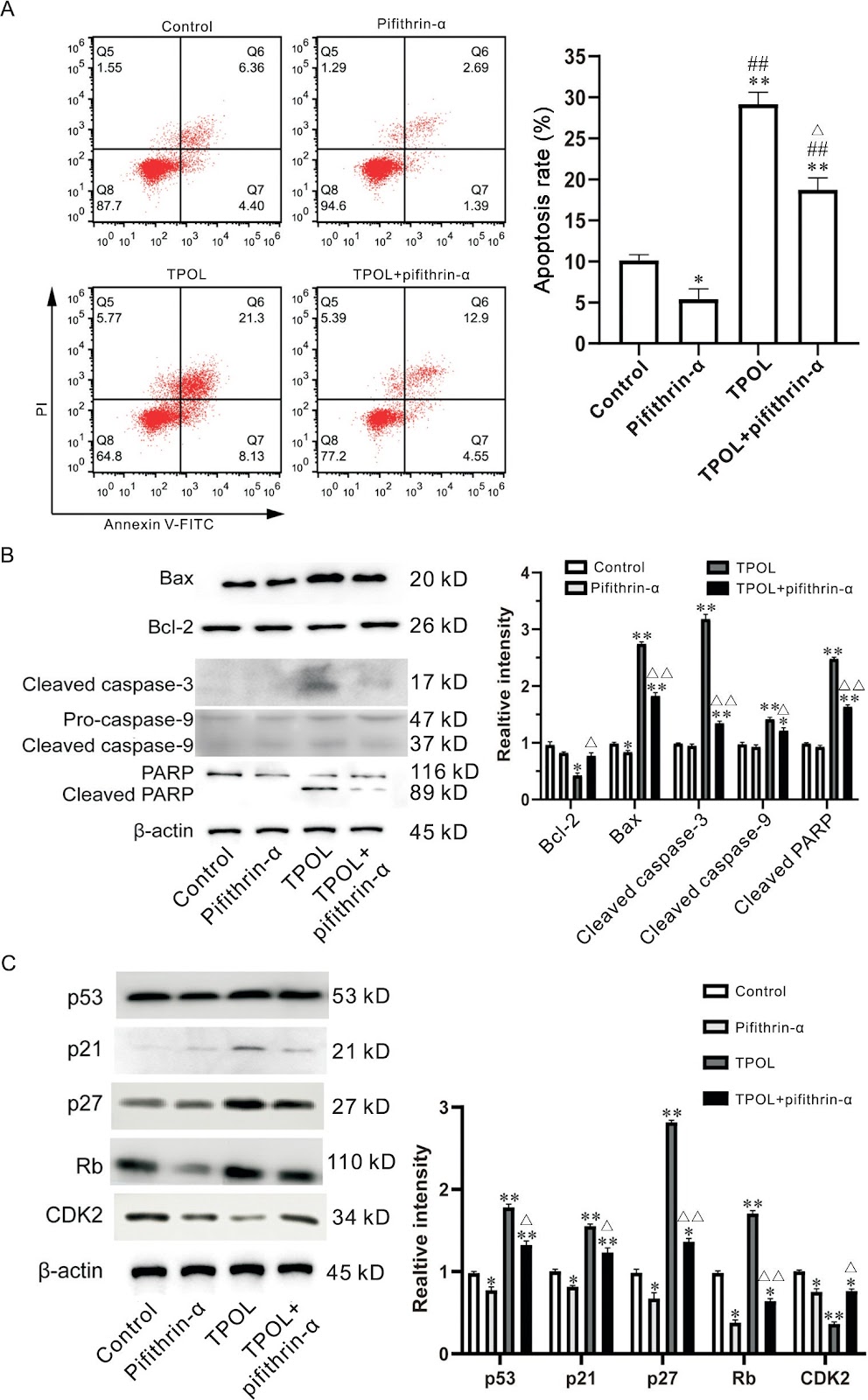
AIM: To explore the influence of ethyl (2,4,6-trimethylbenzoyl)phenylphosphinate (TPOL) on cell apoptosis and its potential mechanism. METHODS: HEK293T cells sensitive to TPOL were treated with different concentrations of TPOL with or without exposure to light radiation, before treatment with various inhibitors, N-acetyl-L-cysteine (NAC), pifithrin-α and Z-DVED-FMK. Cell viability was measured by CCK-8 assay. Annexin V/propidium iodide staining was used to count the number of apoptotic cells. DCFH-DA staining was used to detect reactive oxygen species (ROS) levels, and JC-1 staining was used to assess mitochondrial membrane potential by flow cytometry. The expression of apoptosis-related proteins and cell cycle-regulated molecules was measured by Western blot. RESULTS: TPOL enhanced the apoptosis of HEK293T cells in a dose-dependent manner (P<0.05), with a decrease in Bcl-2 and increases in Bax and cytochrome C (Cyto C), followed by up-regulation of activated caspase-9 and caspase-3, and the cleavage of PARP (P<0.05). The TPOL-enhanced cleavage of caspase-3 and PARP was rescued by Z-DVED-FMK (P<0.01). TPOL also led to a rapid increase in ROS, a reduction in mitochondrial membrane potential, and the release of Cyto C (P<0.01), all of which could be reversed by the ROS scavenger NAC. Moreover, the TPOL-caused alterations in p21, p27, Rb, and CDK2 were also recovered by the p53 inhibitor pifithrin-α (P<0.05). The TPOL-induced changes in Bax, Bcl-2, cleaved caspase-9, activated caspase-3, and cleaved PARP were subsequently rescued by pretreatment with pifithrin-α (P<0.05). CONCLUSION: TPOL can induce cellular apoptosis with ROS-mediated mitochondrial membrane damage through the activation of a ROS-dependent p53/p21/p27/Rb/Bax/Cyto C/caspase-mediated signal axis.
TPOL triggers apoptosis with mitochondrial injury through activating a ROS-dependent p53/p21/p27/Rb/Bax/Cyto C/caspase-mediated signaling
Graphical Abstract
Original ResearchVol. 40, Issue 4 • pp. 594-601DOI: 10.3969/j.issn.1000-4718.2024.04.003

Induction of apoptosis and autophagy in human glioblastoma cells by N-methylflindersine: insights into regulatory role of ERK pathway

Authors: LI Siyuan, LUO Yuyou, LUO Xiongming, WANG Zhongyu, CHEN Huitong, FAN Dong, YUAN Xingyi, CHEN Le, TANG Pei, LIU Jing, WANG Zongming, WANG Xin

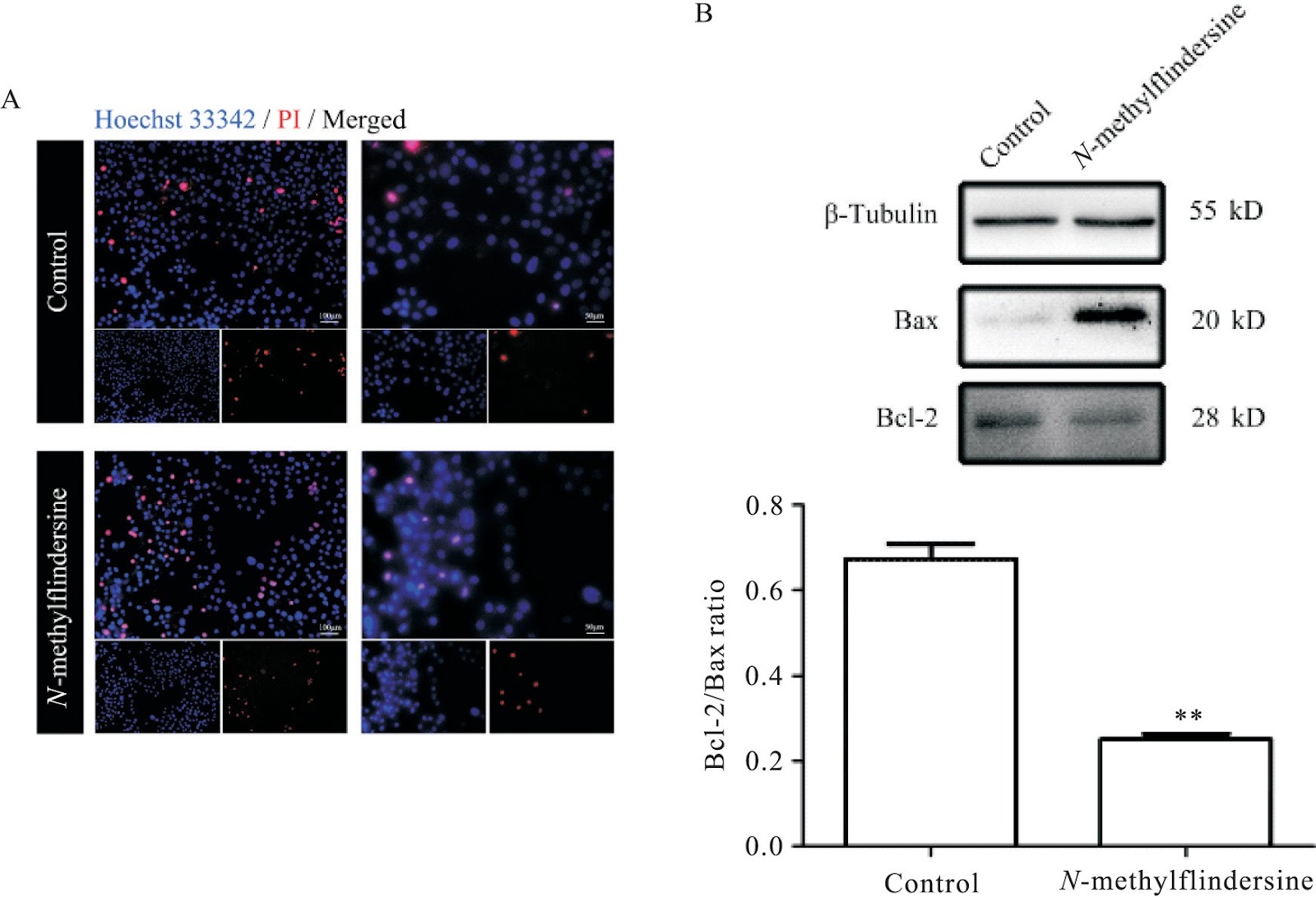
AIM: Mangrove-associated plants are known for producing natural compounds with antitumor activity. Despite the potential therapeutic value of these compounds, the molecular mechanisms underlying their antitumor effects remain unclear. This study aimed to investigate the antitumor properties of N-methylflindersine, an alkaloid derived from the mangrove-associated plant, Micromelum falcatum (Lour.) Tan., and its effects on U87 human glioblastoma cells. METHODS: We identified and isolated 15 compounds from the stem bark of Micromelum falcatum. Among these, we screened N-methylflindersine for its potential inhibitory effects on U87 cell growth. Various assays, including wound healing, Hoechst 33342/PI staining, and protein expression analysis, were conducted to investigate the compound's impact on cell migration, apoptosis, and autophagy-related proteins. RESULTS: Within 24 h, N-methylflindersine demonstrated the ability to reduce U87 cell migration and increase the apoptotic U87 cell population. Furthermore, it downregulated the anti-apoptosis protein Bcl-2 expression, upregulated the pro-apoptosis protein Bax expression, and elevated the ratio of autophagy-related protein LC3-II/LC3-I in U87 cells. Additionally, the ERK signaling pathway was found to be down-regulated following N-methylflindersine treatment. CONCLUSION: N-methylflindersine appears to induce both apoptosis and autophagic cell death in U87 cells, resulting in reduced cell growth. This effect seems to be associated with the downregulation of the ERK signaling pathway.

Induction of apoptosis and autophagy in human glioblastoma cells by N-methylflindersine: insights into regulatory role of ERK pathway
Graphical Abstract
Original ResearchVol. 40, Issue 5 • pp. 796-805DOI: 10.3969/j.issn.1000-4718.2024.05.004

Mechanism of protopanaxatriol attenuating paclitaxel resistance in MDA-MB-231 cells

Authors: LI Lingyu, YE Qianyun, LI Yan, HAN Li, WANG Panpan, ZHANG Ronghua

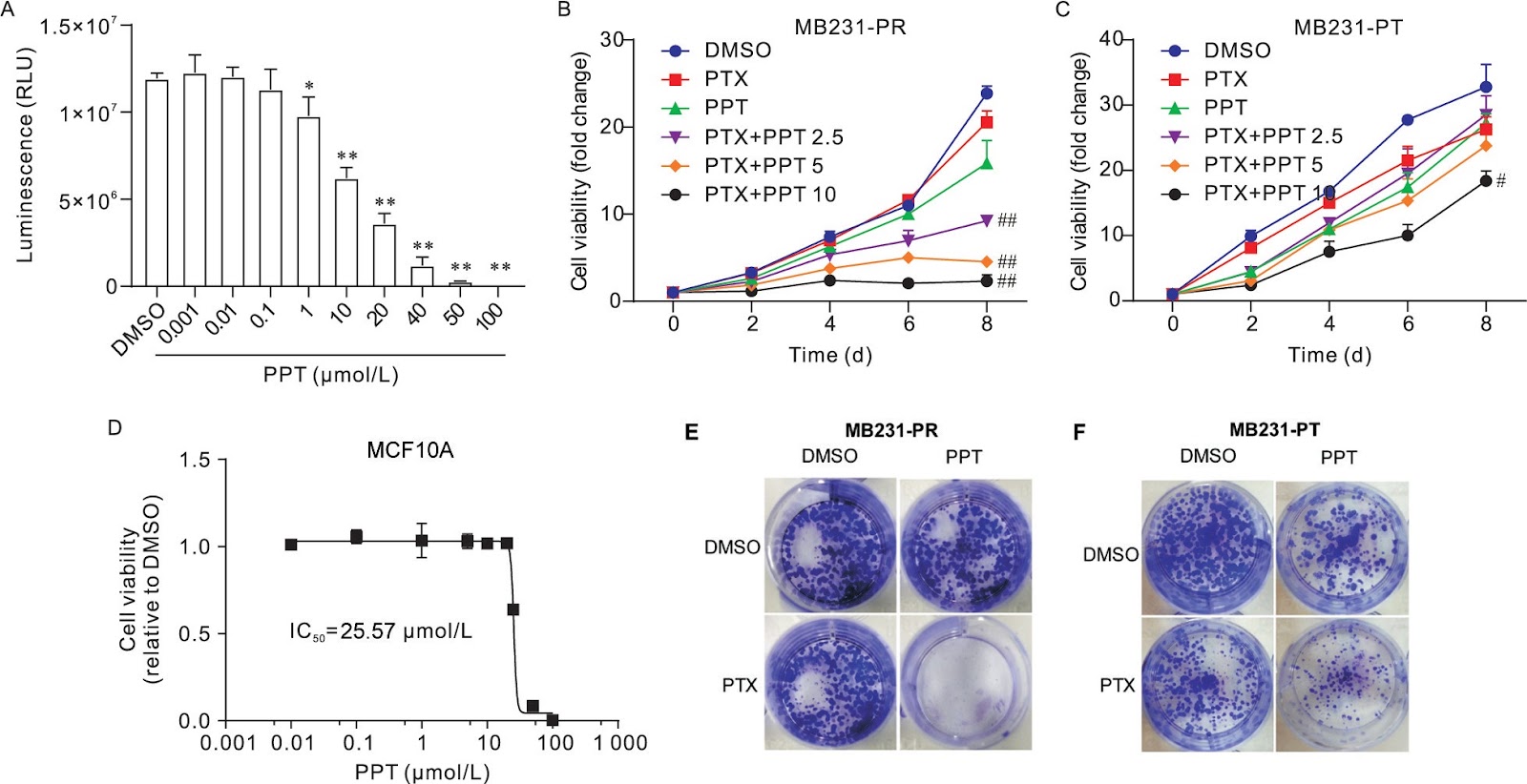
AIM: To investigate the effect of protopanaxatriol (PPT) on the drug resistance of paclitaxel (PTX)-resistant human breast cancer MDA-MB-231 cells (MB231-PR cells). METHODS: The MB231-PR cells were constructed as cell models. They were treated with PPT, and incubated for a certain period of time according to the experimental settings. CellTiter-Glo was used to determine the viability of MB231-PR cells and MDA-MB-231 parental cells (MB231-PT cells). The change of sub-G1 phase was detected by flow cytometry. Western blot was used to evaluate the apoptosis-related proteins, such as cleaved caspase-3, cleaved poly(ADP-ribose) polymerase (PARP), B-cell lymphoma-2 (Bcl-2), Bcl-2-associated X protein (Bax) and survivin. The activity of nuclear factor-κB (NF-κB) was detected by luciferase reporter assay and immunofluorescence assay. The mRNA expression levels of interleukin-6 (IL-6), IL-8, chemokine CXC motif ligand 1 (CXCL1), chemokine CC motif ligand 2 (CCL2), CD44, NANOG, octamer-binding transcription factor 4 (OCT4), sex-determining region Y-box 2 (SOX2) and aldehyde dehydrogenase 1 (ALDH1) were detected by qPCR. The protein levels of IL-6 and IL-8 were measured by ELISA. Tumor sphere formation assay was used to evaluate the characteristics of stem cells. RESULTS: (1) The viability of MB231-PR cells was suppressed by PPT treatment in a dose-dependent manner compared with MB231-PT cells (P<0.01). Besides, the viability of MB231-PR cells was decreased after combined treatment with PPT and PTX (P<0.01), the accumulation of sub-G1 phase was induced (P<0.01), the ratio of Bax/Bcl-2 was elevated (P<0.01), and the protein levels of survivin, cleaved PARP and cleaved caspase-3 were increased (P<0.05). (2) After PPT treatment combined with PTX, the mRNA expression of inflammatory cytokines (IL-6, IL-8, CXCL1 and CCL2) and cancer stem cell-related markers (OCT4, SOX2, NANOG, ALDH1 and CD44) was reduced (P<0.05), and the protein levels of IL-6 and IL-8 were decreased (P<0.01). The activity of NF-κB in MB231-PR cells was suppressed (P<0.05), and the growth of tumor spheres from MB231-PR cells was damaged (P<0.05). (3) Immunofluorescence assay showed that PTX induced nuclear p-p65 expression, but this effect was attenuated by PPT. CONCLUSION: Combined treatment with PPT and PTX could attenuate PTX resistance of MB231-PR cells by inhibiting inflammatory cytokines and cancer stem cells.

Mechanism of protopanaxatriol attenuating paclitaxel resistance in MDA-MB-231 cells
Graphical Abstract