Induction of apoptosis and autophagy in human glioblastoma cells by N-methylflindersine: insights into regulatory role of ERK pathway
Authors: LI Siyuan, LUO Yuyou, LUO Xiongming, WANG Zhongyu, CHEN Huitong, FAN Dong, YUAN Xingyi, CHEN Le, TANG Pei, LIU Jing, WANG Zongming, WANG Xin
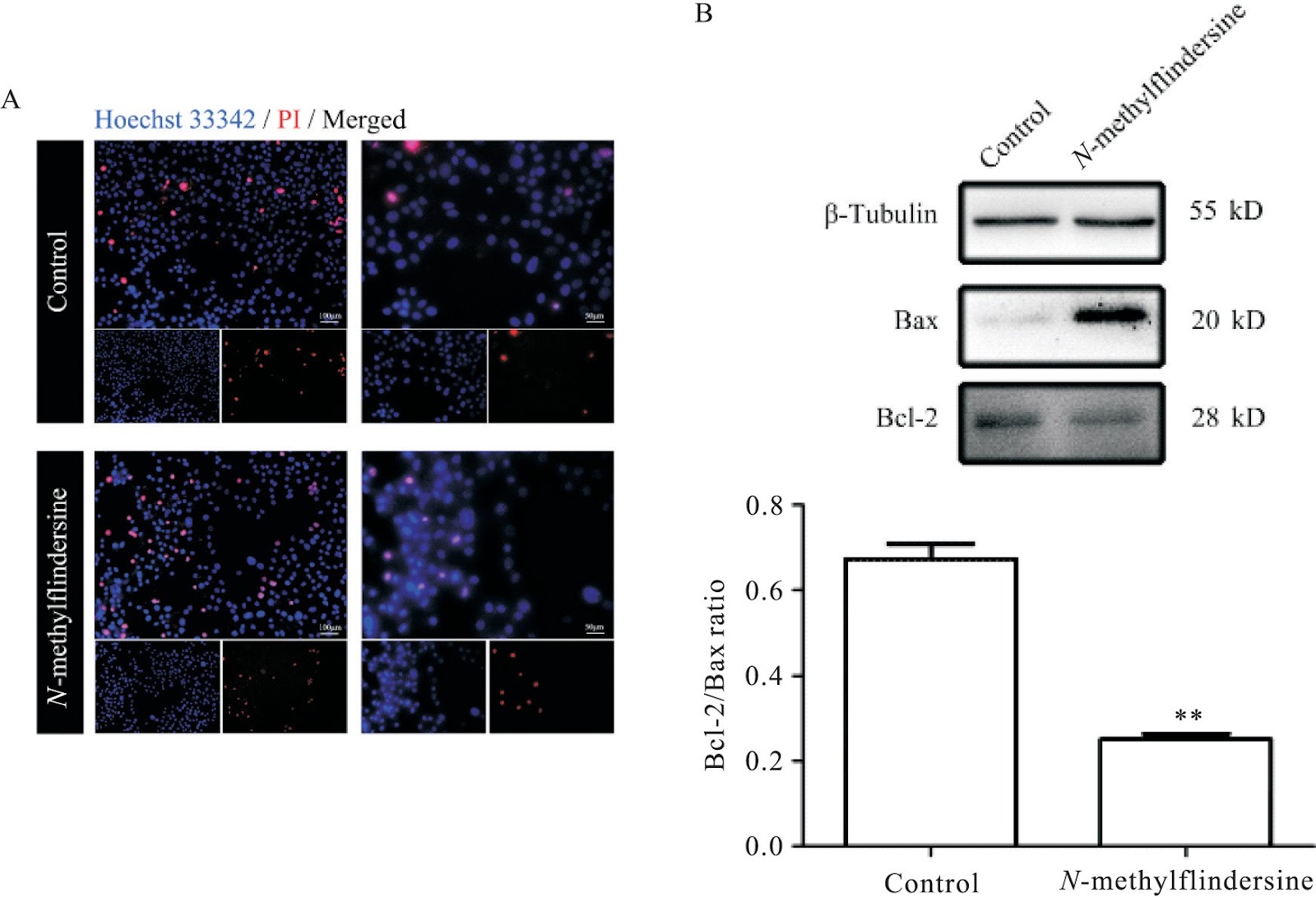
AIM: Mangrove-associated plants are known for producing natural compounds with antitumor activity. Despite the potential therapeutic value of these compounds, the molecular mechanisms underlying their antitumor effects remain unclear. This study aimed to investigate the antitumor properties of N-methylflindersine, an alkaloid derived from the mangrove-associated plant, Micromelum falcatum (Lour.) Tan., and its effects on U87 human glioblastoma cells. METHODS: We identified and isolated 15 compounds from the stem bark of Micromelum falcatum. Among these, we screened N-methylflindersine for its potential inhibitory effects on U87 cell growth. Various assays, including wound healing, Hoechst 33342/PI staining, and protein expression analysis, were conducted to investigate the compound's impact on cell migration, apoptosis, and autophagy-related proteins. RESULTS: Within 24 h, N-methylflindersine demonstrated the ability to reduce U87 cell migration and increase the apoptotic U87 cell population. Furthermore, it downregulated the anti-apoptosis protein Bcl-2 expression, upregulated the pro-apoptosis protein Bax expression, and elevated the ratio of autophagy-related protein LC3-II/LC3-I in U87 cells. Additionally, the ERK signaling pathway was found to be down-regulated following N-methylflindersine treatment. CONCLUSION: N-methylflindersine appears to induce both apoptosis and autophagic cell death in U87 cells, resulting in reduced cell growth. This effect seems to be associated with the downregulation of the ERK signaling pathway.