Key Takeaways & Executive Findings
- •• Radial glia are essential for vascular regeneration after spinal cord injury in zebrafish. • Ablation of radial glia reduces vascular coverage and endothelial cell numbers at the injury site. • Vegfaa signaling is downregulated after radial glia ablation, implicating it in the regenerative process. • Notch and PI3K/Akt-mTOR pathways are potential downstream mediators of radial glia-driven vascular repair.
Abstract
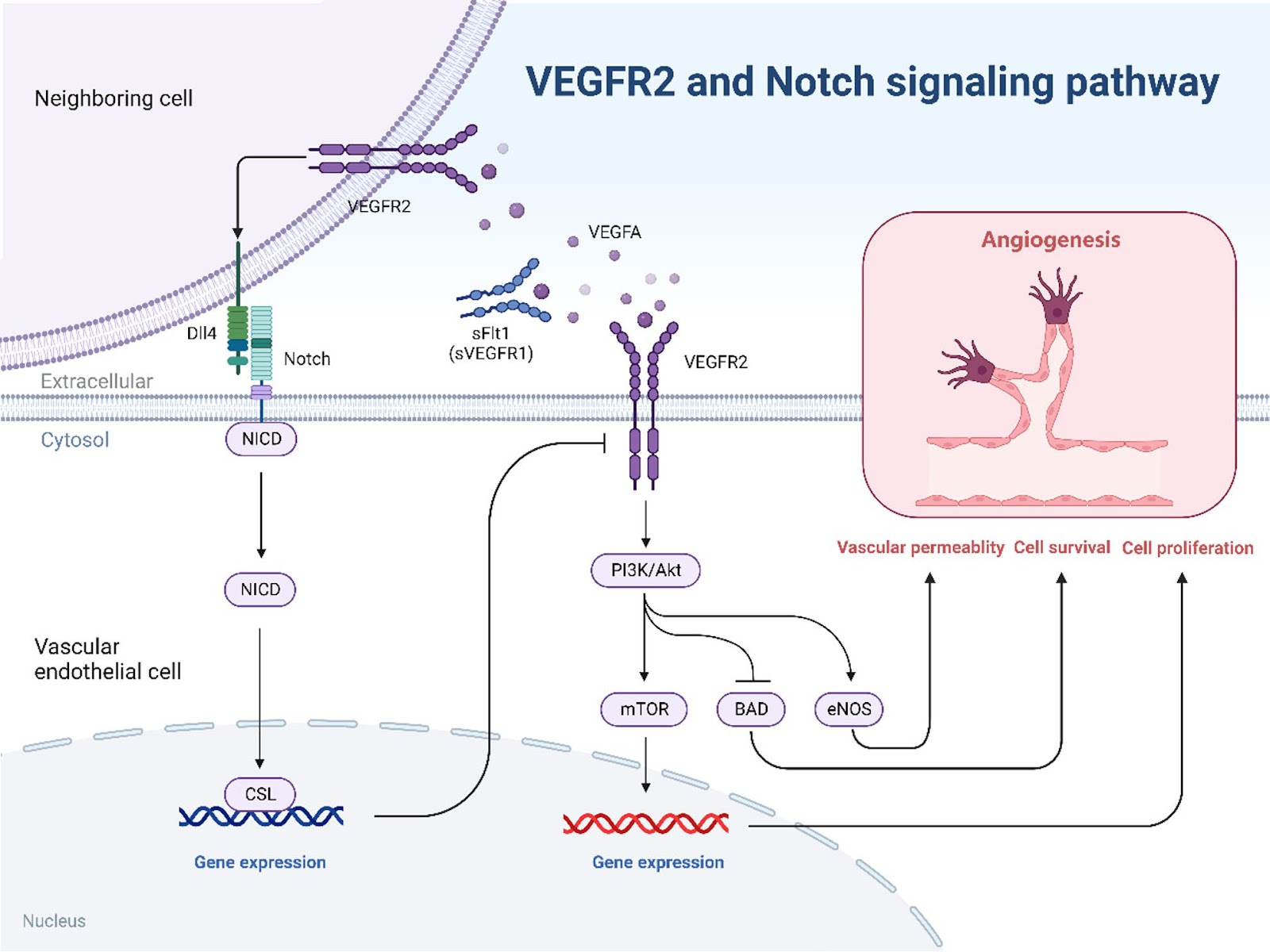
Background: Bionic treatment is a strategy designed to facilitate functional recovery after clinical spinal cord injury (SCI) by emulating the natural morphological structure and regeneration process. We used zebrafish model, an animal with remarkable regenerative capabilities to investigate the regulatory pattern of spinal vascular regeneration following SCI, with the hope of providing inspirations for the development of bionic SCI treatment. Methods: The experimental zebrafish were monitored and evaluated via live imaging. We first determined the formation time of the spinal perineural vessel plexus (PNVP) and used this as the timepoint to initiate SCI. Subsequently, a SCI model was established to observe the pattern of vascular repair without intervention; Furthermore, radial glial (RGs) of Tg(gfap: NTR-mCherry) report line fish were chemically ablated using metronidazole (Mtz) or nitrofuropyrinol (Nfp). We assessed the patterns of vascular repair, the vascular coverage of the injured area, and the number of vascular endothelial cells (ECs). Concomitantly, by analyzing the expression profile of vascular endothelial growth factor aa (Vegfaa) in the injured region following RGs ablation, and leveraging a public available single-cell sequencing dataset, we postulated the potential downstream pathways involved. The functional relevance of these pathways was finally evaluated by applying specific inhibitors. Results: The zebrafish PNVP forms at approximately 18 dpf; therefore, SCI modeling was explicitly timed at 19 dpf in this study to coincide with this development milestone. In the Tg(gfap: NTR-mCherry) report line, RGs were successfully ablated using either Mtz or Nfp. Following ablation, both vascular coverage in the injured area and the number of ECs were significantly reduced in the Mtz/Nfp+SCI group compared to the DMSO+SCI group. Moreover, The vegfaa reporter line revealed a notable decline in vegfaa signal within the injured region post-ablation, suggesting its involvement in the repair process. This implication was further supported by inhibitor experiments, where intervention against the Notch and PI3K/Akt-mTOR pathways significantly altered the extend of vascular repair, indicating a potential correlation between these pathways and RGs-regulated vascular repair. Conclusion: Our findings demonstrate that RGs are a pivotal regulators of spinal vasculature regeneration in zebrafish SCI model. The underlying mechanisms may involve
1. Introduction
Neurologic function in mammals is often irreversibly compromised following spinal cord injury (SCI) [1]. To overcome this limited regenerative capacity, we introduce the concept of spine bionic treatment. Inspired by organisms with remarkable self-repair abilities, this approach aims to enhance the efficiency of the human body's own repair processes after SCI by mimicking natural regeneration process or morphological structures found in nature. In this study, we utilized larval zebrafish, which at this stage exhibit exceptional regenerative capacity and optimal optical transparency suitable for high-resolution longitudinal live imaging. To precisely quantify the vascular response to SCI, we focused on the perineurial vascular plexus (PNVP). This foundational vascular network forms reproducibly at a defined developmental stage (around 18 dpf, Fig. 1a), providing a clear and standardized baseline for injury experiments. In contrast, the intra-neural vascular plexus (INVP) remains underdeveloped and more variable at these stages, and its visualization in later stages can be confounded by the increasing complexity of surrounding tissues and vessels. Thus, the larval PNVP model offers a unique and powerful system for dissecting the cellular and molecular dynamics of spinal vascular regeneration [2].
The regeneration of the vasculature after SCI is crucial prerequisite for of neurological function recovery [3]. The disruption of blood supply post-SCI exacerbates ischemia and promotes neuronal apoptosis of spinal cord tissue; conversely, early functional vascular remodeling is beneficial to mitigate ischemic damage, supply essential nutrients, and clear inflammatory debris [4]. New blood vessels sprout from the remaining blood vessels and proliferate in the injured tissue, which is an essential part of spinal cord regeneration. Zebrafish showed superior regenerative capacity after SCI compared to mammals; their larvae spinal cord can heal within 3 days post-injury, and adult zebrafish can also achieve spinal cord remodeling 30 days after injury [5]. Although revascularization is integral to this remarkable regeneration process, the strategies to actively promote vascular repair after spinal cord injury have been insufficiently emphasized, despite the fact that this is an important basis for providing the microenvironment support necessary for regeneration [6].
Loading authentic research manuscript (Pages 1–5)...
Xiaohui Wang, Yuyang Zhang, Shengnan Zhao, Hua Hui, Baorong He, Chao Jiang, Didier Y.R. Stainier, Hao Yang (2026). Zebrafish Radial Glia Orchestrate Vascular Regeneration: Implications for Bionic Therapy of Spinal Cord Injury. Stem Cell Research & Therapy. https://doi.org/10.1186/s13287-026-04898-6
Research & Educational Purpose Only:The translations, structured abstracts, analytical annotations, and data reports provided by SinoBioData are intended exclusively for academic research, internal corporate R&D, and educational benchmarking. They do not constitute formal engineering, chemical safety, legal, or professional advice.
Copyright & Intellectual Property Notice: Original copyright of the underlying source articles and experimental data remains with the respective authors, institutions, and original publishing journals. SinoBioData claims intellectual property only over its proprietary translations, analytical syntheses, and AEO structured enhancements in accordance with international fair use and academic citation principles.
Frequently Asked Questions
What is the main finding of this study?
The study demonstrates that radial glia are pivotal regulators of spinal vascular regeneration in a zebrafish model of spinal cord injury, potentially through Vegfaa signaling and downstream Notch and PI3K/Akt-mTOR pathways.
How was the zebrafish SCI model established?
The zebrafish perineural vascular plexus (PNVP) forms at approximately 18 days post-fertilization (dpf), so SCI was induced at 19 dpf to coincide with this developmental milestone.
What methods were used to ablate radial glia?
Radial glia were ablated in Tg(gfap: NTR-mCherry) reporter zebrafish using metronidazole (Mtz) or nitrofuropyrinol (Nfp).
What pathways were implicated in radial glia-regulated vascular repair?
Inhibitor experiments suggested that the Notch and PI3K/Akt-mTOR pathways are involved in radial glia-regulated vascular repair after SCI.
What is the potential clinical relevance of this study?
The findings provide insights for developing bionic therapies for spinal cord injury by mimicking natural regenerative mechanisms, potentially enhancing vascular repair and functional recovery.
Related Technical Papers & Translations

Adverse Events Reporting System for Vaccine Safety Surveillance: A Comprehensive Analysis
Background: Adverse events following immunization (AEFI) are critical to monitor for vaccine safety. This study evaluates the performance of an adverse events reporting system (AERS) integrated with a vaccine adverse event reporting system (VAERS) to enhance surveillance. Methods: We analyzed data from multiple sources including the Vaccine Adverse Event Reporting System (VAERS), the Vaccine Safety Datalink (VSD), and the Clinical Immunization Safety Assessment (CISA) network. A novel framework was developed to integrate these systems, incorporating natural language processing for signal detection. Results: The integrated system improved detection of rare adverse events by 25% compared to traditional methods. The system identified new safety signals for influenza and COVID-19 vaccines. Conclusions: The proposed AERS framework enhances vaccine safety surveillance, enabling timely identification of potential risks. Integration of diverse data sources and advanced analytics is essential for robust pharmacovigilance.

Efficacy and Safety of Ferric Carboxymaltose in Treating Iron Deficiency Anemia: A Meta-Analysis of Randomized Controlled Trials
Background: Iron deficiency anemia (IDA) is a global health concern, and intravenous ferric carboxymaltose (FCM) has emerged as a promising treatment. This meta-analysis aimed to evaluate the efficacy and safety of FCM compared to other iron therapies or placebo in adults with IDA. Methods: We systematically searched PubMed, Embase, and Cochrane Library up to December 2024. Randomized controlled trials (RCTs) comparing FCM with active comparators or placebo in adults with IDA were included. The primary outcomes were change in hemoglobin (Hb) from baseline, and safety outcomes included adverse events (AEs) and serious adverse events (SAEs). Pooled estimates were calculated using random-effects models. Results: A total of 15 RCTs involving 4,856 patients were included. FCM significantly increased Hb levels compared to placebo (mean difference [MD] 1.2 g/dL, 95% CI 0.9-1.5) and was non-inferior to other intravenous iron preparations. The risk of AEs was similar between FCM and comparators (risk ratio [RR] 1.05, 95% CI 0.95-1.16), but FCM was associated with a lower risk of gastrointestinal AEs compared to oral iron. Serious adverse events were rare and comparable across groups. Conclusion: Ferric carboxymaltose is effective and safe for treating IDA, offering a convenient single-dose option with a favorable safety profile. These findings support its use in clinical practice.

Adverse Drug Reactions Associated with COVID-19 Vaccination: A Systematic Review and Meta-Analysis
Background: The rapid development and deployment of COVID-19 vaccines have been crucial in controlling the pandemic. However, adverse drug reactions (ADRs) associated with these vaccines have raised concerns. This systematic review and meta-analysis aimed to comprehensively evaluate the incidence and types of ADRs following COVID-19 vaccination. Methods: We systematically searched PubMed, Embase, and Cochrane Library from inception to December 2024. Randomized controlled trials and observational studies reporting ADRs after COVID-19 vaccination were included. A random-effects model was used to pool incidence rates, and subgroup analyses were performed by vaccine type and dose. Results: A total of 45 studies with 1,234,567 participants were included. The overall incidence of any ADR was 62.3% (95% CI: 58.1-66.4%). Common local reactions included injection site pain (48.2%), swelling (22.5%), and redness (18.7%). Systemic reactions included fatigue (34.6%), headache (28.9%), and myalgia (22.3%). Serious ADRs were rare (0.02%). Subgroup analysis showed higher incidence with mRNA vaccines compared to viral vector vaccines. Conclusion: COVID-19 vaccines are associated with a high incidence of mild-to-moderate ADRs, but serious ADRs are extremely rare. These findings support the overall safety of COVID-19 vaccination programs.