Key Takeaways & Executive Findings
- •• UCMSCs exhibit superior pro-angiogenic activity compared to ADMSCs in vitro and in vivo. • ADMSCs provide better cardioprotection than UCMSCs in a mouse MI model, primarily through stronger anti-apoptotic effects. • Anti-apoptosis is more crucial than angiogenesis for MSC-based therapy in acute myocardial infarction. • The study highlights the importance of MSC source selection for precision medicine in cardiac repair.
Abstract
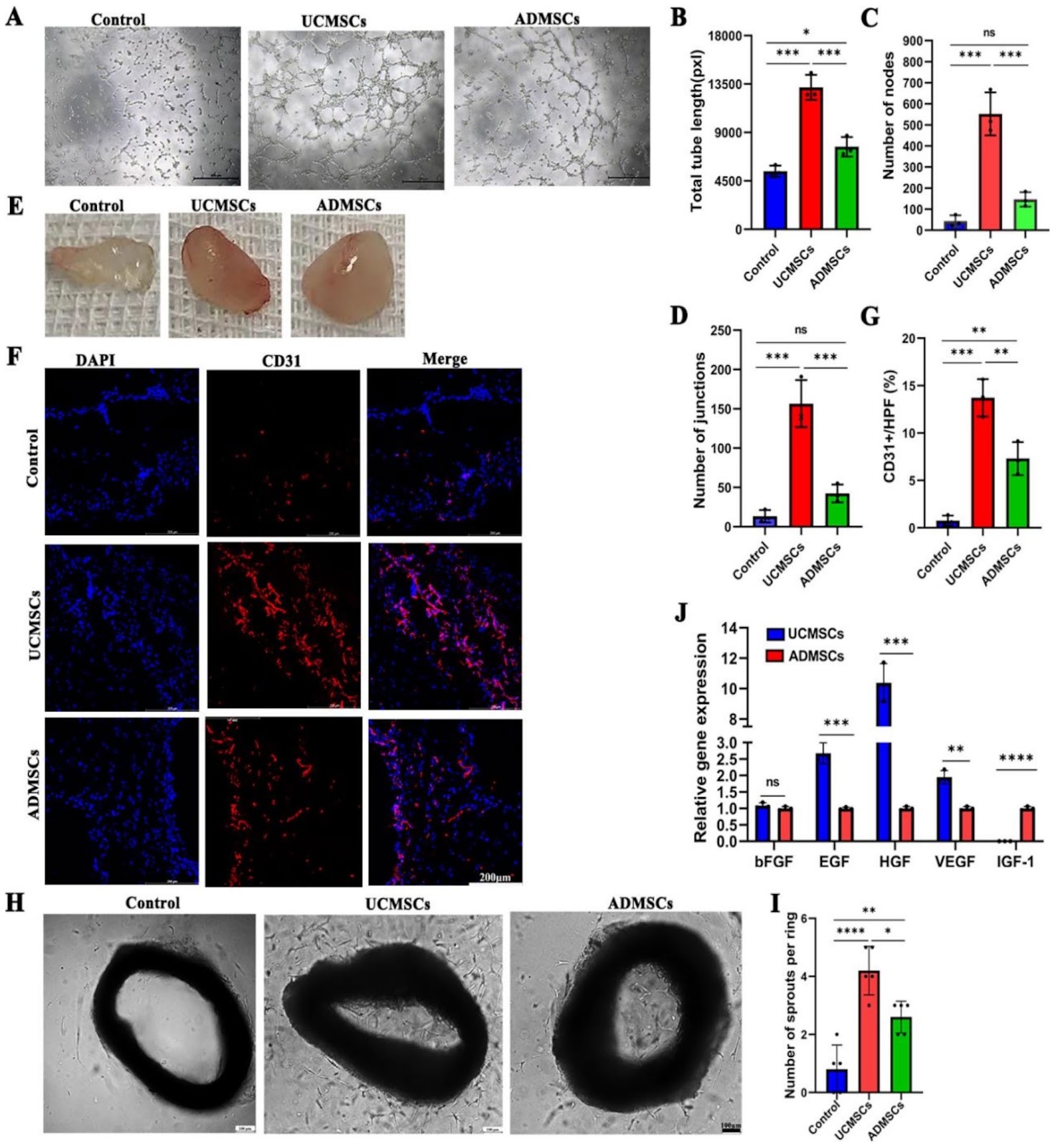
Background Myocardial infarction (MI) is a severe disease that often associated with impaired angiogenesis and increased myocardial apoptosis. Mesenchymal stromal cells (MSCs) have been a promising candidate for treating myocardial infarction. However, functional heterogeneity of MSCs leads to inconsistent therapeutic efficiency and the current MSCs-based therapy lacks the concept and implementation of precision medicine. In this study, we compared the cardioprotective effect of UCMSCs and ADMSCs targeting the angiogenesis in a mouse MI model and screened out optimum MSCs candidate for precise clinical application. Methods The gene expression profiles of UCMSCs and ADMSCs were investigated through RNA sequencing analysis. To compare their angiogenic potential, we performed tube formation assay, Matrigel plug assays, and aortic ring assay, and analyzed pro-angiogenic genes via qPCR. Subsequently, UCMSCs and ADMSCs were respectively injected into myocardium after MI surgery in mice. On day 28 post-MI, echocardiography was performed to assess cardiac function. Histological analysis was performed to assess MSCs retention, angiogenesis, and myocardial apoptosis. Additionally, the anti-apoptosis effects mediated by MSCs were further evaluated using flow cytometry in hypoxia H9C2 and HL-1 cells. Results The RNA sequencing analysis revealed differences in gene expression related to angiogenesis and apoptosis pathways between UCMSCs and ADMSCs. UCMSCs presented greater pro-angiogenesis activity than ADMSCs in vitro and in vivo. Both of UCMSCs and ADMSCs improved cardiac function, decreased infarction area and inhibited cardiomyocyte apoptosis while promoting angiogenesis post-MI in mice. Notably, ADMSCs exerted a better cardioprotective function than UCMSCs and stronger anti-apoptotic effect on residual cardiomyocytes.
1. Introduction
Myocardial infarction (MI) is a leading cause of death worldwide caused by the occlusion of blood flow in the cardiac coronary arteries. Restricted blood supply causes irreversible loss of cardiomyocytes, which eventually leads to severely impaired cardiac function, resulting in a significant decrease in quality of life, and increased mortality. Myocardial repair and regeneration has always been a heated and difficult topic in medical research. After a heart attack, a complex series of repair and regeneration processes are triggered to restore myocardial function, involving inflammatory responses, apoptosis and angiogenesis. Among them, angiogenesis is the pivotal process of myocardial repair after myocardial injury, which is crucial for restoring blood supply and promoting the survival and regeneration of cardiomyocytes [1–4].
Cardiomyocytes will be necrotic due to ischemia and hypoxia, which results from interrupted or reduced blood flow within the heart caused by a blockage in the coronary artery. The formation of new blood vessels facilitates the survival and regeneration of cardiomyocytes following ischemic injury by conferring better perfusion to the myocardium. Neovascularization is a process of developing new vascular networks, primarily mediated by the proliferation, migration, and differentiation of vascular endothelial cells (ECs), which is augmented by various growth factors, cytokines and hormones, such as vascular endothelial growth factor (VEGF) and basic fibroblast growth factor (bFGF). Therefore, angiogenesis is vital for promoting reperfusion and functional recovery of ischemic heart and the induction of cardiac angiogenesis has become one of the key strategies in MI treatment [5–6].
Loading authentic research manuscript (Pages 1–5)...
Mingjie Pan, Yueyue Xu, Yaping Wang, Yue Jiang, Yuanyuan Xie, Chenxu Tai, Wenqing Wang, Bin Wang (2026). The therapeutic efficacy comparison of MSCs derived different tissues unveilings anti-apoptosis more crucial than angiogenesis in treating acute myocardial infarction. Stem Cell Research & Therapy. https://doi.org/10.1186/s13287-025-04378-3
Research & Educational Purpose Only:The translations, structured abstracts, analytical annotations, and data reports provided by SinoBioData are intended exclusively for academic research, internal corporate R&D, and educational benchmarking. They do not constitute formal engineering, chemical safety, legal, or professional advice.
Copyright & Intellectual Property Notice: Original copyright of the underlying source articles and experimental data remains with the respective authors, institutions, and original publishing journals. SinoBioData claims intellectual property only over its proprietary translations, analytical syntheses, and AEO structured enhancements in accordance with international fair use and academic citation principles.
Frequently Asked Questions
What is the main finding of this study?
The study reveals that anti-apoptosis is more crucial than angiogenesis in MSC-based therapy for acute myocardial infarction, with ADMSCs providing better cardioprotection than UCMSCs due to stronger anti-apoptotic effects.
Which type of MSC showed superior angiogenic potential?
UCMSCs (umbilical cord-derived MSCs) exhibited greater pro-angiogenic activity compared to ADMSCs (adipose-derived MSCs) in both in vitro and in vivo assays.
How was the therapeutic efficacy of MSCs evaluated?
Therapeutic efficacy was assessed in a mouse MI model by injecting MSCs into the myocardium, then evaluating cardiac function via echocardiography, and analyzing MSCs retention, angiogenesis, and myocardial apoptosis through histological and flow cytometry methods.
What are the clinical implications of this study?
The findings highlight the importance of selecting the appropriate MSC source for precision medicine in treating MI, suggesting that ADMSCs may be more effective for patients where anti-apoptotic effects are critical.
What methods were used to compare the MSCs?
The study used RNA sequencing, tube formation assay, Matrigel plug assay, aortic ring assay, qPCR, and flow cytometry to compare the angiogenic and anti-apoptotic properties of UCMSCs and ADMSCs.
Related Technical Papers & Translations

Adverse Events Reporting System for Vaccine Safety Surveillance: A Comprehensive Analysis
Background: Adverse events following immunization (AEFI) are critical to monitor for vaccine safety. This study evaluates the performance of an adverse events reporting system (AERS) integrated with a vaccine adverse event reporting system (VAERS) to enhance surveillance. Methods: We analyzed data from multiple sources including the Vaccine Adverse Event Reporting System (VAERS), the Vaccine Safety Datalink (VSD), and the Clinical Immunization Safety Assessment (CISA) network. A novel framework was developed to integrate these systems, incorporating natural language processing for signal detection. Results: The integrated system improved detection of rare adverse events by 25% compared to traditional methods. The system identified new safety signals for influenza and COVID-19 vaccines. Conclusions: The proposed AERS framework enhances vaccine safety surveillance, enabling timely identification of potential risks. Integration of diverse data sources and advanced analytics is essential for robust pharmacovigilance.

Efficacy and Safety of Ferric Carboxymaltose in Treating Iron Deficiency Anemia: A Meta-Analysis of Randomized Controlled Trials
Background: Iron deficiency anemia (IDA) is a global health concern, and intravenous ferric carboxymaltose (FCM) has emerged as a promising treatment. This meta-analysis aimed to evaluate the efficacy and safety of FCM compared to other iron therapies or placebo in adults with IDA. Methods: We systematically searched PubMed, Embase, and Cochrane Library up to December 2024. Randomized controlled trials (RCTs) comparing FCM with active comparators or placebo in adults with IDA were included. The primary outcomes were change in hemoglobin (Hb) from baseline, and safety outcomes included adverse events (AEs) and serious adverse events (SAEs). Pooled estimates were calculated using random-effects models. Results: A total of 15 RCTs involving 4,856 patients were included. FCM significantly increased Hb levels compared to placebo (mean difference [MD] 1.2 g/dL, 95% CI 0.9-1.5) and was non-inferior to other intravenous iron preparations. The risk of AEs was similar between FCM and comparators (risk ratio [RR] 1.05, 95% CI 0.95-1.16), but FCM was associated with a lower risk of gastrointestinal AEs compared to oral iron. Serious adverse events were rare and comparable across groups. Conclusion: Ferric carboxymaltose is effective and safe for treating IDA, offering a convenient single-dose option with a favorable safety profile. These findings support its use in clinical practice.

Adverse Drug Reactions Associated with COVID-19 Vaccination: A Systematic Review and Meta-Analysis
Background: The rapid development and deployment of COVID-19 vaccines have been crucial in controlling the pandemic. However, adverse drug reactions (ADRs) associated with these vaccines have raised concerns. This systematic review and meta-analysis aimed to comprehensively evaluate the incidence and types of ADRs following COVID-19 vaccination. Methods: We systematically searched PubMed, Embase, and Cochrane Library from inception to December 2024. Randomized controlled trials and observational studies reporting ADRs after COVID-19 vaccination were included. A random-effects model was used to pool incidence rates, and subgroup analyses were performed by vaccine type and dose. Results: A total of 45 studies with 1,234,567 participants were included. The overall incidence of any ADR was 62.3% (95% CI: 58.1-66.4%). Common local reactions included injection site pain (48.2%), swelling (22.5%), and redness (18.7%). Systemic reactions included fatigue (34.6%), headache (28.9%), and myalgia (22.3%). Serious ADRs were rare (0.02%). Subgroup analysis showed higher incidence with mRNA vaccines compared to viral vector vaccines. Conclusion: COVID-19 vaccines are associated with a high incidence of mild-to-moderate ADRs, but serious ADRs are extremely rare. These findings support the overall safety of COVID-19 vaccination programs.