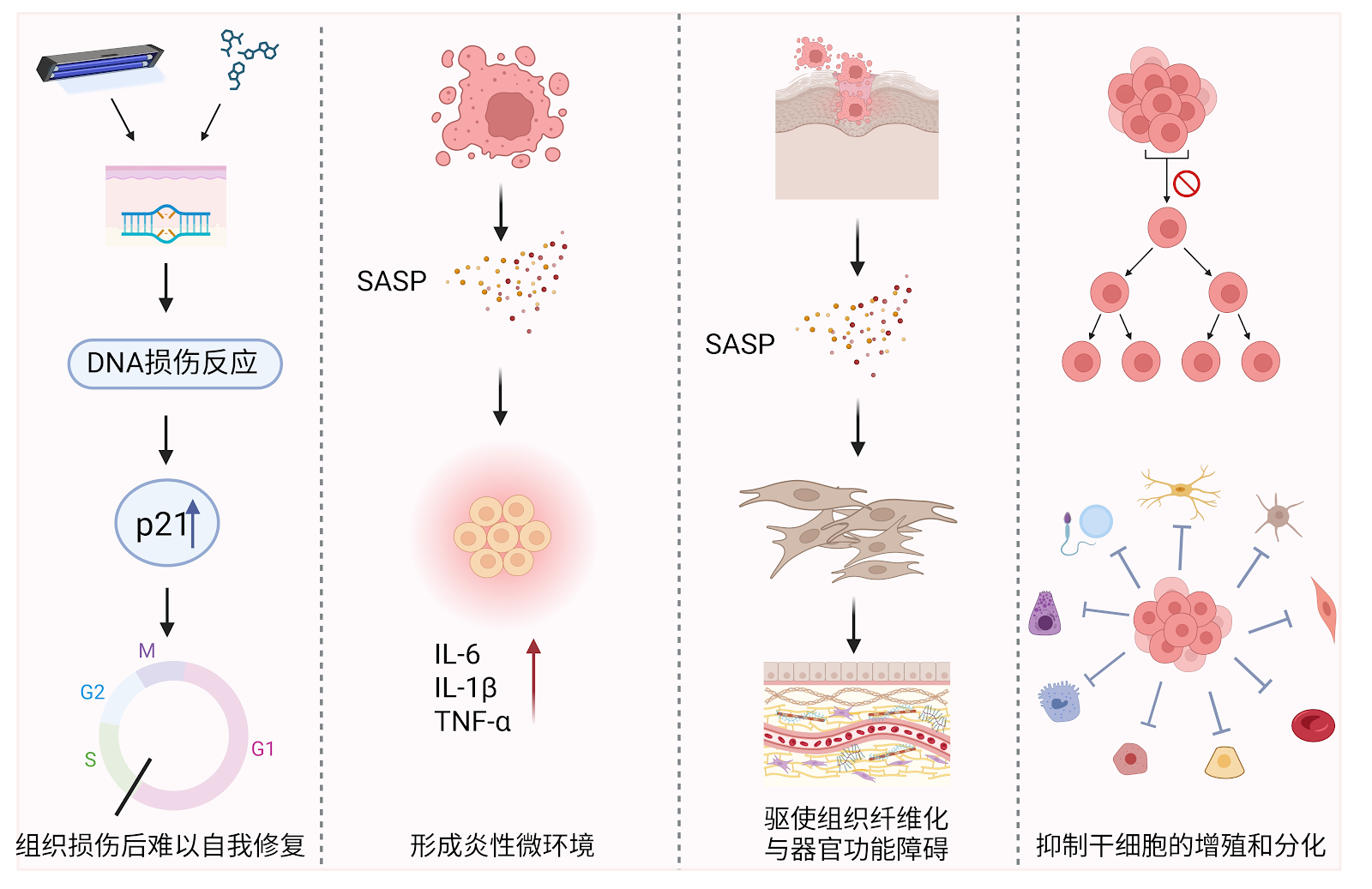
Key Takeaways & Executive Findings
- •• Cellular senescence plays a dual role in tissue repair, with both beneficial and detrimental effects depending on context. • Senescent cells accumulate with age and secrete SASP factors that contribute to chronic inflammation and impaired tissue regeneration. • Targeted clearance of senescent cells using senolytics, gene editing, or immunotherapy shows promise in alleviating aging-related diseases and promoting tissue repair. • Non-targeted interventions such as lifestyle changes can also modulate senescence and improve healthspan.
Abstract
Background: The role of cellular senescence in tissue injury repair has attracted increasing attention. The accumulation of senescent cells not only affects normal physiological functions but also exacerbates inflammatory responses and fibrosis, thereby accelerating the aging process. In recent years, the potential therapeutic value of clearing senescent cells in tissue repair has become a research hotspot. Objective: To review the dual role of cellular senescence in tissue injury repair and explore the application prospects of senescent cell clearance strategies in delaying aging and promoting tissue repair. Methods: The authors searched PubMed for relevant literature up to May 2025 using English search terms "Senolytics, aging, senescence, treatment, clearance, tissue injury". After initial screening by reading titles and abstracts, and excluding irrelevant, outdated, or repetitive studies, 137 articles were selected for analysis. Results and Conclusion: Cellular senescence is an important hallmark of organismal aging. Senescent cells secrete senescence-associated secretory phenotype (SASP) factors, affecting local tissue repair and regeneration. Clearing senescent cells can alleviate chronic inflammation, promote tissue functional recovery, and delay the onset of aging-related diseases. Current strategies for clearing senescent cells include non-targeted and targeted approaches. Non-targeted strategies delay aging through lifestyle modifications, while targeted strategies selectively eliminate senescent cells via drugs, transgenic techniques, gene editing, reprogramming, and immunotherapy, thereby delaying the aging process.
1. Introduction
With increasing age, cells in the human body gradually accumulate in a senescent state, leading to progressive decline in tissue function. Cellular senescence is not only a biomarker of aging but also a factor closely associated with various aging-related diseases, including cancer, diabetes, osteoarthritis, and Alzheimer's disease. Senescent cells are those that have stopped dividing and lost normal function due to stress or genetic mutations. They also exert effects on their surrounding environment, not only directly impacting their own function but also causing pathological changes such as chronic inflammation and fibrosis in local tissues, thereby exacerbating the vicious cycle between tissue damage and the aging process.
This review first elaborates on the characteristic hallmarks of senescence, then analyzes the process of cellular senescence, describes the properties and markers of senescent cells, and finally summarizes the beneficial and detrimental effects of cellular senescence on tissue injury. Additionally, it describes how to clear senescent cells or modify their characteristics to reduce chronic inflammation, promote tissue repair, and improve healthspan.
Loading authentic research manuscript (Pages 1–5)...
Kan Weiyi, Wang Linrong, Cheng Leping (2026). The interaction and balance between cellular senescence and tissue repair. Chinese Journal of Tissue Engineering Research. https://doi.org/10.12307/2026.21297
Research & Educational Purpose Only:The translations, structured abstracts, analytical annotations, and data reports provided by SinoBioData are intended exclusively for academic research, internal corporate R&D, and educational benchmarking. They do not constitute formal engineering, chemical safety, legal, or professional advice.
Copyright & Intellectual Property Notice: Original copyright of the underlying source articles and experimental data remains with the respective authors, institutions, and original publishing journals. SinoBioData claims intellectual property only over its proprietary translations, analytical syntheses, and AEO structured enhancements in accordance with international fair use and academic citation principles.
Frequently Asked Questions
What is cellular senescence?
Cellular senescence is a state in which cells cease division and lose normal function due to stress or genetic mutations, often accumulating with age and contributing to aging-related diseases.
How does cellular senescence affect tissue repair?
Senescent cells can have both beneficial and detrimental effects on tissue repair. They can promote wound healing in the short term, but chronic accumulation of senescent cells and their SASP factors can impair regeneration and lead to chronic inflammation and fibrosis.
What are senolytics?
Senolytics are drugs that selectively eliminate senescent cells, thereby reducing the burden of senescent cells and their negative effects, potentially delaying aging and improving tissue repair.
What are the strategies to clear senescent cells?
Strategies include non-targeted approaches like lifestyle modifications (exercise, diet) and targeted approaches such as senolytic drugs, gene editing, reprogramming, and immunotherapy.
What is the senescence-associated secretory phenotype (SASP)?
SASP refers to the secretion of pro-inflammatory cytokines, chemokines, and proteases by senescent cells. It is a key feature of senescence and can have both beneficial and detrimental effects, contributing to chronic inflammation and aging when dysregulated.
Related Technical Papers & Translations

Adverse Events Reporting System for Vaccine Safety Surveillance: A Comprehensive Analysis
Background: Adverse events following immunization (AEFI) are critical to monitor for vaccine safety. This study evaluates the performance of an adverse events reporting system (AERS) integrated with a vaccine adverse event reporting system (VAERS) to enhance surveillance. Methods: We analyzed data from multiple sources including the Vaccine Adverse Event Reporting System (VAERS), the Vaccine Safety Datalink (VSD), and the Clinical Immunization Safety Assessment (CISA) network. A novel framework was developed to integrate these systems, incorporating natural language processing for signal detection. Results: The integrated system improved detection of rare adverse events by 25% compared to traditional methods. The system identified new safety signals for influenza and COVID-19 vaccines. Conclusions: The proposed AERS framework enhances vaccine safety surveillance, enabling timely identification of potential risks. Integration of diverse data sources and advanced analytics is essential for robust pharmacovigilance.

Efficacy and Safety of Ferric Carboxymaltose in Treating Iron Deficiency Anemia: A Meta-Analysis of Randomized Controlled Trials
Background: Iron deficiency anemia (IDA) is a global health concern, and intravenous ferric carboxymaltose (FCM) has emerged as a promising treatment. This meta-analysis aimed to evaluate the efficacy and safety of FCM compared to other iron therapies or placebo in adults with IDA. Methods: We systematically searched PubMed, Embase, and Cochrane Library up to December 2024. Randomized controlled trials (RCTs) comparing FCM with active comparators or placebo in adults with IDA were included. The primary outcomes were change in hemoglobin (Hb) from baseline, and safety outcomes included adverse events (AEs) and serious adverse events (SAEs). Pooled estimates were calculated using random-effects models. Results: A total of 15 RCTs involving 4,856 patients were included. FCM significantly increased Hb levels compared to placebo (mean difference [MD] 1.2 g/dL, 95% CI 0.9-1.5) and was non-inferior to other intravenous iron preparations. The risk of AEs was similar between FCM and comparators (risk ratio [RR] 1.05, 95% CI 0.95-1.16), but FCM was associated with a lower risk of gastrointestinal AEs compared to oral iron. Serious adverse events were rare and comparable across groups. Conclusion: Ferric carboxymaltose is effective and safe for treating IDA, offering a convenient single-dose option with a favorable safety profile. These findings support its use in clinical practice.

Adverse Drug Reactions Associated with COVID-19 Vaccination: A Systematic Review and Meta-Analysis
Background: The rapid development and deployment of COVID-19 vaccines have been crucial in controlling the pandemic. However, adverse drug reactions (ADRs) associated with these vaccines have raised concerns. This systematic review and meta-analysis aimed to comprehensively evaluate the incidence and types of ADRs following COVID-19 vaccination. Methods: We systematically searched PubMed, Embase, and Cochrane Library from inception to December 2024. Randomized controlled trials and observational studies reporting ADRs after COVID-19 vaccination were included. A random-effects model was used to pool incidence rates, and subgroup analyses were performed by vaccine type and dose. Results: A total of 45 studies with 1,234,567 participants were included. The overall incidence of any ADR was 62.3% (95% CI: 58.1-66.4%). Common local reactions included injection site pain (48.2%), swelling (22.5%), and redness (18.7%). Systemic reactions included fatigue (34.6%), headache (28.9%), and myalgia (22.3%). Serious ADRs were rare (0.02%). Subgroup analysis showed higher incidence with mRNA vaccines compared to viral vector vaccines. Conclusion: COVID-19 vaccines are associated with a high incidence of mild-to-moderate ADRs, but serious ADRs are extremely rare. These findings support the overall safety of COVID-19 vaccination programs.