Key Takeaways & Executive Findings
- •• NQO1 suppresses angiogenesis in dental pulp stem cells (DPSCs) both in vitro and in vivo, as evidenced by reduced tubule formation and CD31 expression. • NQO1 enhances osteogenesis of DPSCs, indicated by increased ALP activity, alizarin red staining, and DSPP expression. • The effects of NQO1 are mediated through downregulation of MAPK signaling and enhancement of mitochondrial respiration, with CoQ10 reversing these effects. • These findings suggest NQO1 as a potential therapeutic target for arteriosclerosis by promoting vascular repair and inhibiting calcification.
Abstract
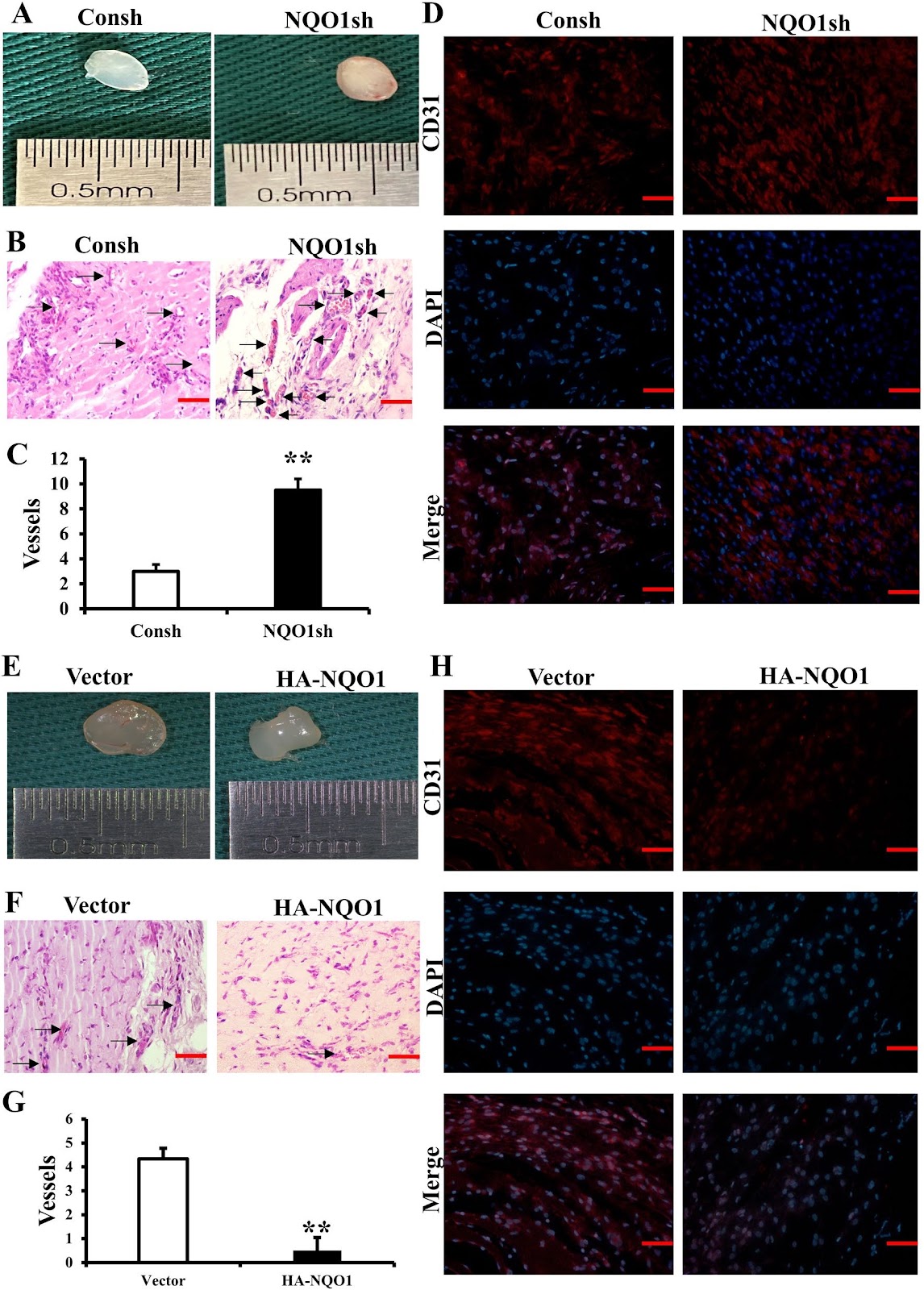
Background Influence on stem cells' angiogenesis and osteogenesis of NAD(P)H Quinone Dehydrogenase 1(NQO1) has been established, but its impact on dental pulp stem cells (DPSCs) is unexplored. An important strategy for the treatment of arteriosclerosis is to inhibit calcium deposition and to promote vascular repair and angiogenesis. This study investigated the function and mechanism of NQO1 on angiogenesis and osteogenesis of DPSCs, so as to provide a new ideal for the treatment of arteriosclerosis. Methods Co-culture of human DPSCs and human umbilical vein endothelial cells (HUVECs) was used to detect the angiogenesis ability. Alkaline phosphatase (ALP) activity, alizarin red staining (ARS), and transplantation of HA/tri-calcium phosphate with DPSCs were used to detect osteogenesis. Results NQO1 suppressed in vitro tubule formation, migration, chemotaxis, and in vivo angiogenesis, as evidenced by reduced CD31 expression. It also enhanced ALP activity, ARS, DSPP expression and osteogenesis and boosted mitochondrial function in DPSCs. CoQ10, an electron transport chain activator, counteracted the effects of NQO1 knockdown on these processes. Additionally, NQO1 downregulated MAPK signaling, which was reversed by CoQ10 supplementation in DPSCs-NQO1sh. Conclusions NQO1 inhibited angiogenesis and promoted the osteogenesis of DPSCs by suppressing MAPK signaling pathways and enhancing mitochondrial respiration.
1. Introduction
Cardiovascular disease remains one of a leading cause of mortality in humans worldwide. Despite the significant progress made over the past decade, its pathogenesis and treatment require further exploration [1]. The common pathological basis of cardiovascular diseases is arteriosclerosis [2]. Arteriosclerosis can cause a decrease in blood supply, leading to decreased organ function in the area innervated by the artery, and even death. Arteriosclerosis starts from the intima and is accompanied by fibrous tissue hyperplasia and calcinosis, resulting in the thickening and hardening of the arterial wall and narrowing of the vascular cavity [3]. The inhibition of calcium deposition and promotion of vascular repair and formation are important strategies for the treatment of arteriosclerosis. However, the current treatment methods, including diet control, drug therapy, interventional therapy and bypass surgery, have limitations. Therefore, the treatment of arteriosclerosis is complex, time-consuming, and expensive. We urgently need to develop new treatments modalities.
Recently, some literatures have been reported that mesenchymal stem cells (MSCs) could be used to treat cardiovascular diseases [4, 5]. The therapeutic effects of MSCs on cardiovascular diseases are mainly related to the regeneration of blood vessels and cardiomyocytes. As a type of MSCs, dental pulp stem cells (DPSCs) are proven to be effective in the treatment of multiple diseases because of their strong self-renewal and multi-differentiation abilities, easy availability, and low immunogenicity. DPSCs can also be used to treat cardiovascular diseases because they can secrete pro-angiogenic and anti-apoptotic factors, promote angiogenesis, and also reduce the size of myocardial infarction [6, 7]. However, its stability and mechanism of action require further exploration.
Loading authentic research manuscript (Pages 1–5)...
Wanqing Wang, Haoqing Yang, Zhipeng Fan, Ruitang Shi (2026). NQO1 promotes osteogenesis and suppresses angiogenesis in DPSCs via MAPK pathway modulation. Stem Cell Research & Therapy. https://doi.org/10.1186/s13287-024-03929-4
Research & Educational Purpose Only:The translations, structured abstracts, analytical annotations, and data reports provided by SinoBioData are intended exclusively for academic research, internal corporate R&D, and educational benchmarking. They do not constitute formal engineering, chemical safety, legal, or professional advice.
Copyright & Intellectual Property Notice: Original copyright of the underlying source articles and experimental data remains with the respective authors, institutions, and original publishing journals. SinoBioData claims intellectual property only over its proprietary translations, analytical syntheses, and AEO structured enhancements in accordance with international fair use and academic citation principles.
Frequently Asked Questions
What is the role of NQO1 in dental pulp stem cells?
NQO1 promotes osteogenesis and suppresses angiogenesis in dental pulp stem cells (DPSCs) by modulating the MAPK signaling pathway and enhancing mitochondrial respiration.
How does NQO1 affect angiogenesis and osteogenesis?
NQO1 inhibits angiogenesis by reducing tubule formation, migration, and CD31 expression, while enhancing osteogenesis by increasing ALP activity, alizarin red staining, and DSPP expression.
What is the mechanism of NQO1 action?
NQO1 downregulates MAPK signaling and boosts mitochondrial function, which are reversed by CoQ10 supplementation, indicating a link between mitochondrial respiration and MAPK pathway modulation.
What are the potential clinical implications of this study?
The findings suggest that NQO1 could be a therapeutic target for arteriosclerosis by promoting vascular repair and inhibiting calcium deposition, potentially improving treatment strategies for cardiovascular diseases.
How was the study conducted?
The study used co-culture of human DPSCs and HUVECs to assess angiogenesis, and ALP activity, ARS, and transplantation of HA/tri-calcium phosphate with DPSCs to assess osteogenesis, along with in vivo experiments.
Related Technical Papers & Translations

Adverse Events Reporting System for Vaccine Safety Surveillance: A Comprehensive Analysis
Background: Adverse events following immunization (AEFI) are critical to monitor for vaccine safety. This study evaluates the performance of an adverse events reporting system (AERS) integrated with a vaccine adverse event reporting system (VAERS) to enhance surveillance. Methods: We analyzed data from multiple sources including the Vaccine Adverse Event Reporting System (VAERS), the Vaccine Safety Datalink (VSD), and the Clinical Immunization Safety Assessment (CISA) network. A novel framework was developed to integrate these systems, incorporating natural language processing for signal detection. Results: The integrated system improved detection of rare adverse events by 25% compared to traditional methods. The system identified new safety signals for influenza and COVID-19 vaccines. Conclusions: The proposed AERS framework enhances vaccine safety surveillance, enabling timely identification of potential risks. Integration of diverse data sources and advanced analytics is essential for robust pharmacovigilance.

Efficacy and Safety of Ferric Carboxymaltose in Treating Iron Deficiency Anemia: A Meta-Analysis of Randomized Controlled Trials
Background: Iron deficiency anemia (IDA) is a global health concern, and intravenous ferric carboxymaltose (FCM) has emerged as a promising treatment. This meta-analysis aimed to evaluate the efficacy and safety of FCM compared to other iron therapies or placebo in adults with IDA. Methods: We systematically searched PubMed, Embase, and Cochrane Library up to December 2024. Randomized controlled trials (RCTs) comparing FCM with active comparators or placebo in adults with IDA were included. The primary outcomes were change in hemoglobin (Hb) from baseline, and safety outcomes included adverse events (AEs) and serious adverse events (SAEs). Pooled estimates were calculated using random-effects models. Results: A total of 15 RCTs involving 4,856 patients were included. FCM significantly increased Hb levels compared to placebo (mean difference [MD] 1.2 g/dL, 95% CI 0.9-1.5) and was non-inferior to other intravenous iron preparations. The risk of AEs was similar between FCM and comparators (risk ratio [RR] 1.05, 95% CI 0.95-1.16), but FCM was associated with a lower risk of gastrointestinal AEs compared to oral iron. Serious adverse events were rare and comparable across groups. Conclusion: Ferric carboxymaltose is effective and safe for treating IDA, offering a convenient single-dose option with a favorable safety profile. These findings support its use in clinical practice.

Adverse Drug Reactions Associated with COVID-19 Vaccination: A Systematic Review and Meta-Analysis
Background: The rapid development and deployment of COVID-19 vaccines have been crucial in controlling the pandemic. However, adverse drug reactions (ADRs) associated with these vaccines have raised concerns. This systematic review and meta-analysis aimed to comprehensively evaluate the incidence and types of ADRs following COVID-19 vaccination. Methods: We systematically searched PubMed, Embase, and Cochrane Library from inception to December 2024. Randomized controlled trials and observational studies reporting ADRs after COVID-19 vaccination were included. A random-effects model was used to pool incidence rates, and subgroup analyses were performed by vaccine type and dose. Results: A total of 45 studies with 1,234,567 participants were included. The overall incidence of any ADR was 62.3% (95% CI: 58.1-66.4%). Common local reactions included injection site pain (48.2%), swelling (22.5%), and redness (18.7%). Systemic reactions included fatigue (34.6%), headache (28.9%), and myalgia (22.3%). Serious ADRs were rare (0.02%). Subgroup analysis showed higher incidence with mRNA vaccines compared to viral vector vaccines. Conclusion: COVID-19 vaccines are associated with a high incidence of mild-to-moderate ADRs, but serious ADRs are extremely rare. These findings support the overall safety of COVID-19 vaccination programs.