Key Takeaways & Executive Findings
- •• MB-exos suppress ferroptosis in endometrial stromal cells, promoting recovery of injured rat uterus. • MB-exos downregulate METTL3, reducing m6A modification levels and stabilizing HMOX1 mRNA to inhibit ferroptosis. • YTHDF2 is identified as the m6A reader that degrades HMOX1 mRNA, a key mechanism in ferroptosis regulation. • Targeting m6A modification and ferroptosis offers a novel therapeutic strategy for endometrial injury and intrauterine adhesions.
Abstract
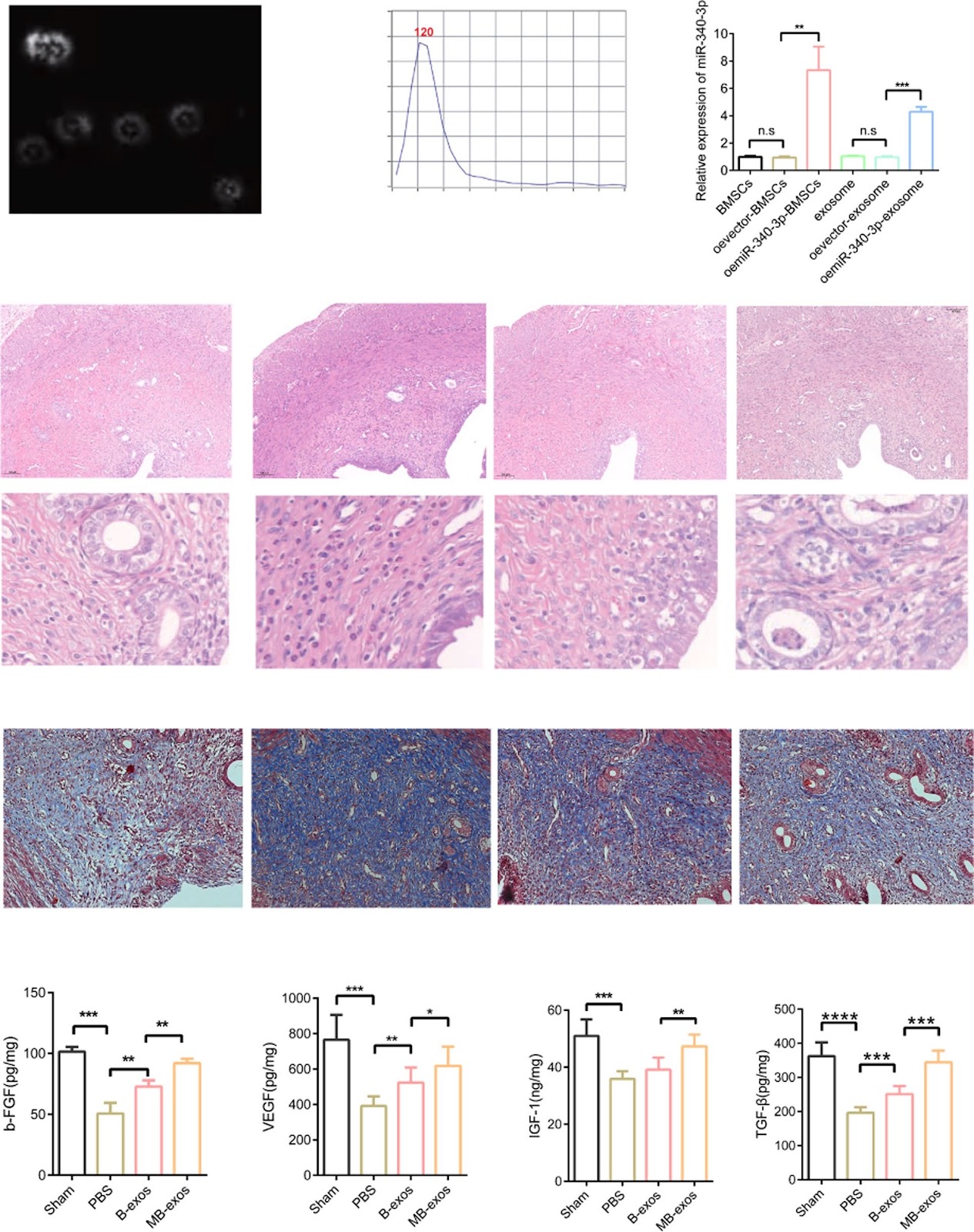
Background Ferroptosis is associated with the pathological progression of hemorrhagic injury and ischemia–reperfusion injury. According to our previous study, exosomes formed through bone marrow mesenchymal stem cells modified with miR-340-3p (MB-exos) can restore damaged endometrium. However, the involvement of ferroptosis in endometrial injury and the effect of MB-exos on ferroptosis remain elusive. Methods The endometrial injury rat model was developed. Exosomes were obtained from the supernatants of bone marrow mesenchymal stromal cells (BMSCs) and miR-340/BMSCs through differential centrifugation. We conducted RNA-seq analysis on endometrial tissues obtained from the PBS and MB-exos groups. Ferroptosis was induced in endometrial stromal cells (ESCs) by treating them with erastin or RSL3, followed by treatment with B-exos or MB-exos. We assessed the endometrial total m6A modification level after injury and subsequent treatment with B-exos or MB-exos by methylation quantification assay. We performed meRIP-qPCR to analyze m6A modification-regulated endogenous mRNAs. Results We reveal that MB-exos facilitate the injured endometrium to recover by suppressing ferroptosis in endometrial stromal cells. The injured endometrium showed significantly upregulated N6-methyladenosine (m6A) modification levels; these levels were attenuated by MB-exos through downregulation of the methylase METTL3. Intriguingly, METTL3 downregulation appears to repress ferroptosis by stabilizing HMOX1 mRNA, thereby potentially elucidating the mechanism through which MB-exos inhibit ferroptosis in ESCs. We identified YTHDF2 as a critical m6A reader protein that contributes to HMOX1 mRNA degradation. YTHDF2 facilitates HMOX1 mRNA degradation by identifying the m6A binding site in the 3′-untranslated regions of HMOX1. In a rat model, treatment with MB-exos ameliorated endometrial injury-induced fibrosis by inhibiting ferroptosis in ESCs. Moreover, METTL3 short hairpin RNA-mediated inhibition of m6A modification enhanced the inhibitory effect of MB-exos on ferroptosis in endometrial injury. Conclusions Thus, these observations provide new insights regarding the molecular mechanisms responsible for endometrial recovery promotion by MB-exos and highlight m6A modification-dependent ferroptosis inhibition as a prospective therapeutic target to attenuate endometrial injury.
1. Introduction
Intrauterine adhesions (IUAs) refer to an iatrogenic condition characterized by the deterioration of functional endometrium in multiple regions, leading to deterioration of the uterine cavity. This condition develops from aggressive or repeated curettages and/or endometritis, resulting in various complications, including amenorrhea, recurrent pregnancy loss, abnormal placentation, infertility, and psychological distress [1]. IUAs incidence in women with infertility ranges from 2 to 22% [2, 3]. Currently, there is no competent method to prevent IUAs reformation. Surgical treatment with lysis of adhesions through hysteroscopy is the primary therapy for IUAs. However, this approach has shown inconsistent results in alleviating symptoms and improving pregnancy rates [2, 4]. Therefore, alternative approaches are required for treating IUA-related infertility.
Ferroptosis, a distinct cell death pathway, results from iron-dependent oxidation of phospholipids containing polyunsaturated fatty acyl tails [5]. As shown recently, ferroptosis participates in the pathological processes of hemorrhagic injury [6]. Morphological changes in mitochondria, a characteristic of ferroptosis, are observed in nerve cells surrounding hematomas, which provides strong evidence for ferroptosis occurrence after cerebral hemorrhage [7]. Ferroptosis inhibition using ferrostatin 1 is a promising approach in reducing hemorrhagic secondary injury and iron deposition in models.
Loading authentic research manuscript (Pages 1–5)...
Bang Xiao, Yiqing Zhu, Meng Liu, Meiting Chen, Chao Huang, Dabing Xu, Fang Wang, Shuhan Sun, Jinfeng Huang, Ningxia Sun, Fu Yang (2026). miR-340-3p-modified bone marrow mesenchymal stem cell-derived exosomes inhibit ferroptosis through METTL3-mediated m6A modification of HMOX1 to promote recovery of injured rat uterus. Stem Cell Research & Therapy. https://doi.org/10.1186/s13287-024-03846-6
Research & Educational Purpose Only:The translations, structured abstracts, analytical annotations, and data reports provided by SinoBioData are intended exclusively for academic research, internal corporate R&D, and educational benchmarking. They do not constitute formal engineering, chemical safety, legal, or professional advice.
Copyright & Intellectual Property Notice: Original copyright of the underlying source articles and experimental data remains with the respective authors, institutions, and original publishing journals. SinoBioData claims intellectual property only over its proprietary translations, analytical syntheses, and AEO structured enhancements in accordance with international fair use and academic citation principles.
Frequently Asked Questions
What is the role of miR-340-3p-modified exosomes in endometrial injury?
The study shows that exosomes derived from bone marrow mesenchymal stem cells modified with miR-340-3p (MB-exos) promote recovery of injured rat uterus by suppressing ferroptosis in endometrial stromal cells.
How do MB-exos inhibit ferroptosis in endometrial stromal cells?
MB-exos downregulate the methylase METTL3, leading to reduced m6A modification levels. This stabilizes HMOX1 mRNA, which in turn inhibits ferroptosis. The m6A reader protein YTHDF2 is involved in degrading HMOX1 mRNA, and its action is counteracted by METTL3 downregulation.
What is the significance of m6A modification in endometrial injury?
The injured endometrium shows significantly upregulated m6A modification levels. MB-exos attenuate these levels, and inhibiting m6A modification enhances the therapeutic effect of MB-exos, highlighting m6A modification as a potential therapeutic target.
What are the clinical implications of this research?
This research provides new insights into the molecular mechanisms of endometrial recovery and suggests that targeting m6A modification-dependent ferroptosis inhibition could be a prospective therapeutic strategy for endometrial injury and intrauterine adhesions.
Related Technical Papers & Translations

Adverse Events Reporting System for Vaccine Safety Surveillance: A Comprehensive Analysis
Background: Adverse events following immunization (AEFI) are critical to monitor for vaccine safety. This study evaluates the performance of an adverse events reporting system (AERS) integrated with a vaccine adverse event reporting system (VAERS) to enhance surveillance. Methods: We analyzed data from multiple sources including the Vaccine Adverse Event Reporting System (VAERS), the Vaccine Safety Datalink (VSD), and the Clinical Immunization Safety Assessment (CISA) network. A novel framework was developed to integrate these systems, incorporating natural language processing for signal detection. Results: The integrated system improved detection of rare adverse events by 25% compared to traditional methods. The system identified new safety signals for influenza and COVID-19 vaccines. Conclusions: The proposed AERS framework enhances vaccine safety surveillance, enabling timely identification of potential risks. Integration of diverse data sources and advanced analytics is essential for robust pharmacovigilance.

Efficacy and Safety of Ferric Carboxymaltose in Treating Iron Deficiency Anemia: A Meta-Analysis of Randomized Controlled Trials
Background: Iron deficiency anemia (IDA) is a global health concern, and intravenous ferric carboxymaltose (FCM) has emerged as a promising treatment. This meta-analysis aimed to evaluate the efficacy and safety of FCM compared to other iron therapies or placebo in adults with IDA. Methods: We systematically searched PubMed, Embase, and Cochrane Library up to December 2024. Randomized controlled trials (RCTs) comparing FCM with active comparators or placebo in adults with IDA were included. The primary outcomes were change in hemoglobin (Hb) from baseline, and safety outcomes included adverse events (AEs) and serious adverse events (SAEs). Pooled estimates were calculated using random-effects models. Results: A total of 15 RCTs involving 4,856 patients were included. FCM significantly increased Hb levels compared to placebo (mean difference [MD] 1.2 g/dL, 95% CI 0.9-1.5) and was non-inferior to other intravenous iron preparations. The risk of AEs was similar between FCM and comparators (risk ratio [RR] 1.05, 95% CI 0.95-1.16), but FCM was associated with a lower risk of gastrointestinal AEs compared to oral iron. Serious adverse events were rare and comparable across groups. Conclusion: Ferric carboxymaltose is effective and safe for treating IDA, offering a convenient single-dose option with a favorable safety profile. These findings support its use in clinical practice.

Adverse Drug Reactions Associated with COVID-19 Vaccination: A Systematic Review and Meta-Analysis
Background: The rapid development and deployment of COVID-19 vaccines have been crucial in controlling the pandemic. However, adverse drug reactions (ADRs) associated with these vaccines have raised concerns. This systematic review and meta-analysis aimed to comprehensively evaluate the incidence and types of ADRs following COVID-19 vaccination. Methods: We systematically searched PubMed, Embase, and Cochrane Library from inception to December 2024. Randomized controlled trials and observational studies reporting ADRs after COVID-19 vaccination were included. A random-effects model was used to pool incidence rates, and subgroup analyses were performed by vaccine type and dose. Results: A total of 45 studies with 1,234,567 participants were included. The overall incidence of any ADR was 62.3% (95% CI: 58.1-66.4%). Common local reactions included injection site pain (48.2%), swelling (22.5%), and redness (18.7%). Systemic reactions included fatigue (34.6%), headache (28.9%), and myalgia (22.3%). Serious ADRs were rare (0.02%). Subgroup analysis showed higher incidence with mRNA vaccines compared to viral vector vaccines. Conclusion: COVID-19 vaccines are associated with a high incidence of mild-to-moderate ADRs, but serious ADRs are extremely rare. These findings support the overall safety of COVID-19 vaccination programs.