Key Takeaways & Executive Findings
- •• Melatonin reduces oxidative stress and lipid peroxidation in hypoxic cardiomyocytes, inhibiting ferroptosis. • Melatonin improves myocardial infarction size, cardiac injury, and pathological changes in a rat model of AMI. • The cardioprotective effect of melatonin is linked to suppression of iron accumulation and ferroptosis. • Targeting ferroptosis with melatonin may offer a novel therapeutic strategy for acute myocardial infarction.
Abstract
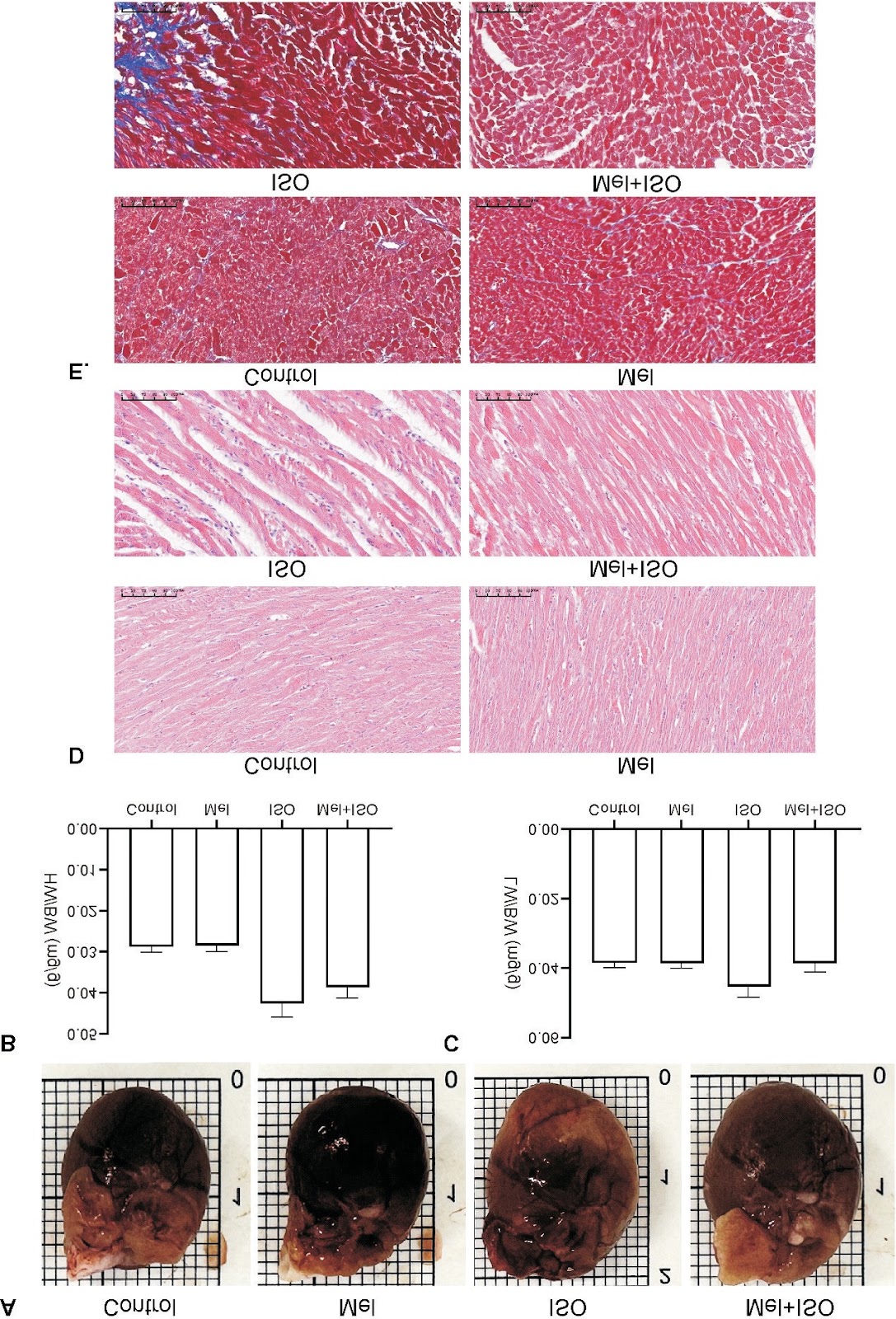
AIM: To investigate whether melatonin can ameliorate acute myocardial infarction (AMI) by inhibiting ferroptosis. METHODS: H9C2 cells were cultured in AnaeroPack system with low sugar and serum-free medium for 10 h to construct a cell model of AMI. Then cells were treated with melatonin and ferroptosis inducer erastin. The cell activity, reactive oxygen species (ROS), lipid peroxidation, mitochondrial membrane potential (MMP), and ferroptosis related protein expression were detected. A rat model of AMI induced by isoprenaline (ISO) injection was established to evaluate the effects of melatonin, in which the myocardial infarction size, cardiac injury, pathological changes, oxidative stress, iron ion and ferroptosis related protein expression were examined. RESULTS: Melatonin decreased the oxidative stress, lipid peroxidation and expression of ferroptosis protein in cardiomyocytes induced by hypoxia, but these effects could be impeded by the ferroptosis inducer erastin. Furthermore, in vivo experiments, we also found that melatonin improved the myocardial infarction size, cardiac injury, pathological changes, oxidative stress, and alleviated iron ion accumulation and ferroptosis. CONCLUSION: The cardioprotective effects of melatonin in AMI are associated with the inhibition of ferroptosis.
1. Introduction
Cardiovascular disease (CVD) is the most common cause of death worldwide and acute myocardial infarction (AMI) is a life-threatening acute CVD [1-3]. AMI is caused by complete occlusion of coronary artery, resulting in myocardial cell ischemia and myocardial necrosis. Although pharmacological thrombolytic therapy and percutaneous coronary intervention (PCI) significantly improve the outcomes for patients with AMI [4-5], 7% of patients die and 22% of survivors may develop chronic heart failure in 1 year after AMI [1]. Therefore, it is urgent to find innovative therapeutic methods for AMI.
Ferroptosis is a mode of programmed cell death caused by iron-dependent lipid peroxidation and the accumulation of reactive oxygen species (ROS) [6]. It is regulated by a variety of cellular metabolic pathways, including redox homeostasis, iron metabolism, mitochondrial activity, and metabolism of amino acids, lipids, and sugars [7-8]. Numerous investigations have shown that the destruction of iron homeostasis can promote the occurrence and development of CVD [7, 9]. In AMI, inhibition of ferroptosis or iron chelation can provide cardioprotective benefits, suggesting that targeting ferroptosis may be a promising novel treatment strategy for AMI [10-11].
Melatonin (Mel) is a main hormone secreted by pineal gland, plays an important role in circadian rhythm regulation, and is a famous antioxidant and free radical scavenger [12-15]. After the concept of ferroptosis was introduced, researchers found that Mel can improve neurodegenerative diseases [16], nonalcoholic fatty liver disease [17], retinal ischemia reperfusion injury [18], acute kidney injury [19], intervertebral disc degeneration and other diseases by inhibiting ferroptosis [20]. Earlier studies have shown that reduced nocturnal Mel levels during AMI are associated with increased oxidative stress [21]. In addition, Mel can protect AMI patients by scavenging free radicals, anti-inflammatory, reducing calcium overload and inhibiting lipid peroxidation [21-23]. The effect of Mel on AMI is closely related to the characteristics of ferroptosis. However, in AMI, there is no clear research revealing that Mel can alleviate AMI by regulating ferroptosis. Therefore, in this study, we explored whether the ameliorative effect of Mel on AMI is connected with ferroptosis.
Loading authentic research manuscript (Pages 1–5)...
HUANG Xiaohui, WEN Weixing, CHEN Peng, LI Weiwen, LI Jiahuan, CAO Yue, HU Yunzhao, HUANG Yuli (2026). Melatonin alleviated acute myocardial infarction by inhibiting ferroptosis. Chinese Journal of Pathophysiology. https://doi.org/10.3969/j.issn.1000-4718.2025.09.002
Research & Educational Purpose Only:The translations, structured abstracts, analytical annotations, and data reports provided by SinoBioData are intended exclusively for academic research, internal corporate R&D, and educational benchmarking. They do not constitute formal engineering, chemical safety, legal, or professional advice.
Copyright & Intellectual Property Notice: Original copyright of the underlying source articles and experimental data remains with the respective authors, institutions, and original publishing journals. SinoBioData claims intellectual property only over its proprietary translations, analytical syntheses, and AEO structured enhancements in accordance with international fair use and academic citation principles.
Frequently Asked Questions
What is the main finding of this study?
The study demonstrates that melatonin alleviates acute myocardial infarction by inhibiting ferroptosis, a form of iron-dependent cell death.
How was the effect of melatonin tested?
The effect was tested in vitro using H9C2 cardiomyocytes under hypoxic conditions and in vivo using a rat model of AMI induced by isoprenaline injection.
What are the potential clinical implications?
Melatonin could be a novel therapeutic agent for AMI by targeting ferroptosis, potentially reducing myocardial injury and improving outcomes.
What is ferroptosis?
Ferroptosis is a programmed cell death mechanism characterized by iron-dependent lipid peroxidation and accumulation of reactive oxygen species.
How does melatonin inhibit ferroptosis?
Melatonin reduces oxidative stress, lipid peroxidation, and iron accumulation, thereby suppressing ferroptosis in cardiomyocytes.
Related Technical Papers & Translations

Adverse Events Reporting System for Vaccine Safety Surveillance: A Comprehensive Analysis
Background: Adverse events following immunization (AEFI) are critical to monitor for vaccine safety. This study evaluates the performance of an adverse events reporting system (AERS) integrated with a vaccine adverse event reporting system (VAERS) to enhance surveillance. Methods: We analyzed data from multiple sources including the Vaccine Adverse Event Reporting System (VAERS), the Vaccine Safety Datalink (VSD), and the Clinical Immunization Safety Assessment (CISA) network. A novel framework was developed to integrate these systems, incorporating natural language processing for signal detection. Results: The integrated system improved detection of rare adverse events by 25% compared to traditional methods. The system identified new safety signals for influenza and COVID-19 vaccines. Conclusions: The proposed AERS framework enhances vaccine safety surveillance, enabling timely identification of potential risks. Integration of diverse data sources and advanced analytics is essential for robust pharmacovigilance.

Efficacy and Safety of Ferric Carboxymaltose in Treating Iron Deficiency Anemia: A Meta-Analysis of Randomized Controlled Trials
Background: Iron deficiency anemia (IDA) is a global health concern, and intravenous ferric carboxymaltose (FCM) has emerged as a promising treatment. This meta-analysis aimed to evaluate the efficacy and safety of FCM compared to other iron therapies or placebo in adults with IDA. Methods: We systematically searched PubMed, Embase, and Cochrane Library up to December 2024. Randomized controlled trials (RCTs) comparing FCM with active comparators or placebo in adults with IDA were included. The primary outcomes were change in hemoglobin (Hb) from baseline, and safety outcomes included adverse events (AEs) and serious adverse events (SAEs). Pooled estimates were calculated using random-effects models. Results: A total of 15 RCTs involving 4,856 patients were included. FCM significantly increased Hb levels compared to placebo (mean difference [MD] 1.2 g/dL, 95% CI 0.9-1.5) and was non-inferior to other intravenous iron preparations. The risk of AEs was similar between FCM and comparators (risk ratio [RR] 1.05, 95% CI 0.95-1.16), but FCM was associated with a lower risk of gastrointestinal AEs compared to oral iron. Serious adverse events were rare and comparable across groups. Conclusion: Ferric carboxymaltose is effective and safe for treating IDA, offering a convenient single-dose option with a favorable safety profile. These findings support its use in clinical practice.

Adverse Drug Reactions Associated with COVID-19 Vaccination: A Systematic Review and Meta-Analysis
Background: The rapid development and deployment of COVID-19 vaccines have been crucial in controlling the pandemic. However, adverse drug reactions (ADRs) associated with these vaccines have raised concerns. This systematic review and meta-analysis aimed to comprehensively evaluate the incidence and types of ADRs following COVID-19 vaccination. Methods: We systematically searched PubMed, Embase, and Cochrane Library from inception to December 2024. Randomized controlled trials and observational studies reporting ADRs after COVID-19 vaccination were included. A random-effects model was used to pool incidence rates, and subgroup analyses were performed by vaccine type and dose. Results: A total of 45 studies with 1,234,567 participants were included. The overall incidence of any ADR was 62.3% (95% CI: 58.1-66.4%). Common local reactions included injection site pain (48.2%), swelling (22.5%), and redness (18.7%). Systemic reactions included fatigue (34.6%), headache (28.9%), and myalgia (22.3%). Serious ADRs were rare (0.02%). Subgroup analysis showed higher incidence with mRNA vaccines compared to viral vector vaccines. Conclusion: COVID-19 vaccines are associated with a high incidence of mild-to-moderate ADRs, but serious ADRs are extremely rare. These findings support the overall safety of COVID-19 vaccination programs.