Key Takeaways & Executive Findings
- •• Established a proof-of-principle pipeline for generating patient-specific lung cancer and healthy lung organoids from iPSCs and tumor tissue, enabling personalized drug testing. • Demonstrated successful differentiation of iPSCs into branching lung organoids (BLO) and patient-matched lung cancer organoids (LCO) with appropriate lung and cancer marker expression. • Showed that iPSC-MSC-derived extracellular vesicles (EVs) can be loaded with cisplatin, but at the tested low concentration (0.07 µg/mL) they did not induce cytotoxicity in organoid models, highlighting the need for optimized drug loading and dosing. • Concluded that while the pipeline is feasible for research, its time- and labor-intensive nature currently limits its application in personalized medicine approaches.
Abstract
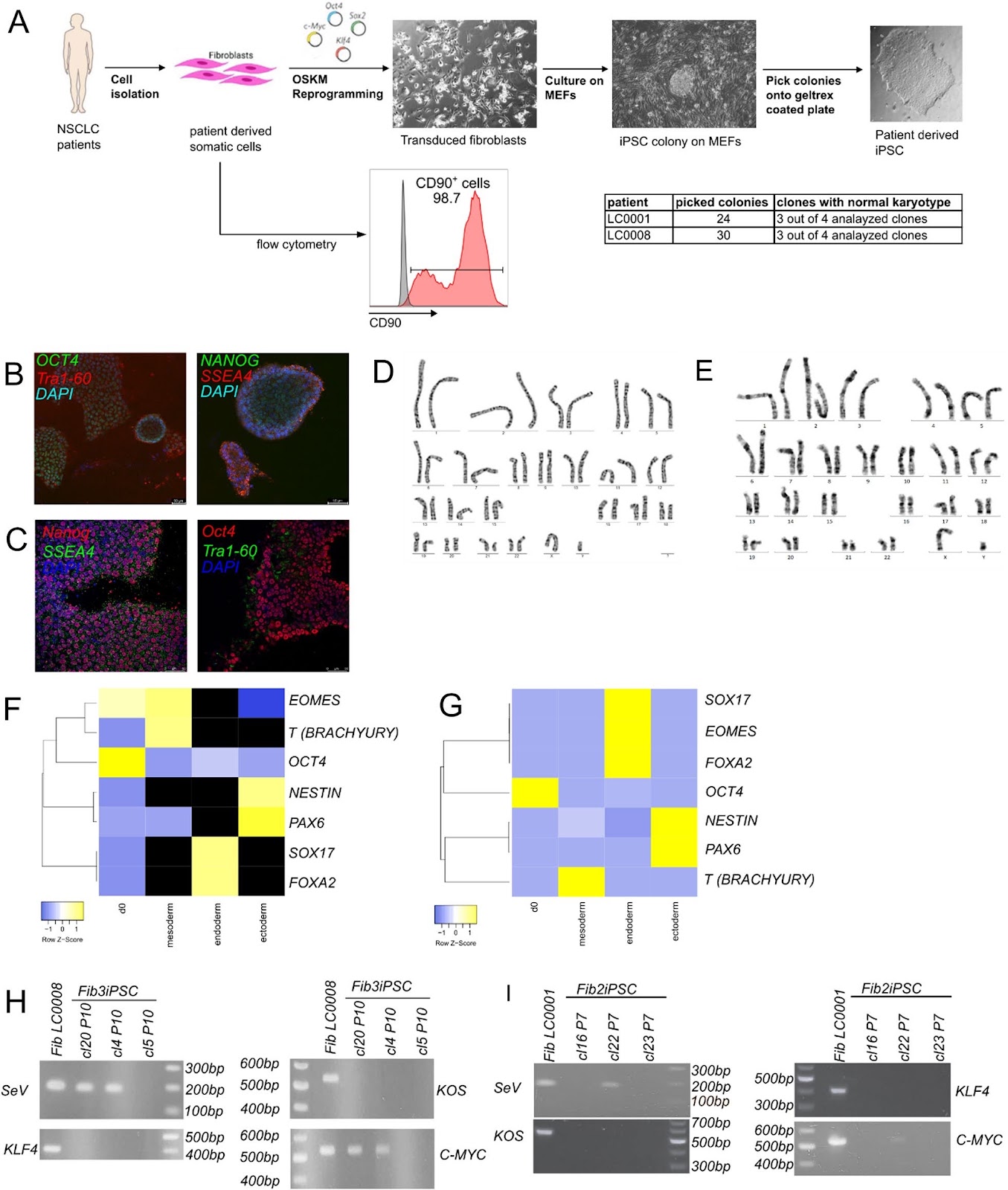
Background Lung cancer remains a leading cause of cancer-related mortality globally. Although recent therapeutic advancements have provided targeted treatment approaches, the development of resistance and systemic toxicity remain primary concerns. Extracellular vesicles (EVs), especially those derived from mesenchymal stromal cells (MSC), have gained attention as promising drug delivery systems, offering biocompatibility and minimal immune responses. Recognizing the limitations of conventional 2D cell culture systems in mimicking the tumor microenvironment, this study aims to describe a proof-of-principle approach for using patient-specific organoid models for both lung cancer and normal lung tissue and the feasibility of employing autologous EVs derived from induced pluripotent stem cell (iPSC)-MSC in personalized medicine approaches. Methods First, we reprogrammed healthy fibroblasts into iPSC. Next, we differentiated patient-derived iPSC into branching lung organoids (BLO) and generated patient-matched lung cancer organoids (LCO) from patient-derived tumor tissue. We show a streamlined process of MSC differentiation from iPSC and EV isolation from iPSC-MSC, encapsulated with 0.07 µg/mL of cytotoxic agent cisplatin and applied to both organoid models. Cytotoxicity of cisplatin and cisplatin-loaded EVs was recorded with LDH and CCK8 tests. Results Fibroblast-derived iPSC showed a normal karyotype, pluripotency staining, and trilineage differentiation. iPSC-derived BLO showed expression of lung markers, like TMPRSS2 and MUC5A while patient-matched LCO showed expression of Napsin and CK5. Next, we compared the effects of iPSC-MSC derived EVs loaded with cisplatin against empty EVs and cisplatin alone in lung cancer organoid and healthy lung organoid models. As expected, we found a cytotoxic effect when LCO were treated with 20 µg/mL cisplatin. Treatment of LCO and BLO with empty EVs resulted in a cytotoxic effect after 24 h. However, EVs loaded with 0.07 µg/mL cisplatin failed to induce any cytotoxic effect in both organoid models. Conclusion We report on a proof-of-principle pipeline towards using autologous or allogeneic iPSC-MSC EVs as drug delivery tests for lung cancer in future. However, due to the time and labor-intensive processes, we conclude that this pipeline might not be feasible for personalized approaches at the moment.
1. Introduction
The World Health Organization (WHO) predicts that, within the next forty years, cancer will surpass ischemic heart disease (IHD) as the primary cause of death, demonstrating a projected increase of more than two-fold from 2016 to 2060 [1]. With 2.2 million new cases and 1.8 million deaths worldwide in 2020, lung cancer is one of the most common types of cancer and a leading cause of cancer-related deaths worldwide [2]. Non-small cell lung cancer (NSCLC) accounts for approximately 85% of all lung cancer cases [3].
In the context of lung cancer treatment, while recent breakthroughs in targeted molecular therapy and immuno-oncology have transformed the field, cytotoxic chemotherapy remains the primary therapeutic option [4]. Traditional systemic administration of chemotherapy drugs, such as cisplatin, often leads to significant toxicity due to the lack of specificity of cancer cells [5]. In recent years, targeted approaches have emerged, particularly in cases with driver mutations such as EGFR exon 19 deletion or ALK gene translocation [6]. However, it is important to note that almost all targeted therapy approaches eventually develop resistance, rendering the therapy ineffective [7]. Furthermore, targeted therapy is only suitable for a small percentage of patients, as not all cases exhibit predominant driver mutations [8]. Hence, an urgent requirement exists for drug delivery systems with the capacity to transport drugs directly to tumors, thus mitigating systemic toxicity. Innovative strategies, such as nanoparticle-based delivery systems, hold great promise for addressing this need.
Loading authentic research manuscript (Pages 1–5)...
Caroline Küstermann, Karīna Narbute, Valērija Movčana, Vadims Parfejevs, Fēlikss Rūmnieks, Pauls Kauķis, Miks Priedols, Rihards Mikilps-Mikgelbs, Marija Mihailova, Santa Andersone, Aigars Dzalbs, Cristina Bajo-Santos, Alvils Krams, Arturs Abols (2026). iPSC-derived lung and lung cancer organoid model to evaluate cisplatin encapsulated autologous iPSC-derived mesenchymal stromal cell-isolated extracellular vesicles. Stem Cell Research & Therapy. https://doi.org/10.1186/s13287-024-03862-6
Research & Educational Purpose Only:The translations, structured abstracts, analytical annotations, and data reports provided by SinoBioData are intended exclusively for academic research, internal corporate R&D, and educational benchmarking. They do not constitute formal engineering, chemical safety, legal, or professional advice.
Copyright & Intellectual Property Notice: Original copyright of the underlying source articles and experimental data remains with the respective authors, institutions, and original publishing journals. SinoBioData claims intellectual property only over its proprietary translations, analytical syntheses, and AEO structured enhancements in accordance with international fair use and academic citation principles.
Frequently Asked Questions
What is the main objective of this study?
The study aims to develop a proof-of-principle pipeline using patient-specific lung cancer and healthy lung organoids to evaluate the feasibility of autologous iPSC-derived mesenchymal stromal cell extracellular vesicles (EVs) as drug delivery vehicles for cisplatin in personalized lung cancer therapy.
How were the organoid models generated?
Healthy fibroblasts were reprogrammed into iPSCs, which were then differentiated into branching lung organoids (BLO). Patient-matched lung cancer organoids (LCO) were generated from patient-derived tumor tissue.
What were the key findings regarding the cytotoxic effects of EVs loaded with cisplatin?
Empty EVs showed a cytotoxic effect after 24 hours, but EVs loaded with 0.07 µg/mL cisplatin failed to induce any cytotoxic effect in both organoid models, suggesting that the drug concentration may be too low or the loading efficiency insufficient.
What are the limitations of the proposed pipeline?
The pipeline is time- and labor-intensive, making it currently not feasible for personalized approaches. The authors suggest that it may be more suitable for research applications or for allogeneic use in the future.
What is the significance of using organoid models in this study?
Organoid models better mimic the tumor microenvironment compared to conventional 2D cell cultures, providing a more physiologically relevant platform for testing drug delivery systems and personalized treatment responses.
Related Technical Papers & Translations

Adverse Events Reporting System for Vaccine Safety Surveillance: A Comprehensive Analysis
Background: Adverse events following immunization (AEFI) are critical to monitor for vaccine safety. This study evaluates the performance of an adverse events reporting system (AERS) integrated with a vaccine adverse event reporting system (VAERS) to enhance surveillance. Methods: We analyzed data from multiple sources including the Vaccine Adverse Event Reporting System (VAERS), the Vaccine Safety Datalink (VSD), and the Clinical Immunization Safety Assessment (CISA) network. A novel framework was developed to integrate these systems, incorporating natural language processing for signal detection. Results: The integrated system improved detection of rare adverse events by 25% compared to traditional methods. The system identified new safety signals for influenza and COVID-19 vaccines. Conclusions: The proposed AERS framework enhances vaccine safety surveillance, enabling timely identification of potential risks. Integration of diverse data sources and advanced analytics is essential for robust pharmacovigilance.

Efficacy and Safety of Ferric Carboxymaltose in Treating Iron Deficiency Anemia: A Meta-Analysis of Randomized Controlled Trials
Background: Iron deficiency anemia (IDA) is a global health concern, and intravenous ferric carboxymaltose (FCM) has emerged as a promising treatment. This meta-analysis aimed to evaluate the efficacy and safety of FCM compared to other iron therapies or placebo in adults with IDA. Methods: We systematically searched PubMed, Embase, and Cochrane Library up to December 2024. Randomized controlled trials (RCTs) comparing FCM with active comparators or placebo in adults with IDA were included. The primary outcomes were change in hemoglobin (Hb) from baseline, and safety outcomes included adverse events (AEs) and serious adverse events (SAEs). Pooled estimates were calculated using random-effects models. Results: A total of 15 RCTs involving 4,856 patients were included. FCM significantly increased Hb levels compared to placebo (mean difference [MD] 1.2 g/dL, 95% CI 0.9-1.5) and was non-inferior to other intravenous iron preparations. The risk of AEs was similar between FCM and comparators (risk ratio [RR] 1.05, 95% CI 0.95-1.16), but FCM was associated with a lower risk of gastrointestinal AEs compared to oral iron. Serious adverse events were rare and comparable across groups. Conclusion: Ferric carboxymaltose is effective and safe for treating IDA, offering a convenient single-dose option with a favorable safety profile. These findings support its use in clinical practice.

Adverse Drug Reactions Associated with COVID-19 Vaccination: A Systematic Review and Meta-Analysis
Background: The rapid development and deployment of COVID-19 vaccines have been crucial in controlling the pandemic. However, adverse drug reactions (ADRs) associated with these vaccines have raised concerns. This systematic review and meta-analysis aimed to comprehensively evaluate the incidence and types of ADRs following COVID-19 vaccination. Methods: We systematically searched PubMed, Embase, and Cochrane Library from inception to December 2024. Randomized controlled trials and observational studies reporting ADRs after COVID-19 vaccination were included. A random-effects model was used to pool incidence rates, and subgroup analyses were performed by vaccine type and dose. Results: A total of 45 studies with 1,234,567 participants were included. The overall incidence of any ADR was 62.3% (95% CI: 58.1-66.4%). Common local reactions included injection site pain (48.2%), swelling (22.5%), and redness (18.7%). Systemic reactions included fatigue (34.6%), headache (28.9%), and myalgia (22.3%). Serious ADRs were rare (0.02%). Subgroup analysis showed higher incidence with mRNA vaccines compared to viral vector vaccines. Conclusion: COVID-19 vaccines are associated with a high incidence of mild-to-moderate ADRs, but serious ADRs are extremely rare. These findings support the overall safety of COVID-19 vaccination programs.