Key Takeaways & Executive Findings
- •• MSC immunomodulation research lacks standardized assays, leading to variability and inconclusive clinical efficacy. • Characterization, proliferation, and polarization assays are most common, often combined with priming strategies. • Key variability sources include MSC tissue source, donor health status, and assay design. • A minimum reporting checklist and multi-assay workflows are recommended to improve comparability and transparency.
Abstract
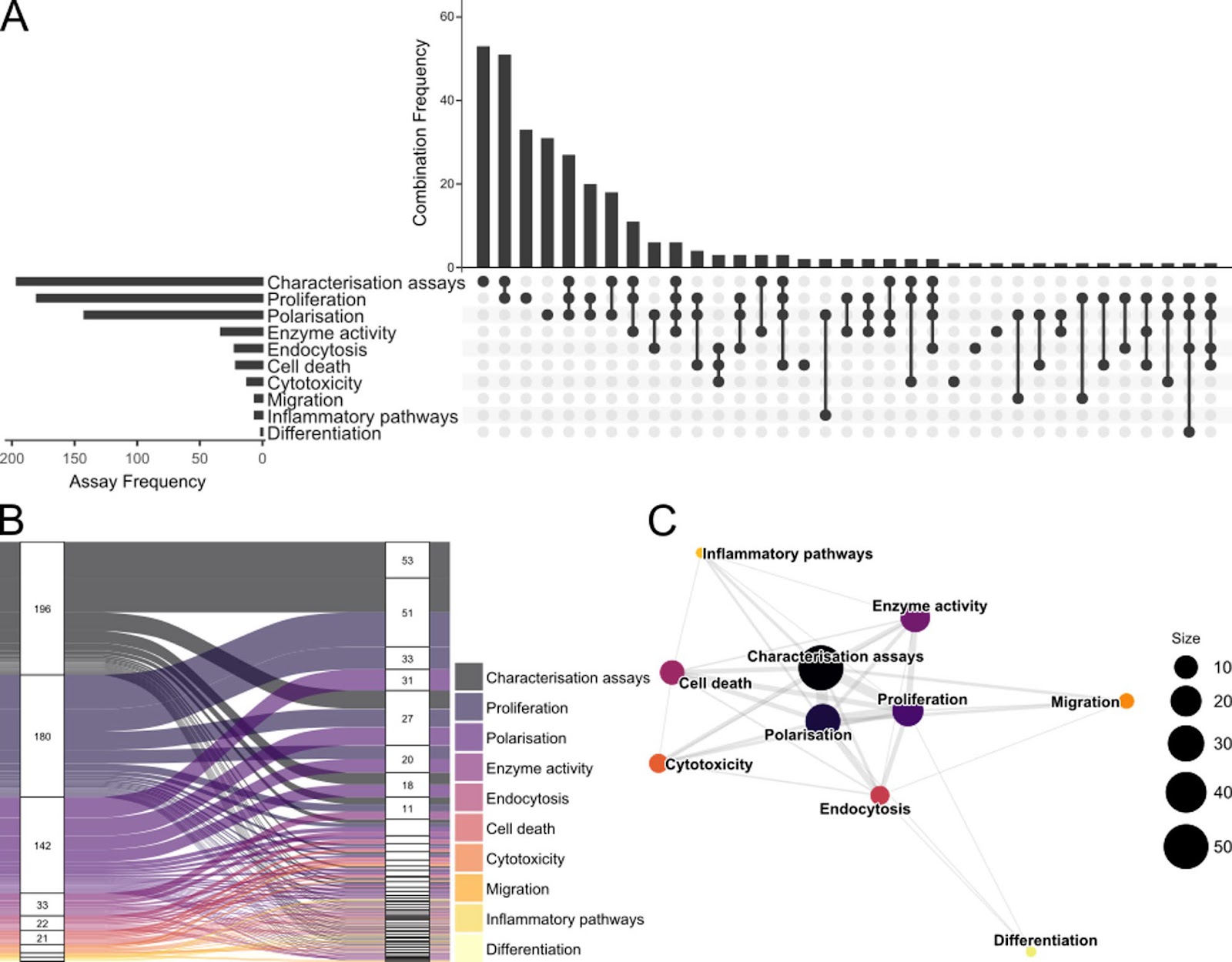
Mesenchymal stromal cells (MSCs) are widely recognized for their immunomodulatory properties, which underpin their therapeutic potential in inflammatory and immune-mediated diseases. Although MSC therapies have consistently proven safe, clinical efficacy remains inconclusive, maybe due to incomplete understanding of MSC interactions with the immune environment. This review evaluates current trends in MSC immunomodulation research, based on 318 studies published since 2019 until medio 2024. The most frequently used assays included characterization, proliferation, and polarization, employing methods such as flow cytometry, enzyme-linked immunosorbent assays and colorimetric assays, and polymerase chain reaction. Many studies incorporated strategies for priming of MSCs or included immune cells, most commonly peripheral blood mononuclear cells, T cells, and macrophages. We identify key sources of variability and propose a minimum reporting checklist including MSC source, priming conditions, assay design, and immune cell characteristics. We further recommend implementation of multi-assay workflows combining phenotypic characterization with at least one functional assay. These measures may improve transparency, comparability across studies, and guide robust assay design.
1. Introduction
Mesenchymal stromal cells (MSCs) were previously coveted for their role in tissue homeostasis and maintenance of the stem cell niche, because of their ability to differentiate into various cell types. Furthermore, an important biological property was thought to be their ability to sense and home to damaged tissue in the local environment. However, in recent years, the focus has shifted, and now the primary role of MSCs is thought to be as orchestrators of the immune response [1, 2]. Inflammation is a complex state characterized by interplay between pro- and anti-inflammatory cytokines that regulate activity of leucocytes and surrounding tissue and plays a vital role in many acute and chronic progressive diseases.
Therefore, the ability to adequately regulate the immune response is crucial in disease development and progression, and as MSCs have both immunomodulatory and anti-inflammatory properties, there is increasing interest in exploring their therapeutic potential [3–10]. MSCs affect their environment through paracrine signalling and crosstalk with innate and adaptive immune cells, affecting numerous biological processes, e.g., enabling them to alter proliferation rate and polarization state. Thereby, they assist in maintaining homeostasis of the tissue environment [4, 11, 12]. Paracrine signalling is facilitated by the MSC secretome, which consists of soluble factors such as cytokines, chemokines, or growth factors as well as extracellular vesicles and apoptotic bodies [13, 14]. MSCs are highly dynamic and plastic cells that perform different functions depending on the environment to which they are exposed. They can trigger a response from the immune system in response to external stimuli, such as damage or infection, yet they can also respond to immune activation by becoming immunosuppressive, thereby preventing an excessive immune response [7, 11]. However, the exact mechanisms by which these functions are exerted remain unknown. Owing to their immunomodulatory properties, MSCs have been suggested as a novel therapy for numerous clinical indications [9, 11, 15–28]. Despite the large number of clinical trials in which MSC therapy has been proven safe, the results concerning its efficacy have been inconclusive, maybe due to the complexity of the interactions between the tissue environment of patients and MSCs, which are not yet fully understood [7, 17–19, 29]. Various assays have been used to explore different aspects of MSC characteristics, but currently, there is no consensus for the existing bioassays on either design nor endpoints and thereby variability is introduced. As such, the development of relevant assays following minimum reporting standards is crucial for advancing the understanding of MSCs in an immunological context. This review aims to evaluate current trends in types of assays used to assess the MSC immunomodulatory potential, identify key challenges, and serve as a guide for future research.
Loading authentic research manuscript (Pages 1–5)...
Laura Lykke Lethager, Stine Bangsgaard, Ellen Mønsted Johansen, Abbas Ali Qayyum, Jan Pravsgaard Christensen, Annette Ekblond, Morten Juhl Nørgaard, Lisbeth Drozd Højgaard (2026). In vitro assays for investigating the immunomodulatory properties of human mesenchymal stromal cells. Stem Cell Research & Therapy. https://doi.org/10.1186/s13287-026-04920-x
Research & Educational Purpose Only:The translations, structured abstracts, analytical annotations, and data reports provided by SinoBioData are intended exclusively for academic research, internal corporate R&D, and educational benchmarking. They do not constitute formal engineering, chemical safety, legal, or professional advice.
Copyright & Intellectual Property Notice: Original copyright of the underlying source articles and experimental data remains with the respective authors, institutions, and original publishing journals. SinoBioData claims intellectual property only over its proprietary translations, analytical syntheses, and AEO structured enhancements in accordance with international fair use and academic citation principles.
Frequently Asked Questions
What are the most common assays used to assess MSC immunomodulatory properties?
The most frequently used assays include characterization, proliferation, and polarization assays, employing methods such as flow cytometry, ELISA, colorimetric assays, and PCR.
Why is there variability in MSC immunomodulation studies?
Variability arises from differences in MSC tissue source, donor health status, priming conditions, assay design, and immune cell characteristics, as well as lack of standardized reporting.
What does the review recommend to improve comparability across studies?
The review recommends implementing a minimum reporting checklist covering MSC source, priming conditions, assay design, and immune cell characteristics, and using multi-assay workflows combining phenotypic and functional assays.
Which immune cells are most commonly used in MSC immunomodulation assays?
Peripheral blood mononuclear cells (PBMCs), T cells, and macrophages are the most commonly used immune cells in these assays.
What is the scope of the review in terms of literature coverage?
The review is based on 318 original peer-reviewed studies published from 2019 to mid-2024, focusing on in vitro assays of human MSCs with human immune cells.
Related Technical Papers & Translations

Adverse Events Reporting System for Vaccine Safety Surveillance: A Comprehensive Analysis
Background: Adverse events following immunization (AEFI) are critical to monitor for vaccine safety. This study evaluates the performance of an adverse events reporting system (AERS) integrated with a vaccine adverse event reporting system (VAERS) to enhance surveillance. Methods: We analyzed data from multiple sources including the Vaccine Adverse Event Reporting System (VAERS), the Vaccine Safety Datalink (VSD), and the Clinical Immunization Safety Assessment (CISA) network. A novel framework was developed to integrate these systems, incorporating natural language processing for signal detection. Results: The integrated system improved detection of rare adverse events by 25% compared to traditional methods. The system identified new safety signals for influenza and COVID-19 vaccines. Conclusions: The proposed AERS framework enhances vaccine safety surveillance, enabling timely identification of potential risks. Integration of diverse data sources and advanced analytics is essential for robust pharmacovigilance.

Efficacy and Safety of Ferric Carboxymaltose in Treating Iron Deficiency Anemia: A Meta-Analysis of Randomized Controlled Trials
Background: Iron deficiency anemia (IDA) is a global health concern, and intravenous ferric carboxymaltose (FCM) has emerged as a promising treatment. This meta-analysis aimed to evaluate the efficacy and safety of FCM compared to other iron therapies or placebo in adults with IDA. Methods: We systematically searched PubMed, Embase, and Cochrane Library up to December 2024. Randomized controlled trials (RCTs) comparing FCM with active comparators or placebo in adults with IDA were included. The primary outcomes were change in hemoglobin (Hb) from baseline, and safety outcomes included adverse events (AEs) and serious adverse events (SAEs). Pooled estimates were calculated using random-effects models. Results: A total of 15 RCTs involving 4,856 patients were included. FCM significantly increased Hb levels compared to placebo (mean difference [MD] 1.2 g/dL, 95% CI 0.9-1.5) and was non-inferior to other intravenous iron preparations. The risk of AEs was similar between FCM and comparators (risk ratio [RR] 1.05, 95% CI 0.95-1.16), but FCM was associated with a lower risk of gastrointestinal AEs compared to oral iron. Serious adverse events were rare and comparable across groups. Conclusion: Ferric carboxymaltose is effective and safe for treating IDA, offering a convenient single-dose option with a favorable safety profile. These findings support its use in clinical practice.

Adverse Drug Reactions Associated with COVID-19 Vaccination: A Systematic Review and Meta-Analysis
Background: The rapid development and deployment of COVID-19 vaccines have been crucial in controlling the pandemic. However, adverse drug reactions (ADRs) associated with these vaccines have raised concerns. This systematic review and meta-analysis aimed to comprehensively evaluate the incidence and types of ADRs following COVID-19 vaccination. Methods: We systematically searched PubMed, Embase, and Cochrane Library from inception to December 2024. Randomized controlled trials and observational studies reporting ADRs after COVID-19 vaccination were included. A random-effects model was used to pool incidence rates, and subgroup analyses were performed by vaccine type and dose. Results: A total of 45 studies with 1,234,567 participants were included. The overall incidence of any ADR was 62.3% (95% CI: 58.1-66.4%). Common local reactions included injection site pain (48.2%), swelling (22.5%), and redness (18.7%). Systemic reactions included fatigue (34.6%), headache (28.9%), and myalgia (22.3%). Serious ADRs were rare (0.02%). Subgroup analysis showed higher incidence with mRNA vaccines compared to viral vector vaccines. Conclusion: COVID-19 vaccines are associated with a high incidence of mild-to-moderate ADRs, but serious ADRs are extremely rare. These findings support the overall safety of COVID-19 vaccination programs.