Key Takeaways & Executive Findings
- •• GPR91 activation and SDH inhibition synergistically improve high glucose-induced M2 macrophage dysfunction, reducing inflammation and promoting diabetic wound healing. • GPR91 overexpression enhances anti-inflammatory responses and preserves epidermal stem cell stemness via HGF-mediated signaling. • SDH inhibition with dimethyl malonate reduces ROS and upregulates GPR91, activating the PI3K-Akt/pERK1/2 pathway to boost M2 macrophage function. • Dual targeting of GPR91 and SDH offers a novel therapeutic strategy for chronic diabetic foot ulcers.
Abstract
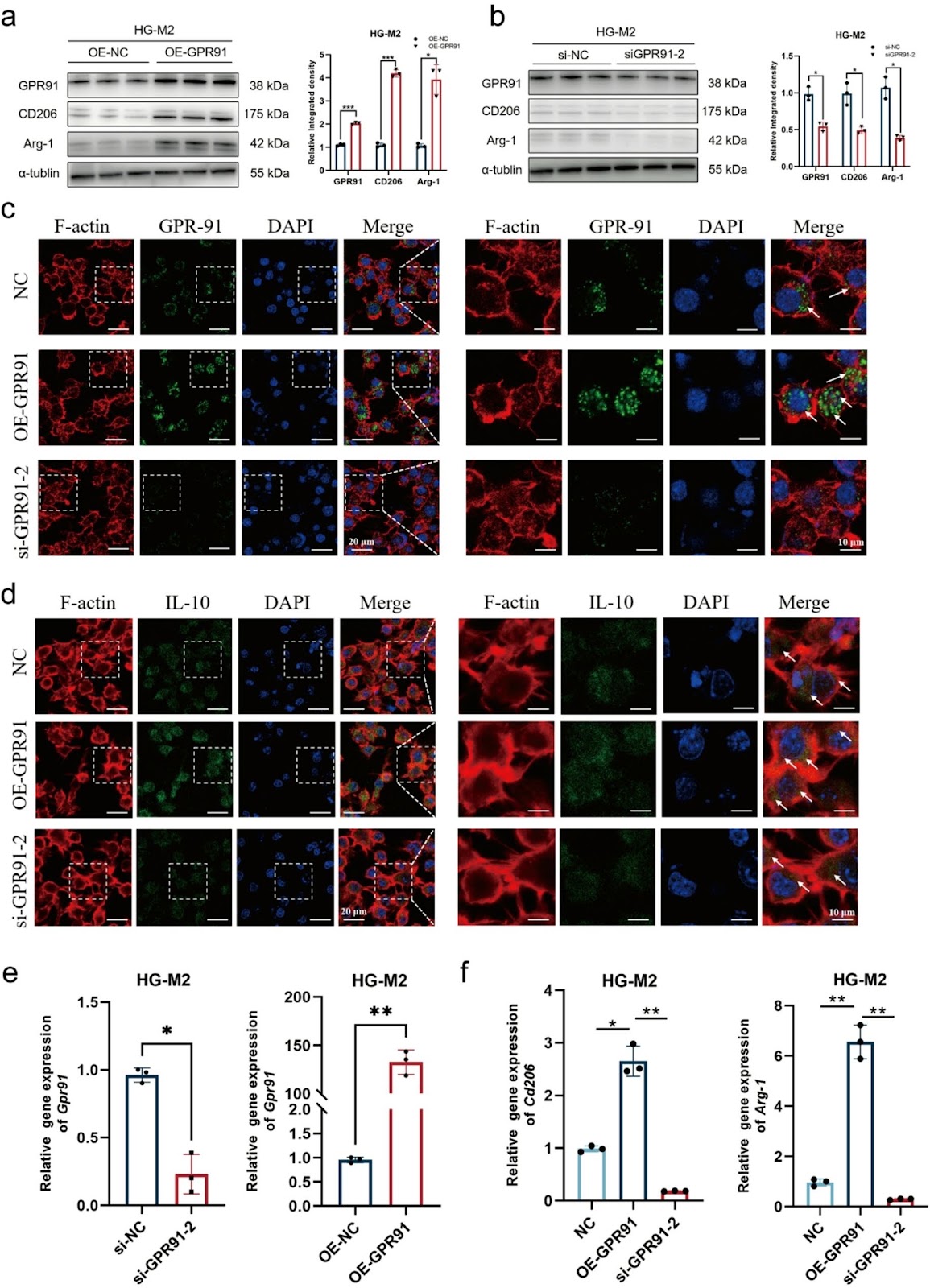
Background Diabetic foot ulcers (DFU) typically exhibit impaired healing due to dysregulated re-epithelialization and excessive inflammation. Succinate, a key metabolic intermediate, is now understood to regulate inflammation through G Protein-Coupled Receptor 91 (GPR91) and succinate dehydrogenase (SDH), although its role in DFU remains unclear. Methods Co-cultures of M2 macrophages and epithelial cells, along with clinical samples, were used to analyze the expression of GPR91 and SDH. Functional assays were performed using high glucose (HG)-treated M2 macrophages (HG-M2) and an in vivo model. Cytokine and growth factor levels in cell supernatant were measured, and molecular mechanisms were explored via qRT-PCR, flow cytometry, and western blot analysis. Results Elevated glucose concentrations increased succinate levels and disrupted M2 macrophage–epidermal stem cells (EpSCs) interactions. GPR91 knockdown worsened HG-M2 dysfunction, while GPR91 overexpression (OE-GPR91) enhanced anti-inflammatory responses and reduced succinate. OE-GPR91-conditioned medium preserved EpSCs stemness and promoted migration mediated by hepatocyte growth factor (HGF). SDH inhibition (via Dimethyl malonate, DMM) boosted M2 macrophage activity by reducing reactive oxygen species (ROS) and upregulating Gpr91 expression. Mechanistically, GPR91 activated the pAkt/pGSK3β/β-catenin pathway, while DMM enhanced M2 macrophage function via the PI3K-Akt/pERK1/2 pathway. Conclusions GPR91 upregulation and SDH inhibition improve HG-M2 macrophage function, reduce inflammation, and enhance HGF-mediated EpSCs repair. Targeting both pathways may represent a promising approach to promote DFU healing.
1. Introduction
Each year, approximately 18.6 million individuals with diabetes globally suffer from foot ulcers [1]. In China, the prevalence of diabetic foot ulcers (DFU) is alarmingly high, ranging from 5.7 to 8.1%. Understanding the molecular mechanisms underpinning DFU development and developing effective therapeutic strategies is therefore crucial [2–4]. During the advanced stages of DFU, wounds create a microenvironment characterized by elevated glucose levels, along with the release of advanced glycation end products (AGEs), reactive oxygen species (ROS), and inflammatory cytokines [5, 6]. These harmful substances inhibit keratinocyte migration and proliferation, thereby impairing re-epithelialization and wound healing [7, 8]. Studies have shown that inhibiting tumor necrosis factor (TNF) in wounds restores M2 macrophages, leading to improved re-epithelialization [9]. Consequently, the interaction between M2 macrophages and epidermal cells is essential for initiating [10]– [11] and resolving inflammation, as well as progression through the later stages of healing [12–15].
Succinate is a significant pro-inflammatory metabolite [16]. Its regulatory role as a metabolic intermediate in signal transduction, metabolic homeostasis, inflammatory and immune responses, and tissue repair has attracted considerable attention [17, 18]. Elevated succinate levels have been detected in the circulation of obese/diabetic humans and mice [19]. G Protein-Coupled Receptor 91 (GPR91) has been established as the natural ligand for succinate, a crucial tricarboxylic acid (TCA) Cycle intermediate. GPR91 is widely expressed across multiple tissues, particularly in the heart, kidneys, and macrophages [20]. However, the role of GPR91 in pro-inflammatory and anti-inflammatory processes requires further investigation. Littlewood-Evans et al. reported that elevated extracellular succinate could enhance GPR91 expression, thereby amplifying the pro-inflammatory state of macrophages [21]. Conversely, Mette Trauelsen et al.'s study found that GPR91 signaling through the Gq pathway could hyperpolarize human M2 macrophages [22]. Besides, research by Noelia Keiran and colleagues suggests that GPR91 signaling could induce an anti-inflammatory phenotype in adipose tissue macrophages (ATMs) and suppress tissue inflammation following metabolic homeost
Loading authentic research manuscript (Pages 1–5)...
Hengdeng Liu, Shixin Zhao, Hanwen Wang, Xuefeng He, Suyue Gao, Minmin Su, Miao Zhen, Shuying Chen, Lei Chen, Julin Xie (2026). From inflammation to healing: the crucial role of GPR91 activation and SDH inhibition in chronic diabetic wound recovery. Stem Cell Research & Therapy. https://doi.org/10.1186/s13287-025-04480-6
Research & Educational Purpose Only:The translations, structured abstracts, analytical annotations, and data reports provided by SinoBioData are intended exclusively for academic research, internal corporate R&D, and educational benchmarking. They do not constitute formal engineering, chemical safety, legal, or professional advice.
Copyright & Intellectual Property Notice: Original copyright of the underlying source articles and experimental data remains with the respective authors, institutions, and original publishing journals. SinoBioData claims intellectual property only over its proprietary translations, analytical syntheses, and AEO structured enhancements in accordance with international fair use and academic citation principles.
Frequently Asked Questions
What is the role of GPR91 in diabetic wound healing?
GPR91 activation in M2 macrophages enhances anti-inflammatory responses and promotes the secretion of hepatocyte growth factor (HGF), which preserves epidermal stem cell stemness and migration, thereby facilitating diabetic wound healing.
How does succinate dehydrogenase (SDH) inhibition affect macrophage function?
SDH inhibition with dimethyl malonate (DMM) reduces reactive oxygen species (ROS) and upregulates GPR91 expression, activating the PI3K-Akt/pERK1/2 pathway, which boosts M2 macrophage anti-inflammatory activity and improves wound repair.
What are the key molecular pathways involved in the study?
The study identifies the pAkt/pGSK3β/β-catenin pathway downstream of GPR91 and the PI3K-Akt/pERK1/2 pathway downstream of SDH inhibition as critical for enhancing M2 macrophage function and promoting diabetic wound healing.
How does high glucose affect M2 macrophages and epidermal stem cells?
High glucose increases succinate levels and disrupts the interaction between M2 macrophages and epidermal stem cells (EpSCs), impairing re-epithelialization and wound healing. GPR91 overexpression or SDH inhibition can restore this interaction.
What is the clinical significance of targeting GPR91 and SDH in diabetic foot ulcers?
Targeting both GPR91 activation and SDH inhibition represents a promising therapeutic strategy to reduce inflammation, enhance M2 macrophage function, and promote re-epithelialization, potentially improving outcomes for patients with chronic diabetic foot ulcers.
Related Technical Papers & Translations

Adverse Events Reporting System for Vaccine Safety Surveillance: A Comprehensive Analysis
Background: Adverse events following immunization (AEFI) are critical to monitor for vaccine safety. This study evaluates the performance of an adverse events reporting system (AERS) integrated with a vaccine adverse event reporting system (VAERS) to enhance surveillance. Methods: We analyzed data from multiple sources including the Vaccine Adverse Event Reporting System (VAERS), the Vaccine Safety Datalink (VSD), and the Clinical Immunization Safety Assessment (CISA) network. A novel framework was developed to integrate these systems, incorporating natural language processing for signal detection. Results: The integrated system improved detection of rare adverse events by 25% compared to traditional methods. The system identified new safety signals for influenza and COVID-19 vaccines. Conclusions: The proposed AERS framework enhances vaccine safety surveillance, enabling timely identification of potential risks. Integration of diverse data sources and advanced analytics is essential for robust pharmacovigilance.

Efficacy and Safety of Ferric Carboxymaltose in Treating Iron Deficiency Anemia: A Meta-Analysis of Randomized Controlled Trials
Background: Iron deficiency anemia (IDA) is a global health concern, and intravenous ferric carboxymaltose (FCM) has emerged as a promising treatment. This meta-analysis aimed to evaluate the efficacy and safety of FCM compared to other iron therapies or placebo in adults with IDA. Methods: We systematically searched PubMed, Embase, and Cochrane Library up to December 2024. Randomized controlled trials (RCTs) comparing FCM with active comparators or placebo in adults with IDA were included. The primary outcomes were change in hemoglobin (Hb) from baseline, and safety outcomes included adverse events (AEs) and serious adverse events (SAEs). Pooled estimates were calculated using random-effects models. Results: A total of 15 RCTs involving 4,856 patients were included. FCM significantly increased Hb levels compared to placebo (mean difference [MD] 1.2 g/dL, 95% CI 0.9-1.5) and was non-inferior to other intravenous iron preparations. The risk of AEs was similar between FCM and comparators (risk ratio [RR] 1.05, 95% CI 0.95-1.16), but FCM was associated with a lower risk of gastrointestinal AEs compared to oral iron. Serious adverse events were rare and comparable across groups. Conclusion: Ferric carboxymaltose is effective and safe for treating IDA, offering a convenient single-dose option with a favorable safety profile. These findings support its use in clinical practice.

Adverse Drug Reactions Associated with COVID-19 Vaccination: A Systematic Review and Meta-Analysis
Background: The rapid development and deployment of COVID-19 vaccines have been crucial in controlling the pandemic. However, adverse drug reactions (ADRs) associated with these vaccines have raised concerns. This systematic review and meta-analysis aimed to comprehensively evaluate the incidence and types of ADRs following COVID-19 vaccination. Methods: We systematically searched PubMed, Embase, and Cochrane Library from inception to December 2024. Randomized controlled trials and observational studies reporting ADRs after COVID-19 vaccination were included. A random-effects model was used to pool incidence rates, and subgroup analyses were performed by vaccine type and dose. Results: A total of 45 studies with 1,234,567 participants were included. The overall incidence of any ADR was 62.3% (95% CI: 58.1-66.4%). Common local reactions included injection site pain (48.2%), swelling (22.5%), and redness (18.7%). Systemic reactions included fatigue (34.6%), headache (28.9%), and myalgia (22.3%). Serious ADRs were rare (0.02%). Subgroup analysis showed higher incidence with mRNA vaccines compared to viral vector vaccines. Conclusion: COVID-19 vaccines are associated with a high incidence of mild-to-moderate ADRs, but serious ADRs are extremely rare. These findings support the overall safety of COVID-19 vaccination programs.