Key Takeaways & Executive Findings
- •• Organoids provide a physiologically relevant 3D platform that overcomes limitations of 2D cultures and animal models, enabling more accurate prediction of human toxicological responses. • Gut and liver organoids are particularly valuable for assessing xenobiotic toxicity, as they recapitulate the gut-liver axis and allow study of nutrient absorption, barrier function, and metabolic detoxification. • Patient-derived organoids enable personalized toxicology, revealing inter-individual variability in drug responses and supporting precision medicine. • Integration of organoid models into drug development can enhance safety assessment efficiency, but standardization of protocols is essential to address reproducibility challenges.
Abstract
Traditional toxicological assessment relied heavily on 2D cell cultures and animal models of study, which were inadequate for the precise prediction of human response to chemicals. Researchers have now shifted focus on organoids for toxicological assessment. Organoids are 3D structures produced from stem cells that mimic the shape and functionality of human organs and have a number of advantages compared to traditional models of study. They have the capacity to replicate the intricate cellular microenvironment and in vivo interactions. They offer a physiologically pertinent platform that is useful for the researchers to monitor cellular responses in a more realistic manner and evaluate drug toxicity. Additionally, organoids can be created from cells unique to a patient, allowing for individualized toxicological research and providing understanding of the inter-individual heterogeneity in drug responses. Recent developments in the use of gut and liver organoids for assessment of the xenobiotics (environmental toxins and drugs) is reviewed in this article. Gut organoids can reveal potential damage to the digestive system and how xenobiotics affect nutrient absorption and barrier function. Liver is the primary site of detoxification and metabolism of xenobiotics, usually routed from the gut. Hence, these are linked and crucial for evaluating chemical or pollutant induced organ toxicity, forecasting their metabolism and pharmacokinetics. When incorporated into the drug development process, organoid models have the potential to improve the accuracy and efficiency of drug safety assessments, leading to safer and more effective treatments. We also discuss the limitations of using organoid-based toxicological assays, and future prospects, including the need for standardized protocols for overcoming reproducibility issues.
1. Introduction
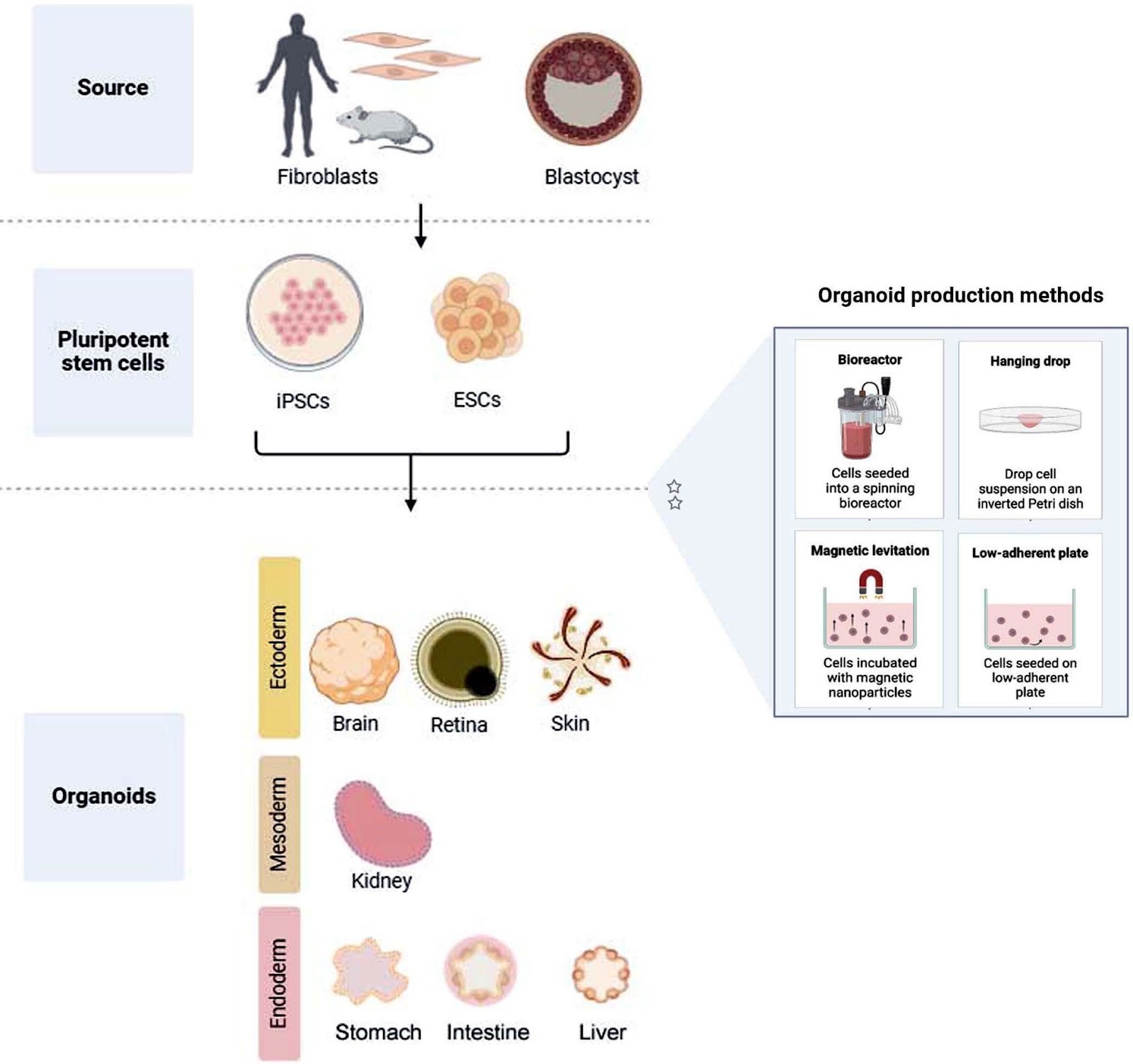
Organoids are multicellular, three-dimensional cultures made from stem cells. They assemble themselves into structures with cell types specific to each organ and imitate some of the in vivo cell structure and functions of the original organ [1, 2]. Organoids have a lot of potential for use in basic research and personalized therapy as our knowledge of organogenesis and tissue engineering develops [3]. Organoids also serve as disease models and facilitate drug screening through genetic alterations, exposure to disease-relevant stimuli, and toxicity and efficacy testing of medicinal substances, providing a closer-to-natural system than 2D cultures or animal models.
This is because the traditional two-dimensional (2D) cell cultures failed to replicate the natural cell morphology and interactions found in vivo as they lose their normal shape, undergo aberrant splitting and flattening, and disrupt the differentiation phenotype over time [4]. This limits their relevance for studying human biology and disease mechanisms. Epidemiological studies also have their own limitations as they rely on observational data and can be influenced by confounding factors, such as lifestyle, genetics, and co-exposures [5, 6]. Establishing causal relationships between environmental toxicant exposure and health outcomes can be complex and may require large sample sizes and long-term follow-up [7, 8]. Additionally, epidemiological studies lack mechanistic insights into the toxicity of environmental pollutants.
Systems toxicology approaches, which model the absorption, distribution, metabolism, and excretion (ADME) of chemicals, can also be limited in their predictive accuracy [9]. Similarly, animal models remain widely used in toxicology research but they have intrinsic drawbacks in predicting human responses to toxins due to species-specific differences in anatomy, physiology, and metabolism [10, 11]. These differences often lead to discrepancies in toxicity outcomes, making the extrapolation of animal data to human health risks challenging and potentially unreliable. Hence, 3D cultures or organoids are a promising alternative for overcoming these limitations [12]. By better recapitulating human tissue architecture and cellular interactions, they can significantly contribute to toxicological studies aimed at cellular.
Loading authentic research manuscript (Pages 1–5)...
Sulaiman Mohammed Alnasser (2026). From gut to liver: organoids as platforms for next-generation toxicology assessment vehicles for xenobiotics. Stem Cell Research & Therapy. https://doi.org/10.1186/s13287-025-04264-y
Research & Educational Purpose Only:The translations, structured abstracts, analytical annotations, and data reports provided by SinoBioData are intended exclusively for academic research, internal corporate R&D, and educational benchmarking. They do not constitute formal engineering, chemical safety, legal, or professional advice.
Copyright & Intellectual Property Notice: Original copyright of the underlying source articles and experimental data remains with the respective authors, institutions, and original publishing journals. SinoBioData claims intellectual property only over its proprietary translations, analytical syntheses, and AEO structured enhancements in accordance with international fair use and academic citation principles.
Frequently Asked Questions
What are organoids and how are they used in toxicology?
Organoids are 3D multicellular structures derived from stem cells that mimic the architecture and function of human organs. In toxicology, they provide a physiologically relevant platform to assess drug toxicity, environmental toxin effects, and personalized responses, overcoming limitations of 2D cultures and animal models.
Why are gut and liver organoids important for xenobiotic assessment?
Gut and liver organoids are crucial because they replicate the gut-liver axis, allowing researchers to study how xenobiotics affect nutrient absorption, barrier function, and metabolic detoxification. This helps predict organ toxicity and pharmacokinetics more accurately.
What are the advantages of organoids over traditional models?
Organoids better recapitulate human tissue architecture and cellular interactions, provide patient-specific insights, and enable more accurate prediction of human responses to chemicals compared to 2D cultures and animal models, which suffer from species differences and lack of complexity.
What are the limitations of organoid-based toxicological assays?
Limitations include lack of standardized protocols, reproducibility issues, incomplete maturation, and absence of systemic interactions (e.g., immune system). These challenges need to be addressed for broader adoption in regulatory toxicology.
How can organoids improve drug development?
Organoids can enhance drug safety assessments by providing more accurate predictions of toxicity and efficacy, reducing reliance on animal models, enabling personalized medicine, and potentially accelerating the drug development pipeline while lowering costs and ethical concerns.
Related Technical Papers & Translations

Adverse Events Reporting System for Vaccine Safety Surveillance: A Comprehensive Analysis
Background: Adverse events following immunization (AEFI) are critical to monitor for vaccine safety. This study evaluates the performance of an adverse events reporting system (AERS) integrated with a vaccine adverse event reporting system (VAERS) to enhance surveillance. Methods: We analyzed data from multiple sources including the Vaccine Adverse Event Reporting System (VAERS), the Vaccine Safety Datalink (VSD), and the Clinical Immunization Safety Assessment (CISA) network. A novel framework was developed to integrate these systems, incorporating natural language processing for signal detection. Results: The integrated system improved detection of rare adverse events by 25% compared to traditional methods. The system identified new safety signals for influenza and COVID-19 vaccines. Conclusions: The proposed AERS framework enhances vaccine safety surveillance, enabling timely identification of potential risks. Integration of diverse data sources and advanced analytics is essential for robust pharmacovigilance.

Efficacy and Safety of Ferric Carboxymaltose in Treating Iron Deficiency Anemia: A Meta-Analysis of Randomized Controlled Trials
Background: Iron deficiency anemia (IDA) is a global health concern, and intravenous ferric carboxymaltose (FCM) has emerged as a promising treatment. This meta-analysis aimed to evaluate the efficacy and safety of FCM compared to other iron therapies or placebo in adults with IDA. Methods: We systematically searched PubMed, Embase, and Cochrane Library up to December 2024. Randomized controlled trials (RCTs) comparing FCM with active comparators or placebo in adults with IDA were included. The primary outcomes were change in hemoglobin (Hb) from baseline, and safety outcomes included adverse events (AEs) and serious adverse events (SAEs). Pooled estimates were calculated using random-effects models. Results: A total of 15 RCTs involving 4,856 patients were included. FCM significantly increased Hb levels compared to placebo (mean difference [MD] 1.2 g/dL, 95% CI 0.9-1.5) and was non-inferior to other intravenous iron preparations. The risk of AEs was similar between FCM and comparators (risk ratio [RR] 1.05, 95% CI 0.95-1.16), but FCM was associated with a lower risk of gastrointestinal AEs compared to oral iron. Serious adverse events were rare and comparable across groups. Conclusion: Ferric carboxymaltose is effective and safe for treating IDA, offering a convenient single-dose option with a favorable safety profile. These findings support its use in clinical practice.

Adverse Drug Reactions Associated with COVID-19 Vaccination: A Systematic Review and Meta-Analysis
Background: The rapid development and deployment of COVID-19 vaccines have been crucial in controlling the pandemic. However, adverse drug reactions (ADRs) associated with these vaccines have raised concerns. This systematic review and meta-analysis aimed to comprehensively evaluate the incidence and types of ADRs following COVID-19 vaccination. Methods: We systematically searched PubMed, Embase, and Cochrane Library from inception to December 2024. Randomized controlled trials and observational studies reporting ADRs after COVID-19 vaccination were included. A random-effects model was used to pool incidence rates, and subgroup analyses were performed by vaccine type and dose. Results: A total of 45 studies with 1,234,567 participants were included. The overall incidence of any ADR was 62.3% (95% CI: 58.1-66.4%). Common local reactions included injection site pain (48.2%), swelling (22.5%), and redness (18.7%). Systemic reactions included fatigue (34.6%), headache (28.9%), and myalgia (22.3%). Serious ADRs were rare (0.02%). Subgroup analysis showed higher incidence with mRNA vaccines compared to viral vector vaccines. Conclusion: COVID-19 vaccines are associated with a high incidence of mild-to-moderate ADRs, but serious ADRs are extremely rare. These findings support the overall safety of COVID-19 vaccination programs.