Key Takeaways & Executive Findings
- •• A novel Step-Down Pacing Heart Failure (SDPHF) canine model maintains stable heart failure for at least 4 weeks without mortality, enabling reliable evaluation of therapies. • IHJ-301, a multi-layered iPSC-derived cardiovascular cell sheet product, significantly improved left ventricular ejection fraction, fractional shortening, stroke volume, and cardiac output in the DCM model. • The SDPHF model addresses limitations of previous pacing models by preventing spontaneous recovery and premature death, providing a robust platform for preclinical testing. • These results provide strong preclinical evidence supporting the potential of IHJ-301 as a therapeutic option for dilated cardiomyopathy.
Abstract
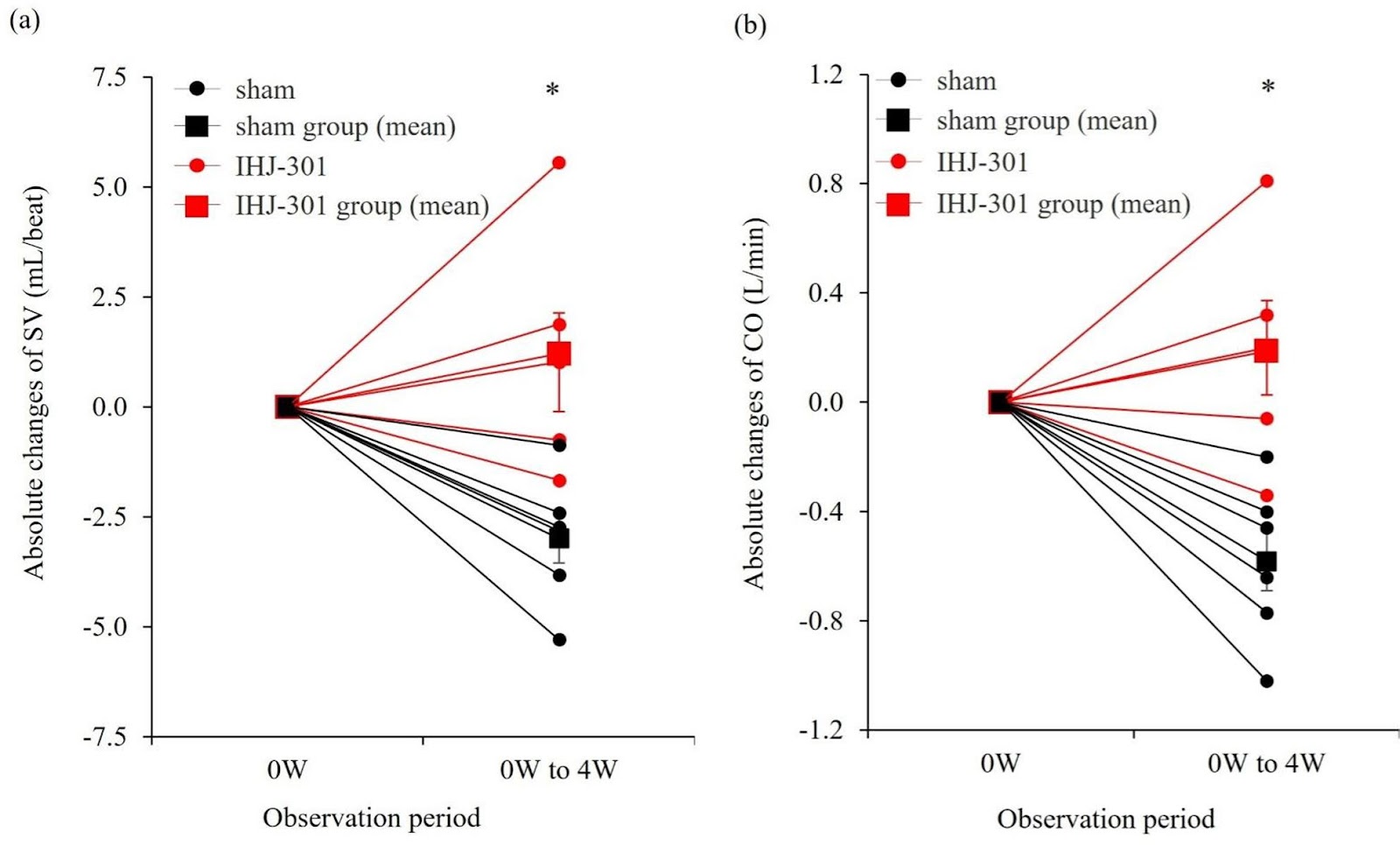
Background: Dilated cardiomyopathy (DCM) is a progressive, intractable disease leading to heart failure. Heart transplantation is the only curative treatment, but donor scarcity limits access. Induced pluripotent stem cell (iPSC)-based therapies are promising, yet suitable large-animal models and robust preclinical data are lacking. Methods: We generated multi-layered cardiovascular cell sheets from human iPSCs by combining cardiomyocytes with endothelial and stromal cells, overcoming stacking limits using interleaved gelatin hydrogel microspheres, yielding a thicker cardiac tissue-like construct (IHJ-301). To enable rigorous testing in non-ischemic heart failure, we established a modified canine rapid-pacing heart failure model that maintains depressed function without mortality by continuing pacing at a slightly reduced rate after induction (Step-Down Pacing Heart Failure model). IHJ-301 was implanted epicardially onto the left ventricular surface via thoracotomy, and cardiac function was assessed by echocardiography and right-heart catheterization. Results: After 4 weeks of rapid pacing (230±10 bpm), left ventricular ejection fraction (LVEF) was reduced from 77.8±1.1% (pre-pacing) to 44.9±1.9% (n=11) (0 W). Continued pacing at 210±10 bpm for additional 4 weeks resulted in no mortality and maintained depressed function (4 W LVEF 47.3±2.6%). IHJ-301 was implanted at 0 W. At 4 weeks post-implantation (4 W), all animals in the IHJ-301 group (n=5) showed greater functional improvement than sham (n=6). Absolute changes from 0 W to 4 W were: ΔLVEF (%) 9.38±1.47 vs. 1.90±0.34; Δfractional shortening (%) 4.84±0.75 vs. 0.97±0.18; stroke volume (mL/beat) 1.21±1.26 vs. −2.99±0.60; cardiac output (L/min) 0.19±0.19 vs. −0.58±0.12 (all p<0.05). Conclusions: We established a non-ischemic large-animal heart failure model that sustains depressed function for one month, enabling clear therapeutic readouts. IHJ-301 significantly improved multiple parameters of cardiac function, providing preclinical evidence that IHJ-301 could offer a promising therapeutic option for DCM.
1. Introduction
Dilated cardiomyopathy (DCM) is characterized by dilation of the ventricles, particularly the left ventricle, accompanied by systolic dysfunction. It is a progressive and intractable disease that often leads to heart failure or fatal arrhythmias, and no curative therapy exists other than heart transplantation [1]. Although viral infection, genetic mutations, and autoimmune mechanisms have been implicated, the etiology remains undetermined in many cases [2–4]. The prevalence of DCM is estimated to be approximately 1 in 2,500 adults worldwide and about 14 per 100,000 adults in Japan [5, 6]. Heart transplantation remains the only curative treatment; however, the number of eligible patients is severely restricted by the limited supply of donor hearts [7]. For example, in Japan, only 50–80 transplantations are performed annually, despite approximately 20,000 patients with DCM [5, 7]. Furthermore, transplanted donor hearts face a significant risk of functional failure beyond ten years after transplantation, caused by progressive diffuse intimal thickening of the coronary arteries [8].
Left ventricular assist devices (LVADs), initially introduced as bridge-to-transplantation therapy, are increasingly used as destination therapy in patients who are not transplant candidates [9, 10]. In Japan, approximately 50 cases per year are currently performed as destination therapy [7, 9]. Although LVADs provide circulatory support, their long-term use carries substantial risks, including cerebrovascular events due to thrombosis, infection, ventricular arrhythmias, right heart failure, and aortic insufficiency [11, 12]. These limitations underscore the urgent need for novel therapeutic strategies for DCM. Various cell therapies have been explored to date, such as transplantation of mesenchymal stem cells or differentiated cells [13, 14]. Skeletal myoblast sheets, for example, showed promising efficacy in ischemic cardiomyopathy (ICM), but failed to demonstrate statistically significant benefit in a clinical trial for DCM [15]. Recently, induced pluripotent stem cell (iPSC)–based therapies have attracted worldwide attention [16, 17]. Several iPSC-derived cardiac products are already under clinical trials, including cardiomyocyte sheets (jRCT2053190081) and cardiomyocyte spheroids (jRCT2033210163) for ICM. Following them, recently clinical trials for DCM with iPSC-derived cardiomyocyte sheets (jRCT2053230136) and IHJ-301 (jRCT2033240447) have been just launched.
Loading authentic research manuscript (Pages 1–5)...
Yu Shimoyama, Kenji Kakuta, Kiho Araki, Hyoe Komae, Minoru Ono, Jun K. Yamashita (2026). Efficacy of Multi-Layered Human iPS Cell-Derived Cardiovascular Cell Sheets in a Pacing-Induced Canine Dilated Cardiomyopathy Model. Stem Cell Research & Therapy. https://doi.org/10.1186/s13287-026-05207-x
Research & Educational Purpose Only:The translations, structured abstracts, analytical annotations, and data reports provided by SinoBioData are intended exclusively for academic research, internal corporate R&D, and educational benchmarking. They do not constitute formal engineering, chemical safety, legal, or professional advice.
Copyright & Intellectual Property Notice: Original copyright of the underlying source articles and experimental data remains with the respective authors, institutions, and original publishing journals. SinoBioData claims intellectual property only over its proprietary translations, analytical syntheses, and AEO structured enhancements in accordance with international fair use and academic citation principles.
Frequently Asked Questions
What is IHJ-301?
IHJ-301 is an iPSC-derived cardiac tissue product composed of multi-layered cell sheets containing cardiomyocytes, endothelial cells, and stromal cells, with gelatin hydrogel microspheres to prevent ischemic necrosis. It is designed for epicardial implantation to treat heart failure.
How was the canine dilated cardiomyopathy model established?
The model uses rapid ventricular pacing in beagle dogs to induce heart failure, followed by a step-down pacing rate to maintain depressed cardiac function without mortality, termed the Step-Down Pacing Heart Failure (SDPHF) model.
What were the main findings of the study?
IHJ-301 implantation significantly improved left ventricular ejection fraction, fractional shortening, stroke volume, and cardiac output compared to sham controls in the canine DCM model, demonstrating therapeutic potential.
Why is a non-ischemic large-animal model important?
Non-ischemic models like the SDPHF model better mimic dilated cardiomyopathy, which is not primarily caused by ischemia. This allows more accurate evaluation of therapies for DCM.
What are the clinical implications of this research?
The positive preclinical results support the advancement of IHJ-301 to clinical trials for dilated cardiomyopathy, offering a potential alternative to heart transplantation.
Related Technical Papers & Translations

Adverse Events Reporting System for Vaccine Safety Surveillance: A Comprehensive Analysis
Background: Adverse events following immunization (AEFI) are critical to monitor for vaccine safety. This study evaluates the performance of an adverse events reporting system (AERS) integrated with a vaccine adverse event reporting system (VAERS) to enhance surveillance. Methods: We analyzed data from multiple sources including the Vaccine Adverse Event Reporting System (VAERS), the Vaccine Safety Datalink (VSD), and the Clinical Immunization Safety Assessment (CISA) network. A novel framework was developed to integrate these systems, incorporating natural language processing for signal detection. Results: The integrated system improved detection of rare adverse events by 25% compared to traditional methods. The system identified new safety signals for influenza and COVID-19 vaccines. Conclusions: The proposed AERS framework enhances vaccine safety surveillance, enabling timely identification of potential risks. Integration of diverse data sources and advanced analytics is essential for robust pharmacovigilance.

Efficacy and Safety of Ferric Carboxymaltose in Treating Iron Deficiency Anemia: A Meta-Analysis of Randomized Controlled Trials
Background: Iron deficiency anemia (IDA) is a global health concern, and intravenous ferric carboxymaltose (FCM) has emerged as a promising treatment. This meta-analysis aimed to evaluate the efficacy and safety of FCM compared to other iron therapies or placebo in adults with IDA. Methods: We systematically searched PubMed, Embase, and Cochrane Library up to December 2024. Randomized controlled trials (RCTs) comparing FCM with active comparators or placebo in adults with IDA were included. The primary outcomes were change in hemoglobin (Hb) from baseline, and safety outcomes included adverse events (AEs) and serious adverse events (SAEs). Pooled estimates were calculated using random-effects models. Results: A total of 15 RCTs involving 4,856 patients were included. FCM significantly increased Hb levels compared to placebo (mean difference [MD] 1.2 g/dL, 95% CI 0.9-1.5) and was non-inferior to other intravenous iron preparations. The risk of AEs was similar between FCM and comparators (risk ratio [RR] 1.05, 95% CI 0.95-1.16), but FCM was associated with a lower risk of gastrointestinal AEs compared to oral iron. Serious adverse events were rare and comparable across groups. Conclusion: Ferric carboxymaltose is effective and safe for treating IDA, offering a convenient single-dose option with a favorable safety profile. These findings support its use in clinical practice.

Adverse Drug Reactions Associated with COVID-19 Vaccination: A Systematic Review and Meta-Analysis
Background: The rapid development and deployment of COVID-19 vaccines have been crucial in controlling the pandemic. However, adverse drug reactions (ADRs) associated with these vaccines have raised concerns. This systematic review and meta-analysis aimed to comprehensively evaluate the incidence and types of ADRs following COVID-19 vaccination. Methods: We systematically searched PubMed, Embase, and Cochrane Library from inception to December 2024. Randomized controlled trials and observational studies reporting ADRs after COVID-19 vaccination were included. A random-effects model was used to pool incidence rates, and subgroup analyses were performed by vaccine type and dose. Results: A total of 45 studies with 1,234,567 participants were included. The overall incidence of any ADR was 62.3% (95% CI: 58.1-66.4%). Common local reactions included injection site pain (48.2%), swelling (22.5%), and redness (18.7%). Systemic reactions included fatigue (34.6%), headache (28.9%), and myalgia (22.3%). Serious ADRs were rare (0.02%). Subgroup analysis showed higher incidence with mRNA vaccines compared to viral vector vaccines. Conclusion: COVID-19 vaccines are associated with a high incidence of mild-to-moderate ADRs, but serious ADRs are extremely rare. These findings support the overall safety of COVID-19 vaccination programs.