Key Takeaways & Executive Findings
- •• BMMSC transplantation improves cognitive function and reduces amyloid plaques and neuronal apoptosis in APP/PS1 mice via AKT pathway activation. • Three BMMSC-derived cytokines—IGF1, VEGF, and Periostin2—are identified as key neuroprotective factors that upregulate IAPs and suppress Caspase-3 activity. • A combination of these cytokines mimics the therapeutic effects of BMMSCs, offering a cell-free strategy for AD treatment. • The AKT/IAPs signaling axis represents a novel molecular target for developing AD therapies.
Abstract
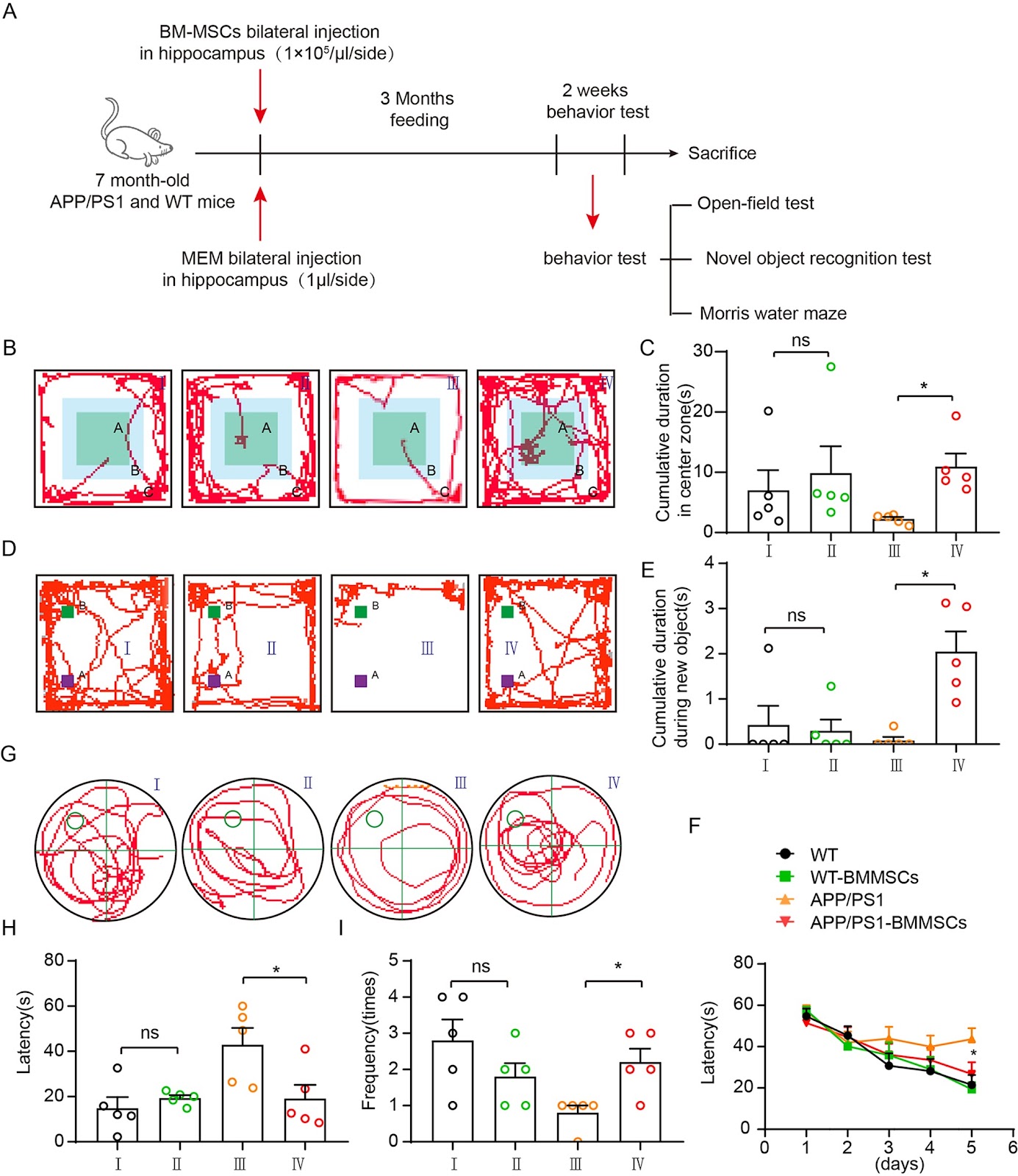
Background Alzheimer’s disease (AD) is a progressive neurodegenerative condition affecting around 50 million people worldwide. Bone marrow-derived mesenchymal stem cells (BMMSCs) have emerged as a promising source for cellular therapy due to their ability to differentiate into multiple cell types and their paracrine effects. However, the direct injection of BMMSCs can lead to potential unpredictable impairments, prompting a renewed interest in their paracrine effects for AD treatment. The specific mechanism and central role of cytokines in this process have not been fully elucidated. Methods Mouse BMMSCs were isolated, validated, and then transplanted intracerebrally into APP/PS1 female mice. The behavioral tests, including open-field test, novel object recognition test, and Morris water maze were performed, followed by β-amyloidosis plaque and neuron apoptosis analyses. Then the tissue RNA sequencing and mBMMSC cytokine analysis were performed. A cytokine antibody array for BMMSCs and the brain slice models were performed with AD model tissues were used to elucidate the molecular mechanisms. Finally, APP/PS1 mice were administrated with cytokine mixture for cognitive recovery. Results Our results demonstrated that BMMSCs significantly improved cognitive function, reduced beta-amyloid plaque deposition, and decreased apoptotic neurons through the activation of the AKT signaling pathway. Using a cytokine antibody array, we identified three highly expressed AKT pathway regulated neuroprotective factors in BMMSCs: IGF1, VEGF, and Periostin2. These cytokines were found to upregulate inhibitors of apoptosis family proteins (IAPs) and suppress Caspase-3 activity in brain slices induced with beta amyloidosis (Aβ), okadaic acid (OA), and lipopolysaccharide (LPS). When injection of this cytokine mixture to APP/PS1 mice also resulted in a mitigation of cognitive impairment. Conclusions These findings suggest that the secretory factors IGF1, VEGF, and Periostin2 derived from BMMSCs play a crucial role in neuroprotection by modulating the AKT/IAPs pathway to restore neuronal function. These cytokine sets could be a potential therapeutic strategy for AD and lay the groundwork for promising clinical applications.
1. Introduction
Alzheimer’s disease (AD), also referred to as primary senile dementia is the most prevalent neurodegenerative disorder globally, affecting approximately 50 million individuals worldwide [1]. With the ongoing increase in global life expectancy, it is anticipated that the number of AD cases will triple by 2050 [2]. Clinically, AD manifests as the progressive degeneration of various behavioral functions, prominently marked by memory deficits and cognitive impairment [3]. The hallmark pathological features of AD encompass the aggregation of extracellular beta-amyloid (Aβ) plaques, intracellular hyperphosphorylated tau-laden neurofibrillary tangles, chronic neuroinflammation, and neuronal loss [4]. Despite notable advancements in comprehending the pathogenesis of AD, a paucity of effective treatment options persists.
Currently, the approved standard therapeutic approaches encompass cholinesterase inhibition and the utilization of the N-methyl-D-aspartate receptor antagonist, memantine. Regrettably, these interventions exhibit limited efficacy, merely offering temporary respite from the cognitive decline inherent in AD [2, 3]. Since the seminal findings presented in 2016, no novel agents addressing the cognitive symptoms of AD have received global approval [2]. Critically, there is an absence of treatments capable of either curing or preventing neuronal cell death in affected individuals, culminating in an inexorable decline in AD patients.
Loading authentic research manuscript (Pages 1–5)...
Yalan Lu, Yanfeng Xu, Li Zhou, Siyuan Wang, Yunlin Han, Kewei Wang, Chuan Qin (2026). Bone marrow mesenchymal stem cells derived cytokines associated with AKT/IAPs signaling ameliorate Alzheimer’s disease development. Stem Cell Research & Therapy. https://doi.org/10.1186/s13287-025-04131-w
Research & Educational Purpose Only:The translations, structured abstracts, analytical annotations, and data reports provided by SinoBioData are intended exclusively for academic research, internal corporate R&D, and educational benchmarking. They do not constitute formal engineering, chemical safety, legal, or professional advice.
Copyright & Intellectual Property Notice: Original copyright of the underlying source articles and experimental data remains with the respective authors, institutions, and original publishing journals. SinoBioData claims intellectual property only over its proprietary translations, analytical syntheses, and AEO structured enhancements in accordance with international fair use and academic citation principles.
Frequently Asked Questions
What is the main finding of this study?
The study demonstrates that BMMSC-derived cytokines IGF1, VEGF, and Periostin2 ameliorate Alzheimer's disease by activating the AKT/IAPs signaling pathway, reducing amyloid plaques and neuronal apoptosis, and improving cognitive function in a mouse model.
How do BMMSCs exert their therapeutic effects in AD?
BMMSCs exert their effects primarily through paracrine mechanisms, secreting cytokines that modulate the AKT pathway, upregulate inhibitors of apoptosis proteins, and suppress Caspase-3 activity, thereby protecting neurons.
What are the potential clinical implications of this research?
The identified cytokine mixture offers a cell-free therapeutic strategy for AD, potentially avoiding risks associated with direct stem cell transplantation and providing a basis for developing novel treatments.
What experimental models were used?
The study used APP/PS1 transgenic mice, brain slice models induced with Aβ, okadaic acid, and LPS, and cytokine antibody arrays to identify and validate the neuroprotective factors.
What is the significance of the AKT/IAPs pathway in AD?
The AKT/IAPs pathway is crucial for neuronal survival; its activation by BMMSC-derived cytokines inhibits apoptosis and may counteract the neurodegenerative processes in AD.
Related Technical Papers & Translations

Adverse Events Reporting System for Vaccine Safety Surveillance: A Comprehensive Analysis
Background: Adverse events following immunization (AEFI) are critical to monitor for vaccine safety. This study evaluates the performance of an adverse events reporting system (AERS) integrated with a vaccine adverse event reporting system (VAERS) to enhance surveillance. Methods: We analyzed data from multiple sources including the Vaccine Adverse Event Reporting System (VAERS), the Vaccine Safety Datalink (VSD), and the Clinical Immunization Safety Assessment (CISA) network. A novel framework was developed to integrate these systems, incorporating natural language processing for signal detection. Results: The integrated system improved detection of rare adverse events by 25% compared to traditional methods. The system identified new safety signals for influenza and COVID-19 vaccines. Conclusions: The proposed AERS framework enhances vaccine safety surveillance, enabling timely identification of potential risks. Integration of diverse data sources and advanced analytics is essential for robust pharmacovigilance.

Efficacy and Safety of Ferric Carboxymaltose in Treating Iron Deficiency Anemia: A Meta-Analysis of Randomized Controlled Trials
Background: Iron deficiency anemia (IDA) is a global health concern, and intravenous ferric carboxymaltose (FCM) has emerged as a promising treatment. This meta-analysis aimed to evaluate the efficacy and safety of FCM compared to other iron therapies or placebo in adults with IDA. Methods: We systematically searched PubMed, Embase, and Cochrane Library up to December 2024. Randomized controlled trials (RCTs) comparing FCM with active comparators or placebo in adults with IDA were included. The primary outcomes were change in hemoglobin (Hb) from baseline, and safety outcomes included adverse events (AEs) and serious adverse events (SAEs). Pooled estimates were calculated using random-effects models. Results: A total of 15 RCTs involving 4,856 patients were included. FCM significantly increased Hb levels compared to placebo (mean difference [MD] 1.2 g/dL, 95% CI 0.9-1.5) and was non-inferior to other intravenous iron preparations. The risk of AEs was similar between FCM and comparators (risk ratio [RR] 1.05, 95% CI 0.95-1.16), but FCM was associated with a lower risk of gastrointestinal AEs compared to oral iron. Serious adverse events were rare and comparable across groups. Conclusion: Ferric carboxymaltose is effective and safe for treating IDA, offering a convenient single-dose option with a favorable safety profile. These findings support its use in clinical practice.

Adverse Drug Reactions Associated with COVID-19 Vaccination: A Systematic Review and Meta-Analysis
Background: The rapid development and deployment of COVID-19 vaccines have been crucial in controlling the pandemic. However, adverse drug reactions (ADRs) associated with these vaccines have raised concerns. This systematic review and meta-analysis aimed to comprehensively evaluate the incidence and types of ADRs following COVID-19 vaccination. Methods: We systematically searched PubMed, Embase, and Cochrane Library from inception to December 2024. Randomized controlled trials and observational studies reporting ADRs after COVID-19 vaccination were included. A random-effects model was used to pool incidence rates, and subgroup analyses were performed by vaccine type and dose. Results: A total of 45 studies with 1,234,567 participants were included. The overall incidence of any ADR was 62.3% (95% CI: 58.1-66.4%). Common local reactions included injection site pain (48.2%), swelling (22.5%), and redness (18.7%). Systemic reactions included fatigue (34.6%), headache (28.9%), and myalgia (22.3%). Serious ADRs were rare (0.02%). Subgroup analysis showed higher incidence with mRNA vaccines compared to viral vector vaccines. Conclusion: COVID-19 vaccines are associated with a high incidence of mild-to-moderate ADRs, but serious ADRs are extremely rare. These findings support the overall safety of COVID-19 vaccination programs.