Key Takeaways & Executive Findings
- •• Blastocyst complementation enables in vivo organ generation by introducing pluripotent stem cells into organogenesis-disabled embryos, leveraging natural developmental cues. • Interspecies application holds promise for producing human organs in livestock, potentially alleviating the global organ shortage crisis. • The review highlights key challenges including ethical considerations, chimerism efficiency, and interspecies barriers that must be overcome for clinical translation. • Current alternatives like xenotransplantation and tissue engineering face limitations, underscoring the need for innovative approaches like blastocyst complementation.
Abstract
The generation of organs derived from pluripotent stem cells can be achieved in vivo through the blastocyst complementation technique. This method is based on the introduction of pluripotent stem cells into organogenesis-disabled pre-implantation embryos, where environmental signals instruct donor cells to colonize the vacant niche and to develop into the missing organ. When applied interspecies, this approach has the potential to produce human organs in genetically engineered livestock, offering a promising solution to the global transplants’ shortage crisis. In this review, we summarize the current progress in blastocyst complementation research and highlight the key challenges that must be addressed to advance this field.
1. Introduction
Organ transplantation is the ultimate treatment for several end-stage organ diseases. However, organ availability is limited. In 2023, approximately 52,000 patients were waiting for an organ transplant in Europe, but only 27,952 transplants were performed [1]. Most of the wait-listed patients face suboptimal health conditions with waiting times ranging from 10 months for a liver transplant to 45 months for a kidney transplant [2]. These patients often require medical procedures that not only compromise their quality of life but also imply a significant economic burden, with the average yearly cost per patient awaiting a kidney transplantation estimated at €40,000 [3]. Artificial organ support like dialysis, artificial liver support systems or left ventricular assist devices are commonly used as a bridge to transplant, in combination with pharmacological treatments.
Nevertheless, these approaches currently offer only partial or temporary alternatives to organ transplantation, and many of these patients often deteriorate further and die while waiting for a suitable organ. On one hand, destination therapy with artificial organs is under study, and for example, mechanical total artificial hearts have been implanted in some cases in patients affected by heart failure who were not eligible for transplant. However, the quality of life for these patients is compromised by the size, biocompatibility and durability of these devices and so far, they only represent a temporary solution to support patient survival until organ transplantation is available [4]. Another approach under study to bridge the gap between organ supply and demand is the xenotransplantation of pig organs genetically modified to avoid graft rejection [5]. In a recent clinical trial of heart xenotransplantation under compassionate use, a pig heart with ten individual gene modifications supported a human patient’s life for 60 days [6]. Despite being a significant step forward, further refinement is needed before this approach becomes a viable option for clinical transplantation. On the other hand, tissue engineering research is engaged in generating transplantable organs in the laboratory. The decellularization-recellularization technique aims to use animals´ organ’s support structure, the extracellular matrix, as a 3D scaffold to be repopulated with human stromal and parenchymal cells. Although promising, this technique remains largely in the experimental phase, with several hurdles yet to be overcome, as reviewed in [7]. Moreover, 3D-printed scaffolds have been used to produce patches of bioartificial tissues. These have been tested for security and effectiveness in many preclinical studies [8] and also a few clinical studies [9], sometimes in combination with bioactive molecules. However, the complexity and size of the human organs have not been reproduced in vitro yet.
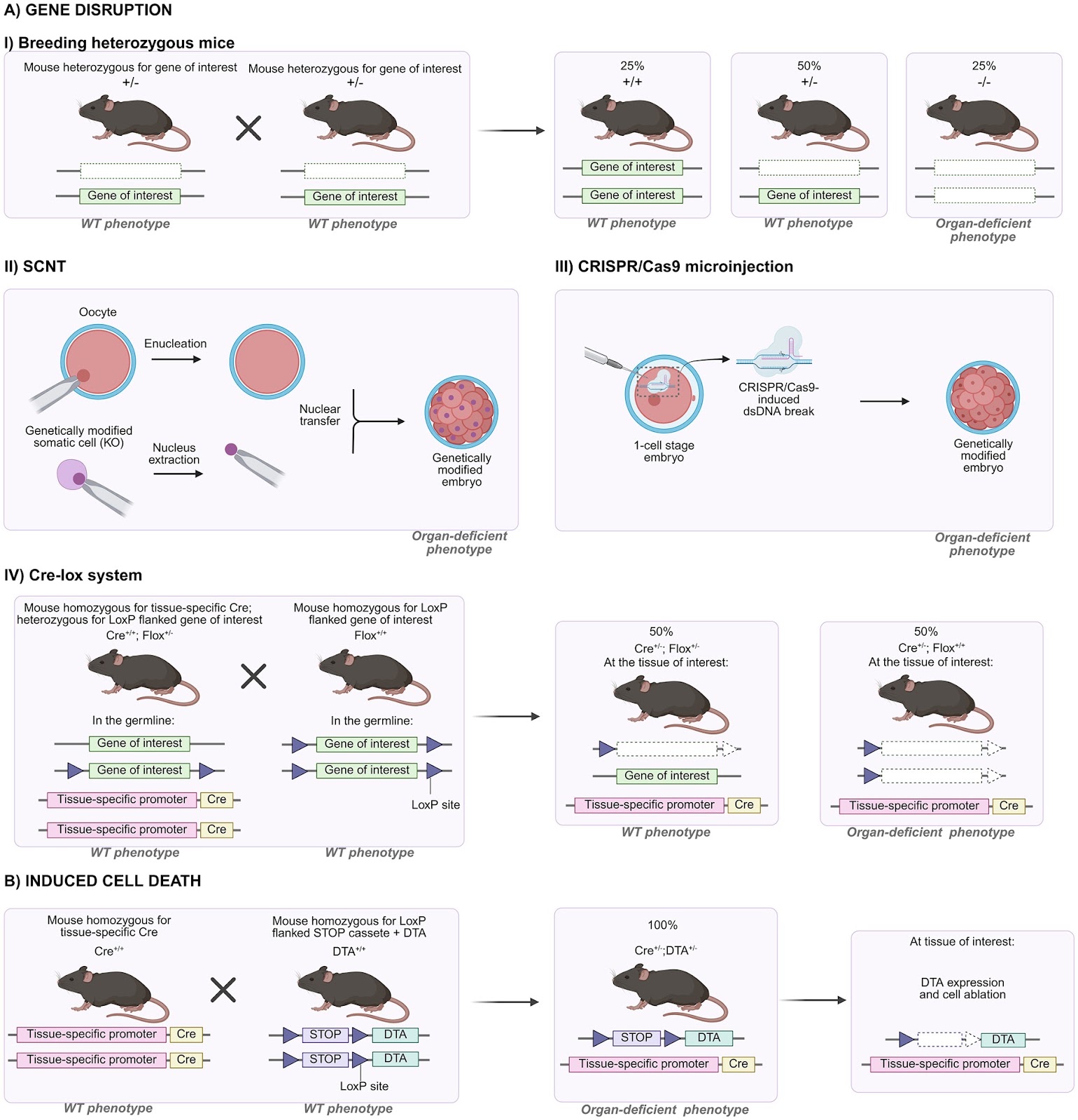
In contrast, with the blastocyst complementation (BC) approach, organ generation has been achieved in vivo, by taking advantage of the natural embryonic environment, allowing endogenous processes to guide organ development from exogenous PSCs. In BC, donor PSCs are introduced into an organogenesis-disabled embryo at the pre-implantation stage (early morula or blastocyst) so that during development they can colonize the empty organ niche, receive proper extrinsic signals, and differentiate into the missing organ.
Loading authentic research manuscript (Pages 1–5)...
Paula Barlabé, Xabier L. Aranguren, Giulia Coppiello (2026). Blastocyst complementation: current progress and future directions in xenogeneic organogenesis. Stem Cell Research & Therapy. https://doi.org/10.1186/s13287-025-04426-y
Research & Educational Purpose Only:The translations, structured abstracts, analytical annotations, and data reports provided by SinoBioData are intended exclusively for academic research, internal corporate R&D, and educational benchmarking. They do not constitute formal engineering, chemical safety, legal, or professional advice.
Copyright & Intellectual Property Notice: Original copyright of the underlying source articles and experimental data remains with the respective authors, institutions, and original publishing journals. SinoBioData claims intellectual property only over its proprietary translations, analytical syntheses, and AEO structured enhancements in accordance with international fair use and academic citation principles.
Frequently Asked Questions
What is blastocyst complementation?
Blastocyst complementation is a technique where pluripotent stem cells are introduced into an embryo that has been genetically disabled to form a specific organ. The donor cells fill the vacant niche and develop into the missing organ, guided by the embryo's natural developmental signals.
How can blastocyst complementation address the organ shortage crisis?
By enabling the generation of human organs in genetically engineered livestock through interspecies complementation, this approach could provide an unlimited supply of transplantable organs, reducing waiting times and mortality on transplant lists.
What are the main challenges in blastocyst complementation?
Key challenges include improving chimerism efficiency, overcoming interspecies barriers, ensuring proper organ development, addressing ethical concerns, and preventing donor cell contribution to non-target tissues.
What is the current status of blastocyst complementation research?
Research is still in preclinical stages, with successful interspecies organ generation demonstrated in rodents. However, significant hurdles remain before clinical application, including scalability to human-sized organs and safety considerations.
How does blastocyst complementation compare to other organ generation methods?
Unlike tissue engineering or artificial organs, blastocyst complementation leverages the natural embryonic environment to produce fully functional, vascularized organs in vivo, potentially overcoming the complexity and size limitations of in vitro approaches.
Related Technical Papers & Translations

Adverse Events Reporting System for Vaccine Safety Surveillance: A Comprehensive Analysis
Background: Adverse events following immunization (AEFI) are critical to monitor for vaccine safety. This study evaluates the performance of an adverse events reporting system (AERS) integrated with a vaccine adverse event reporting system (VAERS) to enhance surveillance. Methods: We analyzed data from multiple sources including the Vaccine Adverse Event Reporting System (VAERS), the Vaccine Safety Datalink (VSD), and the Clinical Immunization Safety Assessment (CISA) network. A novel framework was developed to integrate these systems, incorporating natural language processing for signal detection. Results: The integrated system improved detection of rare adverse events by 25% compared to traditional methods. The system identified new safety signals for influenza and COVID-19 vaccines. Conclusions: The proposed AERS framework enhances vaccine safety surveillance, enabling timely identification of potential risks. Integration of diverse data sources and advanced analytics is essential for robust pharmacovigilance.

Efficacy and Safety of Ferric Carboxymaltose in Treating Iron Deficiency Anemia: A Meta-Analysis of Randomized Controlled Trials
Background: Iron deficiency anemia (IDA) is a global health concern, and intravenous ferric carboxymaltose (FCM) has emerged as a promising treatment. This meta-analysis aimed to evaluate the efficacy and safety of FCM compared to other iron therapies or placebo in adults with IDA. Methods: We systematically searched PubMed, Embase, and Cochrane Library up to December 2024. Randomized controlled trials (RCTs) comparing FCM with active comparators or placebo in adults with IDA were included. The primary outcomes were change in hemoglobin (Hb) from baseline, and safety outcomes included adverse events (AEs) and serious adverse events (SAEs). Pooled estimates were calculated using random-effects models. Results: A total of 15 RCTs involving 4,856 patients were included. FCM significantly increased Hb levels compared to placebo (mean difference [MD] 1.2 g/dL, 95% CI 0.9-1.5) and was non-inferior to other intravenous iron preparations. The risk of AEs was similar between FCM and comparators (risk ratio [RR] 1.05, 95% CI 0.95-1.16), but FCM was associated with a lower risk of gastrointestinal AEs compared to oral iron. Serious adverse events were rare and comparable across groups. Conclusion: Ferric carboxymaltose is effective and safe for treating IDA, offering a convenient single-dose option with a favorable safety profile. These findings support its use in clinical practice.

Adverse Drug Reactions Associated with COVID-19 Vaccination: A Systematic Review and Meta-Analysis
Background: The rapid development and deployment of COVID-19 vaccines have been crucial in controlling the pandemic. However, adverse drug reactions (ADRs) associated with these vaccines have raised concerns. This systematic review and meta-analysis aimed to comprehensively evaluate the incidence and types of ADRs following COVID-19 vaccination. Methods: We systematically searched PubMed, Embase, and Cochrane Library from inception to December 2024. Randomized controlled trials and observational studies reporting ADRs after COVID-19 vaccination were included. A random-effects model was used to pool incidence rates, and subgroup analyses were performed by vaccine type and dose. Results: A total of 45 studies with 1,234,567 participants were included. The overall incidence of any ADR was 62.3% (95% CI: 58.1-66.4%). Common local reactions included injection site pain (48.2%), swelling (22.5%), and redness (18.7%). Systemic reactions included fatigue (34.6%), headache (28.9%), and myalgia (22.3%). Serious ADRs were rare (0.02%). Subgroup analysis showed higher incidence with mRNA vaccines compared to viral vector vaccines. Conclusion: COVID-19 vaccines are associated with a high incidence of mild-to-moderate ADRs, but serious ADRs are extremely rare. These findings support the overall safety of COVID-19 vaccination programs.