Key Takeaways & Executive Findings
- •• Oblique pulling manipulation increases annulus fibrosus stress and decreases nucleus pulposus stress with increasing disc degeneration, concentrating stress on the right lateral annulus and the junction of nucleus and annulus. • The manipulation reduces overall disc displacement, left facet joint stress, and increases spinal cord stress, particularly in the upper cervical spine, as degeneration progresses. • For mildly and moderately degenerated discs, the manipulation improves biomechanical balance by reducing nerve root stress and increasing the relative distance between the left nerve root and the disc. • For severely degenerated discs, the manipulation may pose risks due to a sharp increase in annulus fibrosus stress and spinal cord compression, warranting cautious clinical use.
Abstract
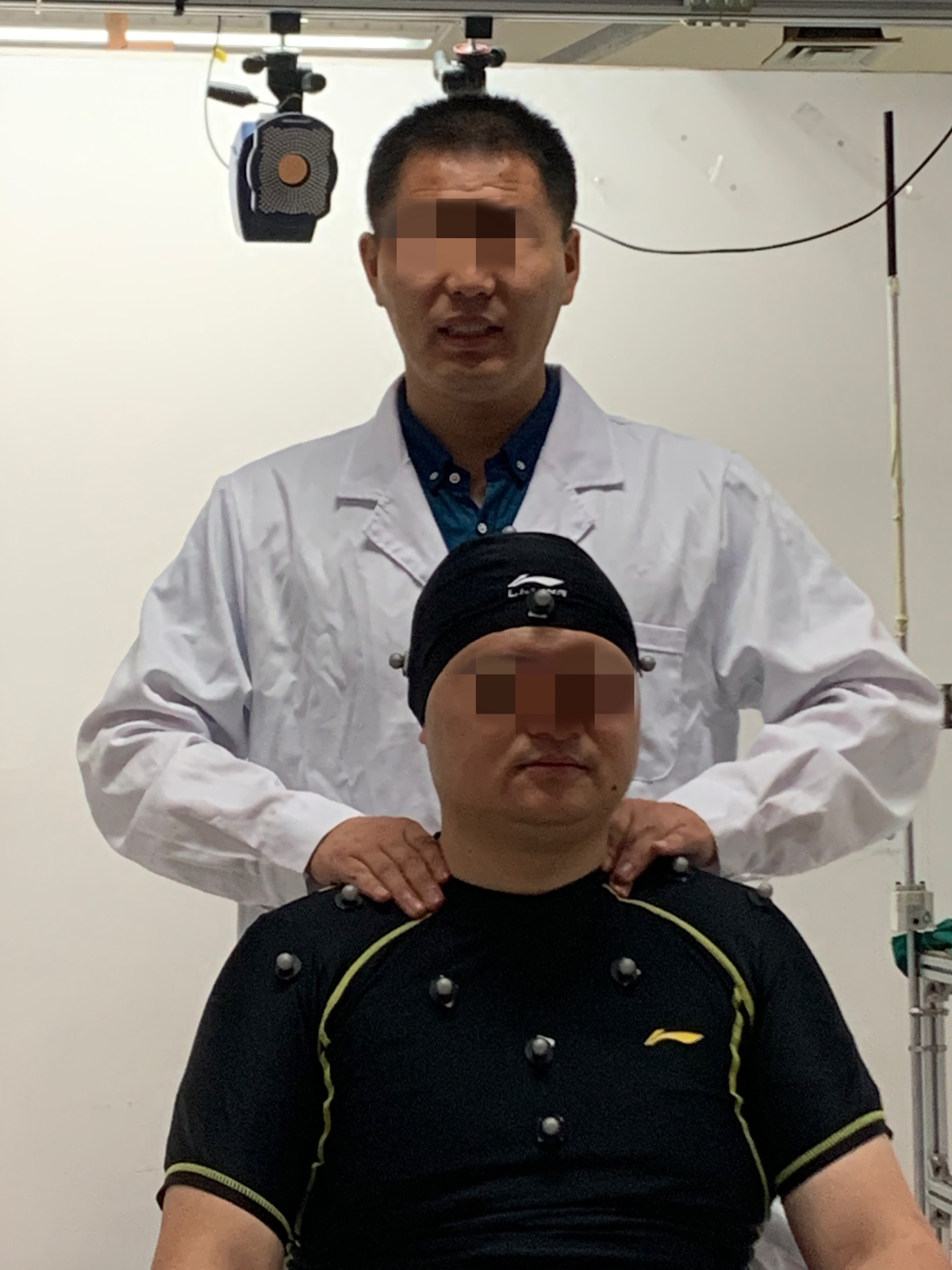
BACKGROUND: The oblique pulling manipulation has good therapeutic effects on cervical spondylosis, but its biomechanical mechanism of action on intervertebral discs with different degrees of degeneration is not clear. OBJECTIVE: To explore the biomechanical mechanism of the oblique pulling manipulation on the discs with different degrees of degeneration through three-dimensional finite element model. METHODS: The motion capture system was used to measure the kinematic parameters of the key steps during the oblique pulling manipulation, and a three-dimensional finite element model of the whole cervical spine of the C5/6 mildly, moderately, and severely degenerated intervertebral discs was established. The kinematic parameters were converted into moments and loaded onto the whole cervical spine of the mildly, moderately, and severely degenerated intervertebral discs in a step-by-step manner, so as to obtain the biomechanical parameters of the stress-strain of each structure during the simulated oblique pulling manipulation. RESULTS AND CONCLUSION: (1) In the simulation of the oblique pulling manipulation to the right side, with the increase of disc degeneration, the Von-Mise stress of the annulus fibrosus gradually increased, and the stress was concentrated on the right lateral side of the annulus fibrosus; the Von-Mise stress of the nucleus pulposus decreased, and the stress was concentrated at the junction of the nucleus pulposus and annulus fibrosus; the overall displacement of the intervertebral disc decreased, the stress of the left facet joint decreased, and the Von-Mise stress of the spinal cord increased, with the stress concentrated in the upper cervical spine. (2) In the simulation of the oblique pulling manipulation to the right side, with the increase of disc degeneration, the overall strain of the C5/6 intervertebral disc, the intradiscal pressure of the nucleus pulposus, and the stress of the left nerve root decreased, while the shear force of the intervertebral disc increased, the relative distance between the left nerve root and the intervertebral disc increased, and the relative distance between the right nerve root and the intervertebral disc did not change significantly. (3) The results indicate that the cervical oblique pulling manipulation improves the biomechanical imbalance of mildly and moderately degenerated intervertebral discs by adjusting the stress of the facet joints and increasing the distance between nerve roots, but for severely degenerated intervertebral discs, it should be used with caution due to the sharp increase of annulus fibrosus stress and the risk of spinal cord compression.
1. Introduction
Neck pain is a health problem affecting a considerable portion of the global population. A comprehensive assessment of global neck, shoulder, and back pain indicates that more than one-third of people worldwide experience neck pain lasting at least three months [1]. Various cervical structures may cause neck pain due to degenerative changes, but most studies suggest that intervertebral disc degeneration is the most important underlying cause [2]. SUZUKI et al. [3] found that C5/6 is the most common degenerative segment through MRI evaluation of a large number of patients with neck pain symptoms.
Currently, there are many treatment methods for cervical disc degenerative diseases [4-6], among which cervical oblique pulling manipulation is one of the effective clinical treatments. It improves facet joint disorders and restores the dynamic and static balance of the cervical spine through overall regulation, thereby improving cervical function and reducing pain [7-9]. However, when it comes to cervical degenerative diseases caused by disc degeneration, the application of oblique pulling manipulation requires more caution, otherwise serious complications may occur. In recent years, finite element analysis has shifted from macroscopic mechanical simulation to patient-specific biomechanical prediction. For example, WISNESKI et al. [10] combined deep learning and dynamic finite element to construct personalized degenerated disc models, achieving prediction of manipulation treatment effects (area under the curve AUC=0.91); LIN et al. [11] further coupled motion capture and finite element inverse analysis to quantify the stress dispersion effect of oblique pulling manipulation on the annulus fibrosus (peak reduction 17.3%). However, the influence of the material property gradient unique to degenerated discs on biomechanical responses still needs to be refined, especially the interaction mechanism of shear force mutation on the spinal cord/nerve root microenvironment remains unclear [12-13]. Currently, most studies focus on the biomechanical mechanisms of massage manipulation on normal intervertebral discs [14-16].
Loading authentic research manuscript (Pages 1–5)...
Huang Xuecheng, Cai Qirui, Weng Rui, Chen Cairui, Yang Geng, Lin Dongxin (2026). Biomechanical evaluation of oblique pulling manipulation on C5/6 intervertebral discs with different levels of degeneration. Chinese Journal of Tissue Engineering Research. https://doi.org/10.12307/2026.21388
Research & Educational Purpose Only:The translations, structured abstracts, analytical annotations, and data reports provided by SinoBioData are intended exclusively for academic research, internal corporate R&D, and educational benchmarking. They do not constitute formal engineering, chemical safety, legal, or professional advice.
Copyright & Intellectual Property Notice: Original copyright of the underlying source articles and experimental data remains with the respective authors, institutions, and original publishing journals. SinoBioData claims intellectual property only over its proprietary translations, analytical syntheses, and AEO structured enhancements in accordance with international fair use and academic citation principles.
Frequently Asked Questions
What is the biomechanical effect of oblique pulling manipulation on mildly degenerated intervertebral discs?
For mildly degenerated discs, oblique pulling manipulation improves biomechanical balance by reducing nerve root stress and increasing the relative distance between the left nerve root and the disc, while maintaining acceptable stress levels on the annulus fibrosus.
How does oblique pulling manipulation affect severely degenerated intervertebral discs?
In severely degenerated discs, the manipulation leads to a sharp increase in annulus fibrosus stress and increased spinal cord stress, which may pose risks of spinal cord compression. Therefore, it should be used with caution in such cases.
What method was used to simulate the oblique pulling manipulation in this study?
The study used a motion capture system to measure kinematic parameters of the manipulation, which were then converted into moments and loaded onto three-dimensional finite element models of the whole cervical spine with different degrees of disc degeneration.
What are the key findings regarding stress distribution in the annulus fibrosus and nucleus pulposus?
With increasing disc degeneration, the Von-Mise stress in the annulus fibrosus gradually increases and concentrates on the right lateral side, while the stress in the nucleus pulposus decreases and concentrates at the junction with the annulus fibrosus.
Why is the C5/6 segment specifically studied in this research?
C5/6 is the most common segment for cervical disc degeneration, as identified by MRI evaluations in patients with neck pain, making it a clinically relevant focus for studying the biomechanical effects of oblique pulling manipulation.
Related Technical Papers & Translations

Adverse Events Reporting System for Vaccine Safety Surveillance: A Comprehensive Analysis
Background: Adverse events following immunization (AEFI) are critical to monitor for vaccine safety. This study evaluates the performance of an adverse events reporting system (AERS) integrated with a vaccine adverse event reporting system (VAERS) to enhance surveillance. Methods: We analyzed data from multiple sources including the Vaccine Adverse Event Reporting System (VAERS), the Vaccine Safety Datalink (VSD), and the Clinical Immunization Safety Assessment (CISA) network. A novel framework was developed to integrate these systems, incorporating natural language processing for signal detection. Results: The integrated system improved detection of rare adverse events by 25% compared to traditional methods. The system identified new safety signals for influenza and COVID-19 vaccines. Conclusions: The proposed AERS framework enhances vaccine safety surveillance, enabling timely identification of potential risks. Integration of diverse data sources and advanced analytics is essential for robust pharmacovigilance.

Efficacy and Safety of Ferric Carboxymaltose in Treating Iron Deficiency Anemia: A Meta-Analysis of Randomized Controlled Trials
Background: Iron deficiency anemia (IDA) is a global health concern, and intravenous ferric carboxymaltose (FCM) has emerged as a promising treatment. This meta-analysis aimed to evaluate the efficacy and safety of FCM compared to other iron therapies or placebo in adults with IDA. Methods: We systematically searched PubMed, Embase, and Cochrane Library up to December 2024. Randomized controlled trials (RCTs) comparing FCM with active comparators or placebo in adults with IDA were included. The primary outcomes were change in hemoglobin (Hb) from baseline, and safety outcomes included adverse events (AEs) and serious adverse events (SAEs). Pooled estimates were calculated using random-effects models. Results: A total of 15 RCTs involving 4,856 patients were included. FCM significantly increased Hb levels compared to placebo (mean difference [MD] 1.2 g/dL, 95% CI 0.9-1.5) and was non-inferior to other intravenous iron preparations. The risk of AEs was similar between FCM and comparators (risk ratio [RR] 1.05, 95% CI 0.95-1.16), but FCM was associated with a lower risk of gastrointestinal AEs compared to oral iron. Serious adverse events were rare and comparable across groups. Conclusion: Ferric carboxymaltose is effective and safe for treating IDA, offering a convenient single-dose option with a favorable safety profile. These findings support its use in clinical practice.

Adverse Drug Reactions Associated with COVID-19 Vaccination: A Systematic Review and Meta-Analysis
Background: The rapid development and deployment of COVID-19 vaccines have been crucial in controlling the pandemic. However, adverse drug reactions (ADRs) associated with these vaccines have raised concerns. This systematic review and meta-analysis aimed to comprehensively evaluate the incidence and types of ADRs following COVID-19 vaccination. Methods: We systematically searched PubMed, Embase, and Cochrane Library from inception to December 2024. Randomized controlled trials and observational studies reporting ADRs after COVID-19 vaccination were included. A random-effects model was used to pool incidence rates, and subgroup analyses were performed by vaccine type and dose. Results: A total of 45 studies with 1,234,567 participants were included. The overall incidence of any ADR was 62.3% (95% CI: 58.1-66.4%). Common local reactions included injection site pain (48.2%), swelling (22.5%), and redness (18.7%). Systemic reactions included fatigue (34.6%), headache (28.9%), and myalgia (22.3%). Serious ADRs were rare (0.02%). Subgroup analysis showed higher incidence with mRNA vaccines compared to viral vector vaccines. Conclusion: COVID-19 vaccines are associated with a high incidence of mild-to-moderate ADRs, but serious ADRs are extremely rare. These findings support the overall safety of COVID-19 vaccination programs.