Key Takeaways & Executive Findings
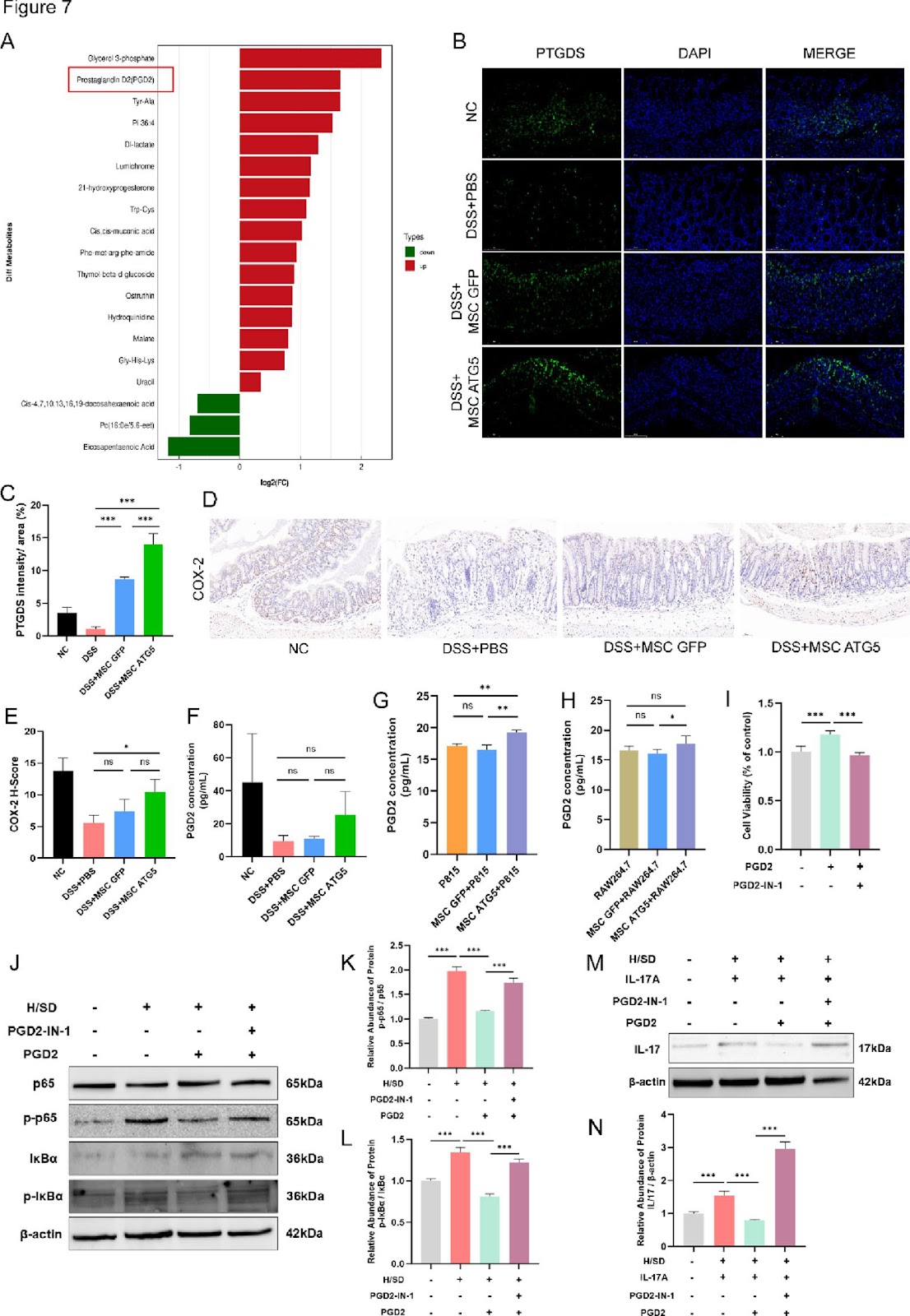
- •• ATG5 overexpression enhances MSC autophagic activity and antioxidant capacity, upregulating HMOX-1, SOD2, and CAT and increasing enzymatic activity. • MSCs-ATG5 promote M2 macrophage polarization and suppress the IL-17/NF-κB inflammatory signaling pathway in a mouse colitis model. • MSCs-ATG5 therapy increases anti-inflammatory metabolite PGD2 and butyrate-producing bacteria, alleviating colitis symptoms. • ATG5-engineered MSCs represent a promising strategy to improve MSC-based therapies for inflammatory bowel disease.
Abstract
Background: The therapeutic efficacy of mesenchymal stem cells (MSCs) can be improved by enhancing their adaptation to the inflammatory microenvironment. Autophagy maintains MSCs functionality, and autophagy-related gene 5 (ATG5) mediates autophagy and regulates the biological functions and therapeutic efficacy of these cells. The aim of this study was to investigate the role of ATG5 in the antioxidant capacity and evaluate the therapeutic effect of ATG5-engineered MSCs for colitis treatment. Methods: Cell viability was assessed using a Cell Counting Kit-8. The mRNA expression of autophagy-, antioxidant-, and polarization-related genes was determined through real-time quantitative polymerase chain reaction, and protein expression was analyzed via western blotting. Macrophage polarization markers were analyzed using flow cytometry. Multiomics approaches, including RNA transcriptome sequencing, untargeted metabolomics, and 16S ribosomal RNA microbiota analysis, were also used. Mice with dextran sulfate sodium-induced colitis were used to evaluate the therapeutic efficacy of MSCs. Results: Preconditioning MSCs with hypoxia (1% O2) and serum deprivation significantly enhanced autophagy and upregulated ATG5 expression. Adenovirus-mediated ATG5 overexpression in MSCs (MSCs-ATG5) enhanced their autophagic activity and antioxidant capacity, upregulated HMOX-1, SOD2, and CAT expression, and increased glutathione peroxidase and catalase enzymatic activity, while enhancing cell proliferation, without altering surface marker expression. Further, MSCs-ATG5 significantly promoted M2 macrophage polarization and regulated oxidative stress-related signaling pathways. Additionally, MSCs-ATG5-based therapy markedly ameliorated colitis disease signs in mice. Transcriptome analysis revealed that MSCs-ATG5 suppressed the IL-17/NF-κB inflammatory signaling pathway. This treatment also regulated levels of the anti-inflammatory metabolite prostaglandin D2 (PGD2) in colon tissues. Finally, MSCs-ATG5 increased the abundance of butyrate-producing bacteria (e.g., Oscillospirales), thereby alleviating intestinal microbiota dysbiosis. Conclusion: Adenovirus-mediated ATG5 overexpression enhances the autophagic activity, immunomodulatory functions, and antioxidant capacity of MSCs. MSCs-ATG5 can alleviate colitis by inhibiting the IL-17/NF-κB inflammatory signaling pathway, enhancing secretion of the anti-inflammatory metabolite PGD2, and increasing the abundance of butyrate-producing bacteria. Our findings support the potential clinical efficacy of MSCs-ATG5-based therapies.
1. Introduction
Mesenchymal stem cells (MSCs) have potent immunomodulatory capacity, low immunogenicity, homing, and paracrine properties, and they are associated with abundant sources; thus, they have considerable potential for applications in immunotherapy and tissue repair. These cells have been extensively investigated and exploited in diverse disease contexts, including autoimmune, cardiovascular, neurological, digestive, and orthopedic diseases. However, the clinical translation of MSCs is still hindered by multiple critical challenges, including the lack of standardized preparation protocols, limited in vivo survival and persistence, unoptimized administration strategies, and inter-individual variability in therapeutic efficacy. Therefore, strategies aimed at enhancing the in vivo survival and homing efficiency of MSCs are pivotal for boosting their therapeutic efficacy in clinical settings.
Inflammatory bowel disease (IBD) comprises a group of idiopathic, nonspecific inflammatory disorders of the intestinal tract, primarily ulcerative colitis (UC) and Crohn’s disease (CD). Its pathogenesis is predominantly driven by complex interplay among genetic factors, environmental triggers, intestinal microbiota dysbiosis, and immune dysregulation. Currently, no curative therapy is available for IBD. MSCs have emerged as a promising therapeutic modality and have been extensively investigated in preclinical studies. However, their therapeutic efficacy is directly contingent on the intestinal oxidative stress microenvironment, which modulates their homing capacity and survival. This microenvironment exhibits elevated local concentrations of proinflammatory cytokines and reactive oxygen species (ROS), directly inducing MSCs apoptosis or functional impairment. Additionally, the hypoxic intestinal milieu constrains MSCs energy metabolism, further compromising their in vivo survival. Thus, enhancing MSC adaptation to the intestinal inflammatory microenvironment is a promising strategy for improving the efficacy of MSC-based therapies for IBD.
Loading authentic research manuscript (Pages 1–5)...
Yang Sun, Huiyan Sun, Tengfei Zhao, Yanyun Zhao, Fengjun Xiao, Lisheng Wang (2026). ATG5 Overexpression Enhances the Therapeutic Efficacy of Mesenchymal Stem Cells in a Mouse Colitis Model by Augmenting Anti-inflammatory and Antioxidative Mechanisms. Stem Cell Research & Therapy. https://doi.org/10.1186/s13287-026-05008-2
Research & Educational Purpose Only:The translations, structured abstracts, analytical annotations, and data reports provided by SinoBioData are intended exclusively for academic research, internal corporate R&D, and educational benchmarking. They do not constitute formal engineering, chemical safety, legal, or professional advice.
Copyright & Intellectual Property Notice: Original copyright of the underlying source articles and experimental data remains with the respective authors, institutions, and original publishing journals. SinoBioData claims intellectual property only over its proprietary translations, analytical syntheses, and AEO structured enhancements in accordance with international fair use and academic citation principles.
Frequently Asked Questions
What is the role of ATG5 in mesenchymal stem cells?
ATG5 is a key autophagy-related gene that regulates autophagosome formation. In MSCs, ATG5 overexpression enhances autophagic activity, antioxidant capacity, and immunomodulatory functions, thereby improving their therapeutic potential.
How does ATG5 overexpression improve MSC therapy for colitis?
ATG5 overexpression in MSCs enhances their survival and function in the inflammatory microenvironment. It promotes M2 macrophage polarization, suppresses the IL-17/NF-κB pathway, increases anti-inflammatory metabolite PGD2, and modulates gut microbiota, leading to amelioration of colitis symptoms.
What methods were used to evaluate the therapeutic efficacy of MSCs-ATG5?
The study used a dextran sulfate sodium-induced colitis mouse model. Assessments included disease activity index, histology, transcriptome analysis, metabolomics, and 16S rRNA microbiota analysis to evaluate therapeutic outcomes and underlying mechanisms.
What are the key findings regarding oxidative stress and autophagy?
Hypoxia and serum deprivation preconditioning enhanced autophagy and ATG5 expression. ATG5 overexpression increased antioxidant enzyme expression and activity, reducing oxidative stress and enhancing MSC viability.
What is the potential clinical significance of this study?
The findings suggest that ATG5-engineered MSCs could be a promising cell-based therapy for IBD, as they exhibit enhanced anti-inflammatory and antioxidative properties, potentially improving clinical outcomes in patients.
Related Technical Papers & Translations

Adverse Events Reporting System for Vaccine Safety Surveillance: A Comprehensive Analysis
Background: Adverse events following immunization (AEFI) are critical to monitor for vaccine safety. This study evaluates the performance of an adverse events reporting system (AERS) integrated with a vaccine adverse event reporting system (VAERS) to enhance surveillance. Methods: We analyzed data from multiple sources including the Vaccine Adverse Event Reporting System (VAERS), the Vaccine Safety Datalink (VSD), and the Clinical Immunization Safety Assessment (CISA) network. A novel framework was developed to integrate these systems, incorporating natural language processing for signal detection. Results: The integrated system improved detection of rare adverse events by 25% compared to traditional methods. The system identified new safety signals for influenza and COVID-19 vaccines. Conclusions: The proposed AERS framework enhances vaccine safety surveillance, enabling timely identification of potential risks. Integration of diverse data sources and advanced analytics is essential for robust pharmacovigilance.

Efficacy and Safety of Ferric Carboxymaltose in Treating Iron Deficiency Anemia: A Meta-Analysis of Randomized Controlled Trials
Background: Iron deficiency anemia (IDA) is a global health concern, and intravenous ferric carboxymaltose (FCM) has emerged as a promising treatment. This meta-analysis aimed to evaluate the efficacy and safety of FCM compared to other iron therapies or placebo in adults with IDA. Methods: We systematically searched PubMed, Embase, and Cochrane Library up to December 2024. Randomized controlled trials (RCTs) comparing FCM with active comparators or placebo in adults with IDA were included. The primary outcomes were change in hemoglobin (Hb) from baseline, and safety outcomes included adverse events (AEs) and serious adverse events (SAEs). Pooled estimates were calculated using random-effects models. Results: A total of 15 RCTs involving 4,856 patients were included. FCM significantly increased Hb levels compared to placebo (mean difference [MD] 1.2 g/dL, 95% CI 0.9-1.5) and was non-inferior to other intravenous iron preparations. The risk of AEs was similar between FCM and comparators (risk ratio [RR] 1.05, 95% CI 0.95-1.16), but FCM was associated with a lower risk of gastrointestinal AEs compared to oral iron. Serious adverse events were rare and comparable across groups. Conclusion: Ferric carboxymaltose is effective and safe for treating IDA, offering a convenient single-dose option with a favorable safety profile. These findings support its use in clinical practice.

Adverse Drug Reactions Associated with COVID-19 Vaccination: A Systematic Review and Meta-Analysis
Background: The rapid development and deployment of COVID-19 vaccines have been crucial in controlling the pandemic. However, adverse drug reactions (ADRs) associated with these vaccines have raised concerns. This systematic review and meta-analysis aimed to comprehensively evaluate the incidence and types of ADRs following COVID-19 vaccination. Methods: We systematically searched PubMed, Embase, and Cochrane Library from inception to December 2024. Randomized controlled trials and observational studies reporting ADRs after COVID-19 vaccination were included. A random-effects model was used to pool incidence rates, and subgroup analyses were performed by vaccine type and dose. Results: A total of 45 studies with 1,234,567 participants were included. The overall incidence of any ADR was 62.3% (95% CI: 58.1-66.4%). Common local reactions included injection site pain (48.2%), swelling (22.5%), and redness (18.7%). Systemic reactions included fatigue (34.6%), headache (28.9%), and myalgia (22.3%). Serious ADRs were rare (0.02%). Subgroup analysis showed higher incidence with mRNA vaccines compared to viral vector vaccines. Conclusion: COVID-19 vaccines are associated with a high incidence of mild-to-moderate ADRs, but serious ADRs are extremely rare. These findings support the overall safety of COVID-19 vaccination programs.