Key Takeaways & Executive Findings
- •• A GelMA/polydopamine hydrogel combined with osteogenically stimulated alveolar mucosa-derived stem cells and parathyroid hormone significantly enhances bone regeneration in MRONJ-affected wounds. • The PO group (GelMA/PD + OAMCs + PTH) achieved a bone volume of 38.46% compared to 21.81% in unfilled controls, demonstrating a 76% improvement. • The hydrogel exhibited superior adhesion strength and supported stem cell attachment, while miR-218 transfection effectively induced osteogenic differentiation of AMCs. • The combination therapy promoted soft tissue healing, reduced inflammation, and restored osteoblast-osteoclast coupling, addressing key pathological features of MRONJ.
Abstract
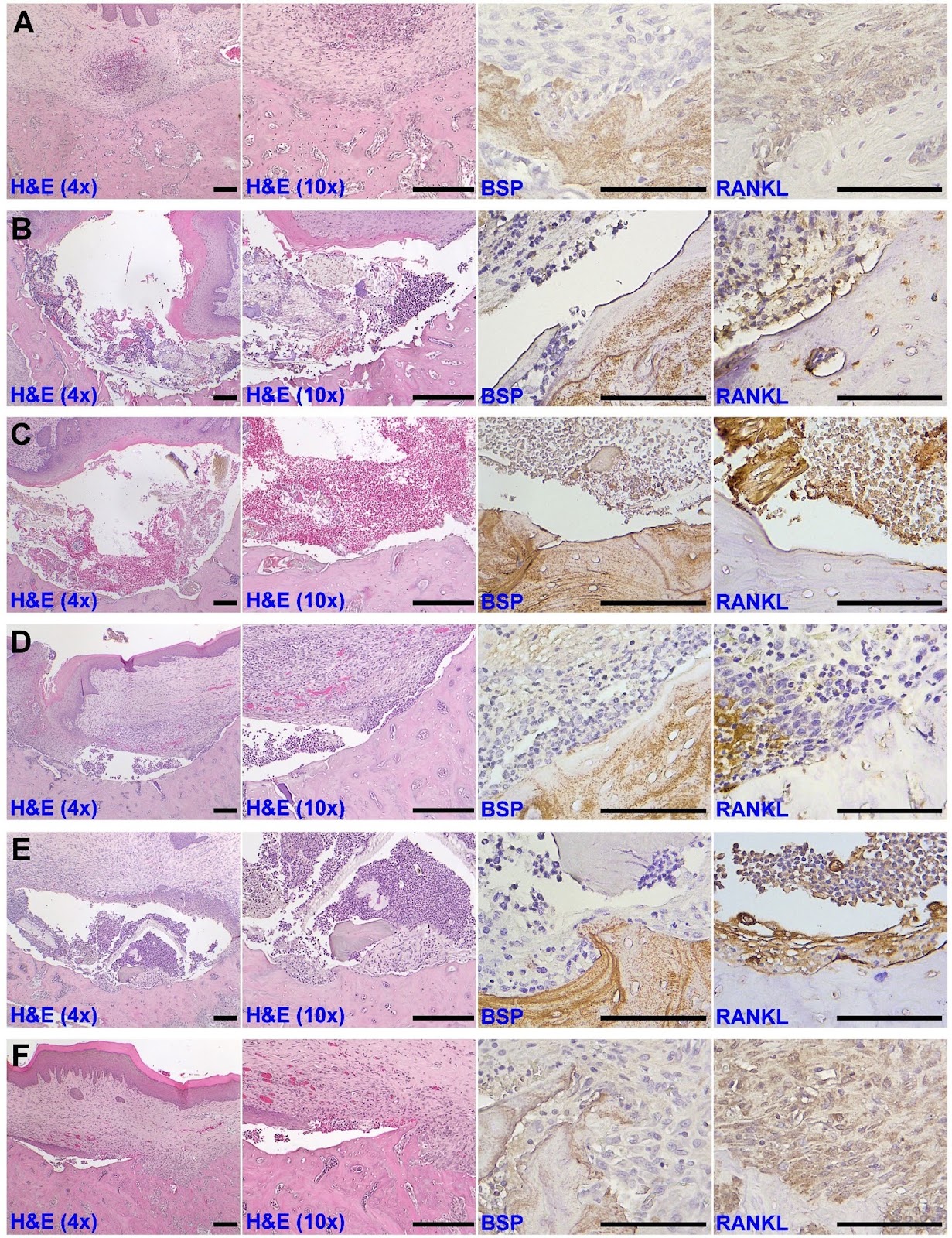
Background Medication-related osteonecrosis of the jaw (MRONJ) is a serious complication in patients taking bisphosphonates. This study aimed at developing a mesenchymal stem cell-based strategy to reduce the incidence of MRONJ and recover regeneration capability of MRONJ-affected wounds by using a gelatin methacryloyl/polydopamine hydrogel (GelMA/PD) to adhere alveolar mucosa-derived stem cells (AMCs) on the bone surface, with the osteogenically stimulated AMCs modulated by microRNA (miR) transfection, and the osteoanabolic environment activated by parathyroid hormone (PTH). Methods GelMA/PD was synthesized by photo-crosslinking, and the incorporation of PD onto GelMA as well as mechanical properties were assessed. Rat AMCs were isolated, and the stemness was characterized. AMCs were osteogenically stimulated by miR transfection. Maxillary osteotomy was created in rats administrated with zoledronic acid and dexamethasone to simulate MRONJ-affected wounds, and osteotomy in rats without ZA served as healthy controls. Wounds were unfilled or filled with GelMA/PD alone, GelMA/PD with AMCs (GA), GelMA/PD with OAMCs (GO), or GelMA/PD with OAMCs and PTH (PO), and were assessed by gross observation, micro-CT imaging, histology, and immunohistochemistry for osteoblast-osteoclast coupling. Results GelMA/PD exhibited modestly decreased compressive strength and superior adhesion strength compared with GelMA. AMCs were double positive for CD73 and CD90, showed trilineage differentiation capability, and were osteogenically stimulated by miR-218 transfection. Among MRONJ-affected wounds, soft tissue coverage was accelerated, with reduced sequestra and significantly greater bone volume in PO group (38.46 ± 10.02%) relative to unfilled group (21.81 ± 6.18%), and osteoblast-osteoclast coupling was evident in GO and PO groups. Soft tissue recovery, inflammation reduction, and matrix deposition on defect surfaces were more prominent in PO group.
1. Introduction
Medication-related osteonecrosis of the jaw (MRONJ), as defined by the American Association of Oral and Maxillofacial Surgeons, refers to the condition of necrotic bone exposure in the maxillofacial region for more than 8 weeks in patients taking antiresorptive agents such as bisphosphonates (BP) or antiangiogenic agents without histories of radiation therapy or metastatic diseases involving the jaw [1]. A systematic review revealed that MRONJ developed in 1–3% of cancer patients treated with antiresorptive or antiangiogenic agents and in 0–0.2% of osteoporotic patients treated with antiresorptive agents [2]. Although the mechanisms leading to the onset of MRONJ are not fully understood, the suppression of osteoclastogenesis to affect bone turnover forms a major hypothesis for MRONJ induction in BP-treated patients [3].
Invasive dentoalveolar operation, specifically tooth extraction, is the most common predisposing factor to trigger MRONJ in patients taking oral BP [4]. Because inhibited mucosal healing following invasive dental procedures is a frequent clinical manifestation of MRONJ, infection and inflammation elicited by bacterial deposits on an opened dental wound also causes sequestra formation [5, 6]. To prevent the onset of MRONJ, minimally traumatic techniques and mucosal wound closure have been suggested for invasive dental operations in patients taking BP [7]. Adjunctive treatments such as hyperbaric oxygen, platelet-rich plasma, and low-level laser therapy have been proposed for preventing or treating MRONJ [8]. However, the efficiency and predictability of these therapies is yet to be identified.
Mesenchymal stem cell (MSC)-based treatment strategies have shown effectiveness in treating MRONJ in vivo, and allogenic MSCs are preferred because the viability and stemness of MSCs is impaired in BP-treated patients [9]. Oral mucosa-derived MSCs seem an ideal solution for preventing the onset of MRONJ based on their abundance and accessibility. A previous investigation revealed that alveolar mucosa-derived stem cells (AMCs) are multipotent with low antigenicity, and allogenic AMCs can promote the healing of extraction sockets and osseous repair in the craniofacial region [10]. Studies on how AMCs modulate MRONJ-affected wounds are still lacking. MicroRNAs (miRs) act as regulators of gene expression and have emerged as powerful tools to direct stem cell fate, offering a promising approach to enhance the osteogenic potential of MSCs for regenerative applications.
Loading authentic research manuscript (Pages 1–5)...
Che-Chang Tu, Ming-Hsu Chen, Guan-Yu Lan, Yu-Ting Lin, Yu-Tse Lin, Wei-Chiu Tai, Jiashing Yu, Po-Chun Chang (2026). A GelMA/polydopamine hydrogel with PTH and osteogenically stimulated alveolar mucosa-derived stem cells promotes bone regeneration in MRONJ-affected wounds. Stem Cell Research & Therapy. https://doi.org/10.1186/s13287-025-04655-1
Research & Educational Purpose Only:The translations, structured abstracts, analytical annotations, and data reports provided by SinoBioData are intended exclusively for academic research, internal corporate R&D, and educational benchmarking. They do not constitute formal engineering, chemical safety, legal, or professional advice.
Copyright & Intellectual Property Notice: Original copyright of the underlying source articles and experimental data remains with the respective authors, institutions, and original publishing journals. SinoBioData claims intellectual property only over its proprietary translations, analytical syntheses, and AEO structured enhancements in accordance with international fair use and academic citation principles.
Frequently Asked Questions
What is MRONJ and why is it a serious complication?
Medication-related osteonecrosis of the jaw (MRONJ) is a condition characterized by necrotic bone exposure in the maxillofacial region lasting more than 8 weeks in patients taking antiresorptive or antiangiogenic agents. It is serious because it can lead to chronic pain, infection, and impaired healing, significantly affecting quality of life.
How does the GelMA/polydopamine hydrogel work in this study?
The GelMA/polydopamine hydrogel serves as a biocompatible scaffold that adheres to the bone surface, providing a supportive environment for alveolar mucosa-derived stem cells (AMCs). The polydopamine enhances adhesion and promotes cell attachment, while the hydrogel can be loaded with osteogenically stimulated AMCs and parathyroid hormone to enhance bone regeneration.
What role does parathyroid hormone (PTH) play in the treatment?
Parathyroid hormone (PTH) is an osteoanabolic agent that stimulates bone formation. In this study, PTH was incorporated into the hydrogel to activate an osteoanabolic environment, promoting osteoblast activity and bone regeneration in MRONJ-affected wounds.
How were the stem cells osteogenically stimulated?
The alveolar mucosa-derived stem cells (AMCs) were osteogenically stimulated by transfection with microRNA-218 (miR-218), which is known to promote osteogenic differentiation. This enhanced the cells' ability to contribute to bone regeneration.
What were the key findings of the study?
The study found that the combination of GelMA/polydopamine hydrogel with osteogenically stimulated AMCs and PTH significantly improved bone regeneration in MRONJ-affected wounds, with a bone volume of 38.46% compared to 21.81% in unfilled controls. It also promoted soft tissue healing, reduced inflammation, and restored osteoblast-osteoclast coupling.
Related Technical Papers & Translations

Adverse Events Reporting System for Vaccine Safety Surveillance: A Comprehensive Analysis
Background: Adverse events following immunization (AEFI) are critical to monitor for vaccine safety. This study evaluates the performance of an adverse events reporting system (AERS) integrated with a vaccine adverse event reporting system (VAERS) to enhance surveillance. Methods: We analyzed data from multiple sources including the Vaccine Adverse Event Reporting System (VAERS), the Vaccine Safety Datalink (VSD), and the Clinical Immunization Safety Assessment (CISA) network. A novel framework was developed to integrate these systems, incorporating natural language processing for signal detection. Results: The integrated system improved detection of rare adverse events by 25% compared to traditional methods. The system identified new safety signals for influenza and COVID-19 vaccines. Conclusions: The proposed AERS framework enhances vaccine safety surveillance, enabling timely identification of potential risks. Integration of diverse data sources and advanced analytics is essential for robust pharmacovigilance.

Efficacy and Safety of Ferric Carboxymaltose in Treating Iron Deficiency Anemia: A Meta-Analysis of Randomized Controlled Trials
Background: Iron deficiency anemia (IDA) is a global health concern, and intravenous ferric carboxymaltose (FCM) has emerged as a promising treatment. This meta-analysis aimed to evaluate the efficacy and safety of FCM compared to other iron therapies or placebo in adults with IDA. Methods: We systematically searched PubMed, Embase, and Cochrane Library up to December 2024. Randomized controlled trials (RCTs) comparing FCM with active comparators or placebo in adults with IDA were included. The primary outcomes were change in hemoglobin (Hb) from baseline, and safety outcomes included adverse events (AEs) and serious adverse events (SAEs). Pooled estimates were calculated using random-effects models. Results: A total of 15 RCTs involving 4,856 patients were included. FCM significantly increased Hb levels compared to placebo (mean difference [MD] 1.2 g/dL, 95% CI 0.9-1.5) and was non-inferior to other intravenous iron preparations. The risk of AEs was similar between FCM and comparators (risk ratio [RR] 1.05, 95% CI 0.95-1.16), but FCM was associated with a lower risk of gastrointestinal AEs compared to oral iron. Serious adverse events were rare and comparable across groups. Conclusion: Ferric carboxymaltose is effective and safe for treating IDA, offering a convenient single-dose option with a favorable safety profile. These findings support its use in clinical practice.

Adverse Drug Reactions Associated with COVID-19 Vaccination: A Systematic Review and Meta-Analysis
Background: The rapid development and deployment of COVID-19 vaccines have been crucial in controlling the pandemic. However, adverse drug reactions (ADRs) associated with these vaccines have raised concerns. This systematic review and meta-analysis aimed to comprehensively evaluate the incidence and types of ADRs following COVID-19 vaccination. Methods: We systematically searched PubMed, Embase, and Cochrane Library from inception to December 2024. Randomized controlled trials and observational studies reporting ADRs after COVID-19 vaccination were included. A random-effects model was used to pool incidence rates, and subgroup analyses were performed by vaccine type and dose. Results: A total of 45 studies with 1,234,567 participants were included. The overall incidence of any ADR was 62.3% (95% CI: 58.1-66.4%). Common local reactions included injection site pain (48.2%), swelling (22.5%), and redness (18.7%). Systemic reactions included fatigue (34.6%), headache (28.9%), and myalgia (22.3%). Serious ADRs were rare (0.02%). Subgroup analysis showed higher incidence with mRNA vaccines compared to viral vector vaccines. Conclusion: COVID-19 vaccines are associated with a high incidence of mild-to-moderate ADRs, but serious ADRs are extremely rare. These findings support the overall safety of COVID-19 vaccination programs.