Targeting cellular senescence in progenitor cells as a strategy to enhance bone regeneration by cell therapies: a systematic review of pre-clinical investigations
Authors: Mayu Morita, Eshan B. Damle, Issei Shinohara, Masatoshi Murayama, Yosuke Susuki, Qi Gao, Chao Ma, Simon Kwoon-Ho Chow, Stuart Barry Goodman
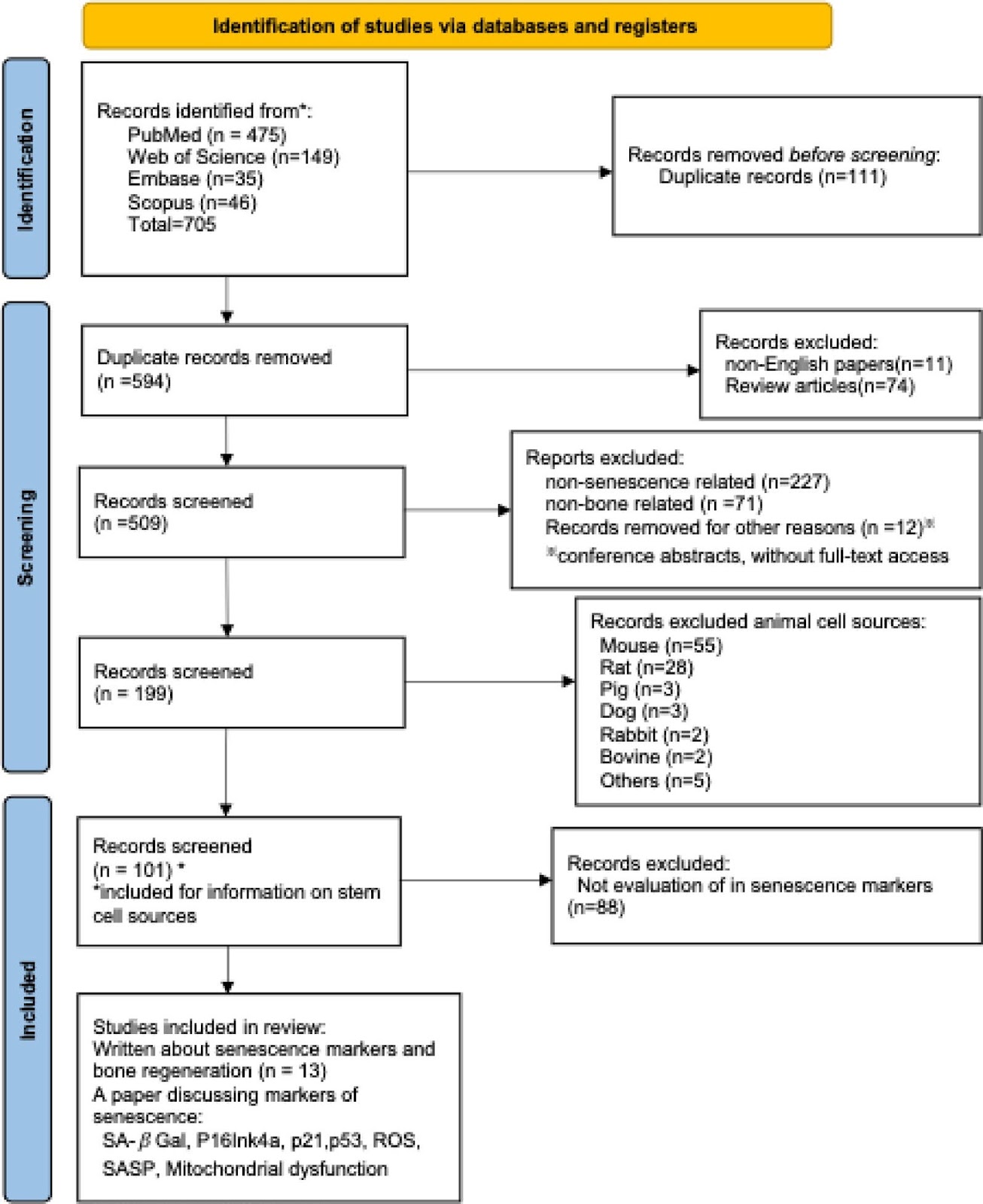
Background With the global population aging, optimizing bone regeneration is becoming increasingly important for enhancing the quality of life among elderly individuals. Progenitor cell-based therapies, such as mesenchymal stromal cells and induced pluripotent stem cells for bone regeneration have shown challenges due to cellular senescence and the control of the differentiation processes remain significant hurdles. In particular, elevated expression of senescence markers may play a pivotal role in limiting bone regeneration. This systematic review examines how these senescence markers influence the efficacy of progenitor cell therapies and whether targeting them could improve outcomes. Methods We conducted a systematic literature review following the PRISMA guidelines, using the PubMed, Web of Science, Embase and Scopus with the algorithm of “bone regeneration AND senescence AND marker”. Data synthesis focused on human cell sources and specifically examined senescence markers related to bone regeneration. Results Studies using human cells were discussed in 101 papers. Based on our inclusion and exclusion criteria, 13 papers remained for our review on senescence markers in human cells within the context of bone regeneration and senescence, with and without interventional strategies. More than half of the cell sources in current aging-related studies are derived from bone marrow. Markers of aging relevant to bone regeneration include changes in cell size and morphology, increased levels of β-galactosidase (β-Gal) and Reactive Oxygen Species (ROS), and the presence of a senescence-associated secretory phenotype (SASP). Additionally, distinct senescence markers such as p16Ink4a, p21, and p53, and mitochondrial dysfunction were associated with reduced osteogenic potential and impaired regenerative capacity. Conclusion Bone marrow is the most common source of cells for studies of senescence. Cellular senescence characterized by elevated expression of specific markers was consistently shown to be negatively associated with osteogenic capacity and regenerative outcomes. The most common strategies to rejuvenate senescent cells include