Forskolin ameliorates ataxia-like behavior in Purkinje cell-Celsr3 cKO mice via cAMP/Epac signaling pathway
Authors: WU Chuyue, GUO Jing, HONG Tu, HUANG Yu, CHEN Shengli, ZHOU Qinji
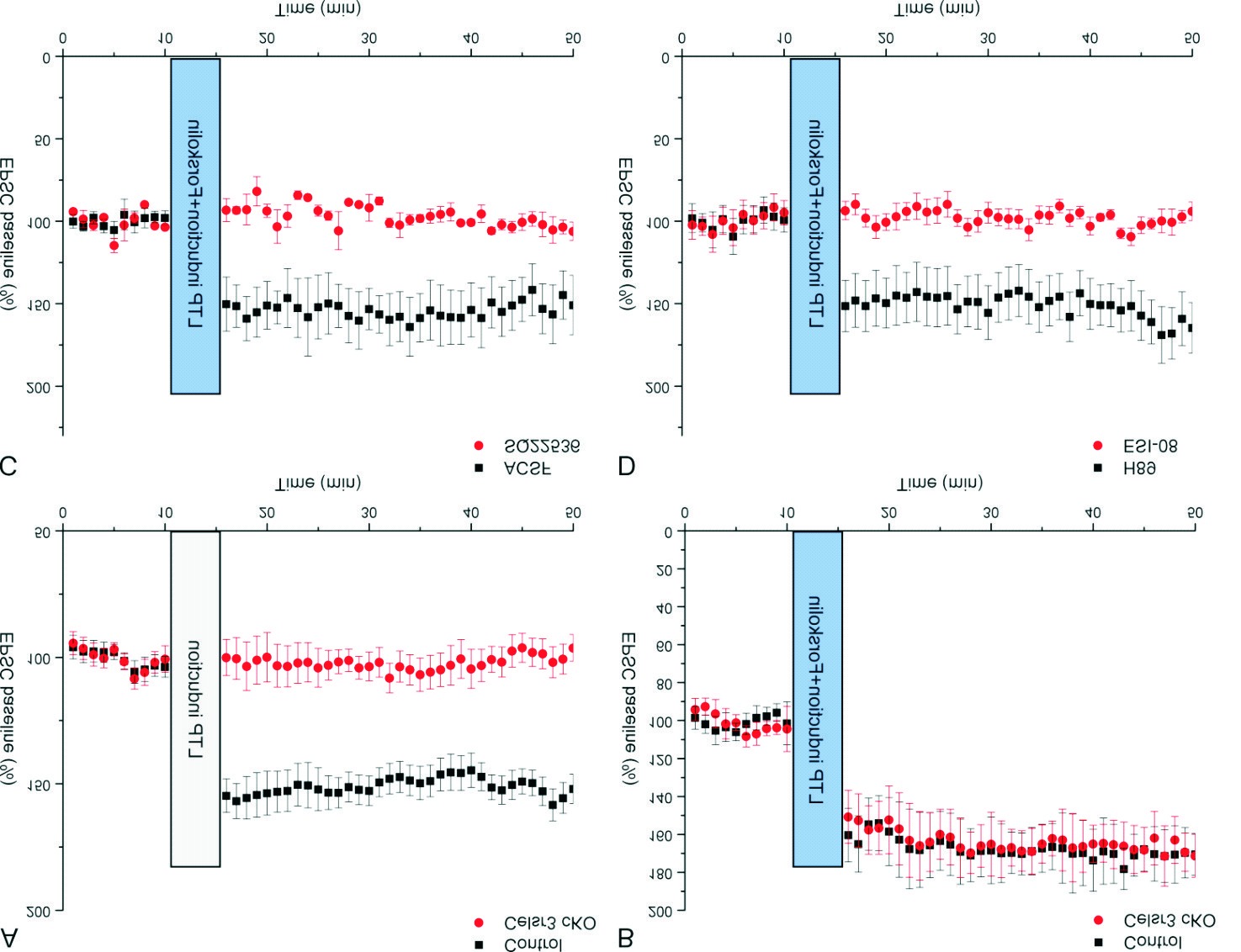
AIM: To evaluate the function and mechanisms of forskolin in treating ataxia-like behavior in Celsr3 conditional knockout (cKO) mice. METHODS: The efficiency of intraperitoneally administered forskolin was evaluated by behavioral tests, and the molecular mechanisms were investigated by patch-clamp experiments. RESULTS: The loss of Celsr3 led to ataxia-like behavior, accompanied by impaired miniature excitatory postsynaptic currents (mEPSCs) and postsynaptic long-term potentiation (LTP) in PCs. The cAMP activator forskolin ameliorated ataxia-like behavior and abrogated the mEPSCs impairment and LTP in model mice. Interestingly, the effects of forskolin could be blocked by SQ22536 (a cAMP antagonist) and ESI-08 (exchange protein activated by cAMP antagonist; Epac) but the H89 (a PKA antagonist) could not block the effects. CONCLUSION: Celsr3 plays an important role in motor coordination by modulating synaptic function, and forskolin may be a valuable therapeutic drug for certain types of inherited cerebellar ataxia.