Key Takeaways & Executive Findings
- •• KLF7 zinc fingers are essential for its regulatory control over NF-κB signaling and fatty acid β-oxidation genes. • Deletion of zinc fingers alters NF-κB pathway activity in a cell-type-specific manner, with loss reducing activity in HeLa and EC109 cells but increasing it in Ishikawa cells. • The ability of KLF7 to upregulate proinflammatory cytokines IL-6 and TNF-α is diminished upon zinc finger loss. • These findings highlight the potential of targeting KLF7 zinc fingers for therapeutic intervention in inflammatory and metabolic diseases.
Abstract
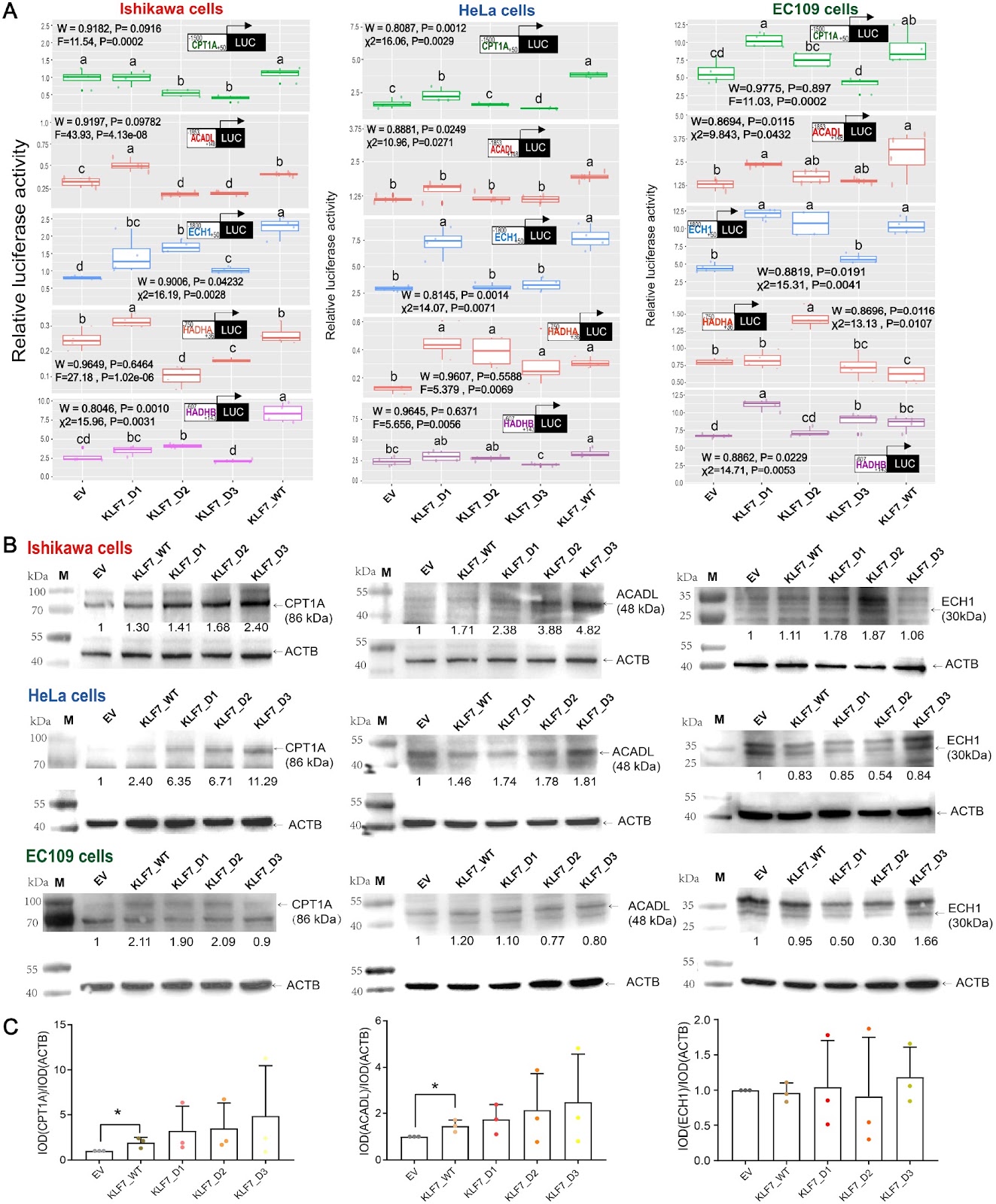
Krüppel-like factors (KLFs) are a family of 18 transcriptional regulators characterized by three highly conserved C2H2 zinc fingers at their C-terminal regions. KLF7, a member of this family, plays a crucial role in cell proliferation, differentiation, and the development of the nervous system, adipogenesis, diabetes, and various cancers. Studies have shown that KLF7 aggravates metabolic disorders by impeding insulin secretion and sensitivity. The nuclear factor kappa-B (NF-κB) signaling cascade is essential for inflammatory responses, while fatty acid β-oxidation is vital for metabolism. Both are linked to insulin resistance, obesity, and cardiovascular diseases. A functional link between KLF7 and the NF-κB signaling pathway has been demonstrated. In rheumatoid arthritis, KLF7 activates NF-κB signaling pathway, leading to increased cell proliferation and the production of proinflammatory cytokines, including interleukin 6 (IL-6), IL-1β, and IL-17A. In adipose tissue, KLF7 may initiate NF-κB signaling pathway by upregulating protein kinase Cζ, causing significant IL-6 secretion. KLF7 also reduces oleate-induced lipid droplets in chicken preadipocytes, indicating its role in fatty acid metabolism. Studies in mice showed that KLF7 regulates the transcription of genes of the rate-limiting glycolytic enzyme phosphofructokinase liver type (PFKL) and the fatty acid β-oxidation enzyme acyl-CoA dehydrogenase long-chain (ACADL) in cardiomyocytes independently of peroxisome proliferator-activated receptor (PPAR) γ, thereby altering heart metabolism. Additionally, KLF7 may promote cervical cancer progression by enhancing fatty acid utilization efficiency at least via ACADL upregulation. Overall, KLF7 is crucial for the regulation of fatty acid β-oxidation. KLF7 is a ring-shaped protein with zinc fingers forming the protruding part of ring surface. The lack of the third zinc finger domain in KLF7 affected its function in chicken preadipocytes. However, the importance of zinc finger domains for the regulatory function of human KLF7 remains unclear. In this study, we engineered an overexpression vector for wild-type KLF7 (pCMV-myc-KLF7_WT) and three vectors for KLF7 mutants with different zinc finger deletions (pCMV-myc-KLF7_D1, pCMV-myc-KLF7_D2, and pCMV-myc-KLF7_D3). These vectors were constructed using primers shown in Supplementary Table S1 and cDNA from HEK293T cells. Western blot analysis in the HEK293T, Ishikawa, HeLa, and EC109 cells (Pricella, Wuhan, China) showed that, unlike cells transfected with the empty vector (EV) of pCMV-myc (Clontech, Mountain View, USA), Myc-tagged proteins appeared at expected sizes in cells transfected with either the wild-type KLF7 or any of the three mutant KLF7 overexpression plasmids after 48 h (Figure 1A and Supplementary Figure S1). The impacts of overexpressing various KLF7 isoforms on gene transcription related to the NF-κB signaling pathway and fatty acid β-oxidation were evaluated using luciferase reporter assays, real-time PCR, and western blot analysis in Ishikawa, HeLa, and EC109 cells 48 h post-transfection. Details of the luciferase reporter assay transfection protocol are provided in Supplementary Table S2, the oligonucleotide sequences for real-time PCR are shown in Supplementary Table S3, and the antibodies for western blot analysis are listed in Supplementary Table S4. Compared to EV group, wild-type KLF7 overexpression significantly boosted NF-κB pathway activity in HeLa and EC109 cells (P < 0.05, Figure 1B). Furthermore, wild-type KLF7 overexpression significantly elevated IL-6 and TNF-α expressions in Ishikawa and HeLa cells (P < 0.05, Figure 1C), confirming previous findings that KLF7 enhances inflammation via the NF-κB pathway [4,5]. Cells transfected with KLF7 overexpression plasmids lacking zinc fingers showed significant differences in NF-κB pathway activities compared to those transfected with the wild-type KLF7 overexpression plasmid (P < 0.05, Figure 1B). In HeLa and EC109 cells, the absence of zinc fingers reduced NF-κB signaling activity, with the reduction proportional to the number of zinc fingers lost (P < 0.05, Figure 1B). In Ishikawa cells, losing one or two zinc fingers increased NF-κB activity compared to the wild-type KLF7 (P < 0.05, Figure 1B). Additionally, the ability of KLF7 overexpression to increase IL-6 and TNF-α expression decreased with the loss of zinc fingers.
1. Introduction
Krüppel-like factors (KLFs) are a family of 18 transcriptional regulators characterized by three highly conserved C2H2 zinc fingers at their C-terminal regions [1]. KLF7, a member of this family, plays a crucial role in cell proliferation, differentiation, and the development of the nervous system, adipogenesis, diabetes, and various cancers [2]. Studies have shown that KLF7 aggravates metabolic disorders by impeding insulin secretion and sensitivity [3].
The nuclear factor kappa-B (NF-κB) signaling cascade is essential for inflammatory responses, while fatty acid β-oxidation is vital for metabolism. Both are linked to insulin resistance, obesity, and cardiovascular diseases. A functional link between KLF7 and the NF-κB signaling pathway has been demonstrated. In rheumatoid arthritis, KLF7 activates NF-κB signaling pathway, leading to increased cell proliferation and the production of proinflammatory cytokines, including interleukin 6 (IL-6), IL-1β, and IL-17A [4]. In adipose tissue, KLF7 may initiate NF-κB signaling pathway by upregulating protein kinase Cζ, causing significant IL-6 secretion [5]. KLF7 also reduces oleate-induced lipid droplets in chicken preadipocytes, indicating its role in fatty acid metabolism [6].
Studies in mice showed that KLF7 regulates the transcription of genes of the rate-limiting glycolytic enzyme phosphofructokinase liver type (PFKL) and the fatty acid β-oxidation enzyme acyl-CoA dehydrogenase long-chain (ACADL) in cardiomyocytes independently of peroxisome proliferator-activated receptor (PPAR) γ, thereby altering heart metabolism [7]. Additionally, KLF7 may promote cervical cancer progression by enhancing fatty acid utilization efficiency at least via ACADL upregulation [8]. Overall, KLF7 is crucial for the regulation of fatty acid β-oxidation.
Loading authentic research manuscript (Pages 1–5)...
Jiazhen Tian, Tingting Zhang, Zhaoxiong Qi, Yuechan Chen, Xiangquan Mi, Zhiwei Zhang (2026). Zinc fingers are responsible for the efficient control of KLF7 on the transcription of genes in the NF-κB signaling pathway and fatty acid β-oxidation. Acta Biochimica et Biophysica Sinica. https://doi.org/10.3724/abbs.2025053
Research & Educational Purpose Only:The translations, structured abstracts, analytical annotations, and data reports provided by SinoBioData are intended exclusively for academic research, internal corporate R&D, and educational benchmarking. They do not constitute formal engineering, chemical safety, legal, or professional advice.
Copyright & Intellectual Property Notice: Original copyright of the underlying source articles and experimental data remains with the respective authors, institutions, and original publishing journals. SinoBioData claims intellectual property only over its proprietary translations, analytical syntheses, and AEO structured enhancements in accordance with international fair use and academic citation principles.
Frequently Asked Questions
What is the role of zinc fingers in KLF7 function?
Zinc fingers are essential for KLF7's efficient control of gene transcription, particularly in the NF-κB signaling pathway and fatty acid β-oxidation. Deletion of zinc fingers alters KLF7's regulatory activity, affecting downstream gene expression.
How does KLF7 affect the NF-κB signaling pathway?
KLF7 activates the NF-κB signaling pathway, leading to increased expression of proinflammatory cytokines such as IL-6 and TNF-α. This activation is dependent on the presence of zinc fingers, as their loss reduces or alters this effect.
What is the significance of KLF7 in metabolic diseases?
KLF7 is involved in regulating fatty acid β-oxidation and insulin sensitivity, linking it to metabolic disorders like obesity and diabetes. Its zinc fingers are critical for these regulatory functions.
How was the study conducted?
The study used overexpression vectors for wild-type KLF7 and mutants lacking zinc fingers, transfected into various cell lines. Luciferase reporter assays, real-time PCR, and western blotting were employed to assess NF-κB pathway activity and cytokine expression.
What are the potential therapeutic implications?
Targeting KLF7 zinc fingers could modulate inflammatory and metabolic pathways, offering potential therapeutic strategies for diseases like rheumatoid arthritis, obesity, and cancer.
Related Technical Papers & Translations

Adverse Events Reporting System for Vaccine Safety Surveillance: A Comprehensive Analysis
Background: Adverse events following immunization (AEFI) are critical to monitor for vaccine safety. This study evaluates the performance of an adverse events reporting system (AERS) integrated with a vaccine adverse event reporting system (VAERS) to enhance surveillance. Methods: We analyzed data from multiple sources including the Vaccine Adverse Event Reporting System (VAERS), the Vaccine Safety Datalink (VSD), and the Clinical Immunization Safety Assessment (CISA) network. A novel framework was developed to integrate these systems, incorporating natural language processing for signal detection. Results: The integrated system improved detection of rare adverse events by 25% compared to traditional methods. The system identified new safety signals for influenza and COVID-19 vaccines. Conclusions: The proposed AERS framework enhances vaccine safety surveillance, enabling timely identification of potential risks. Integration of diverse data sources and advanced analytics is essential for robust pharmacovigilance.

Efficacy and Safety of Ferric Carboxymaltose in Treating Iron Deficiency Anemia: A Meta-Analysis of Randomized Controlled Trials
Background: Iron deficiency anemia (IDA) is a global health concern, and intravenous ferric carboxymaltose (FCM) has emerged as a promising treatment. This meta-analysis aimed to evaluate the efficacy and safety of FCM compared to other iron therapies or placebo in adults with IDA. Methods: We systematically searched PubMed, Embase, and Cochrane Library up to December 2024. Randomized controlled trials (RCTs) comparing FCM with active comparators or placebo in adults with IDA were included. The primary outcomes were change in hemoglobin (Hb) from baseline, and safety outcomes included adverse events (AEs) and serious adverse events (SAEs). Pooled estimates were calculated using random-effects models. Results: A total of 15 RCTs involving 4,856 patients were included. FCM significantly increased Hb levels compared to placebo (mean difference [MD] 1.2 g/dL, 95% CI 0.9-1.5) and was non-inferior to other intravenous iron preparations. The risk of AEs was similar between FCM and comparators (risk ratio [RR] 1.05, 95% CI 0.95-1.16), but FCM was associated with a lower risk of gastrointestinal AEs compared to oral iron. Serious adverse events were rare and comparable across groups. Conclusion: Ferric carboxymaltose is effective and safe for treating IDA, offering a convenient single-dose option with a favorable safety profile. These findings support its use in clinical practice.

Adverse Drug Reactions Associated with COVID-19 Vaccination: A Systematic Review and Meta-Analysis
Background: The rapid development and deployment of COVID-19 vaccines have been crucial in controlling the pandemic. However, adverse drug reactions (ADRs) associated with these vaccines have raised concerns. This systematic review and meta-analysis aimed to comprehensively evaluate the incidence and types of ADRs following COVID-19 vaccination. Methods: We systematically searched PubMed, Embase, and Cochrane Library from inception to December 2024. Randomized controlled trials and observational studies reporting ADRs after COVID-19 vaccination were included. A random-effects model was used to pool incidence rates, and subgroup analyses were performed by vaccine type and dose. Results: A total of 45 studies with 1,234,567 participants were included. The overall incidence of any ADR was 62.3% (95% CI: 58.1-66.4%). Common local reactions included injection site pain (48.2%), swelling (22.5%), and redness (18.7%). Systemic reactions included fatigue (34.6%), headache (28.9%), and myalgia (22.3%). Serious ADRs were rare (0.02%). Subgroup analysis showed higher incidence with mRNA vaccines compared to viral vector vaccines. Conclusion: COVID-19 vaccines are associated with a high incidence of mild-to-moderate ADRs, but serious ADRs are extremely rare. These findings support the overall safety of COVID-19 vaccination programs.