Key Takeaways & Executive Findings
- •• miR-126-3p is upregulated in atherosclerotic cell models, suggesting its involvement in atherosclerosis pathogenesis. • Xiao Ban Tong Mai Fang downregulates miR-126-3p expression in human umbilical vein endothelial cells. • The formula inhibits autophagy and the MAPK signaling pathway, similar to the autophagy inhibitor 3-methyladenine. • Bioinformatics analysis identified 10 key miRNAs and 257 autophagy-related genes, with MAPK pathway as a key mediator.
Abstract
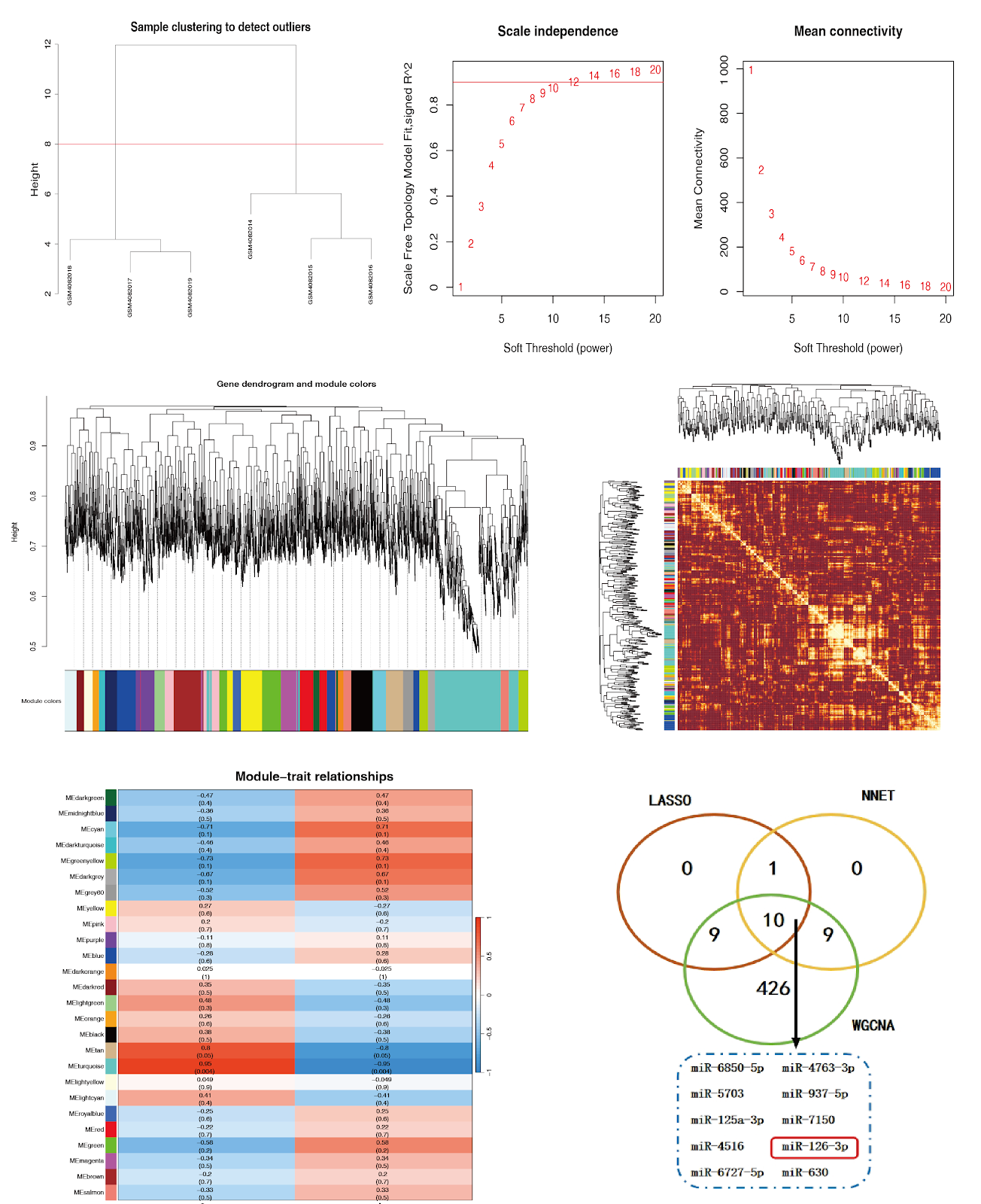
BACKGROUND: Studies have shown that miR-126-3p plays an important role in regulating autophagy and is closely related to the occurrence and development of atherosclerosis. Xiao Ban Tong Mai Fang can exert anti-atherosclerotic effects by exerting anti-inflammatory effects and inhibiting the proliferation of human aortic vascular smooth muscle cells. OBJECTIVE: To explore the mechanism of Xiao Ban Tong Mai Fang in the treatment of atherosclerosis by targeting microRNAs (miRNAs) to regulate autophagy using bioinformatics techniques. METHODS: Machine learning methods were used to screen the differentially expressed miRNAs in the atherosclerosis dataset GSE137580. The screened miRNAs were intersected with the key module genes screened by weighted gene co-expression network analysis. The potential regulatory genes of the intersected miRNAs were predicted based on the database, and then the predicted genes were intersected with the autophagy gene set. Protein-protein interaction analysis and enrichment analysis were performed on the intersection genes. Based on the enrichment analysis results, experimental validation was carried out. Human umbilical vein endothelial cells and RAW264.7 cells were cultured in vitro, and an atherosclerotic cell foam model was induced by oxidized low-density lipoprotein. qPCR was used to detect the differential expression of miR-126-3p. A miR-126-3p overexpression vector was constructed, and the transfection efficiency and the intervention effect of Xiao Ban Tong Mai Fang were detected by qPCR. Western blot was used to detect the regulation of Xiao Ban Tong Mai Fang on autophagy and mitogen-activated protein kinase pathway in human umbilical vein endothelial cells. RESULTS AND CONCLUSION: (1) Combining machine learning and weighted gene co-expression network analysis, 10 key miRNAs were identified. Based on literature review and previous foundation, miR-126-3p was selected for experimental validation. A total of 3,892 potential regulatory genes were predicted, and 257 autophagy-related genes were obtained by intersecting with the autophagy gene set. Enrichment analysis found that these genes were widely enriched in the mitogen-activated protein kinase signaling pathway, so this pathway was selected for experimental validation. (2) qPCR results showed that miR-126-3p was upregulated in oxidized low-density lipoprotein-induced foam cell models of human umbilical vein endothelial cells and RAW264.7 cells (P < 0.05). (3) After intervention with Xiao Ban Tong Mai Fang, the expression of miR-126-3p in the mimic group of human umbilical vein endothelial cells was significantly reduced (P < 0.05). (4) Western Blot results showed that Xiao Ban Tong Mai Fang intervention inhibited the expression of autophagy-related proteins microtubule-associated protein 1 light chain 3 lipidated/non-lipidated (LC3-II/LC3-I) and autophagy adaptor protein p62 in human umbilical vein endothelial cells (P < 0.05), and downregulated the expression of mitogen-activated protein kinase pathway proteins (P < 0.05), similar to the effect of autophagy inhibitor 3-methyladenine. These results indicate that miR-126-3p is upregulated in atherosclerosis models, and its abnormal expression may be involved in the pathogenesis of atherosclerosis. Xiao Ban Tong Mai Fang exerts its therapeutic effect on atherosclerosis by downregulating miR-126-3p, inhibiting the mitogen-activated protein kinase pathway, and inhibiting autophagy in human umbilical vein endothelial cells.
1. Introduction
Atherosclerosis is a vascular wall disease characterized by chronic inflammation, with a high incidence worldwide and serving as an important pathological basis for secondary cardiovascular and cerebrovascular diseases [1-2]. Modern medical treatments for atherosclerosis mainly focus on pharmacological and surgical interventions [3]. However, long-term use of drugs such as statins and fibrates increases the risk of liver and kidney damage and certain muscle pain [4-6]; surgical treatment is limited in clinical application due to its high cost, so finding safe and effective therapeutic drugs is urgent [7-8]. In traditional Chinese medicine, atherosclerosis can be classified under the categories of 'vein accumulation' and 'vein obstruction' [9-11]. Numerous studies have found that traditional Chinese medicine has advantages in the treatment of atherosclerosis, including multi-target synergy, holistic regulation [12], and low toxicity [13], and can act simultaneously on anti-inflammatory, lipid-regulating, and antioxidant mechanisms [14-16], which better matches the complex multifactorial pathogenesis of atherosclerosis. In-depth research on the prevention and treatment of atherosclerosis with traditional Chinese medicine will help expand treatment ideas and promote the modernization and scientific advancement of traditional Chinese medicine.
Xiao Ban Tong Mai Fang is composed of Radix Panacis Quinquefolii, Hirudo, steamed Radix Polygoni Multiflori, Salvia miltiorrhiza, Panax notoginseng, Trichosanthes kirilowii, and Gastrodia elata. It is an empirical formula created by Professor Cui Yingmin, a national-level renowned traditional Chinese medicine expert, with the effects of replenishing qi, activating blood, eliminating plaques, and unblocking meridians. It has shown good clinical efficacy in treating atherosclerosis [17]. Our previous research found that Xiao Ban Tong Mai Fang can exert anti-atherosclerotic effects by anti-inflammatory actions and inhibiting the proliferation of human aortic vascular smooth muscle cells [18]. However, whether Xiao Ban Tong Mai Fang can improve atherosclerosis by regulating miRNA-mediated autophagy remains unclear. miRNAs are newly discovered gene regulatory factors that play key roles in the epigenetic regulation of atherosclerosis, plaque formation, progression, and rupture [19-21]. Studies have shown that miR-126-3p plays an important role in regulating autophagy and is closely related to the occurrence and development of atherosclerosis.
Loading authentic research manuscript (Pages 1–5)...
Cao Shan, Wang Yanxi, Duan Kaixuan, Qi Xiang, Wang Yuhan (2026). Xiao Ban Tong Mai Fang regulates autophagy via targeting miR-126-3p: bioinformatics analysis for prevention and treatment of atherosclerosis. Chinese Journal of Tissue Engineering Research. https://doi.org/10.12307/2026.21610
Research & Educational Purpose Only:The translations, structured abstracts, analytical annotations, and data reports provided by SinoBioData are intended exclusively for academic research, internal corporate R&D, and educational benchmarking. They do not constitute formal engineering, chemical safety, legal, or professional advice.
Copyright & Intellectual Property Notice: Original copyright of the underlying source articles and experimental data remains with the respective authors, institutions, and original publishing journals. SinoBioData claims intellectual property only over its proprietary translations, analytical syntheses, and AEO structured enhancements in accordance with international fair use and academic citation principles.
Frequently Asked Questions
What is the role of miR-126-3p in atherosclerosis?
miR-126-3p is upregulated in atherosclerotic cell models, suggesting its abnormal expression may be involved in the pathogenesis of atherosclerosis. It plays a role in regulating autophagy and is closely related to the disease.
How does Xiao Ban Tong Mai Fang treat atherosclerosis?
Xiao Ban Tong Mai Fang downregulates miR-126-3p, inhibits the mitogen-activated protein kinase (MAPK) pathway, and suppresses autophagy in human umbilical vein endothelial cells, thereby exerting its therapeutic effect on atherosclerosis.
What methods were used in this study?
The study used bioinformatics techniques including machine learning and weighted gene co-expression network analysis (WGCNA) to identify key miRNAs and target genes, followed by experimental validation with cell models and molecular biology techniques such as qPCR and Western blot.
What is the significance of the MAPK pathway in this study?
The MAPK signaling pathway was found to be enriched among the target genes of miR-126-3p and autophagy-related genes. Xiao Ban Tong Mai Fang inhibits this pathway, which is associated with its anti-atherosclerotic effects.
What are the key findings of this research?
The study identified 10 key miRNAs and 257 autophagy-related genes, with miR-126-3p being upregulated in atherosclerosis models. Xiao Ban Tong Mai Fang downregulates miR-126-3p, inhibits MAPK pathway and autophagy, providing a potential mechanism for its therapeutic action.
Related Technical Papers & Translations

Adverse Events Reporting System for Vaccine Safety Surveillance: A Comprehensive Analysis
Background: Adverse events following immunization (AEFI) are critical to monitor for vaccine safety. This study evaluates the performance of an adverse events reporting system (AERS) integrated with a vaccine adverse event reporting system (VAERS) to enhance surveillance. Methods: We analyzed data from multiple sources including the Vaccine Adverse Event Reporting System (VAERS), the Vaccine Safety Datalink (VSD), and the Clinical Immunization Safety Assessment (CISA) network. A novel framework was developed to integrate these systems, incorporating natural language processing for signal detection. Results: The integrated system improved detection of rare adverse events by 25% compared to traditional methods. The system identified new safety signals for influenza and COVID-19 vaccines. Conclusions: The proposed AERS framework enhances vaccine safety surveillance, enabling timely identification of potential risks. Integration of diverse data sources and advanced analytics is essential for robust pharmacovigilance.

Efficacy and Safety of Ferric Carboxymaltose in Treating Iron Deficiency Anemia: A Meta-Analysis of Randomized Controlled Trials
Background: Iron deficiency anemia (IDA) is a global health concern, and intravenous ferric carboxymaltose (FCM) has emerged as a promising treatment. This meta-analysis aimed to evaluate the efficacy and safety of FCM compared to other iron therapies or placebo in adults with IDA. Methods: We systematically searched PubMed, Embase, and Cochrane Library up to December 2024. Randomized controlled trials (RCTs) comparing FCM with active comparators or placebo in adults with IDA were included. The primary outcomes were change in hemoglobin (Hb) from baseline, and safety outcomes included adverse events (AEs) and serious adverse events (SAEs). Pooled estimates were calculated using random-effects models. Results: A total of 15 RCTs involving 4,856 patients were included. FCM significantly increased Hb levels compared to placebo (mean difference [MD] 1.2 g/dL, 95% CI 0.9-1.5) and was non-inferior to other intravenous iron preparations. The risk of AEs was similar between FCM and comparators (risk ratio [RR] 1.05, 95% CI 0.95-1.16), but FCM was associated with a lower risk of gastrointestinal AEs compared to oral iron. Serious adverse events were rare and comparable across groups. Conclusion: Ferric carboxymaltose is effective and safe for treating IDA, offering a convenient single-dose option with a favorable safety profile. These findings support its use in clinical practice.

Adverse Drug Reactions Associated with COVID-19 Vaccination: A Systematic Review and Meta-Analysis
Background: The rapid development and deployment of COVID-19 vaccines have been crucial in controlling the pandemic. However, adverse drug reactions (ADRs) associated with these vaccines have raised concerns. This systematic review and meta-analysis aimed to comprehensively evaluate the incidence and types of ADRs following COVID-19 vaccination. Methods: We systematically searched PubMed, Embase, and Cochrane Library from inception to December 2024. Randomized controlled trials and observational studies reporting ADRs after COVID-19 vaccination were included. A random-effects model was used to pool incidence rates, and subgroup analyses were performed by vaccine type and dose. Results: A total of 45 studies with 1,234,567 participants were included. The overall incidence of any ADR was 62.3% (95% CI: 58.1-66.4%). Common local reactions included injection site pain (48.2%), swelling (22.5%), and redness (18.7%). Systemic reactions included fatigue (34.6%), headache (28.9%), and myalgia (22.3%). Serious ADRs were rare (0.02%). Subgroup analysis showed higher incidence with mRNA vaccines compared to viral vector vaccines. Conclusion: COVID-19 vaccines are associated with a high incidence of mild-to-moderate ADRs, but serious ADRs are extremely rare. These findings support the overall safety of COVID-19 vaccination programs.