Key Takeaways & Executive Findings
- •• The L6-S1 disc angle significantly decreased from (12.16±0.57)° in relaxed posture to (1.26±0.26)° in restrained posture, confirming morphological changes under abnormal forward flexion. • Finite element analysis revealed that under 10° forward flexion, the lower endplate experienced the highest von Mises stress (19.928 MPa), followed by the upper endplate (10.398 MPa), annulus fibrosus (6.819 MPa), and nucleus pulposus (0.104 MPa). • Endplates bore significantly greater stress than other disc structures, suggesting they may be the first to undergo degenerative changes in this model. • The study provides biomechanical validation for the novel rat model of abnormal forward-flexed posture, supporting its use in disc degeneration research.
Abstract
BACKGROUND: Our group developed a rat lumbar spine model inducing L6-S1 segmental degeneration by prolonged fixation in an abnormal forward-bending posture through a specific device. However, biomechanical evaluation of this model remains lacking. OBJECTIVE: To evaluate the biomechanical properties of L6-S1 motion segment in rats with abnormal forward bending posture through X-ray verification and finite element analysis. METHODS: This study utilized a previously established SD rat model of abnormal forward-flexed posture. Lateral X-ray images of three healthy female SD rats were taken in both restrained (unanesthetized) and relaxed (anesthetized) states to measure the L6-S1 disc angle and analyze its changes under different postures. Micro-CT data from one healthy female SD rat were used to reconstruct a 3D L6-S1 model with Mimics, Geomagic Wrap, and SolidWorks. The model was then meshed, assigned material properties, and subjected to forward flexion loading simulation in ANSYS Workbench to calculate stress distribution in L6-S1 disc structures. RESULTS AND CONCLUSION: (1) The mean L6-S1 intervertebral disc angle was (12.16±0.57)° in relaxed posture and (1.26±0.26)° in restrained posture. (2) Under 10° forward flexion, the maximum von Mises stresses in the upper endplate, lower endplate, annulus fibrosus, and nucleus pulposus were 10.398, 19.928, 6.819, and 0.104 MPa, respectively, with endplates showing significantly higher stresses. (3) The forward-flexed posture reduced the L6-S1 disc angle, altering disc morphology and load distribution. The finite element model simulated the biomechanical environment under abnormal posture, indicating that endplates may be the earliest structures to undergo degenerative changes.
1. Introduction
Intervertebral disc degeneration is a pathological process in which the biochemical composition and structure of the disc change, leading to a decline in its biomechanical function [1-6]. To better simulate the natural process of disc degeneration under abnormal posture, our group previously developed a novel rat lumbar spine model by fixing the lumbar spine in an abnormal forward-flexed posture using a specific device. This model successfully induced degeneration at the L6-S1 segment, which anatomically corresponds to common human degenerative segments such as L5-S1 and L4-L5, offering a promising experimental platform for lumbar degeneration research [7].
Finite element analysis is a numerical method that discretizes complex structures into finite elements to approximate solutions for engineering and biomechanical problems. It has been widely used to simulate spinal mechanics, evaluate surgical strategies, and optimize biomaterial design [8-9]. In this study, we systematically evaluated the disc angle changes and tissue stress distribution in the novel rat model using X-ray imaging and finite element analysis, providing biomechanical evidence to validate the model's rationality and expand its application in studying disc degeneration mechanisms and interventions.
Loading authentic research manuscript (Pages 1–5)...
HE Miao, WU Gang, ZHANG Xuxing (2026). X-ray imaging and finite element analysis of the L6-S1 intervertebral disc in rats under abnormal forward-flexed posture. Chinese Journal of Tissue Engineering Research. https://doi.org/10.12307/2026.21415
Research & Educational Purpose Only:The translations, structured abstracts, analytical annotations, and data reports provided by SinoBioData are intended exclusively for academic research, internal corporate R&D, and educational benchmarking. They do not constitute formal engineering, chemical safety, legal, or professional advice.
Copyright & Intellectual Property Notice: Original copyright of the underlying source articles and experimental data remains with the respective authors, institutions, and original publishing journals. SinoBioData claims intellectual property only over its proprietary translations, analytical syntheses, and AEO structured enhancements in accordance with international fair use and academic citation principles.
Frequently Asked Questions
What is the main purpose of this study?
The study aims to evaluate the biomechanical properties of the L6-S1 intervertebral disc in rats under an abnormal forward-flexed posture using X-ray imaging and finite element analysis, thereby validating a novel rat model of disc degeneration.
How was the rat model of abnormal forward-flexed posture established?
The model was established by fixing the lumbar spine of rats in an abnormal forward-flexed posture using a specific device for a prolonged period, which successfully induced degeneration at the L6-S1 segment.
What were the key findings regarding stress distribution in the disc?
Under 10° forward flexion, the maximum von Mises stresses were 10.398 MPa in the upper endplate, 19.928 MPa in the lower endplate, 6.819 MPa in the annulus fibrosus, and 0.104 MPa in the nucleus pulposus. The endplates experienced significantly higher stresses, suggesting they may be the earliest structures to degenerate.
How does this study contribute to disc degeneration research?
The study provides biomechanical validation for the novel rat model, demonstrating that abnormal forward flexion alters disc morphology and load distribution, with endplates being particularly vulnerable. This supports the model's use in studying disc degeneration mechanisms and testing interventions.
What methods were used to construct the finite element model?
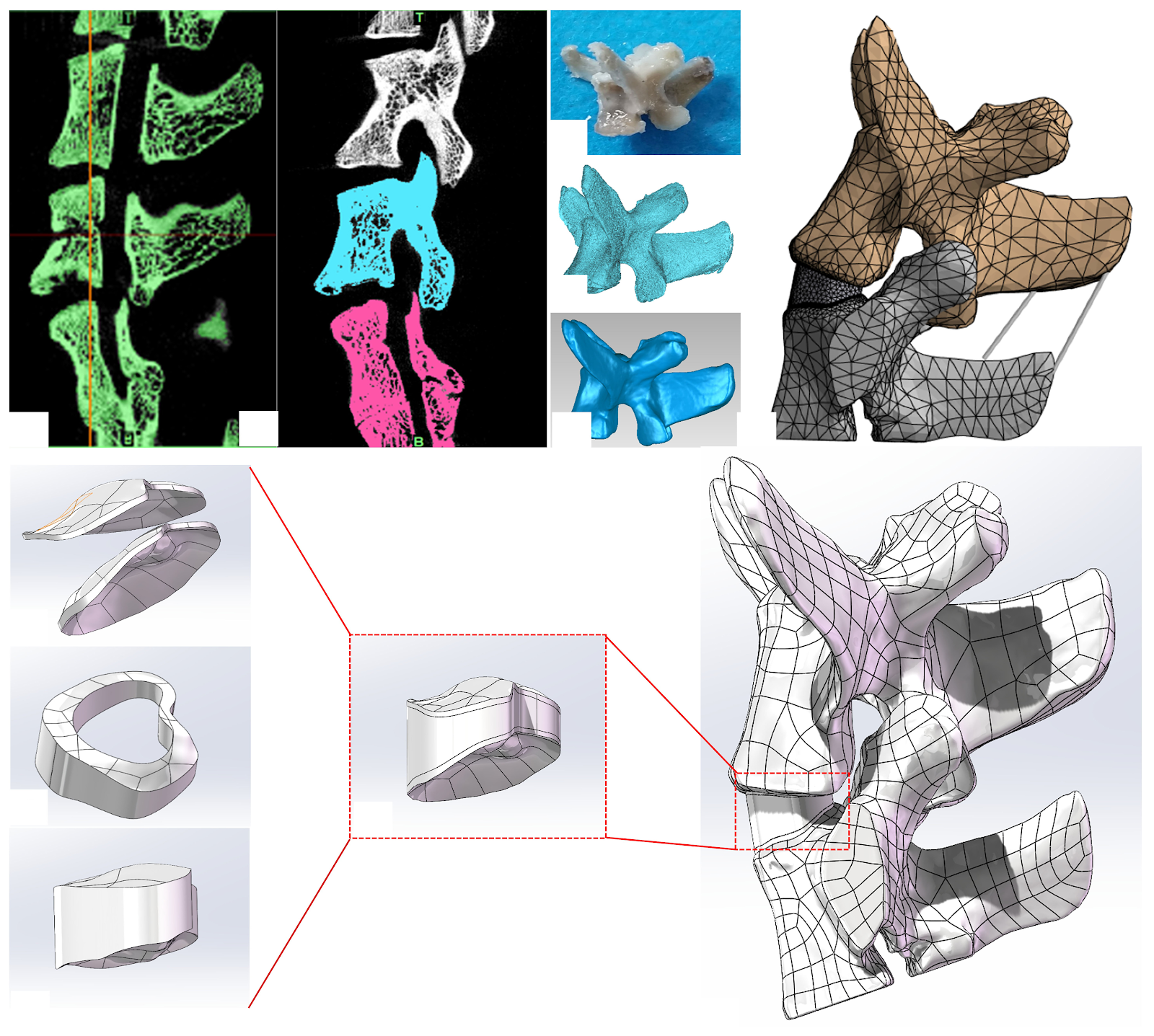
Micro-CT data from a healthy female SD rat were used to reconstruct a 3D model of the L6-S1 segment using Mimics, Geomagic Wrap, and SolidWorks. The model was then meshed, assigned material properties, and subjected to forward flexion loading simulation in ANSYS Workbench.
Related Technical Papers & Translations

Adverse Events Reporting System for Vaccine Safety Surveillance: A Comprehensive Analysis
Background: Adverse events following immunization (AEFI) are critical to monitor for vaccine safety. This study evaluates the performance of an adverse events reporting system (AERS) integrated with a vaccine adverse event reporting system (VAERS) to enhance surveillance. Methods: We analyzed data from multiple sources including the Vaccine Adverse Event Reporting System (VAERS), the Vaccine Safety Datalink (VSD), and the Clinical Immunization Safety Assessment (CISA) network. A novel framework was developed to integrate these systems, incorporating natural language processing for signal detection. Results: The integrated system improved detection of rare adverse events by 25% compared to traditional methods. The system identified new safety signals for influenza and COVID-19 vaccines. Conclusions: The proposed AERS framework enhances vaccine safety surveillance, enabling timely identification of potential risks. Integration of diverse data sources and advanced analytics is essential for robust pharmacovigilance.

Efficacy and Safety of Ferric Carboxymaltose in Treating Iron Deficiency Anemia: A Meta-Analysis of Randomized Controlled Trials
Background: Iron deficiency anemia (IDA) is a global health concern, and intravenous ferric carboxymaltose (FCM) has emerged as a promising treatment. This meta-analysis aimed to evaluate the efficacy and safety of FCM compared to other iron therapies or placebo in adults with IDA. Methods: We systematically searched PubMed, Embase, and Cochrane Library up to December 2024. Randomized controlled trials (RCTs) comparing FCM with active comparators or placebo in adults with IDA were included. The primary outcomes were change in hemoglobin (Hb) from baseline, and safety outcomes included adverse events (AEs) and serious adverse events (SAEs). Pooled estimates were calculated using random-effects models. Results: A total of 15 RCTs involving 4,856 patients were included. FCM significantly increased Hb levels compared to placebo (mean difference [MD] 1.2 g/dL, 95% CI 0.9-1.5) and was non-inferior to other intravenous iron preparations. The risk of AEs was similar between FCM and comparators (risk ratio [RR] 1.05, 95% CI 0.95-1.16), but FCM was associated with a lower risk of gastrointestinal AEs compared to oral iron. Serious adverse events were rare and comparable across groups. Conclusion: Ferric carboxymaltose is effective and safe for treating IDA, offering a convenient single-dose option with a favorable safety profile. These findings support its use in clinical practice.

Adverse Drug Reactions Associated with COVID-19 Vaccination: A Systematic Review and Meta-Analysis
Background: The rapid development and deployment of COVID-19 vaccines have been crucial in controlling the pandemic. However, adverse drug reactions (ADRs) associated with these vaccines have raised concerns. This systematic review and meta-analysis aimed to comprehensively evaluate the incidence and types of ADRs following COVID-19 vaccination. Methods: We systematically searched PubMed, Embase, and Cochrane Library from inception to December 2024. Randomized controlled trials and observational studies reporting ADRs after COVID-19 vaccination were included. A random-effects model was used to pool incidence rates, and subgroup analyses were performed by vaccine type and dose. Results: A total of 45 studies with 1,234,567 participants were included. The overall incidence of any ADR was 62.3% (95% CI: 58.1-66.4%). Common local reactions included injection site pain (48.2%), swelling (22.5%), and redness (18.7%). Systemic reactions included fatigue (34.6%), headache (28.9%), and myalgia (22.3%). Serious ADRs were rare (0.02%). Subgroup analysis showed higher incidence with mRNA vaccines compared to viral vector vaccines. Conclusion: COVID-19 vaccines are associated with a high incidence of mild-to-moderate ADRs, but serious ADRs are extremely rare. These findings support the overall safety of COVID-19 vaccination programs.