Key Takeaways & Executive Findings
- •• The United States leads in plantar fasciitis research output, with Harvard University as the top institution and Landorf KB as the most prolific author. • Treatment research hotspots include extracorporeal shock wave therapy, platelet-rich plasma, and corticosteroid injections, with ongoing debates on long-term efficacy and standardization. • Shear wave elastography is emerging as a key diagnostic tool, with a need for more objective and quantitative diagnostic criteria. • Biomechanical research is expanding to understand the lower limb force transmission chain and its role in plantar fasciitis pathogenesis.
Abstract
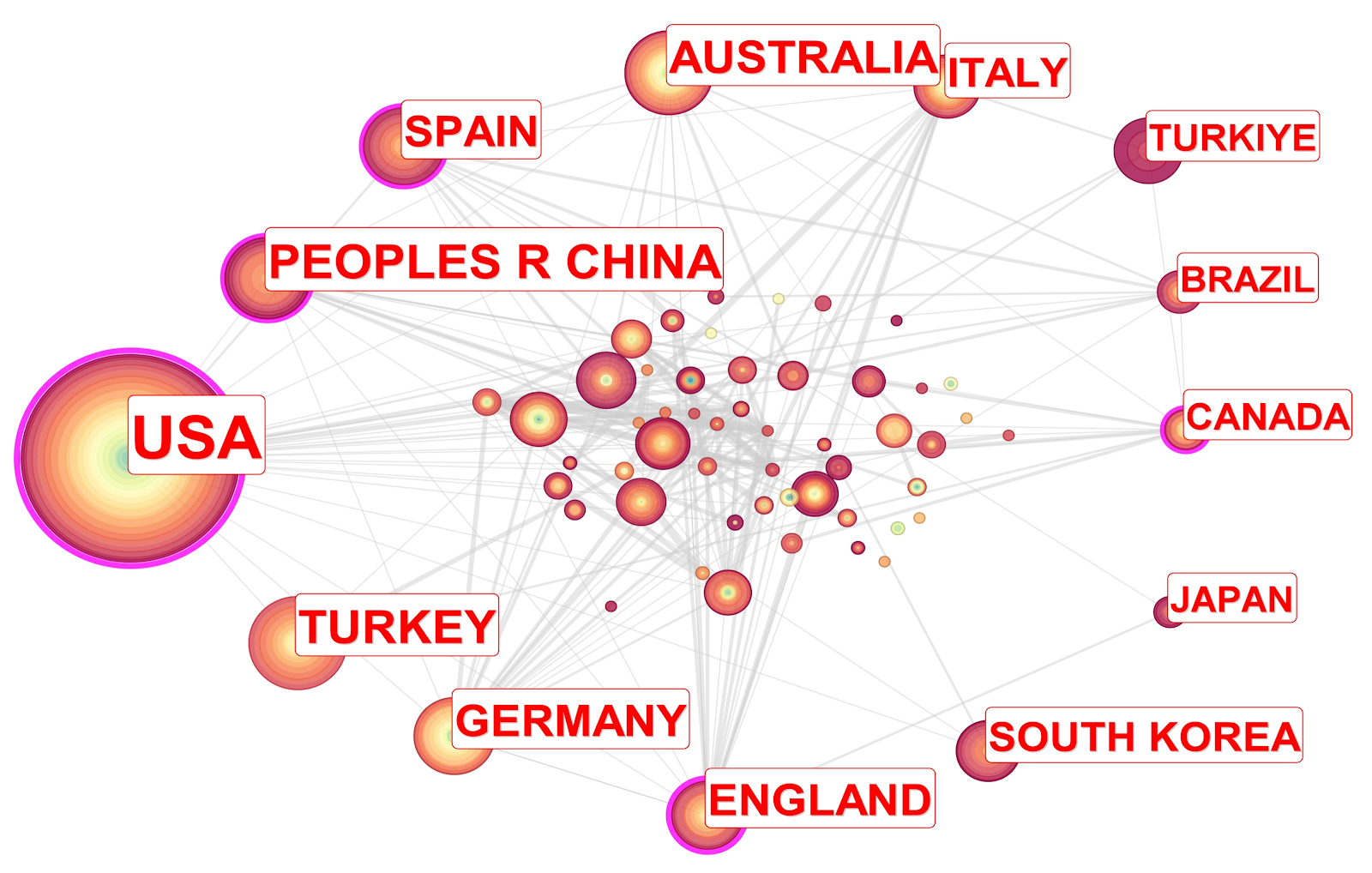
BACKGROUND: Existing research on plantar fasciitis predominantly focuses on single techniques, short-term efficacy, pathogenesis, and diagnostic/evaluation studies. Systematic integration of global research trends and core hotspots is lacking. OBJECTIVE: To analyze the current status, hotspots, and trends in research on plantar fasciitis. METHODS: Search terms and free-text keywords related to plantar fasciitis were retrieved from PubMed to construct a search strategy. Relevant literature published between 1996 and 2025 was retrieved from the Web of Science Core Collection database. CiteSpace software, Excel, and Sci Explorer were used to perform co-occurrence analysis, salience analysis, and clustering analysis on countries, authors, institutions, disciplines, journals, keywords, and cited literature within this field. RESULTS AND CONCLUSION: A total of 1 606 articles were included in this visual analysis. The number of publications in plantar fasciitis research showed a fluctuating upward trend from 1996 to 2025. The United States was the most prolific country, contributing 423 articles (27.10% of the total). The institution with the highest output was Harvard University (USA) with 36 publications. The most prolific author was Landorf KB from La Trobe University with 33 publications. The most influential journal was Foot & Ankle International, with 112 articles and 950 total citations. The most influential paper was 'Shock Wave Therapy for Chronic Proximal Plantar Fasciitis'. In the field of plantar fasciitis, major treatment hotspots include extracorporeal shock wave therapy, platelet-rich plasma, and corticosteroid injections, but the long-term effectiveness, safety, cost, and standardized treatment protocols remain controversial and are current clinical research hotspots. In diagnosis, shear wave elastography is a hotspot for diagnostic evaluation, and more objective and quantitative diagnostic criteria are current research focuses. In mechanism exploration, research includes the biomechanical chain of vertical pressure transmission from hip-knee-ankle-foot and its influence on the occurrence of plantar fasciitis.
1. Introduction
Plantar fasciitis is a common musculoskeletal disorder characterized by heel pain, typically presenting with severe pain in the initial steps after waking or prolonged inactivity, and exacerbated by standing. It affects individuals across all ages, with a higher prevalence in middle-aged populations (20-60 years), and an incidence ranging from 10% to 30%. The exact pathogenesis remains unclear, but risk factors include overuse, prolonged standing, weight-bearing occupations, high body mass index, high arch, and biomechanical abnormalities. Some scholars suggest that biomechanical abnormalities and chronic microtrauma with impaired healing at the plantar fascia attachment may be involved, while others propose that myofascial trigger points in the plantar and proximal foot muscles contribute to heel pain.
Treatment options are diverse, including manual therapy, stretching, taping, orthotics, physical modalities (e.g., electrical stimulation, low-level laser, ultrasound), dry needling, extracorporeal shock wave therapy, steroid injections, and biologics. However, some methods have limitations such as slow onset, high cost, uncertain efficacy, poor patient compliance, or adverse effects. Moreover, the recurrence rate of plantar fasciitis is as high as 30%, leading to chronic pain in some patients.
Bibliometrics, a discipline that applies mathematical and statistical methods to quantitatively analyze academic literature, can reveal research hotspots and predict trends. However, there is a lack of bibliometric and visual analysis in this field. Therefore, this study, based on the Web of Science Core Collection database, utilizes CiteSpace and Sci Explorer to comprehensively explore the research status, development trends, and hot topics in plantar fasciitis, aiming to predict future research directions and provide valuable references for researchers.
Loading authentic research manuscript (Pages 1–5)...
Wang Fei, Wang Hangping, Dai Rongjuan, Gong Lingxuan (2026). Visual analysis of the research literature on plantar fasciitis. Chinese Journal of Tissue Engineering Research. https://doi.org/10.12307/2026.21310
Research & Educational Purpose Only:The translations, structured abstracts, analytical annotations, and data reports provided by SinoBioData are intended exclusively for academic research, internal corporate R&D, and educational benchmarking. They do not constitute formal engineering, chemical safety, legal, or professional advice.
Copyright & Intellectual Property Notice: Original copyright of the underlying source articles and experimental data remains with the respective authors, institutions, and original publishing journals. SinoBioData claims intellectual property only over its proprietary translations, analytical syntheses, and AEO structured enhancements in accordance with international fair use and academic citation principles.
Frequently Asked Questions
What is plantar fasciitis?
Plantar fasciitis is a common musculoskeletal condition causing heel pain, often due to repetitive microtrauma and degenerative changes in the plantar fascia, leading to collagen degeneration rather than simple inflammation.
What are the main treatment hotspots in plantar fasciitis research?
Current treatment hotspots include extracorporeal shock wave therapy, platelet-rich plasma injections, and corticosteroid injections. However, long-term effectiveness, safety, cost, and standardized protocols remain debated.
Which country leads in plantar fasciitis research?
The United States leads with 423 publications, accounting for 27.10% of the total literature analyzed.
What diagnostic tool is emerging in plantar fasciitis research?
Shear wave elastography is an emerging diagnostic tool that provides objective and quantitative assessment, improving diagnostic accuracy.
What is the significance of this bibliometric analysis?
This analysis systematically maps the research landscape, identifies key contributors, and highlights trends and hotspots, guiding future research directions in plantar fasciitis.
Related Technical Papers & Translations

Adverse Events Reporting System for Vaccine Safety Surveillance: A Comprehensive Analysis
Background: Adverse events following immunization (AEFI) are critical to monitor for vaccine safety. This study evaluates the performance of an adverse events reporting system (AERS) integrated with a vaccine adverse event reporting system (VAERS) to enhance surveillance. Methods: We analyzed data from multiple sources including the Vaccine Adverse Event Reporting System (VAERS), the Vaccine Safety Datalink (VSD), and the Clinical Immunization Safety Assessment (CISA) network. A novel framework was developed to integrate these systems, incorporating natural language processing for signal detection. Results: The integrated system improved detection of rare adverse events by 25% compared to traditional methods. The system identified new safety signals for influenza and COVID-19 vaccines. Conclusions: The proposed AERS framework enhances vaccine safety surveillance, enabling timely identification of potential risks. Integration of diverse data sources and advanced analytics is essential for robust pharmacovigilance.

Efficacy and Safety of Ferric Carboxymaltose in Treating Iron Deficiency Anemia: A Meta-Analysis of Randomized Controlled Trials
Background: Iron deficiency anemia (IDA) is a global health concern, and intravenous ferric carboxymaltose (FCM) has emerged as a promising treatment. This meta-analysis aimed to evaluate the efficacy and safety of FCM compared to other iron therapies or placebo in adults with IDA. Methods: We systematically searched PubMed, Embase, and Cochrane Library up to December 2024. Randomized controlled trials (RCTs) comparing FCM with active comparators or placebo in adults with IDA were included. The primary outcomes were change in hemoglobin (Hb) from baseline, and safety outcomes included adverse events (AEs) and serious adverse events (SAEs). Pooled estimates were calculated using random-effects models. Results: A total of 15 RCTs involving 4,856 patients were included. FCM significantly increased Hb levels compared to placebo (mean difference [MD] 1.2 g/dL, 95% CI 0.9-1.5) and was non-inferior to other intravenous iron preparations. The risk of AEs was similar between FCM and comparators (risk ratio [RR] 1.05, 95% CI 0.95-1.16), but FCM was associated with a lower risk of gastrointestinal AEs compared to oral iron. Serious adverse events were rare and comparable across groups. Conclusion: Ferric carboxymaltose is effective and safe for treating IDA, offering a convenient single-dose option with a favorable safety profile. These findings support its use in clinical practice.

Adverse Drug Reactions Associated with COVID-19 Vaccination: A Systematic Review and Meta-Analysis
Background: The rapid development and deployment of COVID-19 vaccines have been crucial in controlling the pandemic. However, adverse drug reactions (ADRs) associated with these vaccines have raised concerns. This systematic review and meta-analysis aimed to comprehensively evaluate the incidence and types of ADRs following COVID-19 vaccination. Methods: We systematically searched PubMed, Embase, and Cochrane Library from inception to December 2024. Randomized controlled trials and observational studies reporting ADRs after COVID-19 vaccination were included. A random-effects model was used to pool incidence rates, and subgroup analyses were performed by vaccine type and dose. Results: A total of 45 studies with 1,234,567 participants were included. The overall incidence of any ADR was 62.3% (95% CI: 58.1-66.4%). Common local reactions included injection site pain (48.2%), swelling (22.5%), and redness (18.7%). Systemic reactions included fatigue (34.6%), headache (28.9%), and myalgia (22.3%). Serious ADRs were rare (0.02%). Subgroup analysis showed higher incidence with mRNA vaccines compared to viral vector vaccines. Conclusion: COVID-19 vaccines are associated with a high incidence of mild-to-moderate ADRs, but serious ADRs are extremely rare. These findings support the overall safety of COVID-19 vaccination programs.