Key Takeaways & Executive Findings
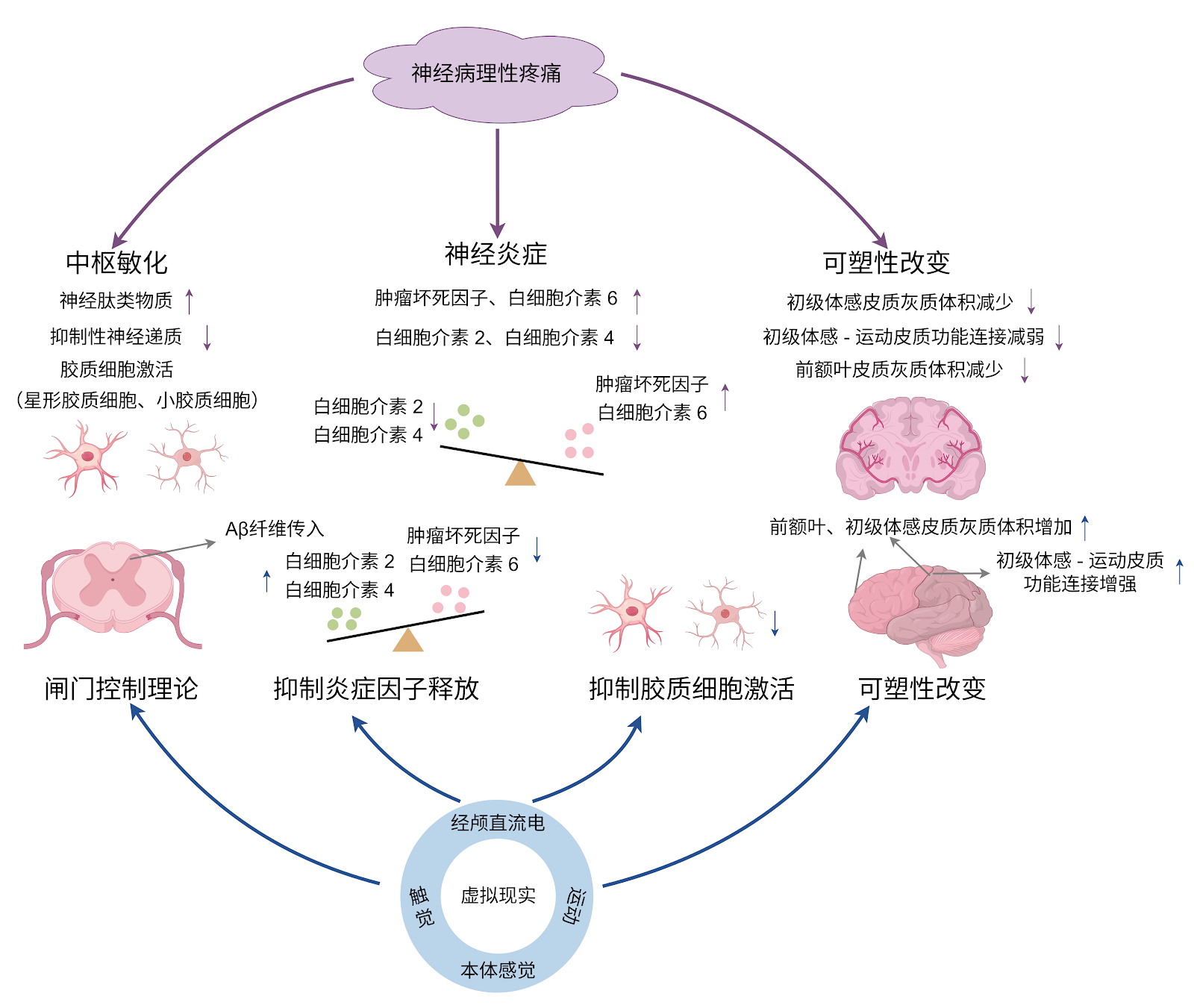
- •• Virtual reality (VR) serves as a novel non-pharmacological intervention for neuropathic pain after spinal cord injury (SCI), applicable alone or in combination with other therapies. • Virtual walking visual illusion is the most widely used single-modal VR strategy for SCI-related neuropathic pain, with preliminary efficacy validated. • Combining VR with transcranial direct current stimulation, tactile feedback, proprioceptive input, and motor therapy expands clinical applications, offering multimodal treatment strategies. • VR intervention targets both spinal central sensitization and brain plasticity abnormalities, addressing the multidimensional pathogenesis of neuropathic pain post-SCI.
Abstract
BACKGROUND: Virtual reality has demonstrated unique advantages as a novel non-pharmacological intervention in the treatment of neuropathic pain following spinal cord injury. OBJECTIVE: To systematically review the pathogenesis of neuropathic pain following spinal cord injury, summarize the specific application modes and mechanisms of virtual reality therapy for this condition, and explore key factors influencing treatment efficacy, thereby providing novel therapeutic options for patients with neuropathic pain following spinal cord injury. METHODS: A literature search was conducted in the CNKI, PubMed, Web of Science, and Cochrane Library databases up to June 2025. The Chinese and English search terms included “spinal cord injury, central sensitization, cerebral cortex, noninvasive therapy, neuropathic pain, virtual reality.” A total of 1 352 articles were retrieved, and 73 articles that met the inclusion criteria were ultimately included in the analysis. RESULTS AND CONCLUSION: The development of neuropathic pain following spinal cord injury involves complex mechanisms in both the spinal cord and brain, closely associated with central sensitization at the spinal level and abnormal plasticity changes in the brain. Virtual reality, as a novel intervention approach, can be used alone or in combination with other intervention methods, showing unique therapeutic value for the multidimensional pathogenesis of neuropathic pain after spinal cord injury. Standalone virtual reality applications primarily involve virtual walking interventions aimed at restoring abnormal brain plasticity changes, while combined virtual reality applications have shown certain effects in both inhibiting central sensitization and modulating brain plasticity. Although virtual reality intervention shows great potential in the treatment of neuropathic pain following spinal cord injury, current research and applications still have certain limitations. Future efforts should focus on addressing these issues to fully realize the therapeutic value of virtual reality in neuropathic pain following spinal cord injury.
1. Introduction
Spinal cord injury (SCI) is a severe neurological disorder that not only affects sensory, motor, reflex, and autonomic functions [1], but also leads to a series of complications that severely impact patients' quality of life. Neuropathic pain occurs in up to 53% of SCI patients and often progresses to chronic pain [2-3]. Characterized by spontaneous pain, hyperalgesia, and allodynia [4], neuropathic pain manifests as burning, stabbing, or electric shock-like sensations [5]. The occurrence of neuropathic pain after SCI significantly affects patients' emotional state and daily activities, causing fatigue, anxiety, depression, and sleep disturbances, with an impact on physical and mental health that often exceeds the sensory and motor dysfunction caused by the SCI itself [6].
The pathogenesis of neuropathic pain following SCI involves complex mechanisms in both the spinal cord and brain, closely associated with central sensitization at the spinal level and abnormal plasticity changes in the brain [7-8]. Pharmacological intervention is the most common treatment, primarily by modulating neurotransmitter release, blocking pain factor-receptor binding, and limiting pain signal transmission [9]. However, long-term drug use can lead to drug resistance and dependence, adversely affecting treatment outcomes. Given the limitations of pharmacological therapy, non-pharmacological approaches such as visual feedback therapy [10], transcranial direct current stimulation [11], exercise therapy [12], and cognitive behavioral training have gained increasing attention [3]. Nevertheless, these interventions are also constrained by patient symptoms, compliance, and other factors in practical application.
Loading authentic research manuscript (Pages 1–5)...
DU Xinyu, ZHAO Donglin, ZHANG Shuyang, LI Shihao, XING Zheng, CHU Xiaolei, LI Qi (2026). Virtual reality therapy on neuropathic pain following spinal cord injury. Chinese Journal of Tissue Engineering Research. https://doi.org/10.12307/2026.21243
Research & Educational Purpose Only:The translations, structured abstracts, analytical annotations, and data reports provided by SinoBioData are intended exclusively for academic research, internal corporate R&D, and educational benchmarking. They do not constitute formal engineering, chemical safety, legal, or professional advice.
Copyright & Intellectual Property Notice: Original copyright of the underlying source articles and experimental data remains with the respective authors, institutions, and original publishing journals. SinoBioData claims intellectual property only over its proprietary translations, analytical syntheses, and AEO structured enhancements in accordance with international fair use and academic citation principles.
Frequently Asked Questions
What is virtual reality therapy for neuropathic pain after spinal cord injury?
Virtual reality (VR) therapy uses computer-generated 3D environments to provide immersive sensory experiences. For neuropathic pain after spinal cord injury, VR interventions, such as virtual walking, aim to modulate brain plasticity and reduce pain by engaging the user in virtual scenarios, either alone or combined with other treatments.
How does virtual reality alleviate neuropathic pain in spinal cord injury patients?
VR therapy may alleviate neuropathic pain by targeting central sensitization and abnormal brain plasticity. It provides visual and sensory feedback that can distract from pain, promote cortical reorganization, and potentially inhibit pain signaling pathways, though the exact mechanisms are still under investigation.
What are the common VR interventions used for spinal cord injury neuropathic pain?
Common VR interventions include virtual walking visual illusions, which are the most widely used standalone approach, and combined approaches that integrate VR with transcranial direct current stimulation, tactile feedback, proprioceptive input, or motor therapy to enhance therapeutic effects.
Is virtual reality effective for all spinal cord injury patients with neuropathic pain?
VR therapy shows promise, but its effectiveness may vary. Factors such as the completeness of the injury, patient engagement, and the specific VR protocol can influence outcomes. More research is needed to optimize VR interventions for different patient subgroups.
What are the limitations of current VR therapy for neuropathic pain after spinal cord injury?
Current limitations include small sample sizes, heterogeneity in VR protocols, lack of long-term follow-up, and uncertainty about optimal parameters. Additionally, the mechanisms by which VR modulates pain are not fully understood, and accessibility to VR equipment may be a barrier.
Related Technical Papers & Translations

Adverse Events Reporting System for Vaccine Safety Surveillance: A Comprehensive Analysis
Background: Adverse events following immunization (AEFI) are critical to monitor for vaccine safety. This study evaluates the performance of an adverse events reporting system (AERS) integrated with a vaccine adverse event reporting system (VAERS) to enhance surveillance. Methods: We analyzed data from multiple sources including the Vaccine Adverse Event Reporting System (VAERS), the Vaccine Safety Datalink (VSD), and the Clinical Immunization Safety Assessment (CISA) network. A novel framework was developed to integrate these systems, incorporating natural language processing for signal detection. Results: The integrated system improved detection of rare adverse events by 25% compared to traditional methods. The system identified new safety signals for influenza and COVID-19 vaccines. Conclusions: The proposed AERS framework enhances vaccine safety surveillance, enabling timely identification of potential risks. Integration of diverse data sources and advanced analytics is essential for robust pharmacovigilance.

Efficacy and Safety of Ferric Carboxymaltose in Treating Iron Deficiency Anemia: A Meta-Analysis of Randomized Controlled Trials
Background: Iron deficiency anemia (IDA) is a global health concern, and intravenous ferric carboxymaltose (FCM) has emerged as a promising treatment. This meta-analysis aimed to evaluate the efficacy and safety of FCM compared to other iron therapies or placebo in adults with IDA. Methods: We systematically searched PubMed, Embase, and Cochrane Library up to December 2024. Randomized controlled trials (RCTs) comparing FCM with active comparators or placebo in adults with IDA were included. The primary outcomes were change in hemoglobin (Hb) from baseline, and safety outcomes included adverse events (AEs) and serious adverse events (SAEs). Pooled estimates were calculated using random-effects models. Results: A total of 15 RCTs involving 4,856 patients were included. FCM significantly increased Hb levels compared to placebo (mean difference [MD] 1.2 g/dL, 95% CI 0.9-1.5) and was non-inferior to other intravenous iron preparations. The risk of AEs was similar between FCM and comparators (risk ratio [RR] 1.05, 95% CI 0.95-1.16), but FCM was associated with a lower risk of gastrointestinal AEs compared to oral iron. Serious adverse events were rare and comparable across groups. Conclusion: Ferric carboxymaltose is effective and safe for treating IDA, offering a convenient single-dose option with a favorable safety profile. These findings support its use in clinical practice.

Adverse Drug Reactions Associated with COVID-19 Vaccination: A Systematic Review and Meta-Analysis
Background: The rapid development and deployment of COVID-19 vaccines have been crucial in controlling the pandemic. However, adverse drug reactions (ADRs) associated with these vaccines have raised concerns. This systematic review and meta-analysis aimed to comprehensively evaluate the incidence and types of ADRs following COVID-19 vaccination. Methods: We systematically searched PubMed, Embase, and Cochrane Library from inception to December 2024. Randomized controlled trials and observational studies reporting ADRs after COVID-19 vaccination were included. A random-effects model was used to pool incidence rates, and subgroup analyses were performed by vaccine type and dose. Results: A total of 45 studies with 1,234,567 participants were included. The overall incidence of any ADR was 62.3% (95% CI: 58.1-66.4%). Common local reactions included injection site pain (48.2%), swelling (22.5%), and redness (18.7%). Systemic reactions included fatigue (34.6%), headache (28.9%), and myalgia (22.3%). Serious ADRs were rare (0.02%). Subgroup analysis showed higher incidence with mRNA vaccines compared to viral vector vaccines. Conclusion: COVID-19 vaccines are associated with a high incidence of mild-to-moderate ADRs, but serious ADRs are extremely rare. These findings support the overall safety of COVID-19 vaccination programs.