Key Takeaways & Executive Findings
- •• miR-155 is overexpressed in glioma and directly targets JARID2, inhibiting its expression and promoting tumor cell viability while suppressing apoptosis. • Knockdown of JARID2 partially reverses the tumor-suppressive effects of miR-155 inhibition, confirming the functional relevance of the miR-155/JARID2 axis in glioma. • Valproic acid (VPA) upregulates JARID2 expression by increasing methylation of the miR-155 promoter, thereby downregulating miR-155 and inhibiting glioma cell growth. • The study identifies a novel epigenetic mechanism for VPA's anti-glioma activity, offering a potential therapeutic strategy targeting the miR-155/JARID2 axis.
Abstract
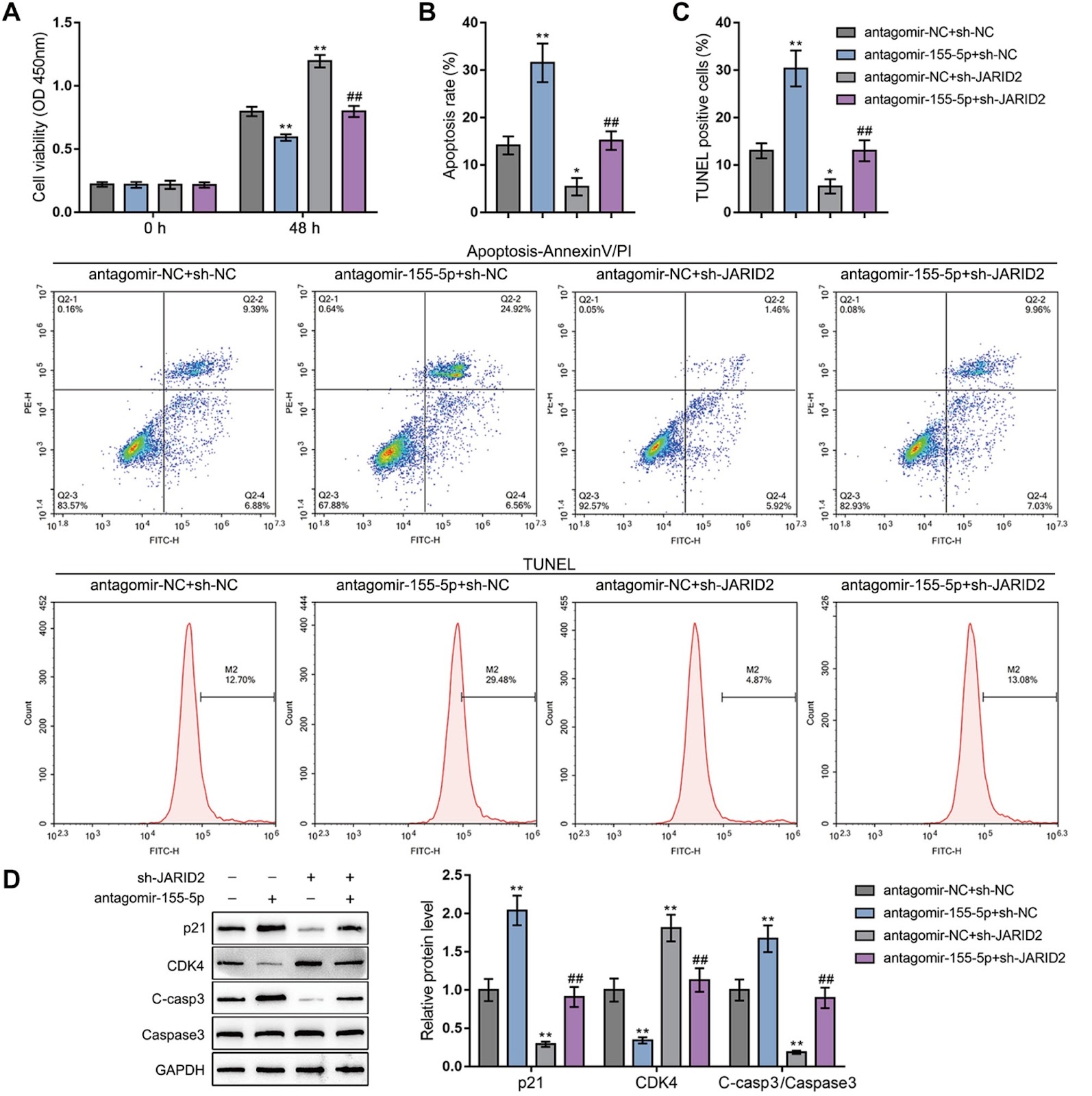
The most frequent primary brain tumor in adults is glioma, yet no effective curative treatments are currently available. Our previous study demonstrated the enhancing effects of JARID2 on glioma sensitivity to TMZ treatment. In this study, miR-155 is predicted to target JARID2. miR-155 is overexpressed in clinical glioma specimens and cell lines. miR-155 overexpression in glioma cells enhances cell viability and represses cell apoptosis. Through targeting, miR-155 inhibits JARID2 expression. miR-155 inhibition inhibits glioma cell viability and enhances cell apoptosis, whereas JARID2 knockdown enhances cell viability and inhibits cell apoptosis; JARID2 knockdown partially reverses miR-155 inhibition effects on glioma phenotypes. miR-155 inhibition reduces but knockdown of JARID2 promotes the tumor formation ability of glioma cells in vivo. Valproic acid (VPA) upregulates JARID2 expression, inhibits glioma cell viability and enhances cell apoptosis. VPA downregulates the expression level of miR-155 by increasing the methylation level of the miR-155 promoter, suggesting that the miR-155/JARID2 axis is implicated in VPA inhibition of glioma cell viability and enhancement of glioma cell apoptosis. This study demonstrates a new mechanism of VPA treatment of gliomas by affecting the miR-155/JARID2 axis, which could be regarded as a new strategy for the prevention and treatment of glioma.
1. Introduction
The most frequent primary brain tumor in adults is glioma, which can develop in either the white or gray brain matter and is likely to have a glial origin from the white brain matter [1,2]. Adults are more likely to develop infiltrative astrocytoma rather than any other type of primary brain tumor. Compared to patients with the two low-grade astrocytomas, those with high-grade astrocytomas have a significantly greater mortality rate [3,4].
The standard first-line chemotherapeutics for recurrent high-grade glioma and other solid neoplasias are alkylating agents such as temozolomide (TMZ) [5,6]. The induction of methyl adducts at multiple DNA bases, such as O6-guanine, N7-guanine, and N3-adenine, leads to the antitumor effects of TMZ [7,8]. Acquired chemotherapeutic resistance is still a major challenge. Moreover, the second chemotherapy cycle is ineffective for more than 90% of recurrent gliomas [9]. Some mechanisms have been shown to exert crucial effects on TMZ chemoresistance [10–12]. Our previous study confirmed the enhancing effects of JARID2 on glioma sensitivity to TMZ treatment. Overexpressing JARID2 in TMZ-treated glioma cells dramatically suppressed cell viability, enhanced cell apoptosis, and elevated the levels of p21, cleaved-PARP, and cleaved-caspase3 [13]. However, because JARID2 expression is markedly downregulated in gliomas, identification of the inhibitory regulator may lead to the development of new therapeutic targets in gliomas.
Recent research has demonstrated that microRNAs (miRNAs) play a crucial role in controlling gene expression in healthy and cancer cells. MiRNAs are endogenous, noncoding, and 20–23 nt in length, targeting mRNAs that may be posttranscriptionally bound by RNAs, which may cause mRNA cleavage, direct translational inhibition, mRNA degradation, or a combination of the two in some instances [14,15]. An individual miRNA can modulate the expression of multiple target RNAs and thereby regulate several gene pathways, subsequently modulating almost all cellular processes, including proliferation, differentiation, apoptosis, and cell growth. MiRNAs may be important as tumor suppressors or oncogenes (oncogenic miRNAs or ‘oncomirs’). MiRNAs are believed to be promising therapeutic targets/tools for cancer therapy and serve as potential biomarkers for human cancers [16,17]. Piwecka et al. [18] identified over 290 miRNAs deregulated in glioma tissues by performing a meta-analysis of miRNA expression profiling studies. Using the extensive data generated by deep sequencing, Moore et al. [19] discovered a complex network of gene expression alterations in the miRNA biogenetic pathway that affect miRNA maturation and are connected to glioma development. Thus, JARID2 downregulation in glioma may be caused by miRNAs that target JARID2. Moreover, valproic acid (VPA), one of the most common histone deacetylase inhibitors (HDACIs), has been detected to directly or synergistically exert inhibitory effects on glioma in vitro and in vivo [20]. For instance, Han et al. [21] reported that VPA enhanced apoptosis by promoting autophagy via Akt/mTOR signaling in glioma. Phospho-VPA suppressed glioblastoma growth in preclinical models through the inhibition of STAT3 phosphorylation [22]. In vivo efficacy experiments showed that combination treatment with MSCs-TK and VPA significantly inhibit
Loading authentic research manuscript (Pages 1–5)...
Ruixuan Wang, Yanhong Chen, Weilu Kuang, Wuzhong Jiang, Wenjing Zeng, Yinyun Chen, Zhengzheng Liu (2026). Valproic acid regulates the miR-155/Jarid2 axis by affecting miR-155 promoter methylation in glioma. Acta Biochimica et Biophysica Sinica. https://doi.org/10.3724/abbs.2023259
Research & Educational Purpose Only:The translations, structured abstracts, analytical annotations, and data reports provided by SinoBioData are intended exclusively for academic research, internal corporate R&D, and educational benchmarking. They do not constitute formal engineering, chemical safety, legal, or professional advice.
Copyright & Intellectual Property Notice: Original copyright of the underlying source articles and experimental data remains with the respective authors, institutions, and original publishing journals. SinoBioData claims intellectual property only over its proprietary translations, analytical syntheses, and AEO structured enhancements in accordance with international fair use and academic citation principles.
Frequently Asked Questions
What is the role of miR-155 in glioma?
miR-155 is overexpressed in glioma and acts as an oncogene by targeting JARID2, thereby promoting cell viability and inhibiting apoptosis.
How does valproic acid (VPA) affect the miR-155/JARID2 axis?
VPA increases methylation of the miR-155 promoter, leading to downregulation of miR-155 and subsequent upregulation of JARID2, which inhibits glioma cell viability and enhances apoptosis.
What is the clinical significance of this study?
The study reveals a novel epigenetic mechanism for VPA's anti-glioma effects, suggesting that targeting the miR-155/JARID2 axis could be a new therapeutic strategy for glioma treatment.
How was the interaction between miR-155 and JARID2 validated?
The interaction was validated through bioinformatics prediction, luciferase reporter assays, and functional experiments showing that miR-155 directly targets and inhibits JARID2 expression.
What are the potential implications for temozolomide (TMZ) resistance?
Since JARID2 enhances TMZ sensitivity, restoring JARID2 expression via miR-155 inhibition or VPA treatment may help overcome TMZ resistance in glioma.
Related Technical Papers & Translations

Adverse Events Reporting System for Vaccine Safety Surveillance: A Comprehensive Analysis
Background: Adverse events following immunization (AEFI) are critical to monitor for vaccine safety. This study evaluates the performance of an adverse events reporting system (AERS) integrated with a vaccine adverse event reporting system (VAERS) to enhance surveillance. Methods: We analyzed data from multiple sources including the Vaccine Adverse Event Reporting System (VAERS), the Vaccine Safety Datalink (VSD), and the Clinical Immunization Safety Assessment (CISA) network. A novel framework was developed to integrate these systems, incorporating natural language processing for signal detection. Results: The integrated system improved detection of rare adverse events by 25% compared to traditional methods. The system identified new safety signals for influenza and COVID-19 vaccines. Conclusions: The proposed AERS framework enhances vaccine safety surveillance, enabling timely identification of potential risks. Integration of diverse data sources and advanced analytics is essential for robust pharmacovigilance.

Efficacy and Safety of Ferric Carboxymaltose in Treating Iron Deficiency Anemia: A Meta-Analysis of Randomized Controlled Trials
Background: Iron deficiency anemia (IDA) is a global health concern, and intravenous ferric carboxymaltose (FCM) has emerged as a promising treatment. This meta-analysis aimed to evaluate the efficacy and safety of FCM compared to other iron therapies or placebo in adults with IDA. Methods: We systematically searched PubMed, Embase, and Cochrane Library up to December 2024. Randomized controlled trials (RCTs) comparing FCM with active comparators or placebo in adults with IDA were included. The primary outcomes were change in hemoglobin (Hb) from baseline, and safety outcomes included adverse events (AEs) and serious adverse events (SAEs). Pooled estimates were calculated using random-effects models. Results: A total of 15 RCTs involving 4,856 patients were included. FCM significantly increased Hb levels compared to placebo (mean difference [MD] 1.2 g/dL, 95% CI 0.9-1.5) and was non-inferior to other intravenous iron preparations. The risk of AEs was similar between FCM and comparators (risk ratio [RR] 1.05, 95% CI 0.95-1.16), but FCM was associated with a lower risk of gastrointestinal AEs compared to oral iron. Serious adverse events were rare and comparable across groups. Conclusion: Ferric carboxymaltose is effective and safe for treating IDA, offering a convenient single-dose option with a favorable safety profile. These findings support its use in clinical practice.

Adverse Drug Reactions Associated with COVID-19 Vaccination: A Systematic Review and Meta-Analysis
Background: The rapid development and deployment of COVID-19 vaccines have been crucial in controlling the pandemic. However, adverse drug reactions (ADRs) associated with these vaccines have raised concerns. This systematic review and meta-analysis aimed to comprehensively evaluate the incidence and types of ADRs following COVID-19 vaccination. Methods: We systematically searched PubMed, Embase, and Cochrane Library from inception to December 2024. Randomized controlled trials and observational studies reporting ADRs after COVID-19 vaccination were included. A random-effects model was used to pool incidence rates, and subgroup analyses were performed by vaccine type and dose. Results: A total of 45 studies with 1,234,567 participants were included. The overall incidence of any ADR was 62.3% (95% CI: 58.1-66.4%). Common local reactions included injection site pain (48.2%), swelling (22.5%), and redness (18.7%). Systemic reactions included fatigue (34.6%), headache (28.9%), and myalgia (22.3%). Serious ADRs were rare (0.02%). Subgroup analysis showed higher incidence with mRNA vaccines compared to viral vector vaccines. Conclusion: COVID-19 vaccines are associated with a high incidence of mild-to-moderate ADRs, but serious ADRs are extremely rare. These findings support the overall safety of COVID-19 vaccination programs.