Key Takeaways & Executive Findings
- •• Urine-derived stem cells (USCs) provide a non-invasive, inexhaustible source of MSCs for EV production, overcoming limitations of invasive tissue extraction. • USC isolation and expansion are robust across different times of day and donors, with no significant differences in clone number, doubling time, or viability. • USCs exhibit typical MSC surface markers (CD73, CD90, CD105) and can be efficiently transfected using PEI/DNA transposon technology, enabling genetic engineering for enhanced EV properties. • USCs maintain viability in serum-free conditions for 72 hours and produce EVs, making them a promising platform for clinical-grade native or engineered extracellular vesicle therapies.
Abstract
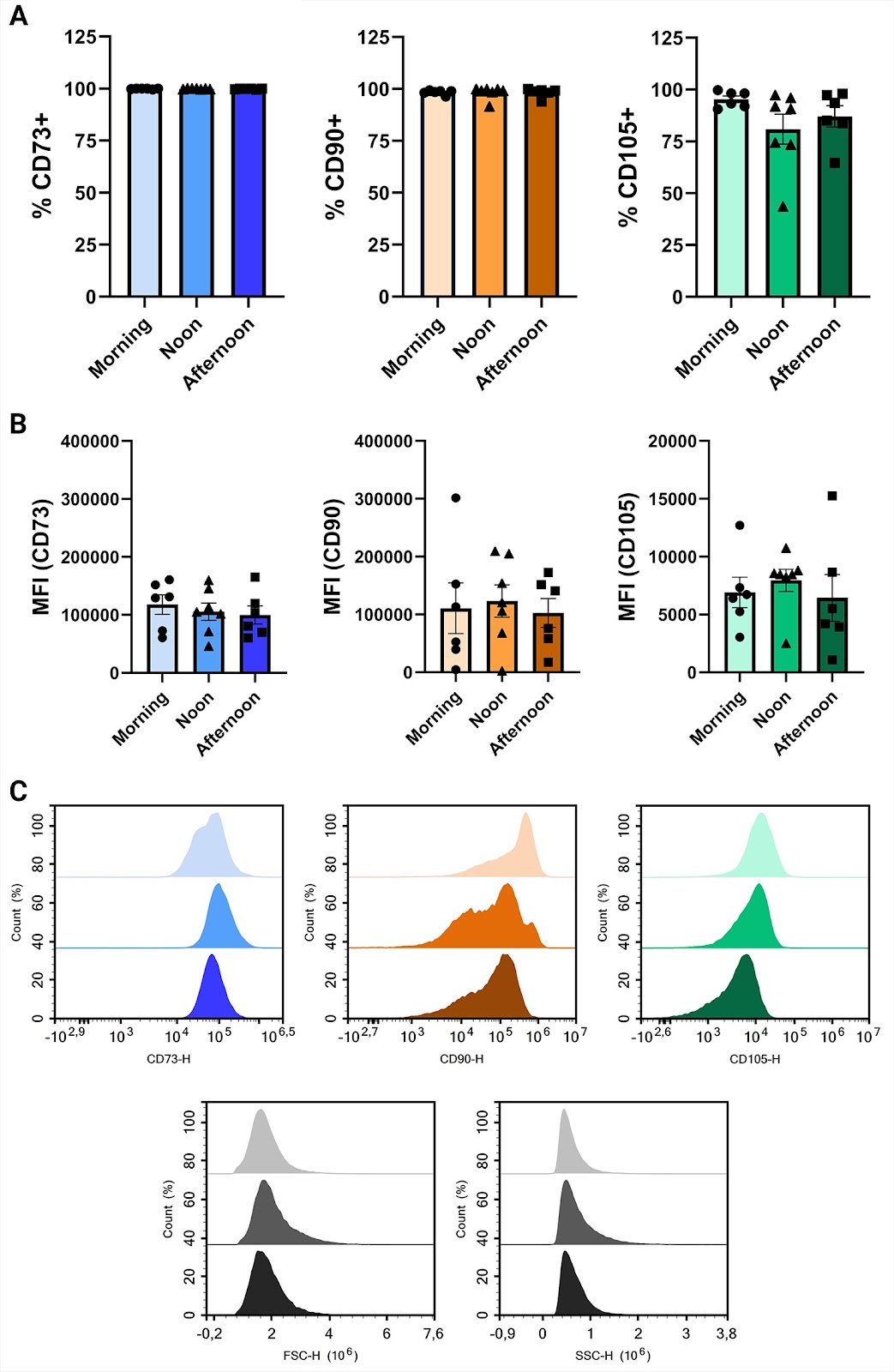
Background Mesenchymal stromal cell (MSC) therapy holds great potential yet efficacy and safety concerns with cell therapy persist. The beneficial effects of MSCs are often attributed to their secretome that includes extracellular vesicles (EVs). EVs carry biologically active molecules, protected by a lipid bilayer. However, several barriers hinder large-scale MSC EV production. A serum-free culturing approach is preferred for producing clinical-grade MSC-derived EVs but this can affect both yield and purity. Consequently, new strategies have been explored, including genetically engineering MSCs to alter EV compositions to enhance potency, increase circulation time or mediate targeting. However, efficient transfection of MSCs is challenging. Typical sources of MSC include adipose tissue and bone marrow, which both require invasive extraction procedures. Here, we investigate the use of urine-derived stem cells (USCs) as a non-invasive and inexhaustible source of MSCs for EV production. Methods We isolated, expanded, and characterized urine-derived stem cells (USCs) harvested from eight healthy donors at three different time points during the day. We evaluated the number of clones per urination, proliferation capacity and conducted flow cytometry to establish expression of surface markers. EVs were produced in chemically defined media and characterized. PEI/DNA transfection was used to genetically engineer USCs using transposon technology. Results There were no differences between time points for clone number, doubling time or viability. USCs showed immunophenotypic characteristics of MSCs, such as expression of CD73, CD90 and CD105, with no difference at the assessed time points, however, male donors had reduced CD73+ cells. Expanded USCs were incubated without growth factors or serum for 72 h without a loss in viability and EVs were isolated. USCs were transfected with high efficiency and after 10 days of selection, pure engineered cell cultures were established. Conclusions Isolation and expansion of MSCs from urine is non-invasive, robust, and without apparent sex-related differences. The sampling time point did not affect any measured markers or USC isolation potential. USCs offer an attractive production platform for EVs, both native and engineered.
1. Introduction
Mesenchymal stromal cells (MSCs) are an attractive cell-based treatment, based on their regenerative and immunomodulatory properties [1–3]. Autologous and allogeneic MSC therapies have been used and are accepted as immunologically privileged or immune evasive respectively [4, 5]. However, the production of donor-specific antibodies has been observed for allogeneic therapies, which could cause MSC clearance by host recipient immune cells and long-term effects remain to be investigated [6]. Other risks, such as uncontrollable growth of transplanted cells and chromosomal instability, have also been reported [7, 8].
The therapeutic effects of MSCs, when treating immune-mediated diseases, are often attributed to the secretome [9]. MSCs secrete molecules such as prostaglandin E2, various cytokines, and extracellular vesicles (EVs), which collectively contribute to the immunomodulatory effects [9, 10]. As such, a secretome-based and therefore cell-free therapy could circumvent some of the risks associated with MSC therapy. EVs have gained extensive attention in this context, as they are complex entities interacting with multiple modulatory pathways. EVs serve as a physiological drug delivery system that can alter the immune system more subtly and sustainably than individual molecules as they contain several bioactive molecules such as lipids, regulatory RNAs and proteins [11, 12].
MSCs can be isolated from various tissues and fluids of either neonatal-associated or adult origin [13]. EVs derived from the most investigated MSCs, bone marrow-, neonatal-associated, and adipose-derived MSCs (AD-MSCs), have been assessed for their modulatory effects in both pre-clinical and clinical settings [14, 15]. EVs from MSCs derived from less investigated sources such as dental pulp, central nervous system, menstrual blood and urine-derived stem cells (USCs) have mostly been investigated in preclinical trials.
Loading authentic research manuscript (Pages 1–5)...
Anders Toftegaard Boysen, Bradley Whitehead, Anne Louise S. Revenfeld, Dhanu Gupta, Thor Petersen, Peter Nejsum (2026). Urine-derived stem cells serve as a robust platform for generating native or engineered extracellular vesicles. Stem Cell Research & Therapy. https://doi.org/10.1186/s13287-024-03903-0
Research & Educational Purpose Only:The translations, structured abstracts, analytical annotations, and data reports provided by SinoBioData are intended exclusively for academic research, internal corporate R&D, and educational benchmarking. They do not constitute formal engineering, chemical safety, legal, or professional advice.
Copyright & Intellectual Property Notice: Original copyright of the underlying source articles and experimental data remains with the respective authors, institutions, and original publishing journals. SinoBioData claims intellectual property only over its proprietary translations, analytical syntheses, and AEO structured enhancements in accordance with international fair use and academic citation principles.
Frequently Asked Questions
What are urine-derived stem cells (USCs) and why are they advantageous for EV production?
Urine-derived stem cells (USCs) are mesenchymal stromal cells isolated from urine, offering a non-invasive and inexhaustible source compared to traditional sources like bone marrow or adipose tissue. They can be expanded and engineered to produce extracellular vesicles (EVs) for therapeutic applications, overcoming barriers of invasive extraction and scalability.
How were USCs characterized in this study?
USCs were characterized by evaluating clone number, proliferation capacity, and surface marker expression via flow cytometry. They expressed typical MSC markers CD73, CD90, and CD105, with no significant differences across different times of day, though male donors showed reduced CD73+ cells.
Can USCs be genetically engineered for enhanced EV production?
Yes, USCs can be efficiently transfected using PEI/DNA transposon technology. After 10 days of selection, pure engineered cell cultures were established, demonstrating the feasibility of genetically modifying USCs to alter EV composition for enhanced potency, targeting, or circulation time.
What is the significance of serum-free culture for USC-derived EVs?
Serum-free culture is preferred for producing clinical-grade EVs to avoid contamination with animal-derived components. This study showed that USCs can be incubated without growth factors or serum for 72 hours without loss of viability, and EVs were successfully isolated, supporting their use in clinical applications.
What are the potential applications of USC-derived EVs?
USC-derived EVs, both native and engineered, hold promise for cell-free therapies in immune-mediated diseases and regenerative medicine. They can serve as drug delivery systems, modulating immune responses and delivering bioactive molecules, potentially circumventing risks associated with whole-cell therapies.
Related Technical Papers & Translations

Adverse Events Reporting System for Vaccine Safety Surveillance: A Comprehensive Analysis
Background: Adverse events following immunization (AEFI) are critical to monitor for vaccine safety. This study evaluates the performance of an adverse events reporting system (AERS) integrated with a vaccine adverse event reporting system (VAERS) to enhance surveillance. Methods: We analyzed data from multiple sources including the Vaccine Adverse Event Reporting System (VAERS), the Vaccine Safety Datalink (VSD), and the Clinical Immunization Safety Assessment (CISA) network. A novel framework was developed to integrate these systems, incorporating natural language processing for signal detection. Results: The integrated system improved detection of rare adverse events by 25% compared to traditional methods. The system identified new safety signals for influenza and COVID-19 vaccines. Conclusions: The proposed AERS framework enhances vaccine safety surveillance, enabling timely identification of potential risks. Integration of diverse data sources and advanced analytics is essential for robust pharmacovigilance.

Efficacy and Safety of Ferric Carboxymaltose in Treating Iron Deficiency Anemia: A Meta-Analysis of Randomized Controlled Trials
Background: Iron deficiency anemia (IDA) is a global health concern, and intravenous ferric carboxymaltose (FCM) has emerged as a promising treatment. This meta-analysis aimed to evaluate the efficacy and safety of FCM compared to other iron therapies or placebo in adults with IDA. Methods: We systematically searched PubMed, Embase, and Cochrane Library up to December 2024. Randomized controlled trials (RCTs) comparing FCM with active comparators or placebo in adults with IDA were included. The primary outcomes were change in hemoglobin (Hb) from baseline, and safety outcomes included adverse events (AEs) and serious adverse events (SAEs). Pooled estimates were calculated using random-effects models. Results: A total of 15 RCTs involving 4,856 patients were included. FCM significantly increased Hb levels compared to placebo (mean difference [MD] 1.2 g/dL, 95% CI 0.9-1.5) and was non-inferior to other intravenous iron preparations. The risk of AEs was similar between FCM and comparators (risk ratio [RR] 1.05, 95% CI 0.95-1.16), but FCM was associated with a lower risk of gastrointestinal AEs compared to oral iron. Serious adverse events were rare and comparable across groups. Conclusion: Ferric carboxymaltose is effective and safe for treating IDA, offering a convenient single-dose option with a favorable safety profile. These findings support its use in clinical practice.

Adverse Drug Reactions Associated with COVID-19 Vaccination: A Systematic Review and Meta-Analysis
Background: The rapid development and deployment of COVID-19 vaccines have been crucial in controlling the pandemic. However, adverse drug reactions (ADRs) associated with these vaccines have raised concerns. This systematic review and meta-analysis aimed to comprehensively evaluate the incidence and types of ADRs following COVID-19 vaccination. Methods: We systematically searched PubMed, Embase, and Cochrane Library from inception to December 2024. Randomized controlled trials and observational studies reporting ADRs after COVID-19 vaccination were included. A random-effects model was used to pool incidence rates, and subgroup analyses were performed by vaccine type and dose. Results: A total of 45 studies with 1,234,567 participants were included. The overall incidence of any ADR was 62.3% (95% CI: 58.1-66.4%). Common local reactions included injection site pain (48.2%), swelling (22.5%), and redness (18.7%). Systemic reactions included fatigue (34.6%), headache (28.9%), and myalgia (22.3%). Serious ADRs were rare (0.02%). Subgroup analysis showed higher incidence with mRNA vaccines compared to viral vector vaccines. Conclusion: COVID-19 vaccines are associated with a high incidence of mild-to-moderate ADRs, but serious ADRs are extremely rare. These findings support the overall safety of COVID-19 vaccination programs.