Key Takeaways & Executive Findings
- •• Patient-derived iPSC model of macular corneal dystrophy recapitulates disease-specific mitochondrial and autophagy impairments in corneal stromal keratocytes. • Trehalose treatment restores autophagic flux and mitochondrial membrane potential, reducing protein aggregates in MCD-iCSKs. • This study provides a human-relevant platform for mechanistic studies and drug screening for MCD. • Trehalose emerges as a potential non-surgical therapeutic candidate for managing macular corneal dystrophy.
Abstract
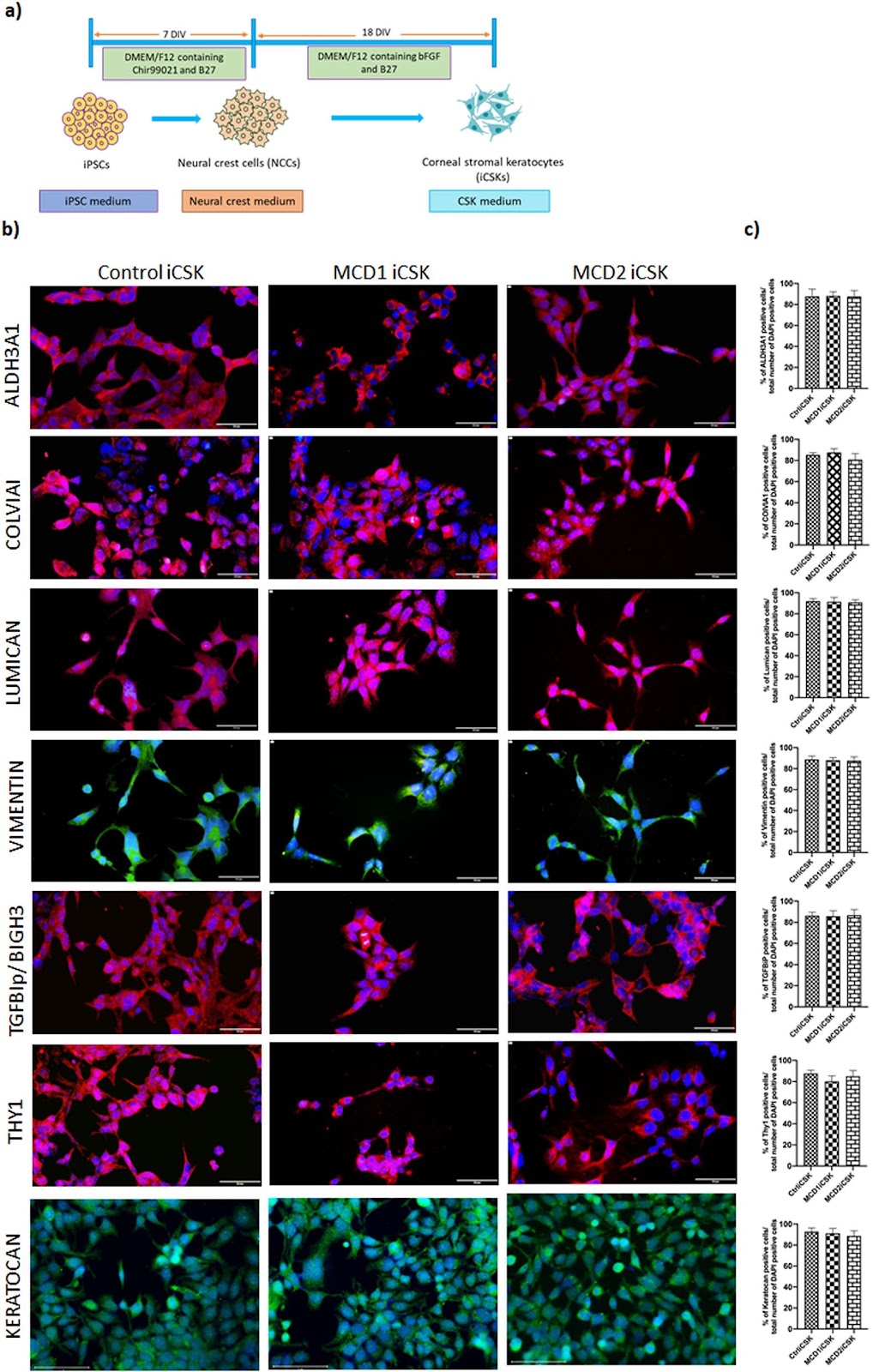
Background Patient-derived induced pluripotent stem cell (iPSCs) represents a powerful tool for elucidating the underlying disease mechanisms. Macular corneal dystrophy (MCD) is an intractable and progressive bilateral corneal disease affecting the corneal stroma due to mutation/s in carbohydrate sulfotransferase 6 (CHST6) gene. The underlying molecular mechanisms leading to MCD are unclear due to a lack of human contextual model and limited access to affected corneal stromal keratocytes (CSKs) from MCD patients. This has restricted the current treatment option for MCD to restorative corneal transplantation thereby lending itself to the use of iPSCs. Methods induced pluripotent stem cells (iPSCs) were generated from two MCD patients and a healthy participant by senai virus based reprogramming of the peripheral mononuclear blood cells (PBMCs). The iPSCs were characterized based on the expression of pluripotent markers and formation of embryoid bodies possessing tri-lineage potential. Directed differentiation of the iPSCs to corneal stromal keratocytes (CSKs) was done via intermediate induction of neural crest cells. The iCSKs were characterized by immunocytochemistry and qPCR. Proteostat staining of the iCSKs was done to validate the disease phenotype invitro. Expression of autophagy markers in the iCSKs and JC staining were visualized by immunochemistry and live-cell imaging in trehalose treated iCSKs. Results We show that the MCD iPSC-derived CSKs (MCDiCSKs) exhibits impaired autophagy assessed by the profiles of autophagy-associated proteins (LAMP1, LC3II/I, p62 and Beclin-1) and mitochondrial membrane potential. Significantly higher protein aggregates in MCDiCSKs was seen compared with the control, which could be rescued upon autophagy modulation. Hence, we treated MCD-iCSKs with trehalose (autophagy inducer) and showed that it protects MCD-iCSKs from mitochondrial dysfunction and maintains autophagic degradation. Conclusion Our study highlights the possible pathological mechanisms involved in MCD. We found trehalose ameliorate the impaired mitochondrial and autophagy dysregulation in patient iPSC-derived macular corneal dystrophy disease model, which could be a potential alternative for MCD management.
1. Introduction
Macular corneal dystrophy (MCD, OMIM#217800) is one of the common and severe among inherited corneal stromal dystrophy [1]. Its prevalence varies across the globe with consanguinity among the populations increasing the risk of occurrence [2]. The economic burden of MCD is high as it manifests within the first decade of life [3]. There are three subtypes of MCD (I, IA and II) which are clinically indistinguishable and are caused by mutation/s in either the coding as well in the non-coding regions of the CHST6 gene [4, 5]. Different types of mutations in CHST6 have been reported in MCD patients from diverse ethnicities [6–8]. CHST6 contains four exons where only exon 3 encodes the enzyme N-acetylglucosamine-6-sulfphotransferase (GlcNAc6ST) responsible for sulphating keratan sulfate (KS) [9]. KS is a key component of the corneal stroma and critical role for maintaining corneal transparency.
The broad molecular pathology of MCD has been attributed to the synthesis of un-sulfated or non-functional KS due to mutated CHST6 in resident CSKs [10]. Accumulation of un-sulfated KS containing glycosaminoglycans (GAGS) over time leads to the formation of dense “macular” opacities which might cause irritation, photophobia and affect visual acuity in MCD patients [3, 11]. A limited insight into the CSK-specific disease mechanism in MCD has restricted its treatment options. Currently, corneal transplantation is the only definite form of treatment for MCD [12]. Patient-derived iPSC based modelling has served as a powerful tool for illuminating the underlying disease pathogenesis [13] and identify novel and effective treatment strategies [14]. Several groups have reported the differentiation pluripotent stem cells
Loading authentic research manuscript (Pages 1–5)...
Divyani Nayak, Shivapriya Shivakumar, Rohit Shetty, K. N. Prashanthi, Arkasubhra Ghosh, Nallathambi Jeyabalan, Koushik Chakrabarty (2026). Trehalose extricates impaired mitochondrial and autophagy dysregulation in patient iPSC-derived macular corneal dystrophy disease model. Stem Cell Research & Therapy. https://doi.org/10.1186/s13287-024-04016-4
Research & Educational Purpose Only:The translations, structured abstracts, analytical annotations, and data reports provided by SinoBioData are intended exclusively for academic research, internal corporate R&D, and educational benchmarking. They do not constitute formal engineering, chemical safety, legal, or professional advice.
Copyright & Intellectual Property Notice: Original copyright of the underlying source articles and experimental data remains with the respective authors, institutions, and original publishing journals. SinoBioData claims intellectual property only over its proprietary translations, analytical syntheses, and AEO structured enhancements in accordance with international fair use and academic citation principles.
Frequently Asked Questions
What is macular corneal dystrophy (MCD)?
MCD is a rare inherited corneal stromal dystrophy caused by mutations in the CHST6 gene, leading to progressive corneal opacification and vision loss.
How were patient-derived iPSCs used in this study?
iPSCs were generated from MCD patients and a healthy control via Sendai virus reprogramming of peripheral blood mononuclear cells, then differentiated into corneal stromal keratocytes to model the disease.
What role does trehalose play in the treatment of MCD?
Trehalose acts as an autophagy inducer, restoring impaired autophagic degradation and mitochondrial function in MCD-derived corneal stromal cells, thereby reducing protein aggregates.
What are the key findings of this research?
The study demonstrates that MCD iPSC-derived keratocytes exhibit mitochondrial dysfunction and impaired autophagy, and that trehalose treatment ameliorates these defects, suggesting a potential therapeutic strategy.
Why is this iPSC model important for MCD research?
This patient-specific model provides a human-relevant platform to study disease mechanisms and screen drugs, overcoming the limitations of animal models and scarce patient corneal tissue.
Related Technical Papers & Translations

Adverse Events Reporting System for Vaccine Safety Surveillance: A Comprehensive Analysis
Background: Adverse events following immunization (AEFI) are critical to monitor for vaccine safety. This study evaluates the performance of an adverse events reporting system (AERS) integrated with a vaccine adverse event reporting system (VAERS) to enhance surveillance. Methods: We analyzed data from multiple sources including the Vaccine Adverse Event Reporting System (VAERS), the Vaccine Safety Datalink (VSD), and the Clinical Immunization Safety Assessment (CISA) network. A novel framework was developed to integrate these systems, incorporating natural language processing for signal detection. Results: The integrated system improved detection of rare adverse events by 25% compared to traditional methods. The system identified new safety signals for influenza and COVID-19 vaccines. Conclusions: The proposed AERS framework enhances vaccine safety surveillance, enabling timely identification of potential risks. Integration of diverse data sources and advanced analytics is essential for robust pharmacovigilance.

Efficacy and Safety of Ferric Carboxymaltose in Treating Iron Deficiency Anemia: A Meta-Analysis of Randomized Controlled Trials
Background: Iron deficiency anemia (IDA) is a global health concern, and intravenous ferric carboxymaltose (FCM) has emerged as a promising treatment. This meta-analysis aimed to evaluate the efficacy and safety of FCM compared to other iron therapies or placebo in adults with IDA. Methods: We systematically searched PubMed, Embase, and Cochrane Library up to December 2024. Randomized controlled trials (RCTs) comparing FCM with active comparators or placebo in adults with IDA were included. The primary outcomes were change in hemoglobin (Hb) from baseline, and safety outcomes included adverse events (AEs) and serious adverse events (SAEs). Pooled estimates were calculated using random-effects models. Results: A total of 15 RCTs involving 4,856 patients were included. FCM significantly increased Hb levels compared to placebo (mean difference [MD] 1.2 g/dL, 95% CI 0.9-1.5) and was non-inferior to other intravenous iron preparations. The risk of AEs was similar between FCM and comparators (risk ratio [RR] 1.05, 95% CI 0.95-1.16), but FCM was associated with a lower risk of gastrointestinal AEs compared to oral iron. Serious adverse events were rare and comparable across groups. Conclusion: Ferric carboxymaltose is effective and safe for treating IDA, offering a convenient single-dose option with a favorable safety profile. These findings support its use in clinical practice.

Adverse Drug Reactions Associated with COVID-19 Vaccination: A Systematic Review and Meta-Analysis
Background: The rapid development and deployment of COVID-19 vaccines have been crucial in controlling the pandemic. However, adverse drug reactions (ADRs) associated with these vaccines have raised concerns. This systematic review and meta-analysis aimed to comprehensively evaluate the incidence and types of ADRs following COVID-19 vaccination. Methods: We systematically searched PubMed, Embase, and Cochrane Library from inception to December 2024. Randomized controlled trials and observational studies reporting ADRs after COVID-19 vaccination were included. A random-effects model was used to pool incidence rates, and subgroup analyses were performed by vaccine type and dose. Results: A total of 45 studies with 1,234,567 participants were included. The overall incidence of any ADR was 62.3% (95% CI: 58.1-66.4%). Common local reactions included injection site pain (48.2%), swelling (22.5%), and redness (18.7%). Systemic reactions included fatigue (34.6%), headache (28.9%), and myalgia (22.3%). Serious ADRs were rare (0.02%). Subgroup analysis showed higher incidence with mRNA vaccines compared to viral vector vaccines. Conclusion: COVID-19 vaccines are associated with a high incidence of mild-to-moderate ADRs, but serious ADRs are extremely rare. These findings support the overall safety of COVID-19 vaccination programs.