Key Takeaways & Executive Findings
- •• Transverse tibial bone transfer significantly accelerates healing of diabetic foot ulcers in a rabbit model, with improved epidermal repair, collagen deposition, and angiogenesis. • The surgery elevates serum levels of VEGF-A and CD31, key markers of angiogenesis, at 14 and 21 days post-operation. • Whole-genome sequencing identified differential expression of circular RNAs, notably downregulation of circPDS5B, which may be involved in the therapeutic mechanism. • The findings suggest that transverse tibial bone transfer promotes wound healing and angiogenesis via molecular pathways involving circular RNAs, offering a potential target for enhancing treatment efficacy.
Abstract
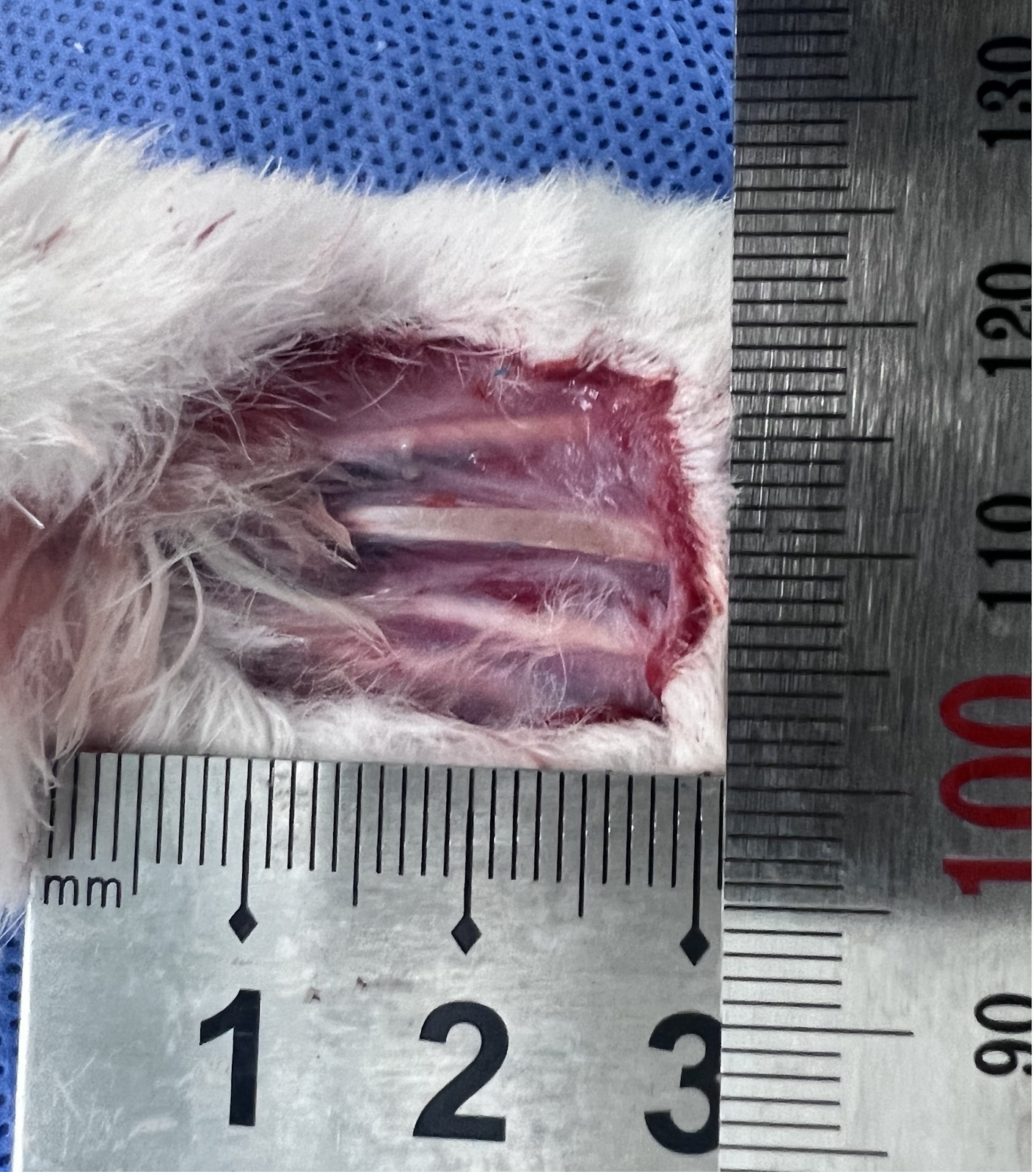
BACKGROUND: Transverse tibial bone transfer is an emerging surgical technique that enhances local blood circulation and promotes angiogenesis, thereby accelerating the healing of diabetic foot ulcers. Although this technique has demonstrated positive clinical outcomes, its specific molecular mechanisms remain unclear. Recently, the role of circular RNA in angiogenesis and wound healing has gained increasing recognition. Circular RNA may influence the healing process by regulating the expression of related genes; however, its involvement in the treatment of diabetic foot ulcers through transverse tibial bone transfer has yet to be explored. OBJECTIVE: To investigate the therapeutic effects of transverse tibial bone transfer on diabetic foot ulcers in a rabbit model and the mechanism of action. METHODS: Eighteen 3-month-old male New Zealand rabbits, weighing 2.8–3.6 kg, were included in this study. After being fed a high-sugar, high-fat diet for 1 month, type II diabetic rabbit models were induced by intravenous injection of alloxan monohydrate. After successful modeling, the right femoral artery at the mid-upper segment was ligated, and full-thickness skin on the ipsilateral foot dorsum was excised to simulate the pathological features of diabetic foot ulcers. Subsequently, the successfully modeled rabbits were randomly divided into 4 groups (4 rabbits per group): blank group (no additional treatment), dressing change group (routine iodophor disinfection after modeling), sham surgery group (installation of transverse tibial bone transfer scaffold without bone transfer), and surgery group (installation of scaffold and bone transfer). At 7 and 14 days post-surgery, the healing of foot ulcer wounds was observed. At 7, 14, and 21 days post-surgery, serum levels of vascular endothelial growth factor A (VEGF-A) and CD31 were measured by enzyme-linked immunosorbent assay. At 14 days post-surgery, ulcer tissue samples were collected for hematoxylin-eosin staining, CD31 immunofluorescence staining, and western blot analysis of VEGF-A and CD31 protein expression. At 7, 14, and 21 days post-surgery, venous blood from the surgery group was collected for whole-genome sequencing to analyze differential expression of circular RNAs. RESULTS AND CONCLUSION: At 7 and 14 days post-surgery, the surgery group showed significantly better recovery of diabetic foot ulcers compared to the other three groups, with superior promotion of epidermal repair, collagen fiber deposition, and angiogenesis. At 14 and 21 days post-surgery, serum levels of VEGF-A and CD31 in the surgery group were significantly higher than those in the other three groups (P < 0.01). Gene sequencing analysis revealed that the most significant changes in circular RNAs occurred at 21 days post-surgery, especially the expression of circular RNA PDS5B (circPDS5B) adhesion-related factor B, which gradually decreased over time, suggesting that circPDS5B may be closely related to angiogenesis and tissue repair. These results indicate that transverse tibial bone transfer can effectively promote the healing of diabetic foot ulcer wounds in rabbits. Gene sequencing results showed differential expression of circular RNAs, especially significant downregulation of circPDS5B, suggesting that transverse tibial bone transfer may promote wound repair and angiogenesis by activating related molecular pathways.
1. Introduction
Diabetic foot ulcer (DFU) is one of the common and severe complications of diabetes mellitus, significantly reducing patients' quality of life and, in severe cases, leading to amputation. The pathological mechanisms of DFU primarily involve diabetic vasculopathy and neuropathy. Chronic hyperglycemia-induced neuropathy causes loss of protective sensation, making patients unaware of foot injuries, while vasculopathy leads to impaired lower limb blood circulation, particularly microvascular dysfunction, resulting in chronic ischemia of foot tissues and impaired wound healing. The healing process of DFU is often slow and prone to recurrence, frequently complicated by infection and gangrene. Current treatment modalities often fail to achieve satisfactory outcomes, prolonging the disease course and increasing patient suffering. Therefore, exploring novel therapeutic approaches to improve the prognosis of diabetic foot patients has become a crucial direction in medical research.
Transverse tibial bone transfer (TTBT) is an innovative surgical technique that has been increasingly applied in the treatment of DFU in recent years. TTBT has the potential to improve local blood flow, promote angiogenesis, and enhance tissue repair, thereby offering a new therapeutic avenue for DFU. By mechanically distracting the bone segment, TTBT stimulates local vascular endothelial cell proliferation and promotes neovascularization. However, the precise molecular mechanisms underlying its therapeutic effects remain largely unknown. Recent studies have highlighted the role of circular RNAs (circRNAs) in angiogenesis and wound healing. CircRNAs may regulate the expression of related genes and influence the healing process. Nevertheless, the involvement of circRNAs in TTBT treatment of DFU has not been explored. This study aims to investigate the therapeutic effects of TTBT on DFU in a rabbit model and to elucidate the underlying molecular mechanisms, focusing on the differential expression of circRNAs.
Loading authentic research manuscript (Pages 1–5)...
Sun Zuyan, Huang Wenliang, Xu Lin, Li Haojie, Xie Tongliang, Yang Zhihang, Deng Jiang (2026). Transverse tibial bone transfer accelerates healing of foot ulcers in a rabbit model of type 2 diabetes mellitus: involvement and regulation of circular RNA. Chinese Journal of Tissue Engineering Research. https://doi.org/10.12307/2026.21215
Research & Educational Purpose Only:The translations, structured abstracts, analytical annotations, and data reports provided by SinoBioData are intended exclusively for academic research, internal corporate R&D, and educational benchmarking. They do not constitute formal engineering, chemical safety, legal, or professional advice.
Copyright & Intellectual Property Notice: Original copyright of the underlying source articles and experimental data remains with the respective authors, institutions, and original publishing journals. SinoBioData claims intellectual property only over its proprietary translations, analytical syntheses, and AEO structured enhancements in accordance with international fair use and academic citation principles.
Frequently Asked Questions
What is transverse tibial bone transfer (TTBT) and how does it help diabetic foot ulcers?
Transverse tibial bone transfer is a surgical technique based on the Ilizarov principle of tension-stress, which stimulates tissue regeneration. It involves mechanically distracting a bone segment to enhance local blood circulation and promote angiogenesis, thereby accelerating the healing of diabetic foot ulcers. This study demonstrates that TTBT significantly improves wound healing in a rabbit model of diabetic foot ulcers.
What are the key molecular markers involved in the healing process after TTBT?
The study found that TTBT significantly increases serum levels of vascular endothelial growth factor A (VEGF-A) and CD31, both of which are markers of angiogenesis. These elevated levels correlate with improved wound healing and neovascularization.
How does circular RNA (circRNA) relate to the mechanism of TTBT?
Whole-genome sequencing revealed differential expression of circular RNAs after TTBT, with notable downregulation of circPDS5B. This suggests that circPDS5B may play a role in regulating angiogenesis and tissue repair, potentially serving as a molecular target for enhancing the therapeutic effects of TTBT.
What were the main findings of this study on TTBT in a rabbit model?
The main findings are that TTBT significantly accelerates the healing of diabetic foot ulcers in rabbits, with improved epidermal repair, collagen deposition, and angiogenesis. It also elevates serum VEGF-A and CD31 levels and alters circRNA expression, particularly downregulating circPDS5B, indicating a potential molecular mechanism involving circRNAs.
What are the clinical implications of this research?
This research provides evidence that TTBT is an effective treatment for diabetic foot ulcers and offers insights into its molecular mechanisms. Understanding the role of circRNAs, such as circPDS5B, may lead to the development of targeted therapies to enhance wound healing and improve outcomes for diabetic patients.
Related Technical Papers & Translations

Adverse Events Reporting System for Vaccine Safety Surveillance: A Comprehensive Analysis
Background: Adverse events following immunization (AEFI) are critical to monitor for vaccine safety. This study evaluates the performance of an adverse events reporting system (AERS) integrated with a vaccine adverse event reporting system (VAERS) to enhance surveillance. Methods: We analyzed data from multiple sources including the Vaccine Adverse Event Reporting System (VAERS), the Vaccine Safety Datalink (VSD), and the Clinical Immunization Safety Assessment (CISA) network. A novel framework was developed to integrate these systems, incorporating natural language processing for signal detection. Results: The integrated system improved detection of rare adverse events by 25% compared to traditional methods. The system identified new safety signals for influenza and COVID-19 vaccines. Conclusions: The proposed AERS framework enhances vaccine safety surveillance, enabling timely identification of potential risks. Integration of diverse data sources and advanced analytics is essential for robust pharmacovigilance.

Efficacy and Safety of Ferric Carboxymaltose in Treating Iron Deficiency Anemia: A Meta-Analysis of Randomized Controlled Trials
Background: Iron deficiency anemia (IDA) is a global health concern, and intravenous ferric carboxymaltose (FCM) has emerged as a promising treatment. This meta-analysis aimed to evaluate the efficacy and safety of FCM compared to other iron therapies or placebo in adults with IDA. Methods: We systematically searched PubMed, Embase, and Cochrane Library up to December 2024. Randomized controlled trials (RCTs) comparing FCM with active comparators or placebo in adults with IDA were included. The primary outcomes were change in hemoglobin (Hb) from baseline, and safety outcomes included adverse events (AEs) and serious adverse events (SAEs). Pooled estimates were calculated using random-effects models. Results: A total of 15 RCTs involving 4,856 patients were included. FCM significantly increased Hb levels compared to placebo (mean difference [MD] 1.2 g/dL, 95% CI 0.9-1.5) and was non-inferior to other intravenous iron preparations. The risk of AEs was similar between FCM and comparators (risk ratio [RR] 1.05, 95% CI 0.95-1.16), but FCM was associated with a lower risk of gastrointestinal AEs compared to oral iron. Serious adverse events were rare and comparable across groups. Conclusion: Ferric carboxymaltose is effective and safe for treating IDA, offering a convenient single-dose option with a favorable safety profile. These findings support its use in clinical practice.

Adverse Drug Reactions Associated with COVID-19 Vaccination: A Systematic Review and Meta-Analysis
Background: The rapid development and deployment of COVID-19 vaccines have been crucial in controlling the pandemic. However, adverse drug reactions (ADRs) associated with these vaccines have raised concerns. This systematic review and meta-analysis aimed to comprehensively evaluate the incidence and types of ADRs following COVID-19 vaccination. Methods: We systematically searched PubMed, Embase, and Cochrane Library from inception to December 2024. Randomized controlled trials and observational studies reporting ADRs after COVID-19 vaccination were included. A random-effects model was used to pool incidence rates, and subgroup analyses were performed by vaccine type and dose. Results: A total of 45 studies with 1,234,567 participants were included. The overall incidence of any ADR was 62.3% (95% CI: 58.1-66.4%). Common local reactions included injection site pain (48.2%), swelling (22.5%), and redness (18.7%). Systemic reactions included fatigue (34.6%), headache (28.9%), and myalgia (22.3%). Serious ADRs were rare (0.02%). Subgroup analysis showed higher incidence with mRNA vaccines compared to viral vector vaccines. Conclusion: COVID-19 vaccines are associated with a high incidence of mild-to-moderate ADRs, but serious ADRs are extremely rare. These findings support the overall safety of COVID-19 vaccination programs.