Key Takeaways & Executive Findings
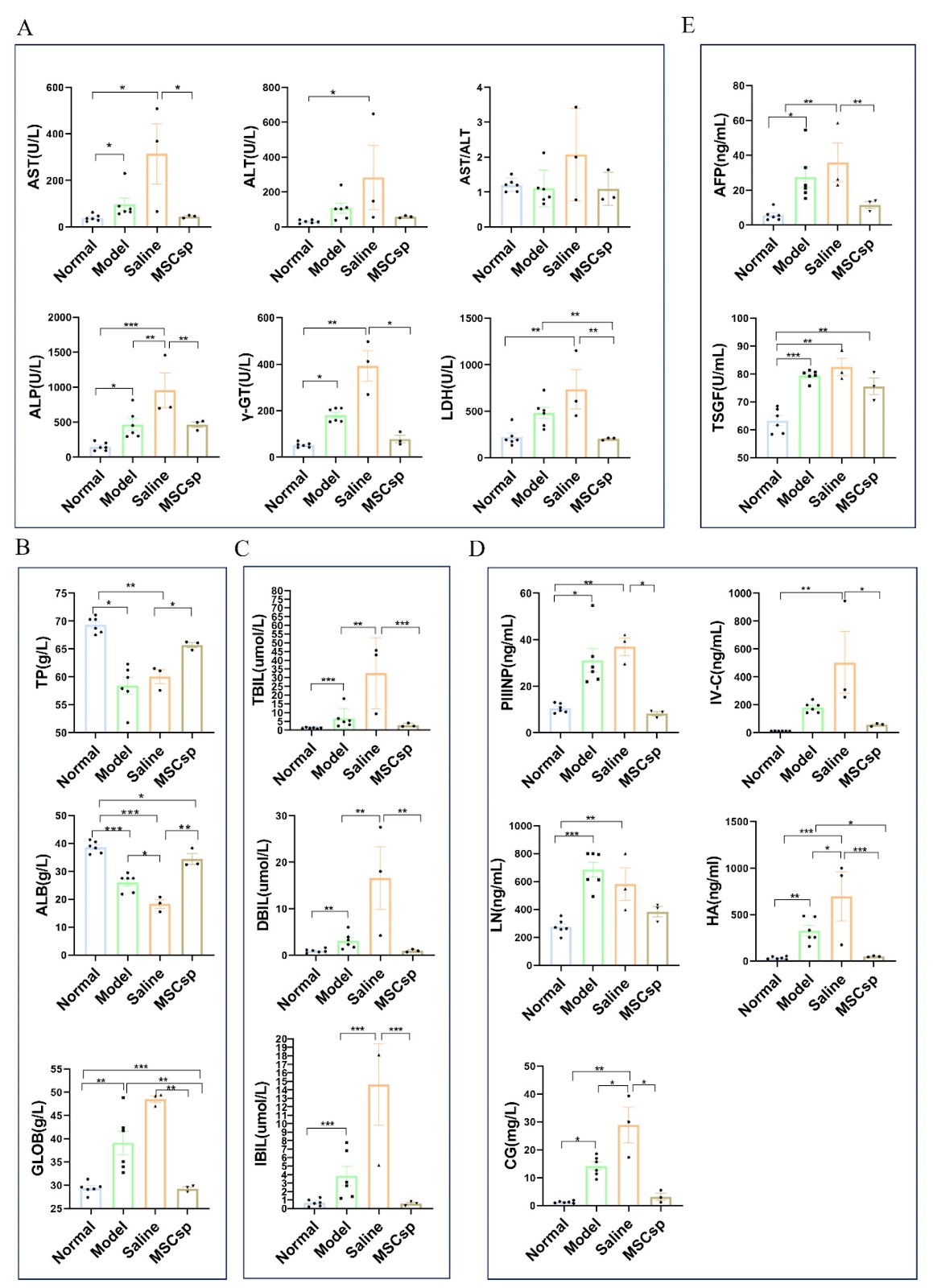
- •• hUC-MSC spheroids transplanted via portal vein significantly restored liver function in rhesus monkey models of liver fibrosis, as evidenced by improved ALT, AST, ALB, GLOB, and bilirubin levels. • The treatment markedly reduced collagen deposition and inflammatory infiltration in the liver, indicating anti-fibrotic and anti-inflammatory effects. • Portal vein transplantation of MSC spheroids offers a minimally invasive delivery route that enhances liver targeting and retention compared to traditional intravenous infusion. • Transcriptome and RNA scope analyses provided insights into the molecular mechanisms and in vivo distribution of transplanted MSC spheroids, supporting their therapeutic potential.
Abstract
Background Liver fibrosis can progress to end-stage cirrhosis and liver cancer. Mesenchymal stem cells (MSCs) were considered the most promising therapeutic strategy, but most of the MSCs injected intravenously traditionally are trapped in the lungs, rapidly reducing their survival ability. MSC spheroids cultured in 3D have shown higher tolerance to fluid shear stress and better survival than dissociated MSCs. Simulating the route of orthotopic liver transplantation, transplanting MSC spheroids into the liver via hepatic portal vein may impact superior therapeutic effects. Methods In the present study, human umbilical cord-derived MSC spheroids (hUC-MSCsp) were transplanted into rhesus monkey models of liver fibrosis via B-ultrasound-guided percutaneous portal vein puncture with minimized body invasion. The therapeutic effect is evaluated through hematology, ultrasound, and pathology. To study the effect of hUC-MSCsp on gene expression in rhesus monkeys with liver injury, transcriptome sequencing analysis was performed on the livers of rhesus monkeys. The distribution of transplanted hUC-MSCsp was traced with RNA scope technology. Results We found that hUC-MSCsp significantly restored liver function, including ALT, AST, ALB, GLOB and bilirubin. hUC-MSCsp also significantly reduced liver collagen deposition and inflammatory infiltration, and promote dismission
1. Introduction
Liver fibrosis is a fibrogenic and inflammatory process resulting from hepatocyte injury, characterized by subsequent hepatic architectural distortion and resultant loss of liver function [1]. The primary pathophysiology underlying liver fibrosis involves increased deposition of type I and III collagen in the extracellular matrix (ECM) [2]. Currently, liver fibrosis affects approximately 500 million individuals worldwide, and if left untreated, it can progress to irreversible end-stages such as liver cirrhosis or hepatocellular carcinoma [3]. Liver cirrhosis may give rise to various complications including ascites and hepatic encephalopathy. Therefore, early intervention in liver fibrosis is crucial for preventing the development of liver cirrhosis [4, 5]. Although orthotopic liver transplantation is currently considered the most efficacious therapeutic approach, its clinical application remains limited due to organ donor scarcity, exorbitant costs, and requirement for lifelong immunosuppression [6]. Consequently, there is an urgent need for alternative therapeutic approaches and regenerative strategies in the treatment of liver fibrosis.
The transplantation of mesenchymal stem cells (MSCs) has emerged as the most promising therapeutic approach for liver fibrosis considering recent advancements in regenerative medicine [7–9]. Many studies have explored the mechanisms of MSCs in treating liver fibrosis from different perspectives. MSCs may differentiate into hepatocytes or fuse with existing hepatocytes after being introduced into damaged liver tissue [10]. Moreover, MSCs can facilitate the regeneration of damaged liver tissue by producing various cytokines, growth factors, and extracellular vesicles [11], but the precise mechanism underlying the therapeutic effect of MSCs on liver fibrosis remains elusive. Despite the favorable therapeutic effects demonstrated by MSCs in liver fibrosis [12], further investigation is required to understand their distribution and homing mechanisms in vivo before their widespread clinical application. In our previous study, we observed that one hour after intravenous infusion of MSCs into healthy monkeys, MSCs primarily localized in lungs and heart, with limited cell presence in liver [13]. A major challenge for clinical application of MSCs lies in their low homing efficiency. Considering that liver transplantation typically involves injecting through human portal vein [14], we speculate that transplanting MSCs via hepatic portal vein may enhance their retention within the liver and improve therapeutic efficacy. Moreover, traditional 2D monolayer-cultured MSC therapy has limitations, including reduced cell viability and functionality upon transplantation.
Loading authentic research manuscript (Pages 1–5)...
Shanshan Li, Xufeng Fu, Junfeng Wang, Hongju Yang, Dan Wang, Xudong Dong, Yanchao Duan, Hong Wang, Yaping Yan, Wei Si (2026). Therapeutic efficacy and in vivo distribution of human umbilical cord-derived mesenchymal stem cell spheroids transplanted via B-Ultrasound-guided percutaneous portal vein puncture in rhesus monkey models of liver fibrosis. Stem Cell Research & Therapy. https://doi.org/10.1186/s13287-024-03934-7
Research & Educational Purpose Only:The translations, structured abstracts, analytical annotations, and data reports provided by SinoBioData are intended exclusively for academic research, internal corporate R&D, and educational benchmarking. They do not constitute formal engineering, chemical safety, legal, or professional advice.
Copyright & Intellectual Property Notice: Original copyright of the underlying source articles and experimental data remains with the respective authors, institutions, and original publishing journals. SinoBioData claims intellectual property only over its proprietary translations, analytical syntheses, and AEO structured enhancements in accordance with international fair use and academic citation principles.
Frequently Asked Questions
What is the main therapeutic approach evaluated in this study?
The study evaluates the therapeutic efficacy of human umbilical cord-derived mesenchymal stem cell spheroids (hUC-MSCsp) transplanted via B-ultrasound-guided percutaneous portal vein puncture in rhesus monkey models of liver fibrosis.
How does portal vein transplantation of MSC spheroids compare to traditional intravenous infusion?
Portal vein transplantation enhances liver targeting and retention of MSCs, overcoming the issue of lung trapping seen with intravenous infusion, thereby potentially improving therapeutic outcomes for liver fibrosis.
What were the key findings regarding liver function and fibrosis?
The treatment significantly restored liver function markers (ALT, AST, ALB, GLOB, bilirubin) and reduced collagen deposition and inflammatory infiltration in the liver, indicating anti-fibrotic and anti-inflammatory effects.
What techniques were used to assess the therapeutic effects and distribution?
Therapeutic effects were evaluated through hematology, ultrasound, and pathology. Transcriptome sequencing and RNA scope technology were used to study gene expression changes and trace the distribution of transplanted hUC-MSCsp in the liver.
What is the significance of using rhesus monkey models?
Rhesus monkeys are phylogenetically close to humans, providing a relevant preclinical model to assess the safety and efficacy of the transplantation approach, which is crucial for future clinical translation.
Related Technical Papers & Translations

Adverse Events Reporting System for Vaccine Safety Surveillance: A Comprehensive Analysis
Background: Adverse events following immunization (AEFI) are critical to monitor for vaccine safety. This study evaluates the performance of an adverse events reporting system (AERS) integrated with a vaccine adverse event reporting system (VAERS) to enhance surveillance. Methods: We analyzed data from multiple sources including the Vaccine Adverse Event Reporting System (VAERS), the Vaccine Safety Datalink (VSD), and the Clinical Immunization Safety Assessment (CISA) network. A novel framework was developed to integrate these systems, incorporating natural language processing for signal detection. Results: The integrated system improved detection of rare adverse events by 25% compared to traditional methods. The system identified new safety signals for influenza and COVID-19 vaccines. Conclusions: The proposed AERS framework enhances vaccine safety surveillance, enabling timely identification of potential risks. Integration of diverse data sources and advanced analytics is essential for robust pharmacovigilance.

Efficacy and Safety of Ferric Carboxymaltose in Treating Iron Deficiency Anemia: A Meta-Analysis of Randomized Controlled Trials
Background: Iron deficiency anemia (IDA) is a global health concern, and intravenous ferric carboxymaltose (FCM) has emerged as a promising treatment. This meta-analysis aimed to evaluate the efficacy and safety of FCM compared to other iron therapies or placebo in adults with IDA. Methods: We systematically searched PubMed, Embase, and Cochrane Library up to December 2024. Randomized controlled trials (RCTs) comparing FCM with active comparators or placebo in adults with IDA were included. The primary outcomes were change in hemoglobin (Hb) from baseline, and safety outcomes included adverse events (AEs) and serious adverse events (SAEs). Pooled estimates were calculated using random-effects models. Results: A total of 15 RCTs involving 4,856 patients were included. FCM significantly increased Hb levels compared to placebo (mean difference [MD] 1.2 g/dL, 95% CI 0.9-1.5) and was non-inferior to other intravenous iron preparations. The risk of AEs was similar between FCM and comparators (risk ratio [RR] 1.05, 95% CI 0.95-1.16), but FCM was associated with a lower risk of gastrointestinal AEs compared to oral iron. Serious adverse events were rare and comparable across groups. Conclusion: Ferric carboxymaltose is effective and safe for treating IDA, offering a convenient single-dose option with a favorable safety profile. These findings support its use in clinical practice.

Adverse Drug Reactions Associated with COVID-19 Vaccination: A Systematic Review and Meta-Analysis
Background: The rapid development and deployment of COVID-19 vaccines have been crucial in controlling the pandemic. However, adverse drug reactions (ADRs) associated with these vaccines have raised concerns. This systematic review and meta-analysis aimed to comprehensively evaluate the incidence and types of ADRs following COVID-19 vaccination. Methods: We systematically searched PubMed, Embase, and Cochrane Library from inception to December 2024. Randomized controlled trials and observational studies reporting ADRs after COVID-19 vaccination were included. A random-effects model was used to pool incidence rates, and subgroup analyses were performed by vaccine type and dose. Results: A total of 45 studies with 1,234,567 participants were included. The overall incidence of any ADR was 62.3% (95% CI: 58.1-66.4%). Common local reactions included injection site pain (48.2%), swelling (22.5%), and redness (18.7%). Systemic reactions included fatigue (34.6%), headache (28.9%), and myalgia (22.3%). Serious ADRs were rare (0.02%). Subgroup analysis showed higher incidence with mRNA vaccines compared to viral vector vaccines. Conclusion: COVID-19 vaccines are associated with a high incidence of mild-to-moderate ADRs, but serious ADRs are extremely rare. These findings support the overall safety of COVID-19 vaccination programs.