Key Takeaways & Executive Findings
- •• High-fat diet induced elevated serum remnant cholesterol levels in mice, leading to significant degeneration of trabecular bone microstructure, including reduced bone density and volume fraction. • Remnant cholesterol levels were negatively correlated with bone mineral density, bone volume fraction, and trabecular number, and positively correlated with structure model index and trabecular separation. • Elevated remnant cholesterol suppressed osteogenic gene expression (Runx2, Col1a1, OCN, ALP, OPG) and enhanced osteoclastogenic gene expression (NFATc1, Cathepsin K), indicating an imbalance in bone turnover. • Despite microstructural deterioration, biomechanical properties (elastic modulus and maximum stress) of the femur were not significantly altered, suggesting early-stage bone quality impairment.
Abstract
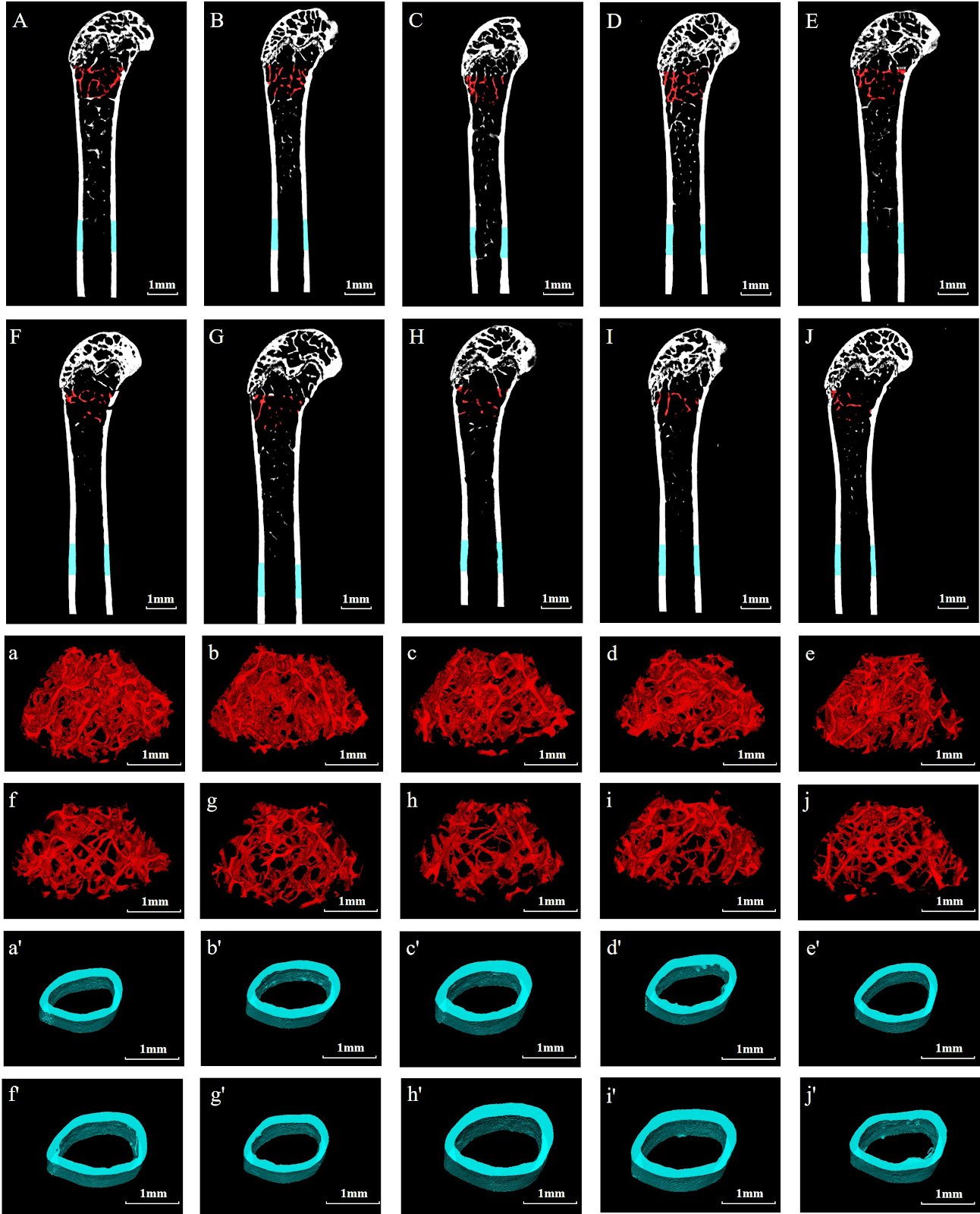
BACKGROUND: High cumulative remnant cholesterol levels are associated with the risk of various metabolic diseases, but their impact on bone quality remains to be explored. OBJECTIVE: To investigate the effects of high cumulative remnant cholesterol levels on bone mass, microstructure, and biomechanical properties in high-fat diet treated mice. METHODS: Ten healthy male SPF-grade C57BL6 mice were randomly allocated into normal control group and high-fat diet group. The normal control group was fed a normal diet for 20 weeks, while the high-fat diet group was fed a high-fat, high-cholesterol diet for 20 weeks. Mouse body mass was detected every week. After 20 weeks of feeding, serum levels of total cholesterol, remnant cholesterol, low-density lipoprotein cholesterol, high-density lipoprotein cholesterol, type I collagen carboxy-terminal cross-linked telopeptide, and type I procollagen amino-terminal propeptide were measured. Micro-CT was used to assess the microstructure of femoral cancellous and cortical bone. Three-point bending test was performed to measure the elastic modulus and maximum stress of the femur. RT-qPCR was used to detect the mRNA expression of RUNT-related transcription factor 2, type I collagen, osteocalcin, alkaline phosphatase, osteoprotegerin, receptor activator of nuclear factor-κB ligand, nuclear factor of activated T cells 1, and cathepsin K in the tibia. Pearson correlation analysis was used to analyze the correlation between remnant cholesterol, total cholesterol, high-density lipoprotein cholesterol, and low-density lipoprotein cholesterol levels and bone mineral density, as well as the correlation between remnant cholesterol levels and bone volume fraction, trabecular number, structure model index, and trabecular separation. RESULTS AND CONCLUSION: (1) From the 6th week of feeding, the body mass of mice in the high-fat diet group was higher than that in the control group (P < 0.05). The serum levels of total cholesterol, remnant cholesterol, and type I collagen carboxy-terminal cross-linked telopeptide in the high-fat diet group were higher than those in the control group (P < 0.05). (2) Micro-CT detection showed that compared with the control group, the bone microstructure of mice in the high-fat diet group underwent obvious degeneration, specifically manifested as significantly decreased bone mineral density, bone volume fraction, trabecular connectivity density, and trabecular number in cancellous bone, and significantly increased trabecular separation, structure model index, and trabecular pattern factor (P < 0.05). There were no significant changes in cortical bone thickness, volume, and area (P > 0.05). There was no significant difference in elastic modulus and maximum stress of the femur between the two groups (P > 0.05). (3) RT-qPCR detection showed that the mRNA expression of RUNT-related transcription factor 2, type I collagen, osteocalcin, alkaline phosphatase, and osteoprotegerin in the high-fat diet group was lower than that in the control group (P < 0.05), while the mRNA expression of nuclear factor of activated T cells 1 and cathepsin K was higher than that in the control group (P < 0.05). (4) Pearson analysis showed that remnant cholesterol and total cholesterol levels were significantly negatively correlated with bone mineral density (P < 0.05), and remnant cholesterol was significantly negatively correlated with bone volume fraction and trabecular number (P < 0.05), and significantly positively correlated with structure model index and trabecular separation (P < 0.05). These results indicate that remnant cholesterol may reduce bone quality by affecting the balance of bone turnover.
1. Introduction
Osteoporosis is a common chronic metabolic disease characterized by impaired bone microstructure and strength, leading to an increased risk of fragility fractures. In bone metabolism, the balance between osteoblastic bone formation and osteoclastic bone resorption is crucial for maintaining normal bone mass [1]. In addition to genetic, age, and sex factors, other factors affecting bone cell function and metabolism, such as lipid metabolism and lifestyle, have gradually attracted widespread attention. The relationship between lipid metabolism and bone metabolism has become a research hotspot in this field [2-3].
Cholesterol is a nonpolar hydrophobic molecule that is crucial in bone health and disease [4]. Studies have found that cholesterol and its derivatives participate in the regulation of signaling pathways related to bone mineralization [5]. On one hand, cholesterol and its derivatives promote the differentiation and function of osteoblasts; on the other hand, both dietary supplementation and elevated endogenous cholesterol levels may inhibit osteoblast differentiation and function, thereby increasing the risk of osteoporosis [6]. In addition, cholesterol can inhibit autophagy during osteoclast differentiation by activating the phosphatidylinositol 3-kinase/protein kinase B/serine-threonine protein kinase signaling pathway [7]. Exogenous oxidized cholesterol and its metabolites also affect the activity and differentiation ability of osteoclasts [8]. Although multiple studies have provided strong evidence for the impact of cholesterol on bone metabolism, cholesterol exists in various forms in the body and has complex effects, and its mechanism of action still needs further verification.
Remnant cholesterol is the total cholesterol content transported in intermediate-density lipoprotein cholesterol, very low-density lipoprotein cholesterol, and chylomicron remnants. In recent years, studies on the relationship between remnant cholesterol and diseases have increased. Epidemiological evidence indicates that high cumulative remnant cholesterol levels are associated with the risk of various metabolic diseases, but their impact on bone quality remains to be explored.
Loading authentic research manuscript (Pages 1–5)...
HOU Xiao-li, CAO Fu-yuan, GAO Jing-yuan, XING Lei, LIU Ning, ZHANG Nan, FAN Xin-hao, CAO Guo-long, TIAN Fa-ming (2026). Serum remnant cholesterol reduces bone quality in obese mice. Chinese Journal of Tissue Engineering Research. https://doi.org/10.12307/2026.21283
Research & Educational Purpose Only:The translations, structured abstracts, analytical annotations, and data reports provided by SinoBioData are intended exclusively for academic research, internal corporate R&D, and educational benchmarking. They do not constitute formal engineering, chemical safety, legal, or professional advice.
Copyright & Intellectual Property Notice: Original copyright of the underlying source articles and experimental data remains with the respective authors, institutions, and original publishing journals. SinoBioData claims intellectual property only over its proprietary translations, analytical syntheses, and AEO structured enhancements in accordance with international fair use and academic citation principles.
Frequently Asked Questions
What is remnant cholesterol?
Remnant cholesterol is the cholesterol content carried by triglyceride-rich lipoproteins, including intermediate-density lipoprotein, very low-density lipoprotein, and chylomicron remnants. It is considered an atherogenic lipoprotein.
How does remnant cholesterol affect bone quality?
Elevated remnant cholesterol levels may suppress osteoblast activity and enhance osteoclast activity, leading to an imbalance in bone turnover, which results in reduced bone mass and deterioration of bone microstructure, as observed in this study.
What were the main findings of this study?
High-fat diet induced elevated remnant cholesterol in mice, which was associated with decreased bone mineral density, bone volume fraction, and trabecular number, and increased structure model index and trabecular separation, indicating impaired bone quality.
Did the biomechanical properties of bone change in this study?
No significant differences were found in elastic modulus and maximum stress between the high-fat diet group and control group, suggesting that biomechanical properties were not yet compromised despite microstructural changes.
What is the clinical significance of this research?
This study highlights the potential role of remnant cholesterol as a risk factor for osteoporosis, suggesting that managing remnant cholesterol levels may be important for maintaining bone health, especially in obese individuals.
Related Technical Papers & Translations

Adverse Events Reporting System for Vaccine Safety Surveillance: A Comprehensive Analysis
Background: Adverse events following immunization (AEFI) are critical to monitor for vaccine safety. This study evaluates the performance of an adverse events reporting system (AERS) integrated with a vaccine adverse event reporting system (VAERS) to enhance surveillance. Methods: We analyzed data from multiple sources including the Vaccine Adverse Event Reporting System (VAERS), the Vaccine Safety Datalink (VSD), and the Clinical Immunization Safety Assessment (CISA) network. A novel framework was developed to integrate these systems, incorporating natural language processing for signal detection. Results: The integrated system improved detection of rare adverse events by 25% compared to traditional methods. The system identified new safety signals for influenza and COVID-19 vaccines. Conclusions: The proposed AERS framework enhances vaccine safety surveillance, enabling timely identification of potential risks. Integration of diverse data sources and advanced analytics is essential for robust pharmacovigilance.

Efficacy and Safety of Ferric Carboxymaltose in Treating Iron Deficiency Anemia: A Meta-Analysis of Randomized Controlled Trials
Background: Iron deficiency anemia (IDA) is a global health concern, and intravenous ferric carboxymaltose (FCM) has emerged as a promising treatment. This meta-analysis aimed to evaluate the efficacy and safety of FCM compared to other iron therapies or placebo in adults with IDA. Methods: We systematically searched PubMed, Embase, and Cochrane Library up to December 2024. Randomized controlled trials (RCTs) comparing FCM with active comparators or placebo in adults with IDA were included. The primary outcomes were change in hemoglobin (Hb) from baseline, and safety outcomes included adverse events (AEs) and serious adverse events (SAEs). Pooled estimates were calculated using random-effects models. Results: A total of 15 RCTs involving 4,856 patients were included. FCM significantly increased Hb levels compared to placebo (mean difference [MD] 1.2 g/dL, 95% CI 0.9-1.5) and was non-inferior to other intravenous iron preparations. The risk of AEs was similar between FCM and comparators (risk ratio [RR] 1.05, 95% CI 0.95-1.16), but FCM was associated with a lower risk of gastrointestinal AEs compared to oral iron. Serious adverse events were rare and comparable across groups. Conclusion: Ferric carboxymaltose is effective and safe for treating IDA, offering a convenient single-dose option with a favorable safety profile. These findings support its use in clinical practice.

Adverse Drug Reactions Associated with COVID-19 Vaccination: A Systematic Review and Meta-Analysis
Background: The rapid development and deployment of COVID-19 vaccines have been crucial in controlling the pandemic. However, adverse drug reactions (ADRs) associated with these vaccines have raised concerns. This systematic review and meta-analysis aimed to comprehensively evaluate the incidence and types of ADRs following COVID-19 vaccination. Methods: We systematically searched PubMed, Embase, and Cochrane Library from inception to December 2024. Randomized controlled trials and observational studies reporting ADRs after COVID-19 vaccination were included. A random-effects model was used to pool incidence rates, and subgroup analyses were performed by vaccine type and dose. Results: A total of 45 studies with 1,234,567 participants were included. The overall incidence of any ADR was 62.3% (95% CI: 58.1-66.4%). Common local reactions included injection site pain (48.2%), swelling (22.5%), and redness (18.7%). Systemic reactions included fatigue (34.6%), headache (28.9%), and myalgia (22.3%). Serious ADRs were rare (0.02%). Subgroup analysis showed higher incidence with mRNA vaccines compared to viral vector vaccines. Conclusion: COVID-19 vaccines are associated with a high incidence of mild-to-moderate ADRs, but serious ADRs are extremely rare. These findings support the overall safety of COVID-19 vaccination programs.