Key Takeaways & Executive Findings
- •• hP-MSC therapy effectively ameliorates PSC in Mdr2−/− mice, as evidenced by improved liver histology, reduced liver enzymes, and decreased inflammatory factors. • Serum metabolomics identified 41 differentially expressed metabolites, with key pathways involving bile acid metabolism, lipid metabolism, and hydroxyproline metabolism. • Eight serum metabolites were identified as potential efficacy biomarkers, with four decreasing and four increasing after hP-MSC treatment, offering non-invasive monitoring options. • The study provides preclinical evidence supporting the therapeutic potential of hP-MSCs for PSC and highlights metabolic regulatory mechanisms underlying their efficacy.
Abstract
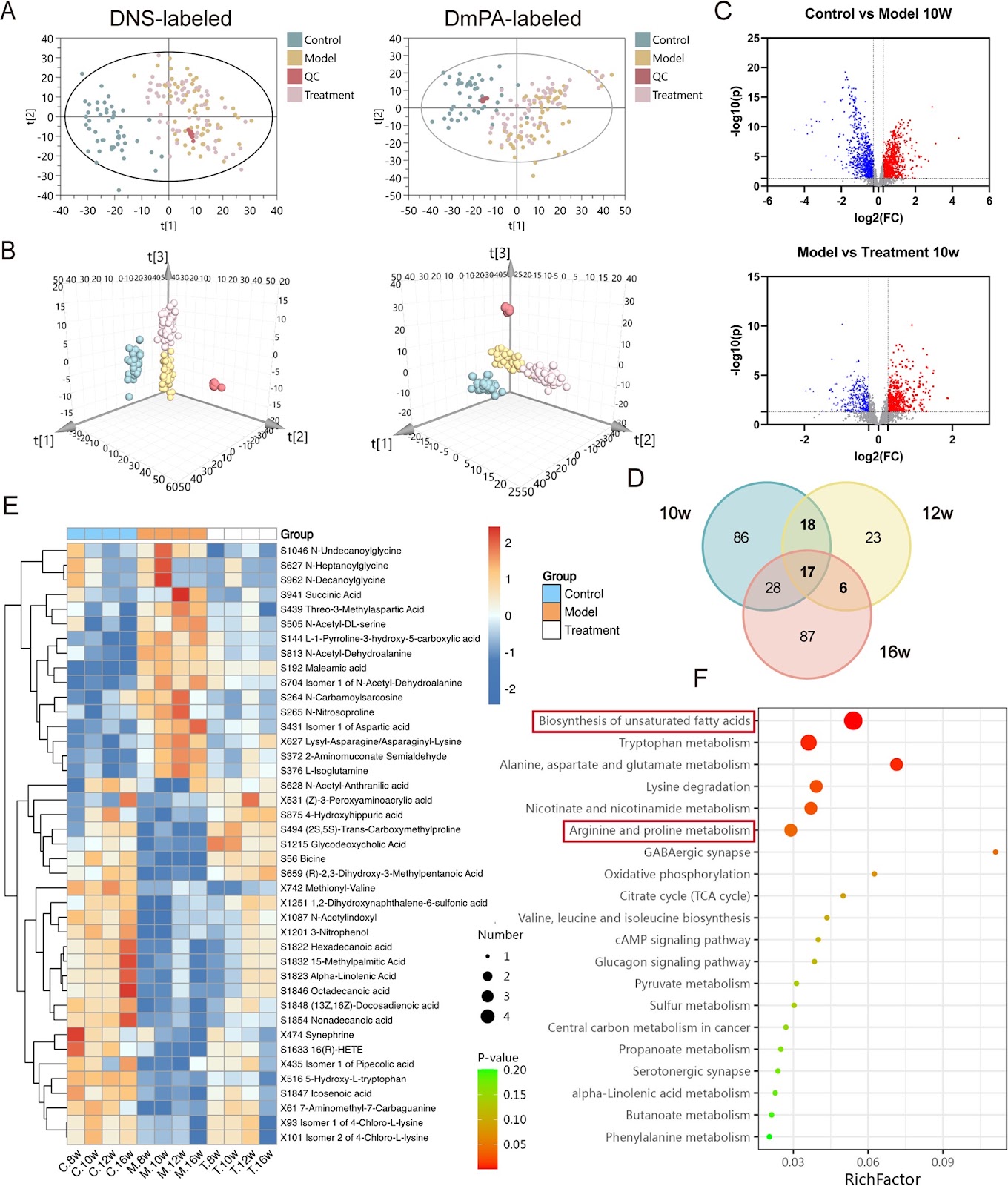
Background The metabolic patterns of human placental-derived mesenchymal stem cell (hP-MSC) treatment for primary sclerosing cholangitis (PSC) remain unclear, and therapeutic effects significantly vary due to individual differences. Therefore, it is crucial to investigate the serological response to hP-MSC transplantation through small molecular metabolites and identify easily detectable markers for efficacy evaluation. Methods Using Mdr2−/− mice as a PSC model and Mdr2+/+ mice as controls, the efficacy of hP-MSC treatment was assessed based on liver pathology, liver enzymes, and inflammatory factors. Serum samples were collected for 12C-/13C-dansylation and DmPA labeling LC–MS analysis to investigate changes in metabolic pathways after hP-MSC treatment. Key metabolites and regulatory enzymes were validated by qRT-PCR and Western blotting. Potential biomarkers of hP-MSC efficacy were identified through correlation analysis and machine learning. Results Collectively, the results of the liver histology, serum liver enzyme levels, and inflammatory factors supported the therapeutic efficacy of hP-MSC treatment. Based on significant differences, 41 differentially expressed metabolites were initially identified; these were enriched in bile acid, lipid, and hydroxyproline metabolism. After treatment, bile acid transport was accelerated, whereas bile acid production was reduced; unsaturated fatty acid synthesis was upregulated overall, with increased FADS2 and elongase expression and enhanced fatty acid β-oxidation; hepatic proline 4-hydroxylase expression was decreased, leading to reduced hydroxyproline production. Correlation analysis of liver enzymes and metabolites, combined with time trends, identified eight potential biomarkers: 2-aminomuconate semialdehyde, l-1-pyrroline-3-hydroxy-5-carboxylic acid, l-isoglutamine, and maleamic acid were more abundant in model mice but decreased after hP-MSC treatment. Conversely, 15-methylpalmitic, eicosenoic, nonadecanoic, and octadecanoic acids were less abundant in model mice but increased after hP-MSC treatment. Conclusions This study revealed metabolic regulatory changes in PSC model mice after hP-MSC treatment and identified eight promising biomarkers, providing preclinical evidence to support therapeutic applications of hP-MSC.
1. Introduction
Primary sclerosing cholangitis (PSC) is a liver condition characterized by damage to bile ducts within or outside the liver, or both. The disease process involves an interaction of inflammation, fibrosis, and cholestasis [1]. No genetic or environmental factors are associated with or known to trigger PSC [2, 3]. Several drugs targeting biliary components, immunomodulation, fibrosis, or the gut microbiome have been tested in PSC patients [4, 5]. Ursodeoxycholic acid (UDCA) has limited efficacy in altering the long-term course of the disease and improving survival [6]. Immunosuppressive medications, including steroids, azathioprine, and cyclosporine, are effective in specific cases according to some reports; however, their overall efficacy remains uncertain and they have substantial adverse effects [7]. Currently, liver transplantation remains the sole definitive treatment. The 10-year recurrence rate after liver transplantation is approximately 20% [8]. Consequently, it is imperative to develop novel therapeutic interventions. Recently, cellular therapy, particularly mesenchymal stem cell (MSC) therapy [9, 10], has received considerable attention as a promising therapeutic modality.
Friedenstein et al. first identified MSCs in mouse bone marrow, and subsequent evidence has demonstrated that they originate from pericytes and adventitial progenitor cells in almost all tissues [11, 12]. Human placenta-derived mesenchymal stem cells (hP-MSCs), found in the fetal membranes of the full-term placenta, are easily obtained using non-invasive techniques. Studies have investigated the potential therapeutic applications of MSCs in mouse models of PSC and organoid models [13–15]. MSCs ameliorate bile duct hyperplasia, peribiliary fibrosis, and inflammation in experimental models, suggesting their potential as a novel treatment for PSC.
Loading authentic research manuscript (Pages 1–5)...
Yingduo Yu, Qigu Yao, Deying Chen, Zhehua Zhang, Qiaoling Pan, Jiong Yu, Hongcui Cao, Liang Li, Lanjuan Li (2026). Serum metabonomics reveal the effectiveness of human placental mesenchymal stem cell therapy for primary sclerosing cholangitis. Stem Cell Research & Therapy. https://doi.org/10.1186/s13287-024-03967-y
Research & Educational Purpose Only:The translations, structured abstracts, analytical annotations, and data reports provided by SinoBioData are intended exclusively for academic research, internal corporate R&D, and educational benchmarking. They do not constitute formal engineering, chemical safety, legal, or professional advice.
Copyright & Intellectual Property Notice: Original copyright of the underlying source articles and experimental data remains with the respective authors, institutions, and original publishing journals. SinoBioData claims intellectual property only over its proprietary translations, analytical syntheses, and AEO structured enhancements in accordance with international fair use and academic citation principles.
Frequently Asked Questions
What is primary sclerosing cholangitis (PSC)?
Primary sclerosing cholangitis (PSC) is a chronic liver disease characterized by inflammation and fibrosis of the bile ducts, leading to cholestasis and eventually cirrhosis. It has no known cure, and liver transplantation is often the only definitive treatment.
How does human placental mesenchymal stem cell (hP-MSC) therapy work for PSC?
hP-MSC therapy is believed to exert immunomodulatory and regenerative effects. In this study, hP-MSC treatment in a PSC mouse model improved liver pathology, reduced liver enzymes and inflammation, and modulated metabolic pathways, including bile acid and lipid metabolism.
What are the potential biomarkers for hP-MSC efficacy in PSC?
The study identified eight serum metabolites as potential biomarkers: 2-aminomuconate semialdehyde, l-1-pyrroline-3-hydroxy-5-carboxylic acid, l-isoglutamine, and maleamic acid decreased after treatment, while 15-methylpalmitic, eicosenoic, nonadecanoic, and octadecanoic acids increased.
What metabolic pathways are affected by hP-MSC treatment in PSC?
hP-MSC treatment affects bile acid metabolism (accelerating transport and reducing production), lipid metabolism (upregulating unsaturated fatty acid synthesis and β-oxidation), and hydroxyproline metabolism (reducing production via decreased proline 4-hydroxylase expression).
What is the significance of this study for PSC treatment?
This study provides preclinical evidence that hP-MSC therapy is effective in a PSC mouse model and identifies potential biomarkers for monitoring treatment response, which could facilitate the development of non-invasive efficacy assessment and personalized therapy in future clinical applications.
Related Technical Papers & Translations

Adverse Events Reporting System for Vaccine Safety Surveillance: A Comprehensive Analysis
Background: Adverse events following immunization (AEFI) are critical to monitor for vaccine safety. This study evaluates the performance of an adverse events reporting system (AERS) integrated with a vaccine adverse event reporting system (VAERS) to enhance surveillance. Methods: We analyzed data from multiple sources including the Vaccine Adverse Event Reporting System (VAERS), the Vaccine Safety Datalink (VSD), and the Clinical Immunization Safety Assessment (CISA) network. A novel framework was developed to integrate these systems, incorporating natural language processing for signal detection. Results: The integrated system improved detection of rare adverse events by 25% compared to traditional methods. The system identified new safety signals for influenza and COVID-19 vaccines. Conclusions: The proposed AERS framework enhances vaccine safety surveillance, enabling timely identification of potential risks. Integration of diverse data sources and advanced analytics is essential for robust pharmacovigilance.

Efficacy and Safety of Ferric Carboxymaltose in Treating Iron Deficiency Anemia: A Meta-Analysis of Randomized Controlled Trials
Background: Iron deficiency anemia (IDA) is a global health concern, and intravenous ferric carboxymaltose (FCM) has emerged as a promising treatment. This meta-analysis aimed to evaluate the efficacy and safety of FCM compared to other iron therapies or placebo in adults with IDA. Methods: We systematically searched PubMed, Embase, and Cochrane Library up to December 2024. Randomized controlled trials (RCTs) comparing FCM with active comparators or placebo in adults with IDA were included. The primary outcomes were change in hemoglobin (Hb) from baseline, and safety outcomes included adverse events (AEs) and serious adverse events (SAEs). Pooled estimates were calculated using random-effects models. Results: A total of 15 RCTs involving 4,856 patients were included. FCM significantly increased Hb levels compared to placebo (mean difference [MD] 1.2 g/dL, 95% CI 0.9-1.5) and was non-inferior to other intravenous iron preparations. The risk of AEs was similar between FCM and comparators (risk ratio [RR] 1.05, 95% CI 0.95-1.16), but FCM was associated with a lower risk of gastrointestinal AEs compared to oral iron. Serious adverse events were rare and comparable across groups. Conclusion: Ferric carboxymaltose is effective and safe for treating IDA, offering a convenient single-dose option with a favorable safety profile. These findings support its use in clinical practice.

Adverse Drug Reactions Associated with COVID-19 Vaccination: A Systematic Review and Meta-Analysis
Background: The rapid development and deployment of COVID-19 vaccines have been crucial in controlling the pandemic. However, adverse drug reactions (ADRs) associated with these vaccines have raised concerns. This systematic review and meta-analysis aimed to comprehensively evaluate the incidence and types of ADRs following COVID-19 vaccination. Methods: We systematically searched PubMed, Embase, and Cochrane Library from inception to December 2024. Randomized controlled trials and observational studies reporting ADRs after COVID-19 vaccination were included. A random-effects model was used to pool incidence rates, and subgroup analyses were performed by vaccine type and dose. Results: A total of 45 studies with 1,234,567 participants were included. The overall incidence of any ADR was 62.3% (95% CI: 58.1-66.4%). Common local reactions included injection site pain (48.2%), swelling (22.5%), and redness (18.7%). Systemic reactions included fatigue (34.6%), headache (28.9%), and myalgia (22.3%). Serious ADRs were rare (0.02%). Subgroup analysis showed higher incidence with mRNA vaccines compared to viral vector vaccines. Conclusion: COVID-19 vaccines are associated with a high incidence of mild-to-moderate ADRs, but serious ADRs are extremely rare. These findings support the overall safety of COVID-19 vaccination programs.