Key Takeaways & Executive Findings
- •• The baseline protocol for PSC aggregate expansion in Vertical-Wheel bioreactors demonstrated robustness across five commercial media, achieving high-fold expansions over six-day cultures. • Long-term serial passage revealed significant differences in cell growth and quality among media, underscoring the need for extended process validation beyond short-term optimization. • In-vessel dissociation operations critically impacted process outcomes, highlighting the importance of integrating harvest and passaging steps into bioprocess design. • The study provides a framework for evaluating commercial media and process robustness, facilitating the translation of PSC therapies toward clinical and commercial manufacturing.
Abstract
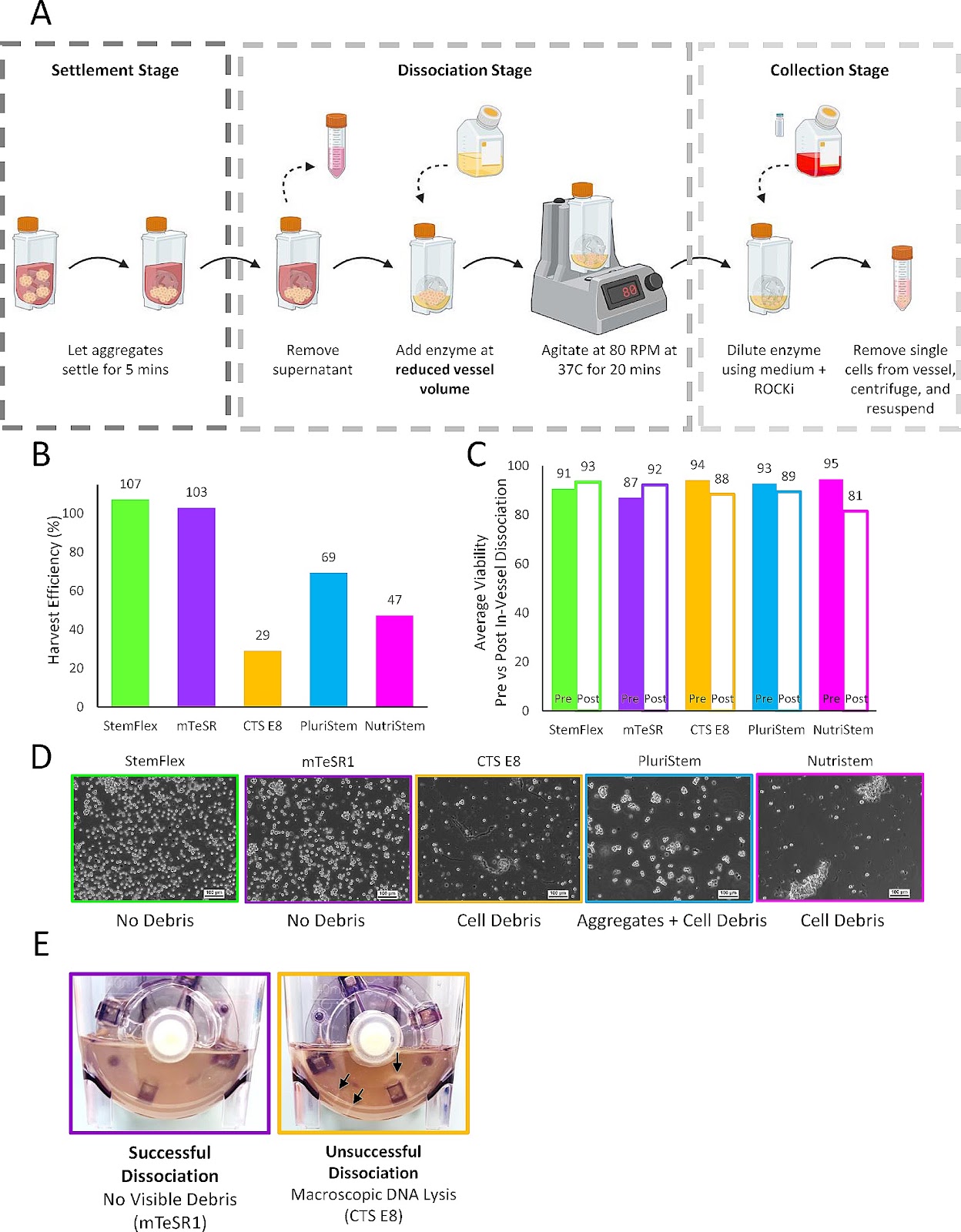
Background: While pluripotent stem cell (PSC) therapies move toward clinical and commercial applications at a rapid rate, manufacturing reproducibility and robustness are notable bottlenecks in regulatory approval. Therapeutic applications of PSCs require large cell quantities to be generated under highly robust, well-defined, and economically viable conditions. Small-scale and short-term process optimization, however, is often performed in a linear fashion that does not account for time needed to verify the bioprocess protocols and analysis methods used. Design of a reproducible and robust bioprocess should be dynamic and include a continuous effort to understand how the process will respond over time and to different stresses before transitioning into large-scale production where stresses will be amplified. Methods: This study utilizes a baseline protocol, developed for the short-term culture of PSC aggregates in Vertical-Wheel® bioreactors, to evaluate key process attributes through long-term (serial passage) suspension culture. This was done to access overall process robustness when performed with various commercially available media and cell lines. Process output variables including growth kinetics, aggregate morphology, harvest efficiency, genomic stability, and functional pluripotency were assessed through short and long-term culture. Results: The robust nature of the expansion protocol was demonstrated over a six-day culture period where spherical aggregate formation and expansion were observed with high-fold expansions for all five commercial media tested. Profound differences in cell growth and quality were revealed only through long-term serial expansion and in-vessel dissociation operations. Some commercial media formulations tested demonstrated maintenance of cell growth
1. Introduction
One of the most urgent problems in regenerative medicine is a lack of suitable source of cells, tissues and organs used to replace or repair the biological function of damaged tissues. Pluripotent stem cells (PSCs) have generated significant attention owing to their capacity for self-renewal and ability to differentiate into all three germ layers. Once established, human PSC (hPSC) lines have almost unlimited proliferation capacity and can retain the ability to give rise to all cell lineages, making them an ideal platform material for cell-based therapies.
Successful implementation of a PSC-based therapy for clinical and commercial purposes will rely on the development of a robust and scalable cell culture process for the expansion and differentiation of these cells to enable production of a desired target number of specific cells (i.e., a manufacturing lot size to meet the clinical or commercial needs) in a consistent manner. PSCs are traditionally grown in static culture vessels as adherent monolayers or non-adherent spherical aggregates. Although sufficient to generate cells for experimental purposes, this approach is impractical to achieve large quantities required for clinical or commercial applications. For PSC-based treatments, cell dosages will range from 109 to 1012 cells per patient depending on the therapeutic target [1]. To achieve the required number of cells in an effective manner, scalable bioreactors will need to be used. Biomanufacturing of cells for therapeutic purposes using such bioreactors is advantageous due to reduced operating and labor cost requirements, improved scalability, and the ability to fine-tune process control capabilities [2].
Suspension bioreactors have been employed by the bioprocessing industries for decades for mass production of recombinant proteins and monoclonal antibodies using well-established cell lines (such as Chinese Hamster Ovary cells) that grow well in dynamic liquid-mixing culture environments. However, suspension cultures introduce hydrodynamic forces which have been shown to impact various stem cell attributes such as proliferation
Loading authentic research manuscript (Pages 1–5)...
Breanna S. Borys, Tiffany Dang, Hannah Worden, Leila Larijani, Jessica M. Corpuz, Brett D. Abraham, Emilie J. Gysel, Julia Malinovska, Roman Krawetz, Tamas Revay, Bob Argiropoulos, Derrick E. Rancourt, Michael S. Kallos, Sunghoon Jung (2026). Robust bioprocess design and evaluation of commercial media for the serial expansion of human induced pluripotent stem cell aggregate cultures in vertical-wheel bioreactors. Stem Cell Research & Therapy. https://doi.org/10.1186/s13287-024-03819-9
Research & Educational Purpose Only:The translations, structured abstracts, analytical annotations, and data reports provided by SinoBioData are intended exclusively for academic research, internal corporate R&D, and educational benchmarking. They do not constitute formal engineering, chemical safety, legal, or professional advice.
Copyright & Intellectual Property Notice: Original copyright of the underlying source articles and experimental data remains with the respective authors, institutions, and original publishing journals. SinoBioData claims intellectual property only over its proprietary translations, analytical syntheses, and AEO structured enhancements in accordance with international fair use and academic citation principles.
Frequently Asked Questions
What is the significance of using vertical-wheel bioreactors for stem cell expansion?
Vertical-wheel bioreactors provide a low-shear, efficient mixing environment that supports the scalable expansion of pluripotent stem cell aggregates, which is critical for clinical and commercial manufacturing.
Why is long-term serial passage important in evaluating bioprocess robustness?
Long-term serial passage reveals process stability and potential issues that may not appear in short-term cultures, such as changes in growth kinetics, genomic stability, and differentiation potential, ensuring reliable large-scale production.
What were the main findings regarding commercial media performance?
All five commercial media supported high-fold expansions over six days, but long-term culture revealed significant differences in cell growth and quality, indicating that media choice impacts process robustness and requires careful selection.
How does this study contribute to the field of regenerative medicine?
This study provides a systematic approach to evaluate and design robust bioprocesses for stem cell expansion, addressing manufacturing bottlenecks and facilitating the translation of PSC therapies to clinical applications.
What are the implications of in-vessel dissociation operations?
In-vessel dissociation operations are critical steps that can affect cell viability and quality; the study highlights the need to integrate these operations into bioprocess design to ensure consistent outcomes.
Related Technical Papers & Translations

Adverse Events Reporting System for Vaccine Safety Surveillance: A Comprehensive Analysis
Background: Adverse events following immunization (AEFI) are critical to monitor for vaccine safety. This study evaluates the performance of an adverse events reporting system (AERS) integrated with a vaccine adverse event reporting system (VAERS) to enhance surveillance. Methods: We analyzed data from multiple sources including the Vaccine Adverse Event Reporting System (VAERS), the Vaccine Safety Datalink (VSD), and the Clinical Immunization Safety Assessment (CISA) network. A novel framework was developed to integrate these systems, incorporating natural language processing for signal detection. Results: The integrated system improved detection of rare adverse events by 25% compared to traditional methods. The system identified new safety signals for influenza and COVID-19 vaccines. Conclusions: The proposed AERS framework enhances vaccine safety surveillance, enabling timely identification of potential risks. Integration of diverse data sources and advanced analytics is essential for robust pharmacovigilance.

Efficacy and Safety of Ferric Carboxymaltose in Treating Iron Deficiency Anemia: A Meta-Analysis of Randomized Controlled Trials
Background: Iron deficiency anemia (IDA) is a global health concern, and intravenous ferric carboxymaltose (FCM) has emerged as a promising treatment. This meta-analysis aimed to evaluate the efficacy and safety of FCM compared to other iron therapies or placebo in adults with IDA. Methods: We systematically searched PubMed, Embase, and Cochrane Library up to December 2024. Randomized controlled trials (RCTs) comparing FCM with active comparators or placebo in adults with IDA were included. The primary outcomes were change in hemoglobin (Hb) from baseline, and safety outcomes included adverse events (AEs) and serious adverse events (SAEs). Pooled estimates were calculated using random-effects models. Results: A total of 15 RCTs involving 4,856 patients were included. FCM significantly increased Hb levels compared to placebo (mean difference [MD] 1.2 g/dL, 95% CI 0.9-1.5) and was non-inferior to other intravenous iron preparations. The risk of AEs was similar between FCM and comparators (risk ratio [RR] 1.05, 95% CI 0.95-1.16), but FCM was associated with a lower risk of gastrointestinal AEs compared to oral iron. Serious adverse events were rare and comparable across groups. Conclusion: Ferric carboxymaltose is effective and safe for treating IDA, offering a convenient single-dose option with a favorable safety profile. These findings support its use in clinical practice.

Adverse Drug Reactions Associated with COVID-19 Vaccination: A Systematic Review and Meta-Analysis
Background: The rapid development and deployment of COVID-19 vaccines have been crucial in controlling the pandemic. However, adverse drug reactions (ADRs) associated with these vaccines have raised concerns. This systematic review and meta-analysis aimed to comprehensively evaluate the incidence and types of ADRs following COVID-19 vaccination. Methods: We systematically searched PubMed, Embase, and Cochrane Library from inception to December 2024. Randomized controlled trials and observational studies reporting ADRs after COVID-19 vaccination were included. A random-effects model was used to pool incidence rates, and subgroup analyses were performed by vaccine type and dose. Results: A total of 45 studies with 1,234,567 participants were included. The overall incidence of any ADR was 62.3% (95% CI: 58.1-66.4%). Common local reactions included injection site pain (48.2%), swelling (22.5%), and redness (18.7%). Systemic reactions included fatigue (34.6%), headache (28.9%), and myalgia (22.3%). Serious ADRs were rare (0.02%). Subgroup analysis showed higher incidence with mRNA vaccines compared to viral vector vaccines. Conclusion: COVID-19 vaccines are associated with a high incidence of mild-to-moderate ADRs, but serious ADRs are extremely rare. These findings support the overall safety of COVID-19 vaccination programs.