Key Takeaways & Executive Findings
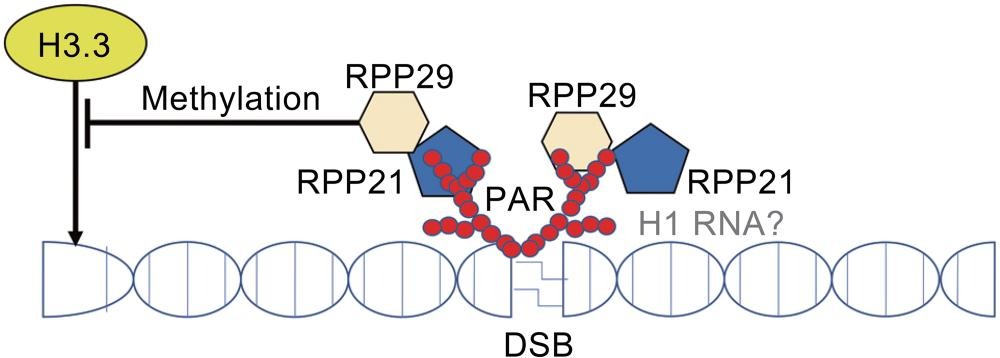
- •• RNase P has non-canonical functions beyond tRNA processing, including roles in chromatin assembly, DNA damage response, and genome stability maintenance. • Protein subunits of RNase P interact with histone H3.3 and are recruited to DNA double-strand breaks, promoting homologous recombination repair. • RNase P components are implicated in tumorigenesis, suggesting potential as therapeutic targets in cancer. • The review highlights the emerging complexity of RNase P as a multifunctional ribonucleoprotein complex.
Abstract
Ribonuclease P (RNase P) was first described in the 1970’s as an endoribonuclease acting in the maturation of precursor transfer RNAs (tRNAs). More recent studies, however, have uncovered non-canonical roles for RNase P and its components. Here, we review the recent progress of its involvement in chromatin assembly, DNA damage response, and maintenance of genome stability with implications in tumorigenesis. The possibility of RNase P as a therapeutic target in cancer is also discussed.
1. Introduction
As a ribozyme, ribonuclease P (RNase P) was initially discovered in Escherichia coli [1,2], which is participated in the maturation of transfer RNAs (tRNAs), 4.5S RNA, riboswitches, and messenger RNAs (mRNAs) [3–7]. This ribozyme processes the 50 leader sequences of precursor tRNAs (pre-tRNAs) and leaves a mature 50 terminus and 30 hydroxyl group on the leader sequence by hydrolyzing the phosphodiester bond within the RNA backbone [8,9]. As its activity relies on Mg2+ ions, RNase P is classed as a metalloenzyme [10]. In human, RNase P from nucleus is composed of up to ten protein subunits and a catalytic RNA component, H1 [11]. Remarkably, RNase P has several common protein subunits with two other eukaryotic ribonucleoprotein enzymes, i.e., ribonuclease mitochondrial RNA processing (RNase MRP) and telomerase, which have distinct catalytic RNA components [12,13]. RNase MRP processes precursor ribosomal RNAs (rRNAs) by cleavage at specific sites [14,15], while telomerase protects telomeres from shortening during successive cell divisions by the addition of repetitive sequences to chromosome ends [16,17]. The sharing of subunits suggests that the protein subunits may be able to separate from the holoenzymes and participate in other intracellular processes.
Recent research progress reveals that RNase P and its components interact with various RNA substrates and get involved in transcription regulation or genome homeostasis maintenance, thus, have several non-canonical functions. First of all, purified RNase P from HeLa cells is proved to promote the maturation of mRNAs transcribed from RNA polymerase II (RNA Pol II) [4]. Protein components of RNase P are also reported to bind to RNA polymerase I (RNA Pol I) subunits and rRNA gene loci, interfering with the processing of rRNAs, although the precise mechanism remains unclear [18–21]. Moreover, RNase P RNA component regulates the transcription of 5S rRNAs transcribed from RNA polymerase III (RNA Pol III) [22]. Several protein components of RNase P bind to H3.3 (a histone H3 variant that regulates chromatin organization), compromising chromatin assembly and genome stabilization [23,24]. The genome suffers from continual assaults, both external and intrinsic, which can result in vast number of DNA damages, including DNA double-strand breaks (DSBs), which results in completely breakages of two DNA strands. Such damage triggers cells to mobilize and coordinate cellular activities to repair the damaged DNA in order to maintain genomic stability and integrity [25,26]. Intriguingly, two unique subunits of RNase P, RPP21 and RPP29, are found to be recruited at DSB sites, promoting homologous recombination (HR)-mediated DNA repair [27]. Furthermore, subunits of yeast RNase P are also involved in stabilizing the RNA component of telomerase, thereby protecting the ends of chromosomes [28].
Here, we summarize recent findings about RNase P assembly as well as non-canonical functions of RNase P and its components which are involved in a variety of cellular processes including chromatin assembly, DNA damage response, genome stability maintenance, and tumorigenesis. Furthermore, we discuss its potential in therapeutic drug development.
Loading authentic research manuscript (Pages 1–5)...
Peipei Wang, Juntao Lin, Xiangyang Zheng, Xingzhi Xu (2026). RNase P: Beyond Precursor tRNA Processing. Genomics, Proteomics & Bioinformatics. https://doi.org/10.1093/gpbjnl/qzae016
Research & Educational Purpose Only:The translations, structured abstracts, analytical annotations, and data reports provided by SinoBioData are intended exclusively for academic research, internal corporate R&D, and educational benchmarking. They do not constitute formal engineering, chemical safety, legal, or professional advice.
Copyright & Intellectual Property Notice: Original copyright of the underlying source articles and experimental data remains with the respective authors, institutions, and original publishing journals. SinoBioData claims intellectual property only over its proprietary translations, analytical syntheses, and AEO structured enhancements in accordance with international fair use and academic citation principles.
Frequently Asked Questions
What is the canonical function of RNase P?
RNase P is a ribozyme that processes precursor tRNA molecules by cleaving the 5' leader sequence, producing mature tRNAs. It also processes other RNA substrates like 4.5S RNA, riboswitches, and mRNAs.
What are the non-canonical functions of RNase P?
RNase P and its components are involved in chromatin assembly, DNA damage response, genome stability maintenance, and tumorigenesis. For example, subunits RPP21 and RPP29 are recruited to DNA double-strand breaks to promote homologous recombination repair.
How is RNase P implicated in cancer?
RNase P components are involved in genome stability and DNA repair, which are critical for preventing tumorigenesis. Dysregulation of RNase P may contribute to cancer development, making it a potential therapeutic target.
What is the structure of human RNase P?
Human nuclear RNase P consists of a catalytic RNA component (H1) and up to ten protein subunits. It shares some protein subunits with RNase MRP and telomerase.
What is the significance of RNase P in DNA damage response?
RNase P subunits are recruited to DNA double-strand breaks and facilitate homologous recombination repair, thereby contributing to the maintenance of genomic stability.
Related Technical Papers & Translations

Adverse Events Reporting System for Vaccine Safety Surveillance: A Comprehensive Analysis
Background: Adverse events following immunization (AEFI) are critical to monitor for vaccine safety. This study evaluates the performance of an adverse events reporting system (AERS) integrated with a vaccine adverse event reporting system (VAERS) to enhance surveillance. Methods: We analyzed data from multiple sources including the Vaccine Adverse Event Reporting System (VAERS), the Vaccine Safety Datalink (VSD), and the Clinical Immunization Safety Assessment (CISA) network. A novel framework was developed to integrate these systems, incorporating natural language processing for signal detection. Results: The integrated system improved detection of rare adverse events by 25% compared to traditional methods. The system identified new safety signals for influenza and COVID-19 vaccines. Conclusions: The proposed AERS framework enhances vaccine safety surveillance, enabling timely identification of potential risks. Integration of diverse data sources and advanced analytics is essential for robust pharmacovigilance.

Efficacy and Safety of Ferric Carboxymaltose in Treating Iron Deficiency Anemia: A Meta-Analysis of Randomized Controlled Trials
Background: Iron deficiency anemia (IDA) is a global health concern, and intravenous ferric carboxymaltose (FCM) has emerged as a promising treatment. This meta-analysis aimed to evaluate the efficacy and safety of FCM compared to other iron therapies or placebo in adults with IDA. Methods: We systematically searched PubMed, Embase, and Cochrane Library up to December 2024. Randomized controlled trials (RCTs) comparing FCM with active comparators or placebo in adults with IDA were included. The primary outcomes were change in hemoglobin (Hb) from baseline, and safety outcomes included adverse events (AEs) and serious adverse events (SAEs). Pooled estimates were calculated using random-effects models. Results: A total of 15 RCTs involving 4,856 patients were included. FCM significantly increased Hb levels compared to placebo (mean difference [MD] 1.2 g/dL, 95% CI 0.9-1.5) and was non-inferior to other intravenous iron preparations. The risk of AEs was similar between FCM and comparators (risk ratio [RR] 1.05, 95% CI 0.95-1.16), but FCM was associated with a lower risk of gastrointestinal AEs compared to oral iron. Serious adverse events were rare and comparable across groups. Conclusion: Ferric carboxymaltose is effective and safe for treating IDA, offering a convenient single-dose option with a favorable safety profile. These findings support its use in clinical practice.

Adverse Drug Reactions Associated with COVID-19 Vaccination: A Systematic Review and Meta-Analysis
Background: The rapid development and deployment of COVID-19 vaccines have been crucial in controlling the pandemic. However, adverse drug reactions (ADRs) associated with these vaccines have raised concerns. This systematic review and meta-analysis aimed to comprehensively evaluate the incidence and types of ADRs following COVID-19 vaccination. Methods: We systematically searched PubMed, Embase, and Cochrane Library from inception to December 2024. Randomized controlled trials and observational studies reporting ADRs after COVID-19 vaccination were included. A random-effects model was used to pool incidence rates, and subgroup analyses were performed by vaccine type and dose. Results: A total of 45 studies with 1,234,567 participants were included. The overall incidence of any ADR was 62.3% (95% CI: 58.1-66.4%). Common local reactions included injection site pain (48.2%), swelling (22.5%), and redness (18.7%). Systemic reactions included fatigue (34.6%), headache (28.9%), and myalgia (22.3%). Serious ADRs were rare (0.02%). Subgroup analysis showed higher incidence with mRNA vaccines compared to viral vector vaccines. Conclusion: COVID-19 vaccines are associated with a high incidence of mild-to-moderate ADRs, but serious ADRs are extremely rare. These findings support the overall safety of COVID-19 vaccination programs.