Key Takeaways & Executive Findings
- •• Clinical-grade hiPSC-CM patches demonstrated safety with no tumorigenicity or genomic mutations in preclinical assessments. • hiPSC-CM patches improved cardiac function and promoted angiogenesis in a porcine myocardial infarction model. • No lethal arrhythmias were observed post-transplantation, supporting the safety profile of the patches. • The study provides proof-of-concept for the translational potential of hiPSC-CM patches in treating heart failure.
Abstract
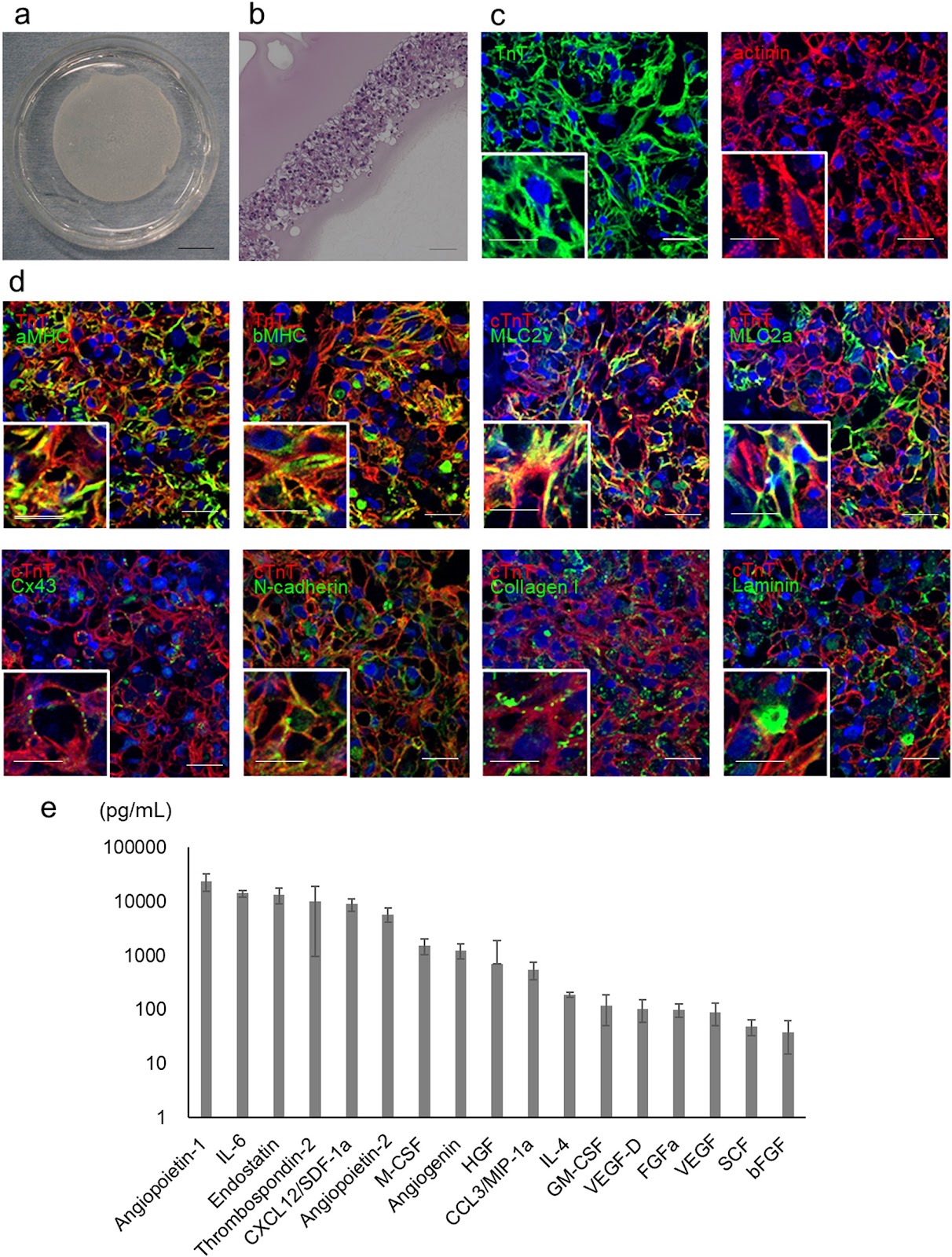
Background Cell- or tissue-based regenerative therapy is an attractive approach to treat heart failure. A tissue patch that can safely and effectively repair damaged heart muscle would greatly improve outcomes for patients with heart failure. In this study, we conducted a preclinical proof-of-concept analysis of the efficacy and safety of clinical-grade human induced pluripotent stem cell-derived cardiomyocyte (hiPSC-CM) patches. Methods A clinical-grade hiPSC line was established using peripheral blood mononuclear cells from a healthy volunteer that was homozygous for human leukocyte antigens. The hiPSCs were differentiated into cardiomyocytes. The obtained hiPSC-CMs were cultured on temperature-responsive culture dishes for patch fabrication. The cellular characteristics, safety, and efficacy of hiPSCs, hiPSC-CMs, and hiPSC-CM patches were analyzed. Results The hiPSC-CMs expressed cardiomyocyte-specific genes and proteins, and electrophysiological analyses revealed that hiPSC-CMs exhibit similar properties to human primary myocardial cells. In vitro and in vivo safety studies indicated that tumorigenic cells were absent. Moreover, whole-genome and exome sequencing revealed no genomic mutations. General toxicity tests also showed no adverse events posttransplantation. A porcine model of myocardial infarction demonstrated significantly improved cardiac function and angiogenesis in response to cytokine secretion from hiPSC-CM patches. No lethal arrhythmias were observed. Conclusions hiPSC-CM patches are promising for future translational research and may have clinical application potential for the treatment of heart failure.
1. Introduction
Heart failure remains correlated with a high mortality rate despite advances in medical treatment. Novel treatment techniques are necessary to improve the outcomes of heart failure patients. Recent studies have illustrated that human induced pluripotent stem cells (hiPSCs) are a source of stem cells that can replace lost cells in diseased organs [1–3]. Moreover, hiPSC-derived cardiomyocytes (hiPSC-CMs), in the form of myocardial tissue patches, can be used to supply new cardiomyocytes to the heart, suggesting their potential clinical application in the treatment of heart failure [4–7].
However, there are major concerns regarding the safety and, particularly, the tumorigenicity of hiPSCs [8–10]. Adequate in vitro and in vivo preclinical studies on the safety and efficacy of hiPSC-CMs are necessary for the initiation of subsequent clinical trial investigations and the potential clinical application of this technique.
In this study, we determined whether a clinical-grade hiPSC-CM patch could serve as a functional myocardial tissue. We performed a preclinical study to ensure its safety and conducted a proof-of-concept analysis of hiPSC-CM patches in clinical applications.
Loading authentic research manuscript (Pages 1–5)...
Shigeru Miyagawa, Takuji Kawamura, Emiko Ito, Maki Takeda, Hiroko Iseoka, Junya Yokoyama, Akima Harada, Noriko Mochizuki-Oda, Yukiko Imanishi-Ochi, Junjun Li, Masao Sasai, Fumiyo Kitaoka, Masaki Nomura, Naoki Amano, Tomoko Takahashi, Hiromi Dohi, Eiichi Morii, Yoshiki Sawa (2026). Pre-clinical evaluation of the efficacy and safety of human induced pluripotent stem cell-derived cardiomyocyte patch. Stem Cell Research & Therapy. https://doi.org/10.1186/s13287-024-03690-8
Research & Educational Purpose Only:The translations, structured abstracts, analytical annotations, and data reports provided by SinoBioData are intended exclusively for academic research, internal corporate R&D, and educational benchmarking. They do not constitute formal engineering, chemical safety, legal, or professional advice.
Copyright & Intellectual Property Notice: Original copyright of the underlying source articles and experimental data remains with the respective authors, institutions, and original publishing journals. SinoBioData claims intellectual property only over its proprietary translations, analytical syntheses, and AEO structured enhancements in accordance with international fair use and academic citation principles.
Frequently Asked Questions
What is the main purpose of this study?
The study aims to evaluate the efficacy and safety of clinical-grade human induced pluripotent stem cell-derived cardiomyocyte (hiPSC-CM) patches for the treatment of heart failure through preclinical proof-of-concept analysis.
How were the hiPSC-CM patches fabricated?
Clinical-grade hiPSCs were differentiated into cardiomyocytes, which were then cultured on temperature-responsive culture dishes to form patches.
What were the key safety findings?
The study found no tumorigenic cells, no genomic mutations, and no adverse events in general toxicity tests, indicating a favorable safety profile.
What were the efficacy results in the animal model?
In a porcine myocardial infarction model, hiPSC-CM patches significantly improved cardiac function and promoted angiogenesis, with no lethal arrhythmias observed.
What is the clinical significance of this research?
The results suggest that hiPSC-CM patches are promising for future translational research and may have clinical application potential for treating heart failure.
Related Technical Papers & Translations

Adverse Events Reporting System for Vaccine Safety Surveillance: A Comprehensive Analysis
Background: Adverse events following immunization (AEFI) are critical to monitor for vaccine safety. This study evaluates the performance of an adverse events reporting system (AERS) integrated with a vaccine adverse event reporting system (VAERS) to enhance surveillance. Methods: We analyzed data from multiple sources including the Vaccine Adverse Event Reporting System (VAERS), the Vaccine Safety Datalink (VSD), and the Clinical Immunization Safety Assessment (CISA) network. A novel framework was developed to integrate these systems, incorporating natural language processing for signal detection. Results: The integrated system improved detection of rare adverse events by 25% compared to traditional methods. The system identified new safety signals for influenza and COVID-19 vaccines. Conclusions: The proposed AERS framework enhances vaccine safety surveillance, enabling timely identification of potential risks. Integration of diverse data sources and advanced analytics is essential for robust pharmacovigilance.

Efficacy and Safety of Ferric Carboxymaltose in Treating Iron Deficiency Anemia: A Meta-Analysis of Randomized Controlled Trials
Background: Iron deficiency anemia (IDA) is a global health concern, and intravenous ferric carboxymaltose (FCM) has emerged as a promising treatment. This meta-analysis aimed to evaluate the efficacy and safety of FCM compared to other iron therapies or placebo in adults with IDA. Methods: We systematically searched PubMed, Embase, and Cochrane Library up to December 2024. Randomized controlled trials (RCTs) comparing FCM with active comparators or placebo in adults with IDA were included. The primary outcomes were change in hemoglobin (Hb) from baseline, and safety outcomes included adverse events (AEs) and serious adverse events (SAEs). Pooled estimates were calculated using random-effects models. Results: A total of 15 RCTs involving 4,856 patients were included. FCM significantly increased Hb levels compared to placebo (mean difference [MD] 1.2 g/dL, 95% CI 0.9-1.5) and was non-inferior to other intravenous iron preparations. The risk of AEs was similar between FCM and comparators (risk ratio [RR] 1.05, 95% CI 0.95-1.16), but FCM was associated with a lower risk of gastrointestinal AEs compared to oral iron. Serious adverse events were rare and comparable across groups. Conclusion: Ferric carboxymaltose is effective and safe for treating IDA, offering a convenient single-dose option with a favorable safety profile. These findings support its use in clinical practice.

Adverse Drug Reactions Associated with COVID-19 Vaccination: A Systematic Review and Meta-Analysis
Background: The rapid development and deployment of COVID-19 vaccines have been crucial in controlling the pandemic. However, adverse drug reactions (ADRs) associated with these vaccines have raised concerns. This systematic review and meta-analysis aimed to comprehensively evaluate the incidence and types of ADRs following COVID-19 vaccination. Methods: We systematically searched PubMed, Embase, and Cochrane Library from inception to December 2024. Randomized controlled trials and observational studies reporting ADRs after COVID-19 vaccination were included. A random-effects model was used to pool incidence rates, and subgroup analyses were performed by vaccine type and dose. Results: A total of 45 studies with 1,234,567 participants were included. The overall incidence of any ADR was 62.3% (95% CI: 58.1-66.4%). Common local reactions included injection site pain (48.2%), swelling (22.5%), and redness (18.7%). Systemic reactions included fatigue (34.6%), headache (28.9%), and myalgia (22.3%). Serious ADRs were rare (0.02%). Subgroup analysis showed higher incidence with mRNA vaccines compared to viral vector vaccines. Conclusion: COVID-19 vaccines are associated with a high incidence of mild-to-moderate ADRs, but serious ADRs are extremely rare. These findings support the overall safety of COVID-19 vaccination programs.