Key Takeaways & Executive Findings
- •• Mendelian randomization and colocalization identified JUN as a key susceptibility gene for gout, with MAPK3 and HMGCR as closely interacting targets. • 372 potential therapeutic compounds and 79 traditional Chinese medicines were predicted, with capsaicin and 5,6-benzoflavone showing high binding affinity to core targets. • Capsaicin (50 μmol/L) downregulated JUN and MAPK pathway mRNA expression and reduced inflammatory cytokines in a monosodium urate-induced RAW264.7 cell model. • Findings suggest that targeting JUN and MAPK signaling, with a treatment strategy of clearing heat and detoxifying combined with promoting blood circulation, may be promising for gout therapy.
Abstract
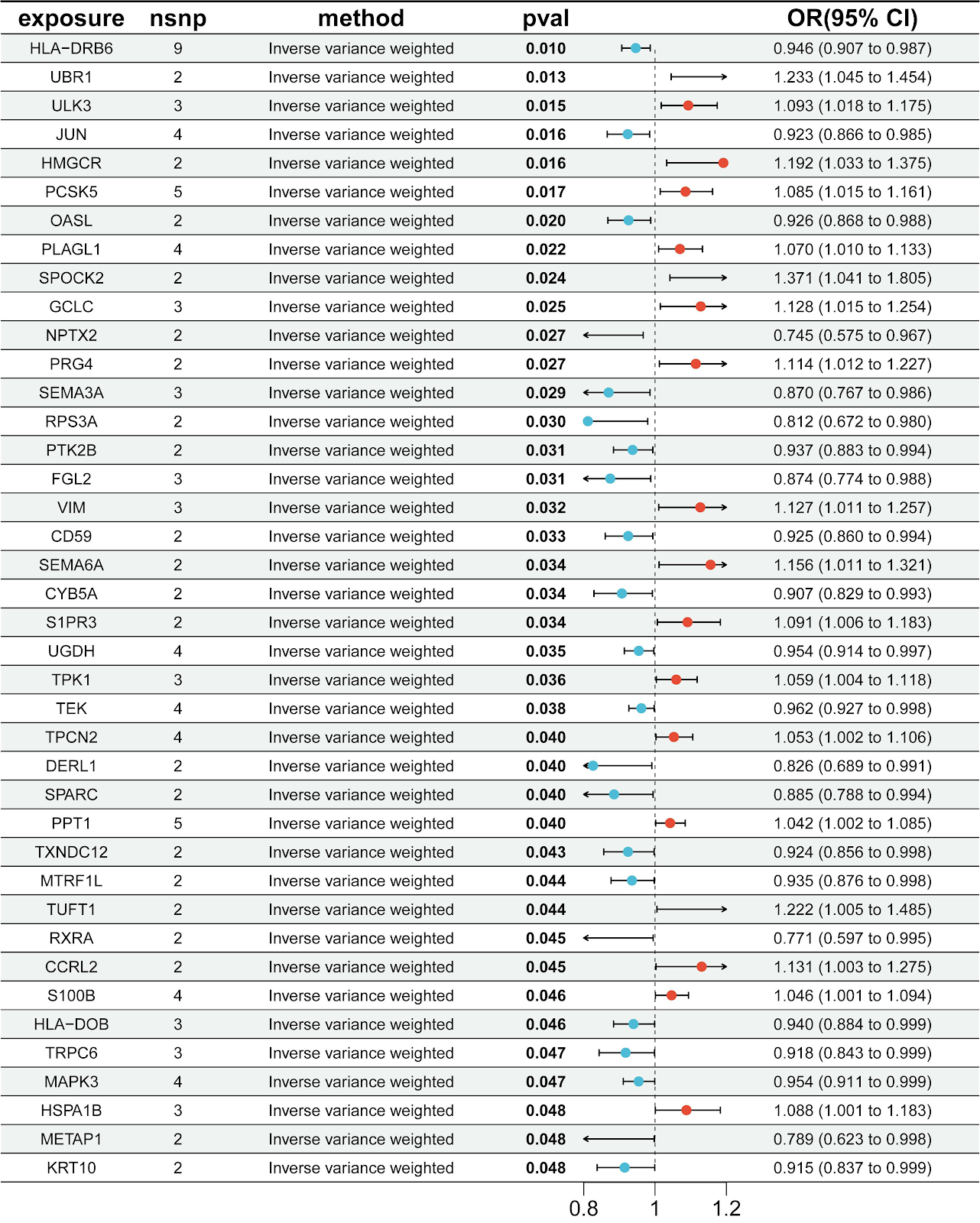
BACKGROUND: Existing pharmacological treatments for gout are frequently limited by substantial side effects, underscoring the urgent need to discover novel therapeutic targets and develop more targeted drugs. OBJECTIVE: To identify genetic targets for gout, and to predict promising therapeutic compounds as well as traditional Chinese medicines by integrating druggable gene datasets with Mendelian randomization and colocalization analysis approaches. This work will lay a foundation for in-depth exploration of the pathogenesis of gout in the Chinese population, and provide insights for the clinical management and development of new targeted drugs. METHODS: Gout-related datasets were obtained from the Finnish database FinnGen R11. Blood expression quantitative trait loci data were obtained from the GWAS catalog website developed by the MRC Integrative Epidemiology Unit at the University of Bristol. Mendelian randomization analysis was performed to identify potential targets; colocalization analysis was used to identify key susceptibility genes for gout. Gene Ontology and Kyoto Encyclopedia of Genes and Genomes enrichment analyses were used to explore gene functions, and protein-protein interaction networks were used to screen closely interacting targets. The Drug-Gene Interaction Database developed by Washington University School of Medicine in St. Louis was used to predict compounds with potential therapeutic effects. Molecular docking was used to predict the binding degree of compounds to core targets. The Coremine Medical database founded by PubGene was used to predict traditional Chinese medicines related to core genes. All databases used are public resources. A gout cell model was established using monosodium urate crystal-induced RAW264.7 cells to preliminarily verify the expression of key genes and the intervention effect of compounds. CCK-8 assay and cell invasion assay were used to screen safe doses and optimal administration concentrations. ELISA was used to measure inflammatory factor levels, and real-time fluorescence quantitative reverse transcription PCR was used to detect mRNA expression of key targets and pathways. RESULTS AND CONCLUSION: (1) Mendelian randomization analysis identified 40 potential gene targets significantly associated with gout; colocalization analysis identified Jun proto-oncogene as a key susceptibility gene for gout; protein-protein interaction network showed that Jun proto-oncogene, mitogen-activated protein kinase 3, and 3-hydroxy-3-methylglutaryl-CoA reductase had close interactions. (2) Gene Ontology and Kyoto Encyclopedia of Genes and Genomes enrichment results showed that potential targets mainly regulate mitogen-activated protein kinase, tumor necrosis factor, ErbB, interleukin-17, hypoxia-inducible factor 1, Toll-like receptor and other signaling pathways, and intervene in positive regulation of extracellular signal-regulated kinase 1/2 cascade, glutathione metabolism, ubiquitin protein regulation and other processes. (3) Based on potential targets, 372 compounds with potential intervention effects were predicted, including capsaicin, 5,6-benzoflavone, L-glutamic acid, quercetin, honokiol, kaempferol, cinnamaldehyde, and andrographolide. (4) Molecular docking showed that capsaicin and 5,6-benzoflavone had high binding affinity with core targets such as Jun proto-oncogene. (5) 79 potential targeted traditional Chinese medicines were predicted, including Atractylodes, Magnolia officinalis, Smilax glabra, Alisma orientale, and Salvia miltiorrhiza, with efficacy mainly concentrated in clearing heat and detoxifying, promoting blood circulation and removing blood stasis, and resolving phlegm and dampness. (6) In cell experiments, CCK-8 and cell invasion assay results showed that the optimal safe dose of capsaicin was 50 μmol/L. In the model group, the expression of key gene Jun proto-oncogene was significantly upregulated, and capsaicin could significantly downregulate the mRNA expression of Jun proto-oncogene and mitogen-activated protein kinase pathway-related genes such as c-Jun N-terminal kinase, extracellular signal-regulated kinase 1/2, and p38, and reduce the levels of interleukin-6, interleukin-1β, and tumor necrosis factor α in cell supernatant. (7) Data mining results suggest that compounds such as capsaicin and 5,6-benzoflavone and traditional Chinese medicines such as Atractylodes and Smilax glabra may exert therapeutic effects on gout by intervening in targets such as Jun proto-oncogene and mitogen-activated protein kinase 3, regulating tumor necrosis factor, Th-17, hypoxia-inducible factor 1 and other pathways, and mitogen-activated protein kinase cascade, protein ubiquitination, and glutathione metabolism. Among them, the key susceptibility gene JUN can serve as a potential diagnostic marker for gout. Treatment methods mainly focusing on clearing heat and detoxifying combined with promoting blood circulation and removing blood stasis can be key to gout treatment. (8) Cell experiments preliminarily verified the expression of JUN gene and mitogen-activated protein kinase pathway in gout cell model and the intervention effect of capsaicin, providing a basis and foundation for the next step of gout diagnosis and treatment targets and new drug development.
1. Introduction
Gout is a metabolic disease characterized by hyperuricemia due to purine metabolism abnormalities and reduced uric acid excretion, leading to the deposition of monosodium urate crystals in joints, which triggers inflammatory responses and tissue damage. The acute phase of gout manifests as peripheral joint synovitis with severe pain. If not effectively controlled, it can eventually progress to joint damage, deformity, dysfunction, and subcutaneous tophi deposition. In severe cases, complications such as renal impairment, atherosclerosis, or cardiovascular and cerebrovascular accidents may occur.
Current pharmacological treatments for gout, such as nonsteroidal anti-inflammatory drugs, colchicine, and corticosteroids, are often associated with significant adverse effects, including gastrointestinal, renal, and cardiovascular toxicities. Therefore, there is an urgent need to identify novel therapeutic targets and develop more effective and safer drugs. Advances in genomics and bioinformatics have enabled the identification of druggable genes and the prediction of potential therapeutic agents through approaches like Mendelian randomization and colocalization analysis.
In this study, we integrated druggable gene datasets with Mendelian randomization and colocalization analysis to identify genetic targets for gout. We further predicted potential therapeutic compounds and traditional Chinese medicines, and validated the expression of key genes and the intervention effect of a candidate compound in a cellular model. Our findings provide a foundation for understanding the pathogenesis of gout in the Chinese population and for the development of new targeted therapies.
Loading authentic research manuscript (Pages 1–5)...
Tian Xuanhe, Tong Siyu, Teng Fei, Zhong Shuai, Zhao Xiaohu, Zhang Yuya, Liu Yuan, Jiang Ping (2026). Potential targets and drug prediction for gout: identification of druggable genes. Chinese Journal of Tissue Engineering Research. https://doi.org/10.12307/2026.21434
Research & Educational Purpose Only:The translations, structured abstracts, analytical annotations, and data reports provided by SinoBioData are intended exclusively for academic research, internal corporate R&D, and educational benchmarking. They do not constitute formal engineering, chemical safety, legal, or professional advice.
Copyright & Intellectual Property Notice: Original copyright of the underlying source articles and experimental data remains with the respective authors, institutions, and original publishing journals. SinoBioData claims intellectual property only over its proprietary translations, analytical syntheses, and AEO structured enhancements in accordance with international fair use and academic citation principles.
Frequently Asked Questions
What is the main objective of this study?
The main objective is to identify genetic targets for gout and predict potential therapeutic compounds and traditional Chinese medicines by integrating druggable gene datasets with Mendelian randomization and colocalization analysis.
What methods were used in this study?
The study used Mendelian randomization, colocalization analysis, gene ontology and KEGG enrichment, protein-protein interaction networks, drug-gene interaction database mining, molecular docking, and cell experiments with monosodium urate-induced RAW264.7 cells.
What were the key findings?
Key findings include the identification of JUN as a key susceptibility gene, 40 potential targets, 372 potential compounds, and 79 traditional Chinese medicines. Capsaicin was shown to downregulate JUN and MAPK pathway expression and reduce inflammatory cytokines in vitro.
How can these findings be applied clinically?
The findings suggest that JUN could serve as a potential diagnostic marker and therapeutic target for gout. Compounds like capsaicin and traditional Chinese medicines with heat-clearing and detoxifying effects may be developed as new treatments.
What are the limitations of this study?
The study relies on bioinformatics predictions and in vitro experiments; further in vivo studies and clinical trials are needed to validate the efficacy and safety of the identified targets and compounds.
Related Technical Papers & Translations

Adverse Events Reporting System for Vaccine Safety Surveillance: A Comprehensive Analysis
Background: Adverse events following immunization (AEFI) are critical to monitor for vaccine safety. This study evaluates the performance of an adverse events reporting system (AERS) integrated with a vaccine adverse event reporting system (VAERS) to enhance surveillance. Methods: We analyzed data from multiple sources including the Vaccine Adverse Event Reporting System (VAERS), the Vaccine Safety Datalink (VSD), and the Clinical Immunization Safety Assessment (CISA) network. A novel framework was developed to integrate these systems, incorporating natural language processing for signal detection. Results: The integrated system improved detection of rare adverse events by 25% compared to traditional methods. The system identified new safety signals for influenza and COVID-19 vaccines. Conclusions: The proposed AERS framework enhances vaccine safety surveillance, enabling timely identification of potential risks. Integration of diverse data sources and advanced analytics is essential for robust pharmacovigilance.

Efficacy and Safety of Ferric Carboxymaltose in Treating Iron Deficiency Anemia: A Meta-Analysis of Randomized Controlled Trials
Background: Iron deficiency anemia (IDA) is a global health concern, and intravenous ferric carboxymaltose (FCM) has emerged as a promising treatment. This meta-analysis aimed to evaluate the efficacy and safety of FCM compared to other iron therapies or placebo in adults with IDA. Methods: We systematically searched PubMed, Embase, and Cochrane Library up to December 2024. Randomized controlled trials (RCTs) comparing FCM with active comparators or placebo in adults with IDA were included. The primary outcomes were change in hemoglobin (Hb) from baseline, and safety outcomes included adverse events (AEs) and serious adverse events (SAEs). Pooled estimates were calculated using random-effects models. Results: A total of 15 RCTs involving 4,856 patients were included. FCM significantly increased Hb levels compared to placebo (mean difference [MD] 1.2 g/dL, 95% CI 0.9-1.5) and was non-inferior to other intravenous iron preparations. The risk of AEs was similar between FCM and comparators (risk ratio [RR] 1.05, 95% CI 0.95-1.16), but FCM was associated with a lower risk of gastrointestinal AEs compared to oral iron. Serious adverse events were rare and comparable across groups. Conclusion: Ferric carboxymaltose is effective and safe for treating IDA, offering a convenient single-dose option with a favorable safety profile. These findings support its use in clinical practice.

Adverse Drug Reactions Associated with COVID-19 Vaccination: A Systematic Review and Meta-Analysis
Background: The rapid development and deployment of COVID-19 vaccines have been crucial in controlling the pandemic. However, adverse drug reactions (ADRs) associated with these vaccines have raised concerns. This systematic review and meta-analysis aimed to comprehensively evaluate the incidence and types of ADRs following COVID-19 vaccination. Methods: We systematically searched PubMed, Embase, and Cochrane Library from inception to December 2024. Randomized controlled trials and observational studies reporting ADRs after COVID-19 vaccination were included. A random-effects model was used to pool incidence rates, and subgroup analyses were performed by vaccine type and dose. Results: A total of 45 studies with 1,234,567 participants were included. The overall incidence of any ADR was 62.3% (95% CI: 58.1-66.4%). Common local reactions included injection site pain (48.2%), swelling (22.5%), and redness (18.7%). Systemic reactions included fatigue (34.6%), headache (28.9%), and myalgia (22.3%). Serious ADRs were rare (0.02%). Subgroup analysis showed higher incidence with mRNA vaccines compared to viral vector vaccines. Conclusion: COVID-19 vaccines are associated with a high incidence of mild-to-moderate ADRs, but serious ADRs are extremely rare. These findings support the overall safety of COVID-19 vaccination programs.