Key Takeaways & Executive Findings
- •• Transcranial direct current stimulation did not significantly alter the number of repetitions in unstable barbell bench press, indicating no effect on muscle endurance. • True transcranial direct current stimulation significantly reduced Y-axis acceleration amplitude, suggesting improved movement stability during the task. • Anodal transcranial direct current stimulation increased activation of the anterior deltoid and co-activation of the posterior deltoid, potentially enhancing shoulder joint stiffness. • No significant interaction was found between transcranial direct current stimulation and exercise phase, indicating that the effects were consistent across the movement. • Transcranial direct current stimulation may be a useful adjunct in sports and rehabilitation to improve stability in unstable resistance exercises.
Abstract
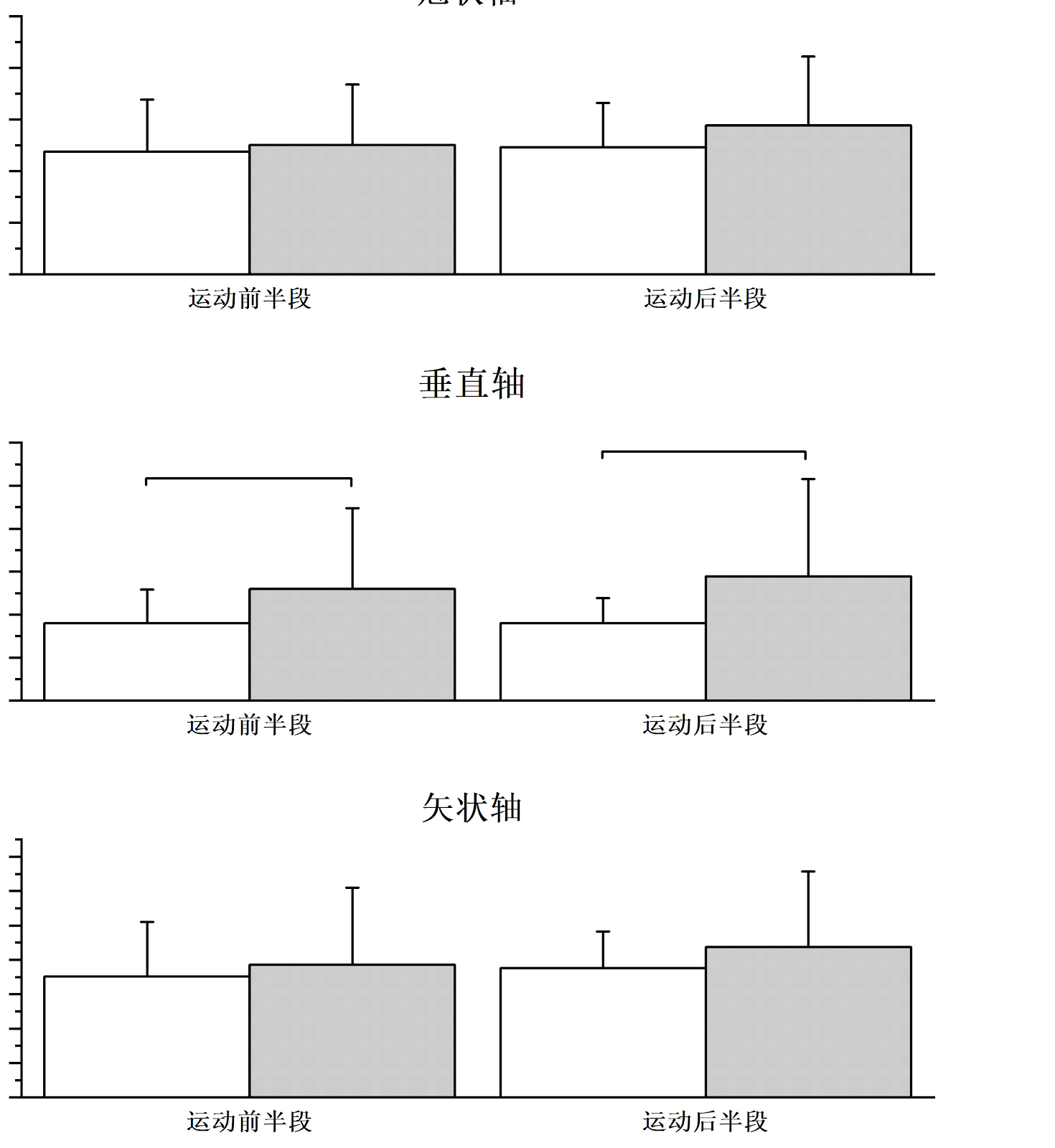
BACKGROUND: Transcranial direct current stimulation can enhance human motor performance by modulating cortical excitability, but its impact on the performance of unstable resistance exercise remains unclear. OBJECTIVE: To investigate the effects of transcranial direct current stimulation on unstable barbell bench press performance and electromyographic activity. METHODS: A randomized, self-controlled crossover design was employed. Twenty-two male college students were randomly assigned to receive either active anodal transcranial direct current stimulation or sham stimulation. After transcranial direct current stimulation interventions, subjects performed a fatigue test involving the unstable barbell bench press. Performance during the unstable barbell bench press task was assessed by recording both the number of completed repetitions and barbell acceleration, serving as indicators of load capacity and movement stability control. In addition, surface electromyographic signals were collected from the right biceps brachii, triceps brachii, anterior deltoid, posterior deltoid, and pectoralis major during the exercise. A paired t-test was used to examine differences in repetition counts between true and sham stimulation conditions. Repeated measures analysis of variance was applied to analyze differences in triaxial acceleration, agonist muscle activation levels, and antagonist co-activation levels. RESULTS AND CONCLUSION: (1) No significant difference in the number of barbell bench press repetitions was observed between the true and sham stimulation conditions. However, the mean amplitude of Y-axis acceleration was substantially lower in the true stimulation group than the sham stimulation group. (2) True transcranial direct current stimulation markedly increased the activation level of the anterior deltoid and the co-activation level of the posterior deltoid. (3) There was no significant interaction between transcranial direct current stimulation and exercise phase on any measured variable. (4) These findings suggest that transcranial direct current stimulation does not significantly affect muscle endurance performance during unstable barbell bench press, but it can improve movement stability, possibly by increasing anterior deltoid activation and posterior deltoid co-activation, thereby enhancing shoulder joint stiffness and stability. In competitive sports and clinical rehabilitation, transcranial direct current stimulation may be considered to modulate performance in unstable load-bearing tasks according to training objectives.
1. Introduction
With the rapid development of neuroscience and in-depth research on the brain and nervous system, non-invasive neuromodulation techniques are gradually becoming novel means to enhance human motor performance and address health issues. Transcranial direct current stimulation (tDCS), as an economical and convenient non-invasive neuromodulation technique, has gained widespread attention in recent years. Previous studies have shown that tDCS can modulate the excitability of the motor cortex, improve regional cerebral blood flow, enhance synaptic plasticity and brain network connectivity, and improve neuromuscular control [1-2]. Studies have found that tDCS can effectively increase muscle strength [3], delay muscle fatigue [4], improve balance control, and enhance motor skill learning efficiency [5-6]. However, some studies have reported no improvements in muscle strength, endurance, or balance control following tDCS [7]. Therefore, the effectiveness of tDCS in enhancing human motor performance remains controversial, possibly due to factors such as stimulation parameters and task specificity.
Unstable load-bearing exercise is a form of resistance training performed under unstable conditions. It is common in competitive sports and daily activities, and serves as an important training and rehabilitation modality [8]. During such tasks, individuals must coordinate limb stability while overcoming external loads, increasing task difficulty and imposing greater demands on the neuromuscular system [9]. Previous research has demonstrated that appropriate unstable load training can yield superior outcomes in muscle strength, endurance, and balance compared to traditional resistance training [10]. The barbell bench press is a common upper-limb strength test and training exercise, and when performed on an unstable surface, it challenges both force production and postural control.
Loading authentic research manuscript (Pages 1–5)...
Wang Lejun, Chi Wenxin, Song Xiaoqian, Li Qian, Qiao Minjie, Tao Haifeng (2026). Performance of unstable barbell bench press and changes in electromyographic activity after transcranial direct current stimulation. Chinese Journal of Tissue Engineering Research. https://doi.org/10.12307/2026.21274
Research & Educational Purpose Only:The translations, structured abstracts, analytical annotations, and data reports provided by SinoBioData are intended exclusively for academic research, internal corporate R&D, and educational benchmarking. They do not constitute formal engineering, chemical safety, legal, or professional advice.
Copyright & Intellectual Property Notice: Original copyright of the underlying source articles and experimental data remains with the respective authors, institutions, and original publishing journals. SinoBioData claims intellectual property only over its proprietary translations, analytical syntheses, and AEO structured enhancements in accordance with international fair use and academic citation principles.
Frequently Asked Questions
What is transcranial direct current stimulation (tDCS)?
Transcranial direct current stimulation (tDCS) is a non-invasive brain stimulation technique that applies a weak electrical current to the scalp to modulate cortical excitability. It has been investigated for its potential to enhance motor performance, muscle strength, and motor learning.
How does tDCS affect unstable barbell bench press performance?
In this study, tDCS did not significantly change the number of repetitions (muscle endurance) but improved movement stability, as indicated by reduced Y-axis acceleration amplitude. This improvement may be due to increased activation of the anterior deltoid and co-activation of the posterior deltoid, enhancing shoulder joint stiffness.
What are the key findings of the study?
The key findings are: (1) tDCS had no significant effect on muscle endurance (repetitions) in unstable barbell bench press; (2) tDCS improved movement stability (reduced Y-axis acceleration); (3) tDCS increased anterior deltoid activation and posterior deltoid co-activation; (4) there was no interaction between tDCS and exercise phase.
What are the practical implications of this research?
The findings suggest that tDCS could be used as an adjunct in sports training and rehabilitation to improve stability during unstable resistance exercises, potentially reducing injury risk and enhancing performance in tasks requiring joint stability.
What are the limitations of the study?
The study involved only male college students, and the sample size was relatively small. Future research should include diverse populations and investigate different tDCS protocols and exercise tasks to generalize the findings.
Related Technical Papers & Translations

Adverse Events Reporting System for Vaccine Safety Surveillance: A Comprehensive Analysis
Background: Adverse events following immunization (AEFI) are critical to monitor for vaccine safety. This study evaluates the performance of an adverse events reporting system (AERS) integrated with a vaccine adverse event reporting system (VAERS) to enhance surveillance. Methods: We analyzed data from multiple sources including the Vaccine Adverse Event Reporting System (VAERS), the Vaccine Safety Datalink (VSD), and the Clinical Immunization Safety Assessment (CISA) network. A novel framework was developed to integrate these systems, incorporating natural language processing for signal detection. Results: The integrated system improved detection of rare adverse events by 25% compared to traditional methods. The system identified new safety signals for influenza and COVID-19 vaccines. Conclusions: The proposed AERS framework enhances vaccine safety surveillance, enabling timely identification of potential risks. Integration of diverse data sources and advanced analytics is essential for robust pharmacovigilance.

Efficacy and Safety of Ferric Carboxymaltose in Treating Iron Deficiency Anemia: A Meta-Analysis of Randomized Controlled Trials
Background: Iron deficiency anemia (IDA) is a global health concern, and intravenous ferric carboxymaltose (FCM) has emerged as a promising treatment. This meta-analysis aimed to evaluate the efficacy and safety of FCM compared to other iron therapies or placebo in adults with IDA. Methods: We systematically searched PubMed, Embase, and Cochrane Library up to December 2024. Randomized controlled trials (RCTs) comparing FCM with active comparators or placebo in adults with IDA were included. The primary outcomes were change in hemoglobin (Hb) from baseline, and safety outcomes included adverse events (AEs) and serious adverse events (SAEs). Pooled estimates were calculated using random-effects models. Results: A total of 15 RCTs involving 4,856 patients were included. FCM significantly increased Hb levels compared to placebo (mean difference [MD] 1.2 g/dL, 95% CI 0.9-1.5) and was non-inferior to other intravenous iron preparations. The risk of AEs was similar between FCM and comparators (risk ratio [RR] 1.05, 95% CI 0.95-1.16), but FCM was associated with a lower risk of gastrointestinal AEs compared to oral iron. Serious adverse events were rare and comparable across groups. Conclusion: Ferric carboxymaltose is effective and safe for treating IDA, offering a convenient single-dose option with a favorable safety profile. These findings support its use in clinical practice.

Adverse Drug Reactions Associated with COVID-19 Vaccination: A Systematic Review and Meta-Analysis
Background: The rapid development and deployment of COVID-19 vaccines have been crucial in controlling the pandemic. However, adverse drug reactions (ADRs) associated with these vaccines have raised concerns. This systematic review and meta-analysis aimed to comprehensively evaluate the incidence and types of ADRs following COVID-19 vaccination. Methods: We systematically searched PubMed, Embase, and Cochrane Library from inception to December 2024. Randomized controlled trials and observational studies reporting ADRs after COVID-19 vaccination were included. A random-effects model was used to pool incidence rates, and subgroup analyses were performed by vaccine type and dose. Results: A total of 45 studies with 1,234,567 participants were included. The overall incidence of any ADR was 62.3% (95% CI: 58.1-66.4%). Common local reactions included injection site pain (48.2%), swelling (22.5%), and redness (18.7%). Systemic reactions included fatigue (34.6%), headache (28.9%), and myalgia (22.3%). Serious ADRs were rare (0.02%). Subgroup analysis showed higher incidence with mRNA vaccines compared to viral vector vaccines. Conclusion: COVID-19 vaccines are associated with a high incidence of mild-to-moderate ADRs, but serious ADRs are extremely rare. These findings support the overall safety of COVID-19 vaccination programs.