Key Takeaways & Executive Findings
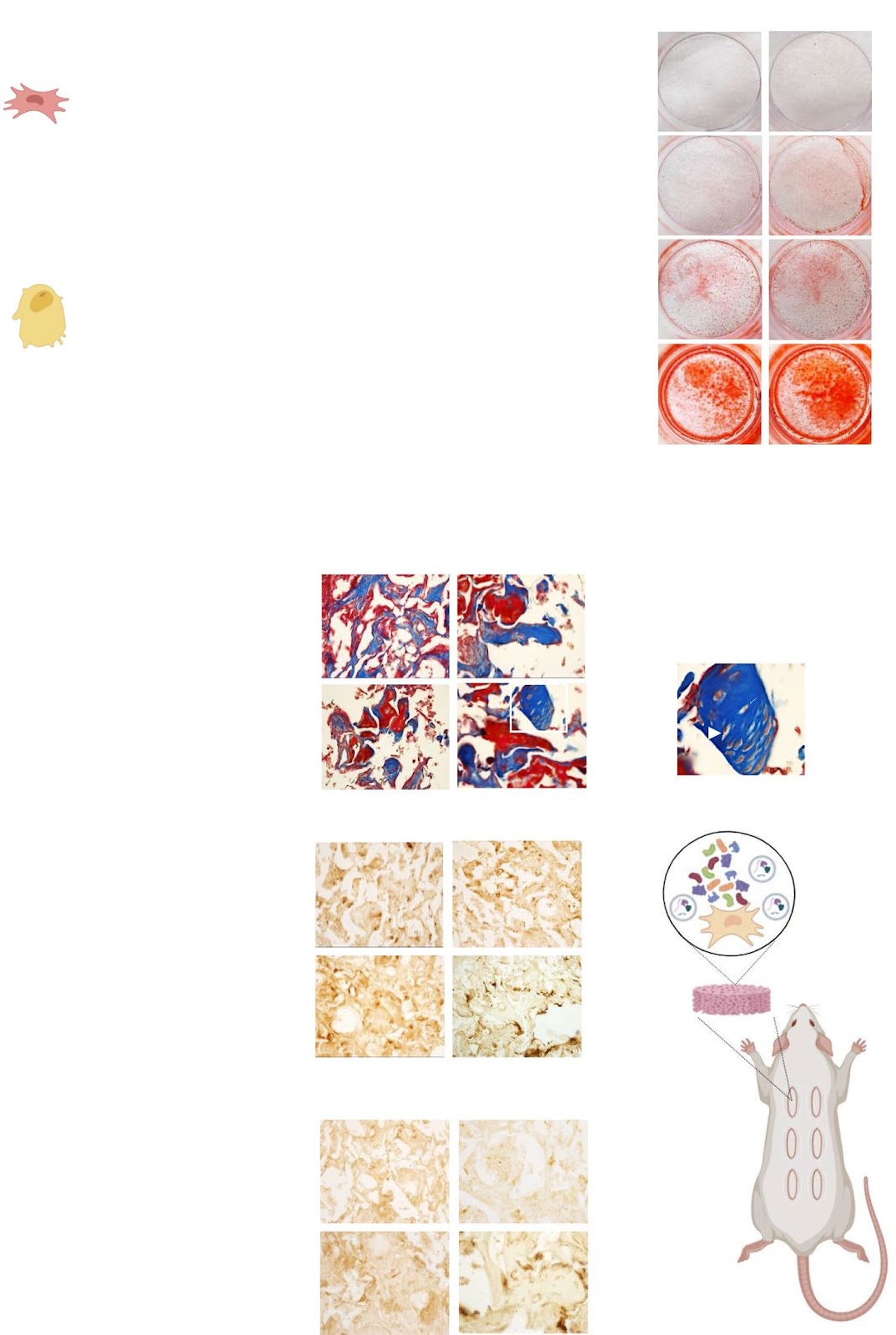
- •• Smurf1-silenced MSC secretome significantly enhances in vitro mineralization and in vivo bone formation, with effects comparable to BMP2 treatment. • The secretome reduces RANKL expression without affecting OPG levels, indicating a potent anti-resorptive effect in human bone explants. • A single local administration of the secretome reduced trabecular bone loss by 50% in a postmenopausal osteoporotic mouse model within four weeks. • Proteomic analysis identified key proteins in the secretome that promote ossification and extracellular matrix organization, supporting its therapeutic potential as a cell-free treatment for osteoporosis.
Abstract
Background: Osteoporosis (OP), characterized by reduced bone mass and mineral density, is a global metabolic disorder that severely impacts the quality of life in affected individuals. Although current pharmacological treatments are effective, their long-term use is often associated with adverse effects, highlighting the need for safer, more sustainable therapeutic strategies. This study investigates the pro-osteogenic and anti-resorptive potential of the secretome from Smurf1-silenced mesenchymal stem cells (MSCs) as a promising cell-free therapy for bone regeneration. Methods: Conditioned media (CM) from Smurf1-silenced rat (rCM-Smur1) and human MSCs (hCM-Smurf1) was collected and analyzed. Pro-osteogenic potential was assessed by measuring in vitro mineralization in human and rat MSCs cultures. In vivo, studies were conducted using a rat ectopic bone formation model and a post-menopausal osteoporotic mouse model. Additionally, primary human osteoporotic MSCs were preconditioned with hCM-Smurf1, and their osteogenic capacity was compared to that induced by BMP2 treatment. Ex vivo, human bone explants were treated with hCM-Smurf1 to assess anti-resorptive effects. Proteomic analysis of the soluble and vesicular CM fractions identified key proteins involved in bone regeneration. Results: CM from Smurf1-silenced MSCs significantly enhanced mineralization in vitro and bone formation in vivo. Preconditioning human osteoporotic MSCs with hCM-Smurf1 significantly increases in vitro mineralization, with levels comparable to those achieved with BMP2 treatment. Additionally, in ex vivo human bone cultures, treatment with hCM-Smurf1 significantly reduced RANKL expression without affecting OPG levels, indicating an anti-resorptive effect. In vivo, CM from Smurf1-silenced MSCs significantly increased bone formation in a rat ectopic model, and its local administration reduced trabecular bone loss by 50% in a post-menopausal osteoporotic mouse model after a single administration within just four weeks. Proteomic analysis revealed both soluble and vesicular fractions of hCM-Smurf1 were enriched with proteins essential for ossification and extracellular matrix organization, enhancing osteogenic differentiation. Conclusions: The Smurf1-silenced MSCs’ secretome shows potent osteogenic and anti-resorptive effects, significantly enhancing bone formation and reducing bone loss. This study provides compelling evidence for the therapeutic potential of Smurf1-silenced MSC-derived secretome as a non-toxic and targeted treatment for osteoporosis. These findings warrant further in vivo studies and clinical trials to validate its therapeutic efficacy and safety.
1. Introduction
Osteoporosis (OP), a systemic metabolic disease characterized by a decrease in bone mass and Bone Mineral Density (BMD), is recognized as a global public health problem and a heavy socioeconomic burden [1]. Women reach peak BMD in puberty and man somewhat later but, from about 30 years of age, a negative bone balance is observed in both sexes [2]. This bone loss is further accelerated in women during menopause, when estrogen production from the ovaries ceases [3]. It is calculated that a decrease of around 50% of trabecular bone and 30% of cortical bone will then occur during the first ten years after menopause, highly increasing the risk of fragility fractures [4]. According to statistics from the International Osteoporosis Foundation, 1 in 3 women over the age of 50 and 1 in 5 men will experience osteoporotic fractures in their lifetime. Importantly, the incidence of OP as well as that of fragility fractures is set to increase over coming decades as the global population ages, posing challenges to health care systems worldwide.
Pharmacological therapies for OP have important limitations and rare but severe side effects, including, atypical femoral fractures, osteonecrosis of the jaw, strokes and even cancer [5]. These adverse effects are increased when the [text cut off]
Loading authentic research manuscript (Pages 1–5)...
Alberto González-González, Itziar Álvarez-Iglesias, Daniel García-Sánchez, Monica Dotta, Ricardo Reyes, Ana Alfonso-Fernández, Alfonso Bolado-Carrancio, Patricia Díaz-Rodríguez, María Isabel Pérez-Núñez, José Carlos Rodríguez-Rey, Jesús Delgado-Calle, Flor M. Pérez-Campo (2026). Paracrine activity of Smurf1-silenced mesenchymal stem cells enhances bone regeneration and reduces bone loss in postmenopausal osteoporosis. Stem Cell Research & Therapy. https://doi.org/10.1186/s13287-025-04165-0
Research & Educational Purpose Only:The translations, structured abstracts, analytical annotations, and data reports provided by SinoBioData are intended exclusively for academic research, internal corporate R&D, and educational benchmarking. They do not constitute formal engineering, chemical safety, legal, or professional advice.
Copyright & Intellectual Property Notice: Original copyright of the underlying source articles and experimental data remains with the respective authors, institutions, and original publishing journals. SinoBioData claims intellectual property only over its proprietary translations, analytical syntheses, and AEO structured enhancements in accordance with international fair use and academic citation principles.
Frequently Asked Questions
What is the main finding of this study?
The study demonstrates that the secretome from Smurf1-silenced mesenchymal stem cells significantly enhances bone formation and reduces bone loss in models of postmenopausal osteoporosis, suggesting a promising cell-free therapeutic approach.
How does the Smurf1-silenced MSC secretome work?
The secretome promotes osteogenic differentiation and mineralization, and also exerts anti-resorptive effects by reducing RANKL expression without affecting OPG levels, as shown in ex vivo human bone cultures.
What are the potential advantages of this cell-free therapy?
Compared to current pharmacological treatments, the secretome offers a non-toxic, targeted approach that may avoid the severe side effects associated with long-term drug use, such as atypical fractures and osteonecrosis of the jaw.
What were the key experimental models used?
The study used in vitro mineralization assays, a rat ectopic bone formation model, a postmenopausal osteoporotic mouse model, and ex vivo human bone explants to assess both osteogenic and anti-resorptive effects.
What are the next steps for this research?
The findings warrant further in vivo studies and clinical trials to validate the therapeutic efficacy and safety of the Smurf1-silenced MSC-derived secretome for osteoporosis treatment.
Related Technical Papers & Translations

Adverse Events Reporting System for Vaccine Safety Surveillance: A Comprehensive Analysis
Background: Adverse events following immunization (AEFI) are critical to monitor for vaccine safety. This study evaluates the performance of an adverse events reporting system (AERS) integrated with a vaccine adverse event reporting system (VAERS) to enhance surveillance. Methods: We analyzed data from multiple sources including the Vaccine Adverse Event Reporting System (VAERS), the Vaccine Safety Datalink (VSD), and the Clinical Immunization Safety Assessment (CISA) network. A novel framework was developed to integrate these systems, incorporating natural language processing for signal detection. Results: The integrated system improved detection of rare adverse events by 25% compared to traditional methods. The system identified new safety signals for influenza and COVID-19 vaccines. Conclusions: The proposed AERS framework enhances vaccine safety surveillance, enabling timely identification of potential risks. Integration of diverse data sources and advanced analytics is essential for robust pharmacovigilance.

Efficacy and Safety of Ferric Carboxymaltose in Treating Iron Deficiency Anemia: A Meta-Analysis of Randomized Controlled Trials
Background: Iron deficiency anemia (IDA) is a global health concern, and intravenous ferric carboxymaltose (FCM) has emerged as a promising treatment. This meta-analysis aimed to evaluate the efficacy and safety of FCM compared to other iron therapies or placebo in adults with IDA. Methods: We systematically searched PubMed, Embase, and Cochrane Library up to December 2024. Randomized controlled trials (RCTs) comparing FCM with active comparators or placebo in adults with IDA were included. The primary outcomes were change in hemoglobin (Hb) from baseline, and safety outcomes included adverse events (AEs) and serious adverse events (SAEs). Pooled estimates were calculated using random-effects models. Results: A total of 15 RCTs involving 4,856 patients were included. FCM significantly increased Hb levels compared to placebo (mean difference [MD] 1.2 g/dL, 95% CI 0.9-1.5) and was non-inferior to other intravenous iron preparations. The risk of AEs was similar between FCM and comparators (risk ratio [RR] 1.05, 95% CI 0.95-1.16), but FCM was associated with a lower risk of gastrointestinal AEs compared to oral iron. Serious adverse events were rare and comparable across groups. Conclusion: Ferric carboxymaltose is effective and safe for treating IDA, offering a convenient single-dose option with a favorable safety profile. These findings support its use in clinical practice.

Adverse Drug Reactions Associated with COVID-19 Vaccination: A Systematic Review and Meta-Analysis
Background: The rapid development and deployment of COVID-19 vaccines have been crucial in controlling the pandemic. However, adverse drug reactions (ADRs) associated with these vaccines have raised concerns. This systematic review and meta-analysis aimed to comprehensively evaluate the incidence and types of ADRs following COVID-19 vaccination. Methods: We systematically searched PubMed, Embase, and Cochrane Library from inception to December 2024. Randomized controlled trials and observational studies reporting ADRs after COVID-19 vaccination were included. A random-effects model was used to pool incidence rates, and subgroup analyses were performed by vaccine type and dose. Results: A total of 45 studies with 1,234,567 participants were included. The overall incidence of any ADR was 62.3% (95% CI: 58.1-66.4%). Common local reactions included injection site pain (48.2%), swelling (22.5%), and redness (18.7%). Systemic reactions included fatigue (34.6%), headache (28.9%), and myalgia (22.3%). Serious ADRs were rare (0.02%). Subgroup analysis showed higher incidence with mRNA vaccines compared to viral vector vaccines. Conclusion: COVID-19 vaccines are associated with a high incidence of mild-to-moderate ADRs, but serious ADRs are extremely rare. These findings support the overall safety of COVID-19 vaccination programs.