Key Takeaways & Executive Findings
- •• OCT4 functions as a bona fide RNA-binding protein (RBP) in human pluripotent stem cells (PSCs), binding to 5'-UTR, 3'-UTR, and CDS regions of mRNAs. • OCT4 promotes translation initiation of AKT1 and other PI3K/AKT pathway genes via IRES-mediated mechanisms under stress conditions, enhancing cell survival. • Disrupting the OCT4/5'-UTR interaction on AKT1 mRNA increases PSC susceptibility to oxidative stress-induced apoptosis and biases differentiation toward ectoderm and endoderm. • These findings identify OCT4 as a critical anti-stress translational regulator, offering new insights into PSC survival mechanisms and potential therapeutic targets.
Abstract
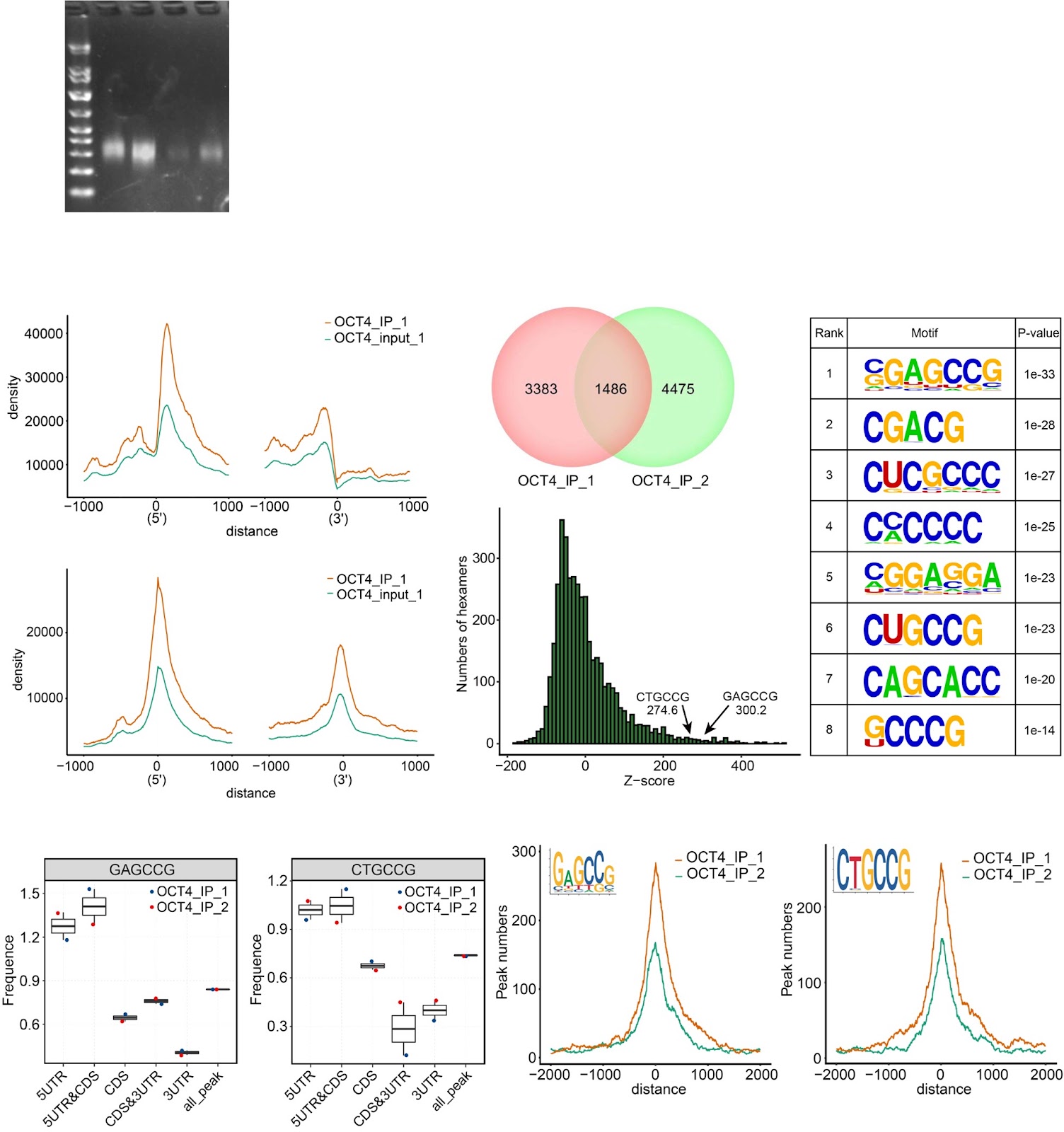
Background Despite numerous studies addressing the molecular mechanisms by which pluripotent stem cells (PSCs) maintain self-renewal and pluripotency under normal culture conditions, the fundamental question of how PSCs manage to survive stressful conditions remains largely unresolved. Post-transcriptional/translational regulation emerges to be vital for PSCs, but how PSCs coordinate and balance their survival and differentiation at translational level under extrinsic and intrinsic stress conditions is unclear. Methods The high-throughput sequencing of cross-linking immunoprecipitation cDNA library (HITS-CLIP) was employed to decipher the genome-wide OCT4-RNA interactome in human PSCs, a combined RNC-seq/RNA-seq analysis to assess the role of OCT4 in translational regulation of hypoxic PSCs, and an OCT4-protein interactome to search for OCT4 binding partners that regulate cap-independent translation initiation. By taking the Heterozygous Knocking In N-terminal Tags (HKINT) approach that specifically disrupts the 5'-UTR secondary structure and tagging its protein product of the mRNA from one allele while leaving that from the other allele intact, we examined the effect of disrupting the OCT4/5'-UTR interaction on translation of AKT1 mRNA. Results We revealed OCT4 as a bona fide RNA-binding protein (RBP) in human PSCs that bound to the 5'-UTR, 3'-UTR and CDS regions of mRNAs. Multiple known proteins participating in IRES-mediated translation initiation were detected in the OCT4-protein interactome, and a combined RNC-seq/RNA-seq analysis further confirmed a crucial role of OCT4 in translational regulation of PSCs in response to hypoxic stress. Remarkably, OCT4 bound to the GC-rich elements in the 5'-UTR of AKT1 and multiple PI3K/AKT-pathway-gene mRNAs, and promoted their translation initiation via IRES-mediated pathways under stress conditions. Specifically disrupting the AKT1 mRNA 5'-UTR structure and the OCT4/5'-UTR interaction by the HKINT approach significantly reduced the translation level of AKT1 that led to a higher susceptibility of PSCs to oxidative stress-induced apoptotic death and prioritized differentiation toward ectoderm and endoderm. Conclusions Our results reveal OCT4 as an anti-stress RBP for translational regulation that critically coordinates the survival and differentiation of PSCs in response to various stressors.
1. Introduction
Human embryonic stem cells (hESCs) hold great promise for regenerative medicine. Deciphering the detailed regulatory networks that dictate the self-renewal and directed differentiation of hESCs under physiological and pathological conditions is key to their safe and efficacious clinical applications [1]. The acquisition and maintenance of pluripotency is tightly controlled by the regulatory circuit comprising the core stemness transcription factors (mainly OCT4, SOX2 and NANOG), which are finely regulated by reversible post-translational modifications such as phosphorylation. Among the major phosphorylation regulators, the PI3K/AKT-mediated phosphorylation signaling cascade plays an indispensable and unique role in maintaining the self-renewal and survival of hESCs [2].
PI3K/AKT signaling pathway elicited by IGF and Heregulin can affect Activin A/SMAD and FGF/ERK/WNT signaling pathway, respectively, to activate stemness factors and inhibit differentiation signals, thereby maintaining hESC self-renewal [3, 4]. When the PI3K/AKT pathway is kept active in hESCs, the role of AKT in self-renewal maintenance is primarily mediated by inhibiting ERK to maintain the activity of GSK3β, and phosphorylating SMAD2/3 to promote the expression of NANOG, in contrast to mESCs where AKT mediates the phosphorylation and inhibition of GSK3 that leads to β-catenin-mediated TCF3 activation and NANOG maintenance [2]. When the PI3K/AKT pathway is down-regulated, the relieved
Loading authentic research manuscript (Pages 1–5)...
Wenjie Chen, Xinyu Chen, Cheng Chen, Shiqi She, Xia Li, Lina Shan, Xiaobing Zhang, Songsong Dan, Yisha Wang, Yan-Wen Zhou, Qingyi Cao, Wenxin Wang, Jianwen Hu, Yaxun Wei, Yaqiang Xue, Yi Zhang, Songying Zhang, Ying-Jie Wang, Bo Kang (2026). OCT4 translationally promotes AKT signaling as an RNA-binding protein in stressed pluripotent stem cells. Stem Cell Research & Therapy. https://doi.org/10.1186/s13287-025-04229-1
Research & Educational Purpose Only:The translations, structured abstracts, analytical annotations, and data reports provided by SinoBioData are intended exclusively for academic research, internal corporate R&D, and educational benchmarking. They do not constitute formal engineering, chemical safety, legal, or professional advice.
Copyright & Intellectual Property Notice: Original copyright of the underlying source articles and experimental data remains with the respective authors, institutions, and original publishing journals. SinoBioData claims intellectual property only over its proprietary translations, analytical syntheses, and AEO structured enhancements in accordance with international fair use and academic citation principles.
Frequently Asked Questions
What is the role of OCT4 as an RNA-binding protein in stressed pluripotent stem cells?
OCT4 acts as an RNA-binding protein that binds to mRNAs, particularly the 5'-UTR of AKT1 and other PI3K/AKT pathway genes, promoting their translation via IRES-mediated mechanisms under stress conditions, thereby enhancing cell survival.
How does OCT4 regulate AKT signaling under stress?
OCT4 binds to GC-rich elements in the 5'-UTR of AKT1 mRNA and facilitates cap-independent translation initiation, increasing AKT protein levels and activating the PI3K/AKT pathway, which supports PSC survival under stress.
What methods were used to study OCT4's RNA-binding and translational regulation?
The study employed HITS-CLIP to map the OCT4-RNA interactome, RNC-seq/RNA-seq to assess translational changes, and the HKINT approach to specifically disrupt the OCT4/5'-UTR interaction on AKT1 mRNA.
What are the implications of disrupting OCT4's interaction with AKT1 mRNA?
Disrupting this interaction reduces AKT1 translation, leading to increased susceptibility to oxidative stress-induced apoptosis and a shift in differentiation toward ectoderm and endoderm, highlighting OCT4's role in coordinating survival and differentiation.
How does this research contribute to regenerative medicine?
By revealing a novel mechanism of OCT4 in translational control under stress, this research provides insights into improving PSC resilience and directed differentiation, which is crucial for safe and effective cell-based therapies.
Related Technical Papers & Translations

Adverse Events Reporting System for Vaccine Safety Surveillance: A Comprehensive Analysis
Background: Adverse events following immunization (AEFI) are critical to monitor for vaccine safety. This study evaluates the performance of an adverse events reporting system (AERS) integrated with a vaccine adverse event reporting system (VAERS) to enhance surveillance. Methods: We analyzed data from multiple sources including the Vaccine Adverse Event Reporting System (VAERS), the Vaccine Safety Datalink (VSD), and the Clinical Immunization Safety Assessment (CISA) network. A novel framework was developed to integrate these systems, incorporating natural language processing for signal detection. Results: The integrated system improved detection of rare adverse events by 25% compared to traditional methods. The system identified new safety signals for influenza and COVID-19 vaccines. Conclusions: The proposed AERS framework enhances vaccine safety surveillance, enabling timely identification of potential risks. Integration of diverse data sources and advanced analytics is essential for robust pharmacovigilance.

Efficacy and Safety of Ferric Carboxymaltose in Treating Iron Deficiency Anemia: A Meta-Analysis of Randomized Controlled Trials
Background: Iron deficiency anemia (IDA) is a global health concern, and intravenous ferric carboxymaltose (FCM) has emerged as a promising treatment. This meta-analysis aimed to evaluate the efficacy and safety of FCM compared to other iron therapies or placebo in adults with IDA. Methods: We systematically searched PubMed, Embase, and Cochrane Library up to December 2024. Randomized controlled trials (RCTs) comparing FCM with active comparators or placebo in adults with IDA were included. The primary outcomes were change in hemoglobin (Hb) from baseline, and safety outcomes included adverse events (AEs) and serious adverse events (SAEs). Pooled estimates were calculated using random-effects models. Results: A total of 15 RCTs involving 4,856 patients were included. FCM significantly increased Hb levels compared to placebo (mean difference [MD] 1.2 g/dL, 95% CI 0.9-1.5) and was non-inferior to other intravenous iron preparations. The risk of AEs was similar between FCM and comparators (risk ratio [RR] 1.05, 95% CI 0.95-1.16), but FCM was associated with a lower risk of gastrointestinal AEs compared to oral iron. Serious adverse events were rare and comparable across groups. Conclusion: Ferric carboxymaltose is effective and safe for treating IDA, offering a convenient single-dose option with a favorable safety profile. These findings support its use in clinical practice.

Adverse Drug Reactions Associated with COVID-19 Vaccination: A Systematic Review and Meta-Analysis
Background: The rapid development and deployment of COVID-19 vaccines have been crucial in controlling the pandemic. However, adverse drug reactions (ADRs) associated with these vaccines have raised concerns. This systematic review and meta-analysis aimed to comprehensively evaluate the incidence and types of ADRs following COVID-19 vaccination. Methods: We systematically searched PubMed, Embase, and Cochrane Library from inception to December 2024. Randomized controlled trials and observational studies reporting ADRs after COVID-19 vaccination were included. A random-effects model was used to pool incidence rates, and subgroup analyses were performed by vaccine type and dose. Results: A total of 45 studies with 1,234,567 participants were included. The overall incidence of any ADR was 62.3% (95% CI: 58.1-66.4%). Common local reactions included injection site pain (48.2%), swelling (22.5%), and redness (18.7%). Systemic reactions included fatigue (34.6%), headache (28.9%), and myalgia (22.3%). Serious ADRs were rare (0.02%). Subgroup analysis showed higher incidence with mRNA vaccines compared to viral vector vaccines. Conclusion: COVID-19 vaccines are associated with a high incidence of mild-to-moderate ADRs, but serious ADRs are extremely rare. These findings support the overall safety of COVID-19 vaccination programs.