Key Takeaways & Executive Findings
- •• Early single-dose MSC therapy significantly improves survival and right ventricular function in a rat model of PAH, while repeated dosing offers no added benefit. • MSCs suppress pulmonary arterial adventitial fibroblast activation and reduce extracellular matrix deposition, attenuating vascular remodeling. • The therapeutic mechanism involves the SOCS3/STAT3 signaling pathway, providing a molecular target for PAH treatment. • Optimal timing of MSC administration is critical; early intervention (day 1) is more effective than delayed or repeated regimens.
Abstract
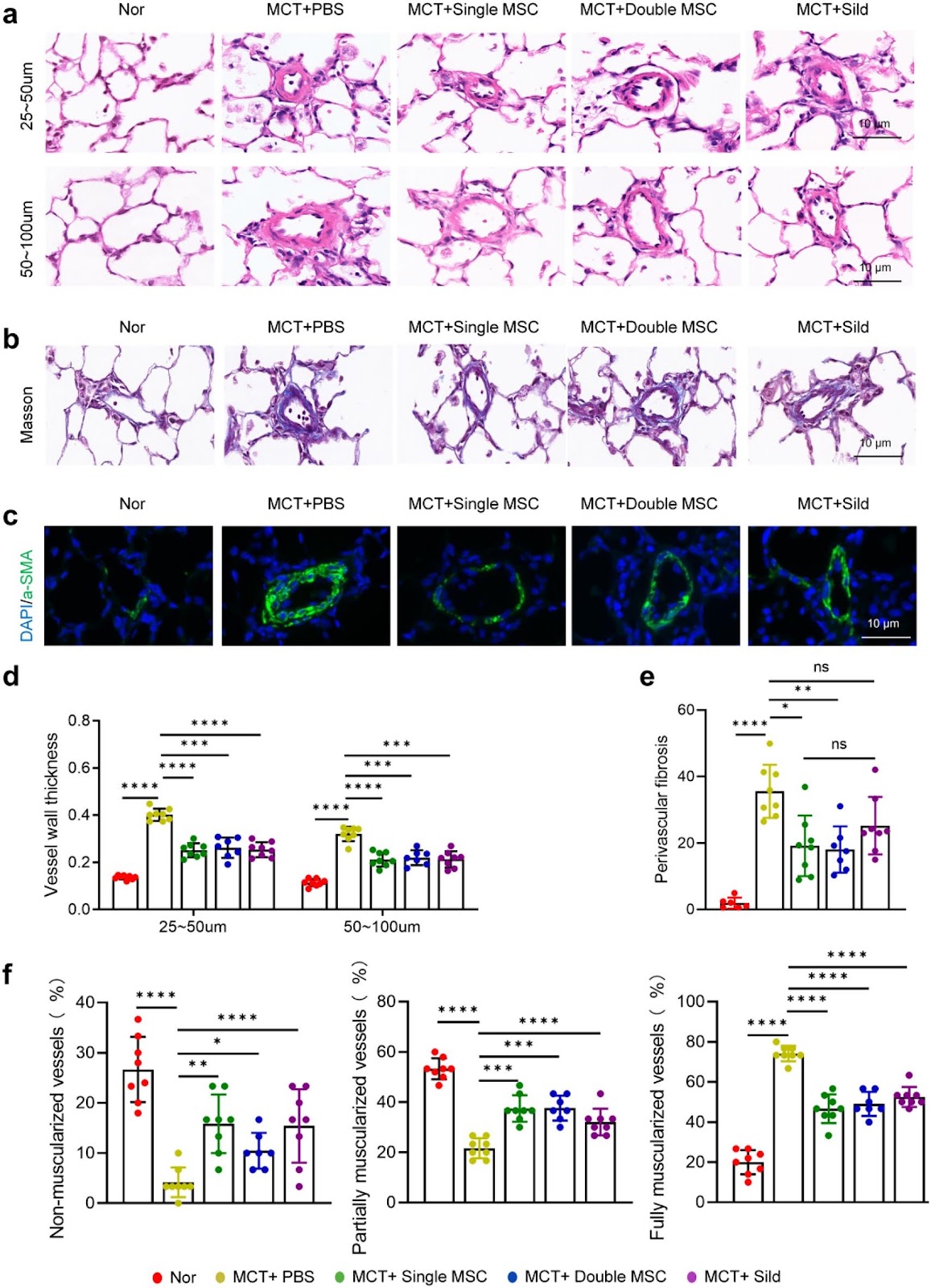
Background Pulmonary arterial hypertension (PAH) is a fatal condition characterized by progressive vascular remodeling in the pulmonary arteries, eventually leading to right heart failure and death. Dysregulated extracellular matrix (ECM) remodeling is central to PAH pathogenesis and represents a potential therapeutic target. Mesenchymal stromal cells (MSCs) have shown promise in preclinical studies; however, the optimal therapeutic window, dosing frequency, and mechanistic basis for their regulation of vascular ECM remain unclear. Methods We employed a monocrotaline (MCT)-induced rat model of PAH to evaluate different MSC treatment regimens, including early administration (day 1 post-MCT), delayed administration (days 7 and 14), and repeated dosing (days 1 and 11). Additionally, we combined in vivo and in vitro approaches to investigate how MSCs modulate the activation of pulmonary arterial adventitial fibroblasts (PAAFs) and influence ECM remodeling. Results Biodistribution studies indicated that MSC retention in lung tissue peaked within 24 h and gradually declined by day 21. A single early dose of MSCs (on day 1) significantly ameliorated PAH progression, increasing the 28-day survival rate, reducing right ventricular systolic pressure (RVSP), improving right ventricular function, and attenuating small pulmonary vascular remodeling, including reductions in medial thickening, excessive muscularization, and collagen deposition. Repeated MSC administration did not provide additional therapeutic benefit. Both in animal models and cell cultures, MSCs effectively suppressed PAAF activation and reduced ECM protein production. This anti-fibrotic effect was mediated via the SOCS3/STAT3 signaling pathway. Conclusions Early single-dose MSC therapy effectively alleviates PAH by suppressing PAAF activation and ECM remodeling through the SOCS3/STAT3 pathway, offering a potential therapeutic strategy for PAH.
1. Introduction
Pulmonary arterial hypertension (PAH) is a progressive and life-threatening disease characterized by increased pulmonary vascular resistance and elevated pulmonary arterial pressure, ultimately leading to right ventricular (RV) failure and death [1, 2]. The core pathology involves perivascular inflammation and fibrosis mediated by multiple immune cells. These cells release various cytokines that cause endothelial injury, fibroblast activation, and smooth muscle cell (SMC) hyperproliferation, collectively driving vascular remodeling [3, 4]. Current treatments primarily target endothelial dysfunction and SMC-mediated vasoconstriction through pathways such as nitric oxide, endothelin-1, and prostacyclin [5]. However, therapeutic efficacy remains limited, and long-term survival is poor. The five-year survival rate remains around 60% even with combination therapy [6].
Mesenchymal stromal cells (MSCs) are stem cells with broad immunoregulatory functions. They can be sourced from various tissues and have shown potential in controlling fibroblast activation. They have been applied in multiple fibrotic diseases, including those of the liver, kidney, and lungs [7–9]. In preclinical PAH studies, MSC administration has been shown to improve pulmonary vascular remodeling [10]. This is achieved by suppressing inflammation mediated by macrophages and lymphocytes, promoting endothelial repair, and reducing SMC overgrowth [10]. Nevertheless, their clinical application remains limited, largely due to an incomplete understanding of their mechanisms of action.
The pulmonary vessel wall consists of three layers: adventitia, media, and intima. Existing therapies mainly target medial thickening caused by endothelial damage. Recent studies highlight the active role of the adventitia in vascular remodeling. Pulmonary artery adventitial fibroblasts (PAAFs) are the main cell type in this layer. Under hypoxia or inflammation, PAAFs become activated, producing excess extracellular matrix (ECM) proteins and pro-inflammatory cytokines. This leads to vascular fibrosis and stiffening [11, 12]. Increasing evidence indicates that adventitial ECM remodeling is not a passive outcome but an early and critical driver of PAH pathogenesis, initiating and sustaining pathological crosstalk across vascular layers [13, 14]. However, the
Loading authentic research manuscript (Pages 1–5)...
Jiaojiao Wang, Jing Jin, Mengni Zhang, Xinyuan Chen, Sheng Du, Xiaoxiao Mao, Changlei Bao, Jinsheng Zhu, Xinyu Song, Shiyue Li (2026). Mesenchymal stromal cells alleviate pulmonary arterial hypertension by suppressing pulmonary arterial adventitial fibroblast activation and extracellular matrix remodeling via the SOCS3/STAT3 pathway. Stem Cell Research & Therapy. https://doi.org/10.1186/s13287-025-04883-5
Research & Educational Purpose Only:The translations, structured abstracts, analytical annotations, and data reports provided by SinoBioData are intended exclusively for academic research, internal corporate R&D, and educational benchmarking. They do not constitute formal engineering, chemical safety, legal, or professional advice.
Copyright & Intellectual Property Notice: Original copyright of the underlying source articles and experimental data remains with the respective authors, institutions, and original publishing journals. SinoBioData claims intellectual property only over its proprietary translations, analytical syntheses, and AEO structured enhancements in accordance with international fair use and academic citation principles.
Frequently Asked Questions
What is the main finding of this study?
The study demonstrates that early single-dose administration of mesenchymal stromal cells (MSCs) significantly alleviates pulmonary arterial hypertension (PAH) in a rat model by suppressing pulmonary arterial adventitial fibroblast activation and extracellular matrix remodeling via the SOCS3/STAT3 pathway.
How does MSC therapy work in PAH?
MSCs modulate the activation of pulmonary arterial adventitial fibroblasts (PAAFs) and reduce extracellular matrix protein production, thereby attenuating vascular remodeling. This effect is mediated through the SOCS3/STAT3 signaling pathway.
What is the optimal timing for MSC administration?
The study found that a single early dose (on day 1 post-MCT) was most effective, while delayed or repeated administration did not provide additional therapeutic benefit.
What are the implications for clinical treatment of PAH?
The findings suggest that early intervention with MSCs could be a promising therapeutic strategy for PAH, potentially improving survival and right ventricular function. However, further research is needed to translate these findings into clinical practice.
Related Technical Papers & Translations

Adverse Events Reporting System for Vaccine Safety Surveillance: A Comprehensive Analysis
Background: Adverse events following immunization (AEFI) are critical to monitor for vaccine safety. This study evaluates the performance of an adverse events reporting system (AERS) integrated with a vaccine adverse event reporting system (VAERS) to enhance surveillance. Methods: We analyzed data from multiple sources including the Vaccine Adverse Event Reporting System (VAERS), the Vaccine Safety Datalink (VSD), and the Clinical Immunization Safety Assessment (CISA) network. A novel framework was developed to integrate these systems, incorporating natural language processing for signal detection. Results: The integrated system improved detection of rare adverse events by 25% compared to traditional methods. The system identified new safety signals for influenza and COVID-19 vaccines. Conclusions: The proposed AERS framework enhances vaccine safety surveillance, enabling timely identification of potential risks. Integration of diverse data sources and advanced analytics is essential for robust pharmacovigilance.

Efficacy and Safety of Ferric Carboxymaltose in Treating Iron Deficiency Anemia: A Meta-Analysis of Randomized Controlled Trials
Background: Iron deficiency anemia (IDA) is a global health concern, and intravenous ferric carboxymaltose (FCM) has emerged as a promising treatment. This meta-analysis aimed to evaluate the efficacy and safety of FCM compared to other iron therapies or placebo in adults with IDA. Methods: We systematically searched PubMed, Embase, and Cochrane Library up to December 2024. Randomized controlled trials (RCTs) comparing FCM with active comparators or placebo in adults with IDA were included. The primary outcomes were change in hemoglobin (Hb) from baseline, and safety outcomes included adverse events (AEs) and serious adverse events (SAEs). Pooled estimates were calculated using random-effects models. Results: A total of 15 RCTs involving 4,856 patients were included. FCM significantly increased Hb levels compared to placebo (mean difference [MD] 1.2 g/dL, 95% CI 0.9-1.5) and was non-inferior to other intravenous iron preparations. The risk of AEs was similar between FCM and comparators (risk ratio [RR] 1.05, 95% CI 0.95-1.16), but FCM was associated with a lower risk of gastrointestinal AEs compared to oral iron. Serious adverse events were rare and comparable across groups. Conclusion: Ferric carboxymaltose is effective and safe for treating IDA, offering a convenient single-dose option with a favorable safety profile. These findings support its use in clinical practice.

Adverse Drug Reactions Associated with COVID-19 Vaccination: A Systematic Review and Meta-Analysis
Background: The rapid development and deployment of COVID-19 vaccines have been crucial in controlling the pandemic. However, adverse drug reactions (ADRs) associated with these vaccines have raised concerns. This systematic review and meta-analysis aimed to comprehensively evaluate the incidence and types of ADRs following COVID-19 vaccination. Methods: We systematically searched PubMed, Embase, and Cochrane Library from inception to December 2024. Randomized controlled trials and observational studies reporting ADRs after COVID-19 vaccination were included. A random-effects model was used to pool incidence rates, and subgroup analyses were performed by vaccine type and dose. Results: A total of 45 studies with 1,234,567 participants were included. The overall incidence of any ADR was 62.3% (95% CI: 58.1-66.4%). Common local reactions included injection site pain (48.2%), swelling (22.5%), and redness (18.7%). Systemic reactions included fatigue (34.6%), headache (28.9%), and myalgia (22.3%). Serious ADRs were rare (0.02%). Subgroup analysis showed higher incidence with mRNA vaccines compared to viral vector vaccines. Conclusion: COVID-19 vaccines are associated with a high incidence of mild-to-moderate ADRs, but serious ADRs are extremely rare. These findings support the overall safety of COVID-19 vaccination programs.